


Background
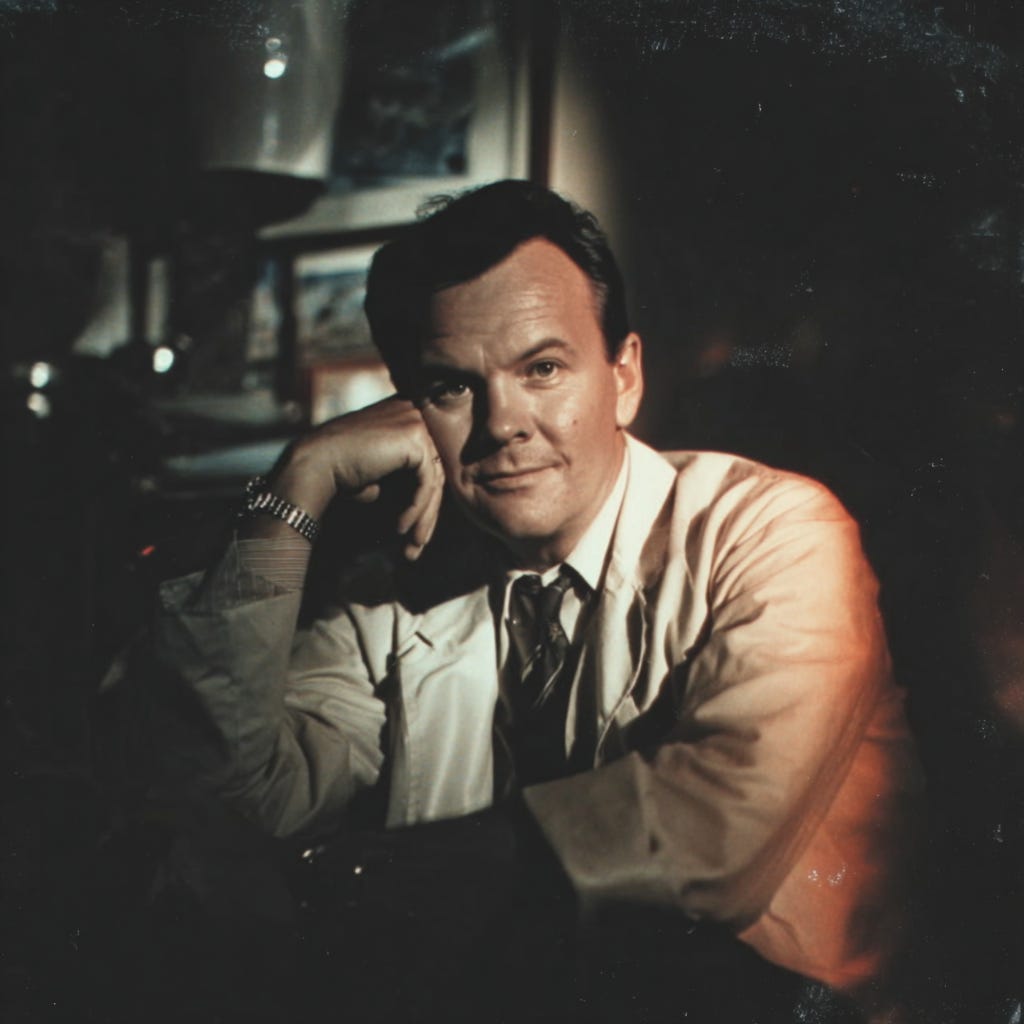
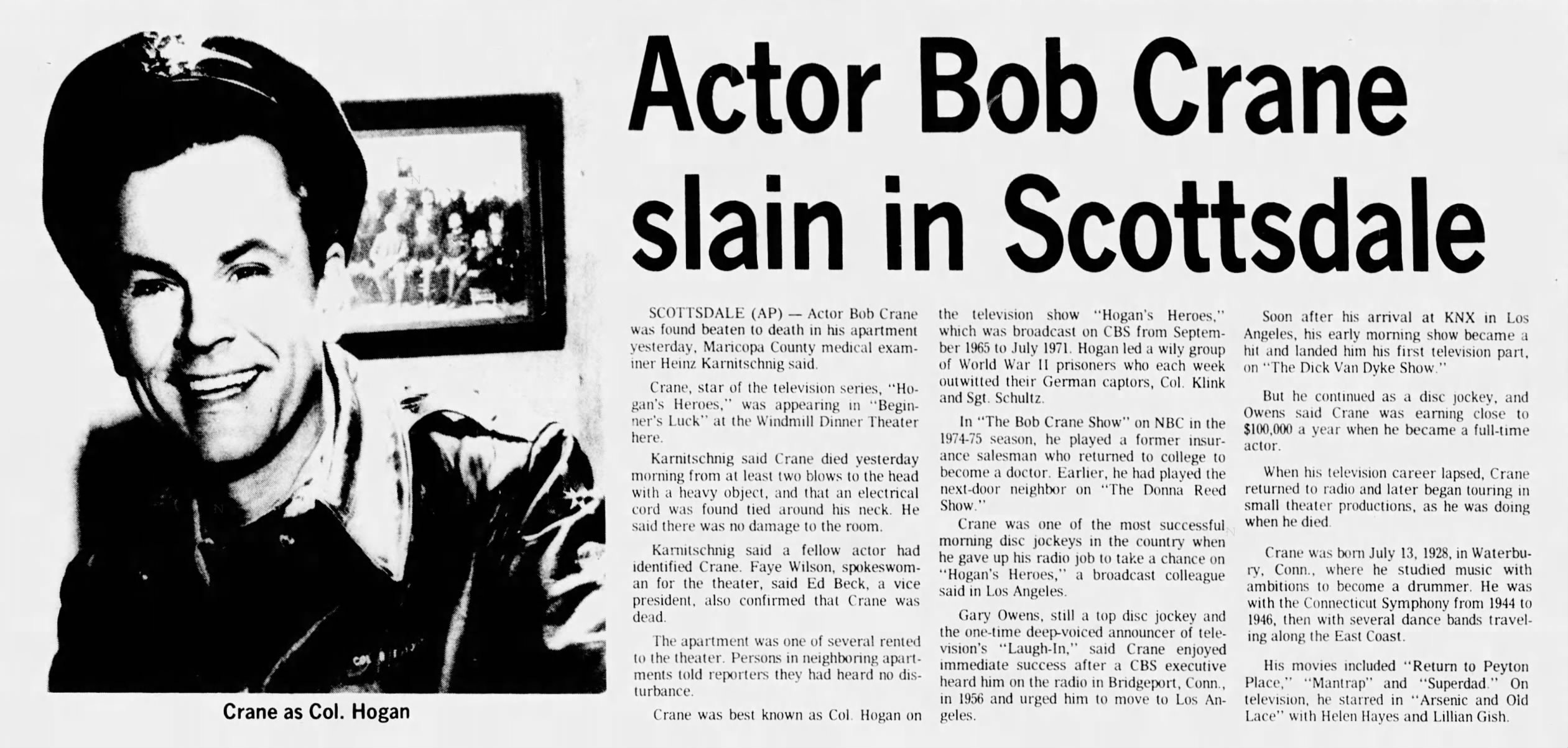
On June 29, 1978, beloved television icon Bob Crane was found bludgeoned to death in his Scottsdale, Arizona, apartment. Although some close to Crane, including his own family, knew about his secret double life as a sex addict, following his death, his public image suffered after lurid details about his life were released. Nearly 50 years after his brutal murder, the question remains: Who killed Bob Crane?
Early Life and Career
Before his rise to prominence as a television personality, Robert Edward Crane was born on July 13, 1928, in Waterbury, Connecticut. He was the youngest of two sons of Rose Mary and Alfred Thomas Crane. —The family originally spelled their name, Crean.
Robert, or Bob as he preferred to be called, spent his childhood and teenage years in Stamford, Connecticut. By the time he was eleven, Bob’s passion for playing drums had become a big part of his life. In junior high, he organized local drum and bugle parades and later joined the high school orchestra. He graduated from Stamford High School in 1946 and briefly played drums with the Connecticut Symphony Orchestra, but was let go after not taking it seriously enough.
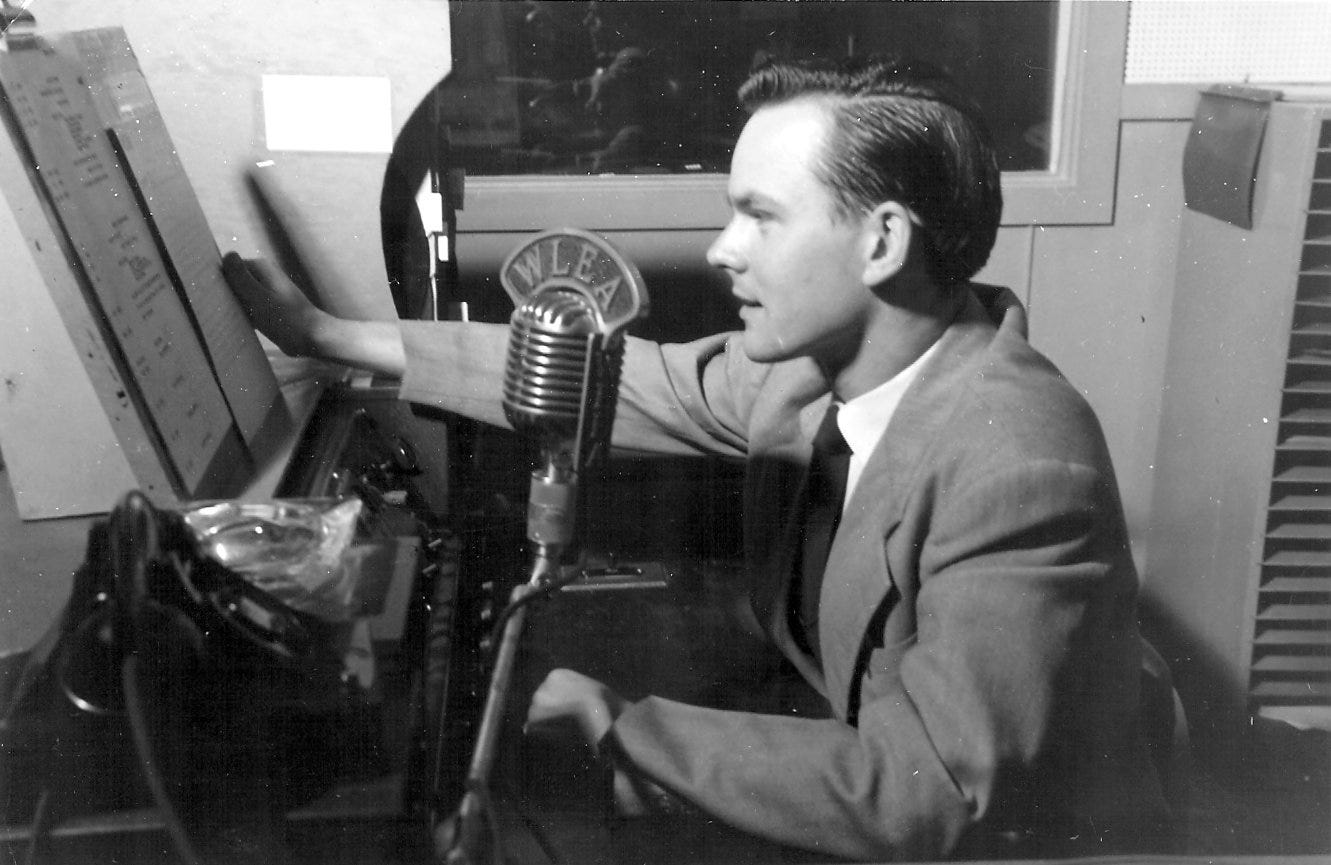
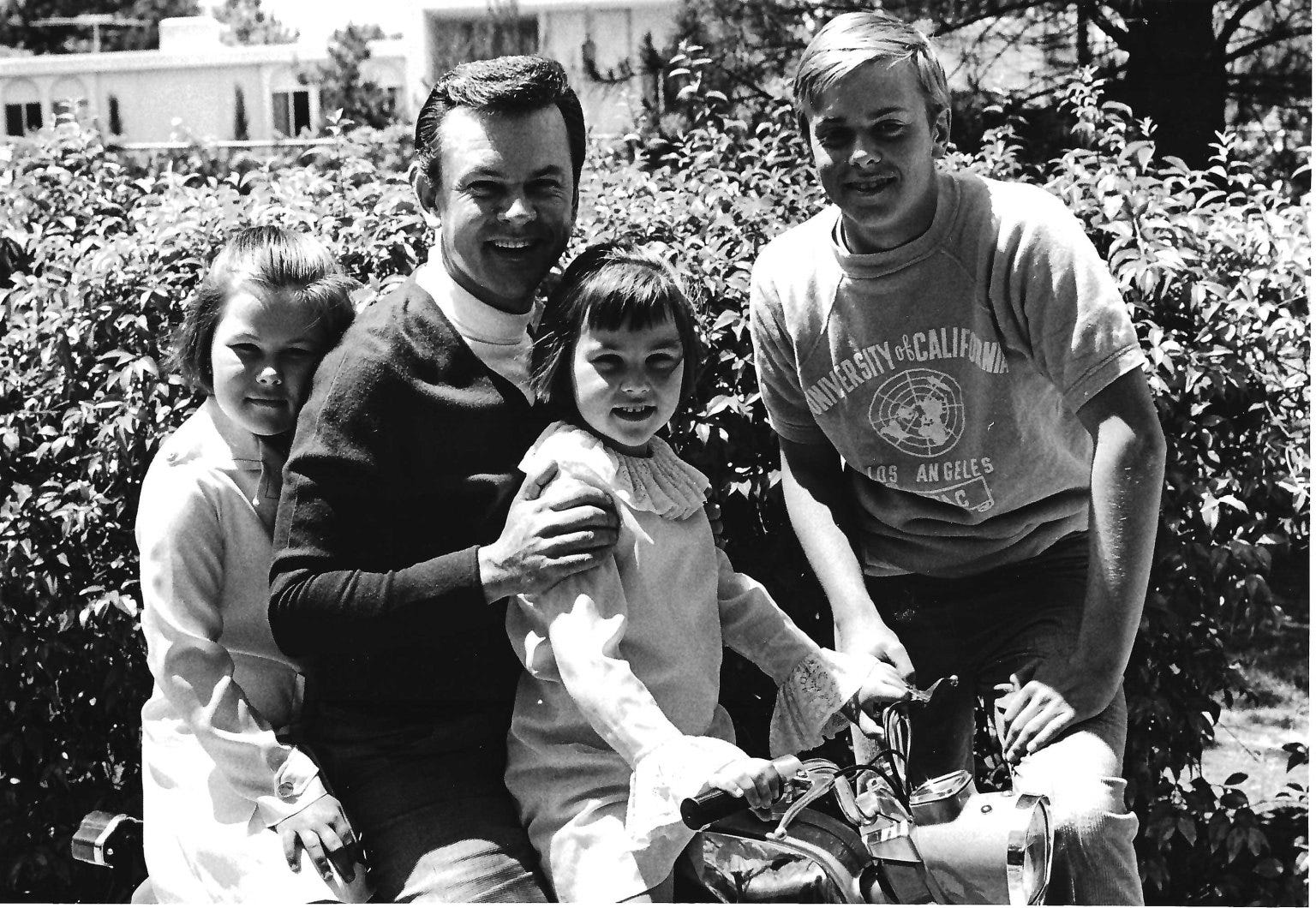
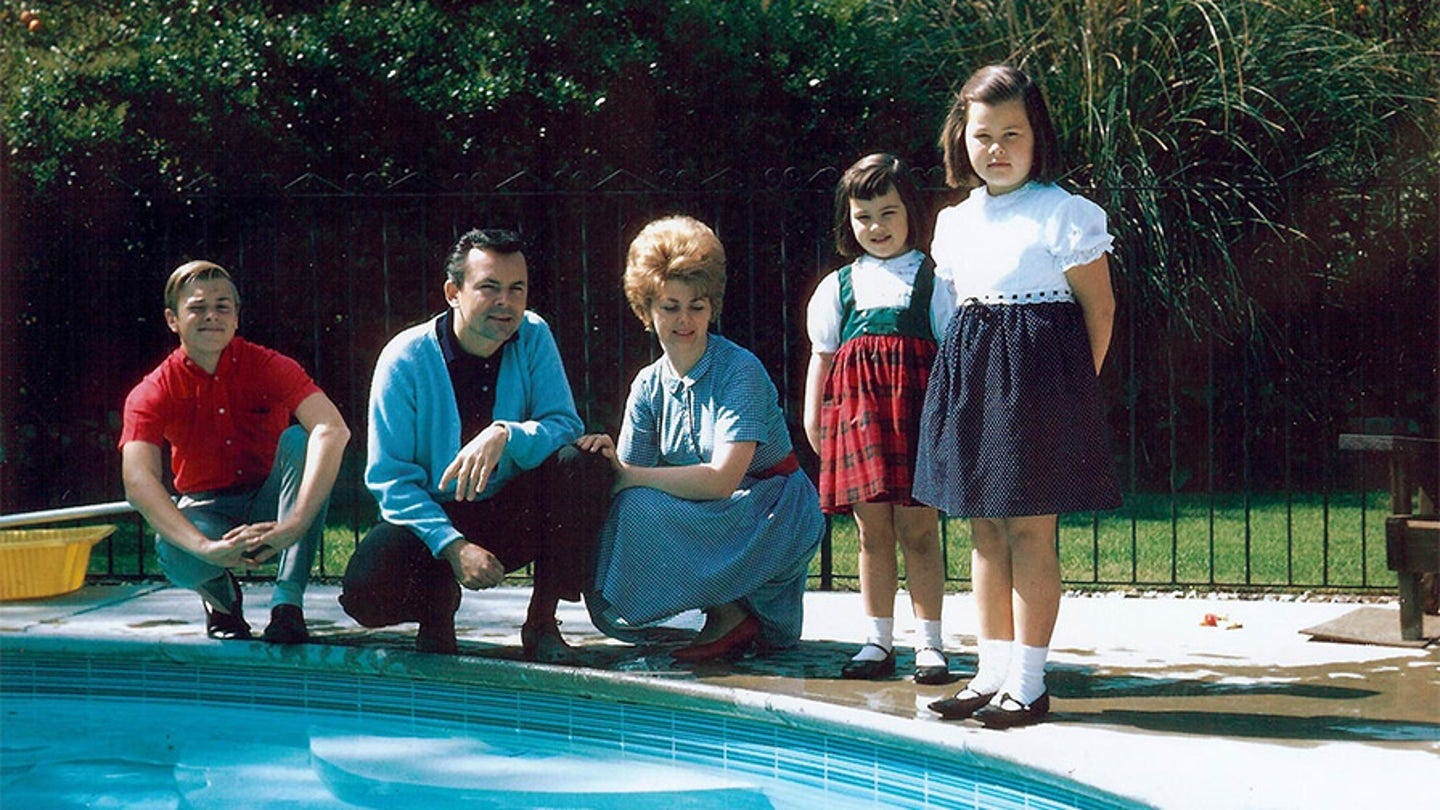
In 1949, Bob married his high school sweetheart, Anne Terzian. The couple had three children: Robert David, Deborah Ann, and Karen Leslie. Not long after, he enlisted in the Connecticut Army National Guard and was honorably discharged in 1950. The same year, Crane entered the world of radio by starting as a janitor at WLEA in Hornell, New York. It wasn’t long until his witty, vibrant personality landed him a job as an on-air personality.
He moved on to WLAD in Connecticut and also hosted for other radio stations. His big break came in 1956 when CBS Radio hired Crane to host a morning show in Los Angeles. Crane quickly became the “King of the Los Angeles Airwaves.” With his program at the top of the ratings, Crane blended his drumming and humor with celebrity interviews such as Marilyn Monroe, Bob Hope, and Frank Sinatra.
This led to an opportunity guest hosting on the Johnny Carson show and appearances on popular TV shows such as The Twilight Zone, Alfred Hitchcock Presents, and The Dick VanDyke Show. In 1963, he became a regular on The Donna Reed Show, a role that lasted until 1964.
Hogan’s Heroes
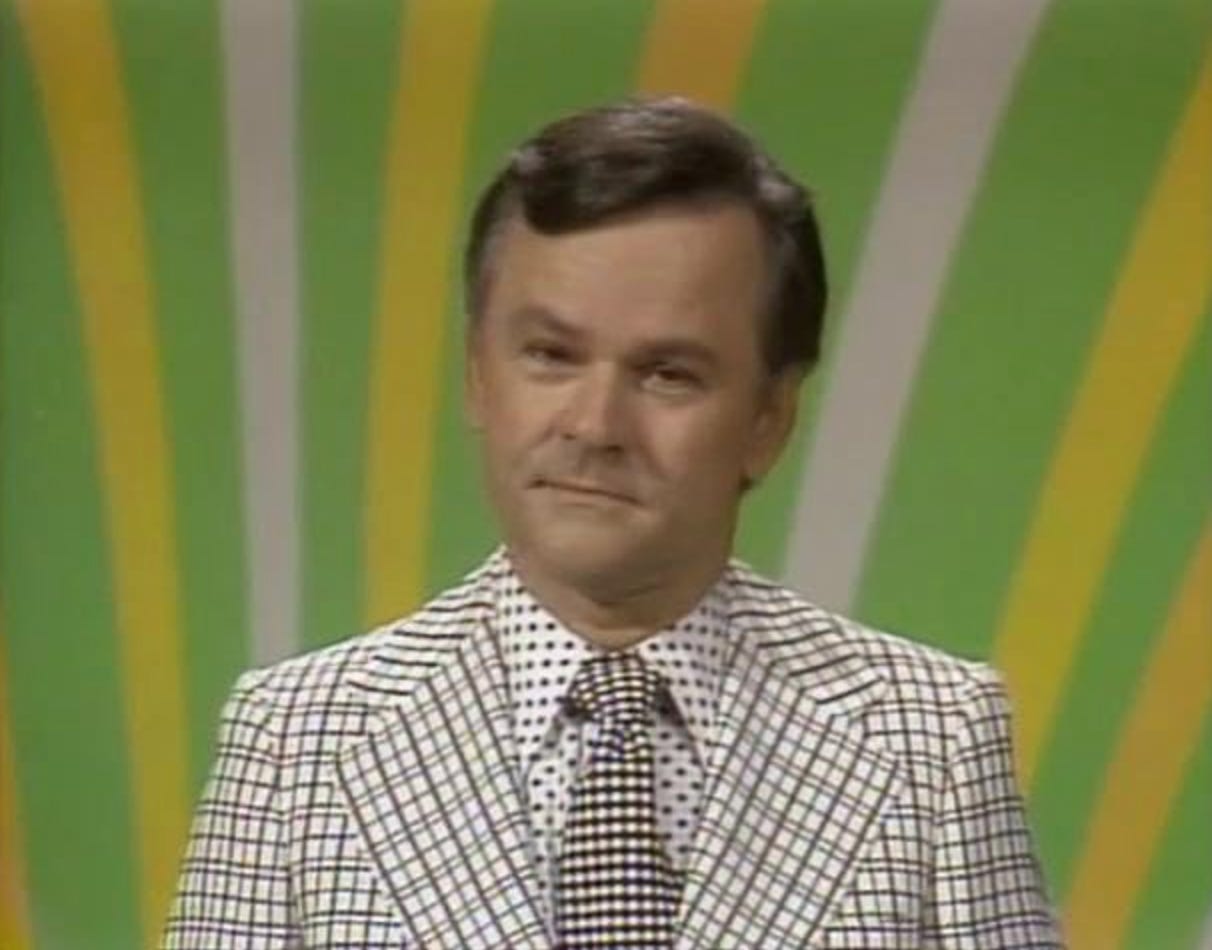
Crane’s breakout role came in 1965 when he was offered the starring role in a CBS television sitcom set in a WWII POW camp. To the amazement of many, the show took off despite the somewhat controversial and sensitive nature of the comedy. It was an immediate hit that lasted for six seasons. The show also earned Crane two Emmy Award nominations.
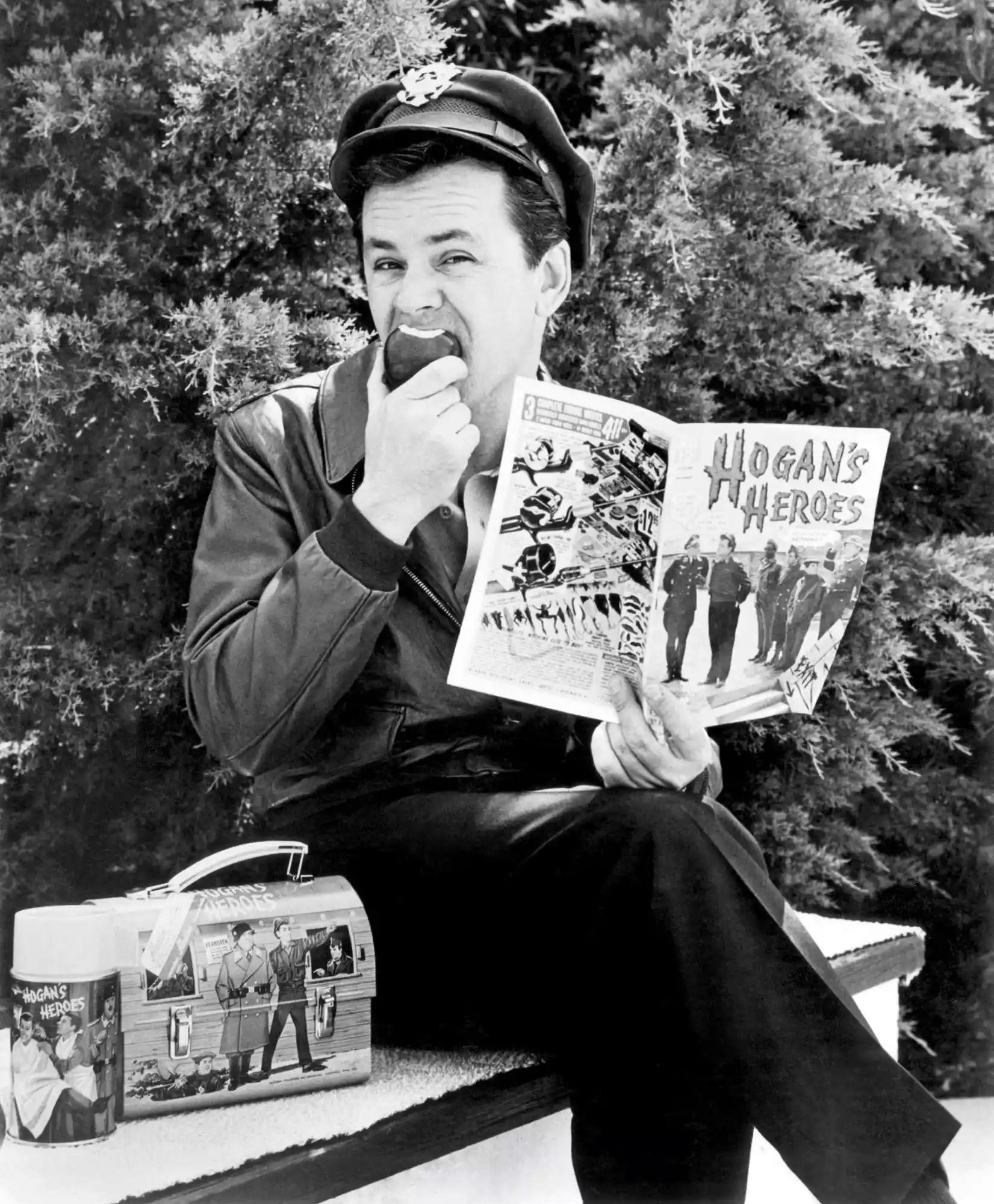
The show catapulted Crane to Hollywood success. It ended his radio career and allowed him to embrace the wealth and fame of Hollywood’s elite crowd. And to engage in his growing passion for cameras, video cameras, and other photographic equipment.
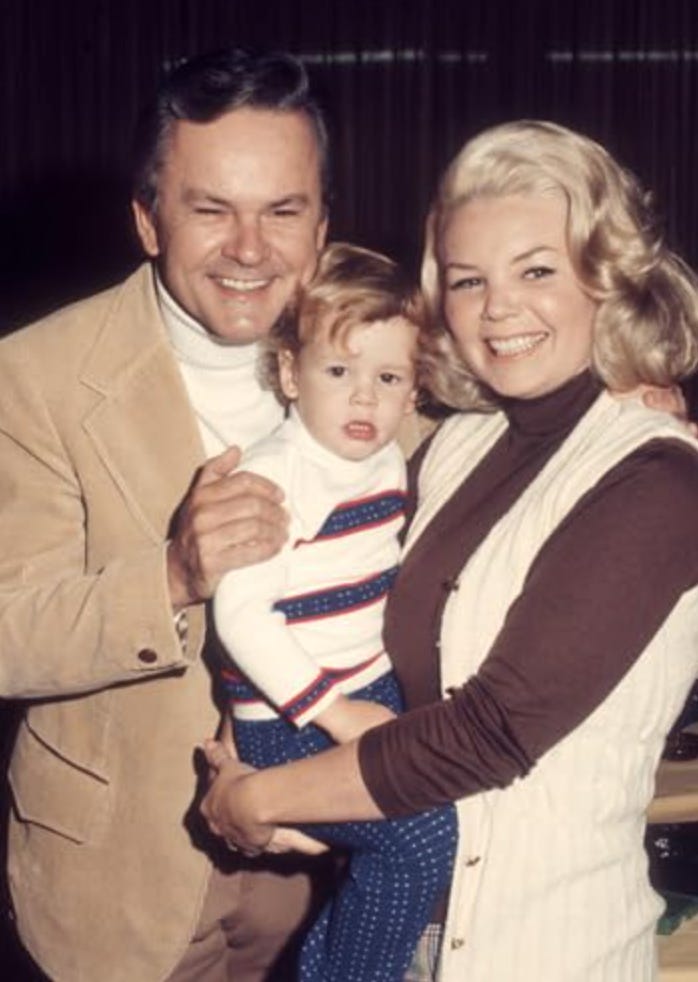
Despite his success on screen, Crane had plenty of problems. He had affairs with two different Hogan’s Heroes co-stars. In 1970, after twenty years of marriage, he divorced his wife, Anne. That same year, he married co-star Patricia Olson (stage name Sigrid Valdis), who played Hilda on the show. The couple had one son, then adopted a daughter. (Though Crane’s son, Robert David, later disputed whether or not Crane was the biological father of the couple’s son.)
Career Decline and Private Life
In 1971, after Hogan’s Heroes was canceled, Crane’s career began a decline. He was offered a few roles in Disney movies and guest spots on popular shows such as Policewoman and The Love Boat. But his sometimes raunchy answers on talk shows led Disney to distance itself from Crane, and his guest-starring roles became few and far between.
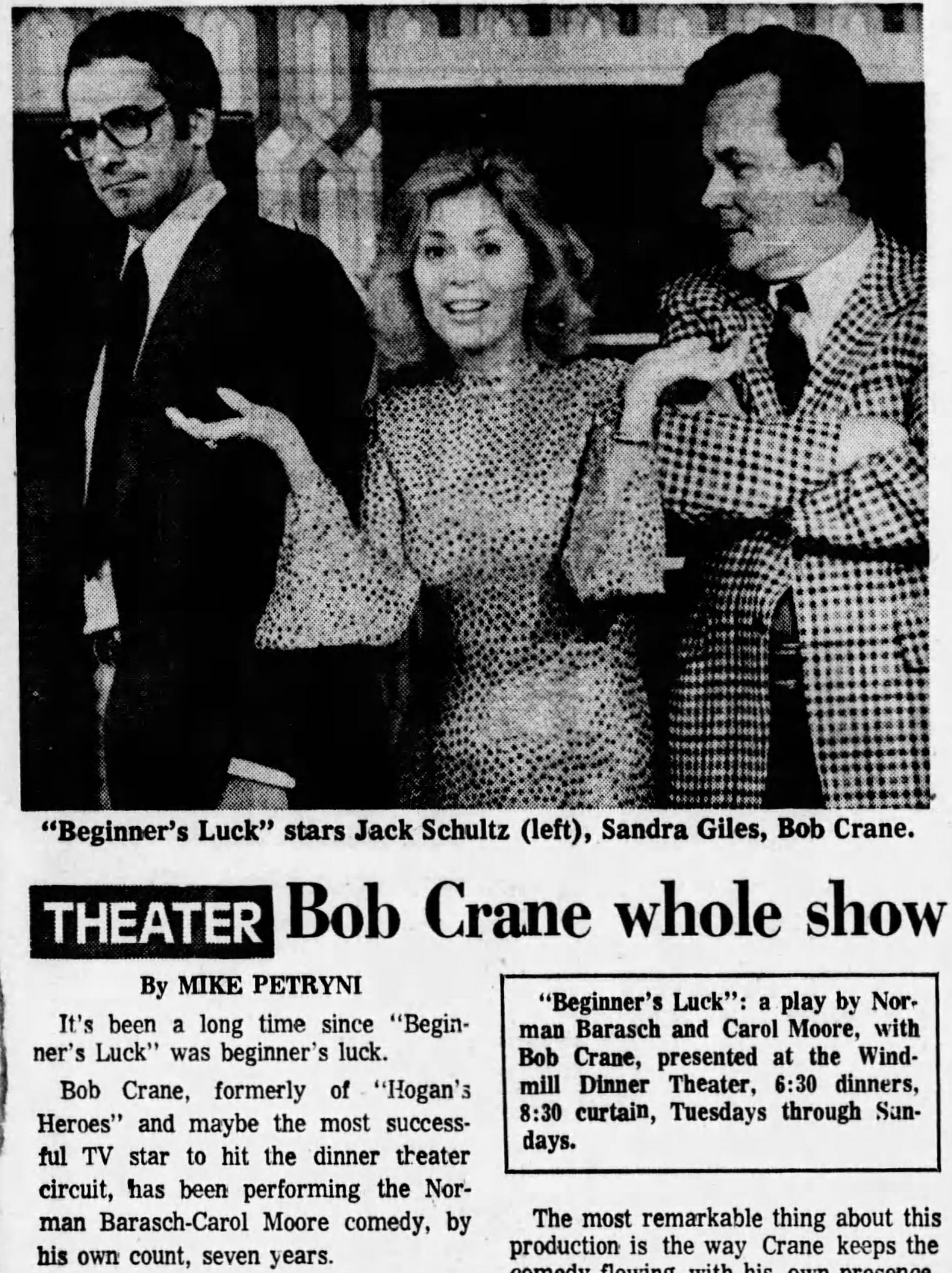
By 1973, Crane had abandoned Hollywood altogether to act in dinner theaters. He purchased the rights to a play called Beginner’s Luck and toured across California, Texas, and Arizona. This gave him a steady income and the opportunity to perform live. But it lacked the thrill of his Hollywood days of fame.
Crane had always been fascinated by photography and the emerging hobby of videography. When home video technology emerged in the 1960s, Crane was one of its biggest enthusiasts. However, unlike most people who used it to film normal subjects, Crane had a secret obsession.
Long before his fame on Hogan’s Heroes, Crane had a secret known to those close to him, including his own son, Robert. Crane’s sex addiction and womanizing was an open secret. One of Crane’s favorite activities was photographing or recording his own sexual encounters.
He had his own darkroom and often printed photographs of women, saving the photos in personal albums. Albums he’d share with anyone who wanted to look, even if they refused. Crane’s son, Robert, would later say that all the women his father photographed or recorded knew what was happening and had given consent. This would later prove false, as many of the women had no idea they were being taped.
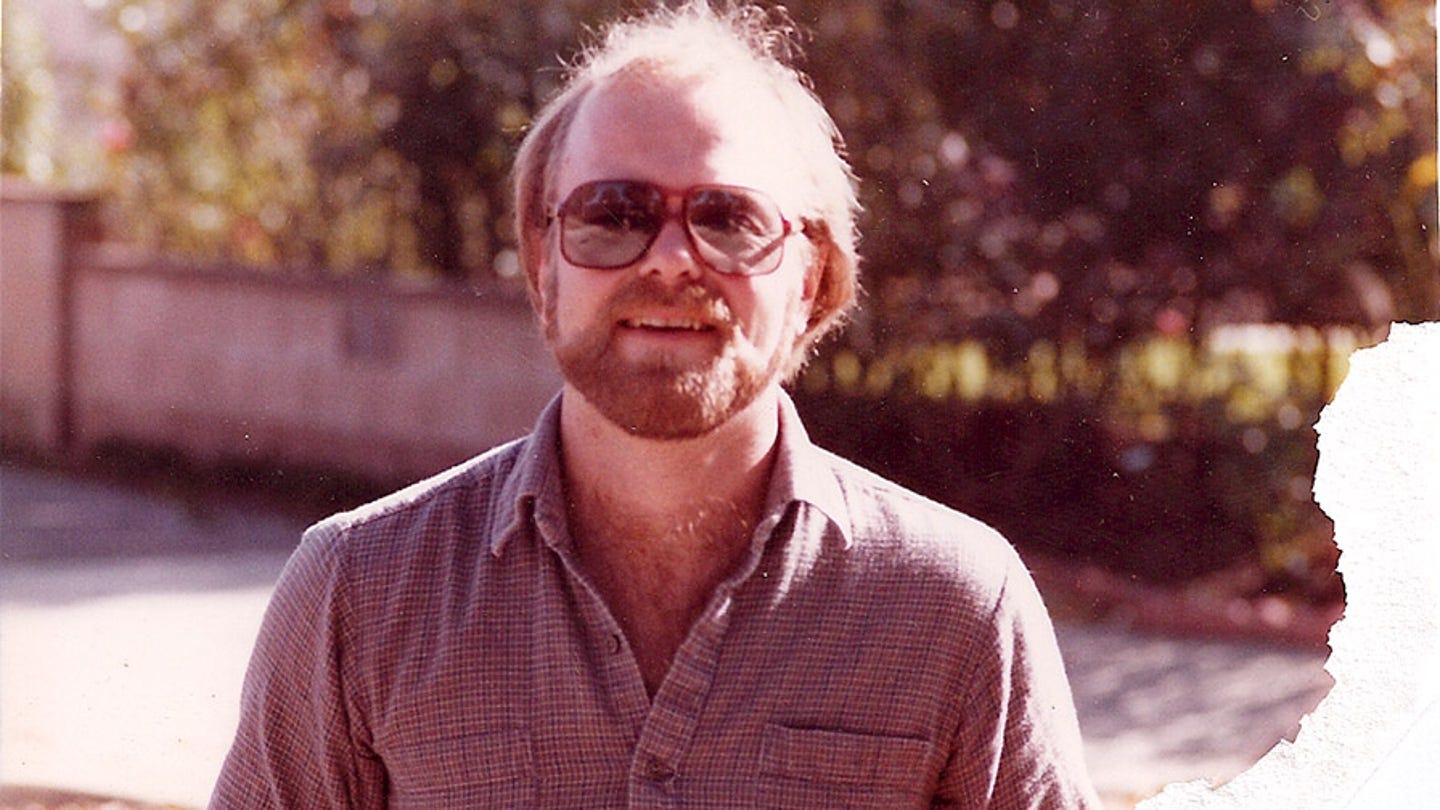
During the filming of Hogan’s Heroes, Crane’s co-star, Richard Dawson, introduced Crane to a man named John Henry Carpenter. At the time of the meeting, Carpenter was a Sony Electronics sales manager. He had plenty of new equipment to feed Crane’s ‘hobby,’ and the two became fast friends.
Crane loved any type of video equipment, and Carpenter had the newest and best. The two would visit bars, pick up women, often due to Crane’s celebrity status, and would later film their encounters.
Murder
In June 1978, Crane had been performing in Beginner’s Luck at the Windmill Dinner Theater in Scottsdale, Arizona. On the afternoon of June 29th, Crane’s co-star, Victoria Ann Berry, went to Crane’s Winfield Place Apartment. He hadn’t shown up for lunch, and she wanted to know if he was all right.
To Berry’s horror, she discovered Crane’s body lying on a bloody bed. He’d been bludgeoned to death with an unidentified weapon, although police later speculated it was a missing camera tripod. An electrical cord from a camera was tied around his neck, almost like a statement.
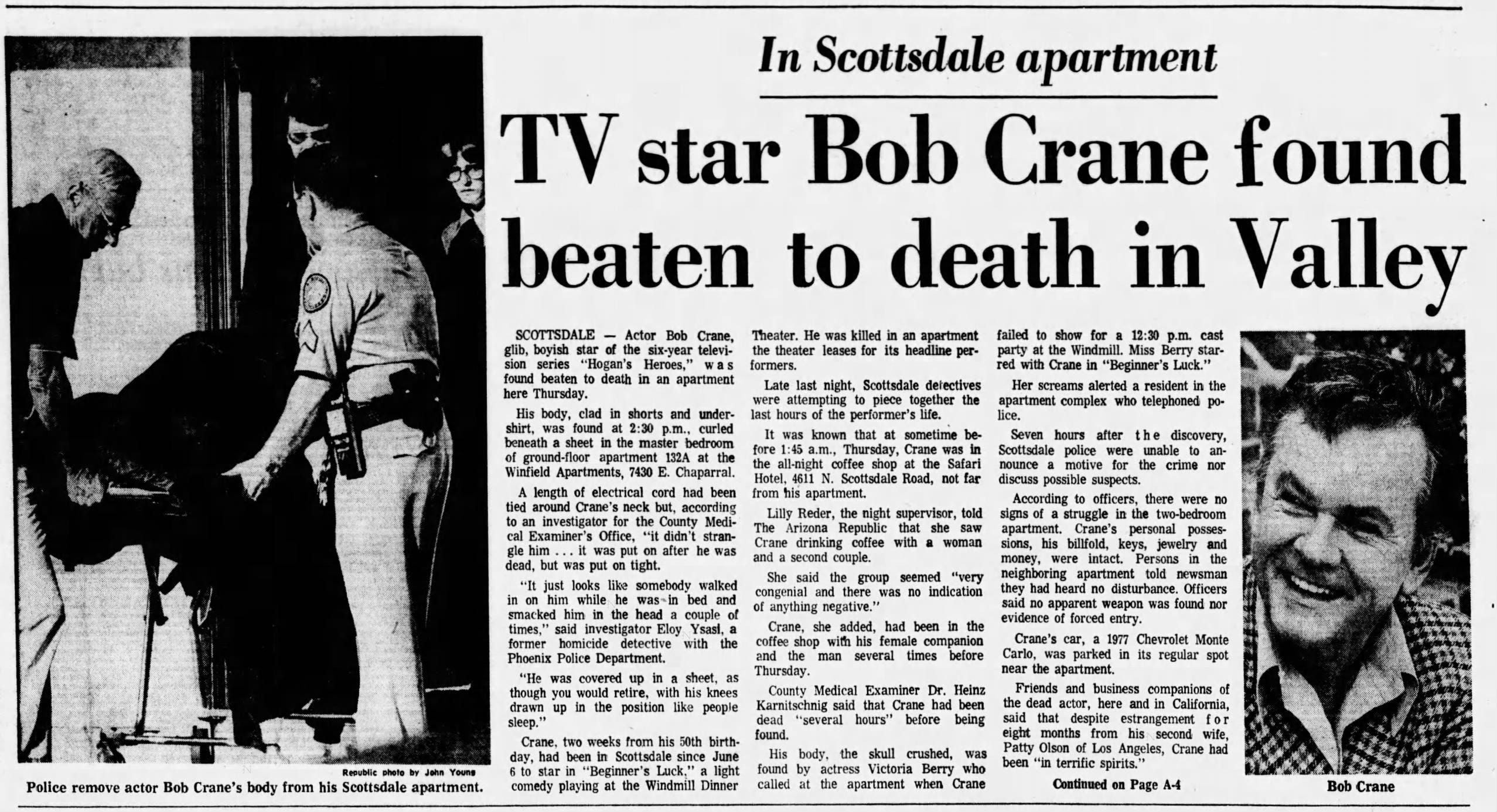
The once laughing, vibrant star had been silenced just a few weeks before his 50th birthday. The charismatic, lovable character who had become one of television’s most beloved actors had his sordid private life paraded in front of the world.
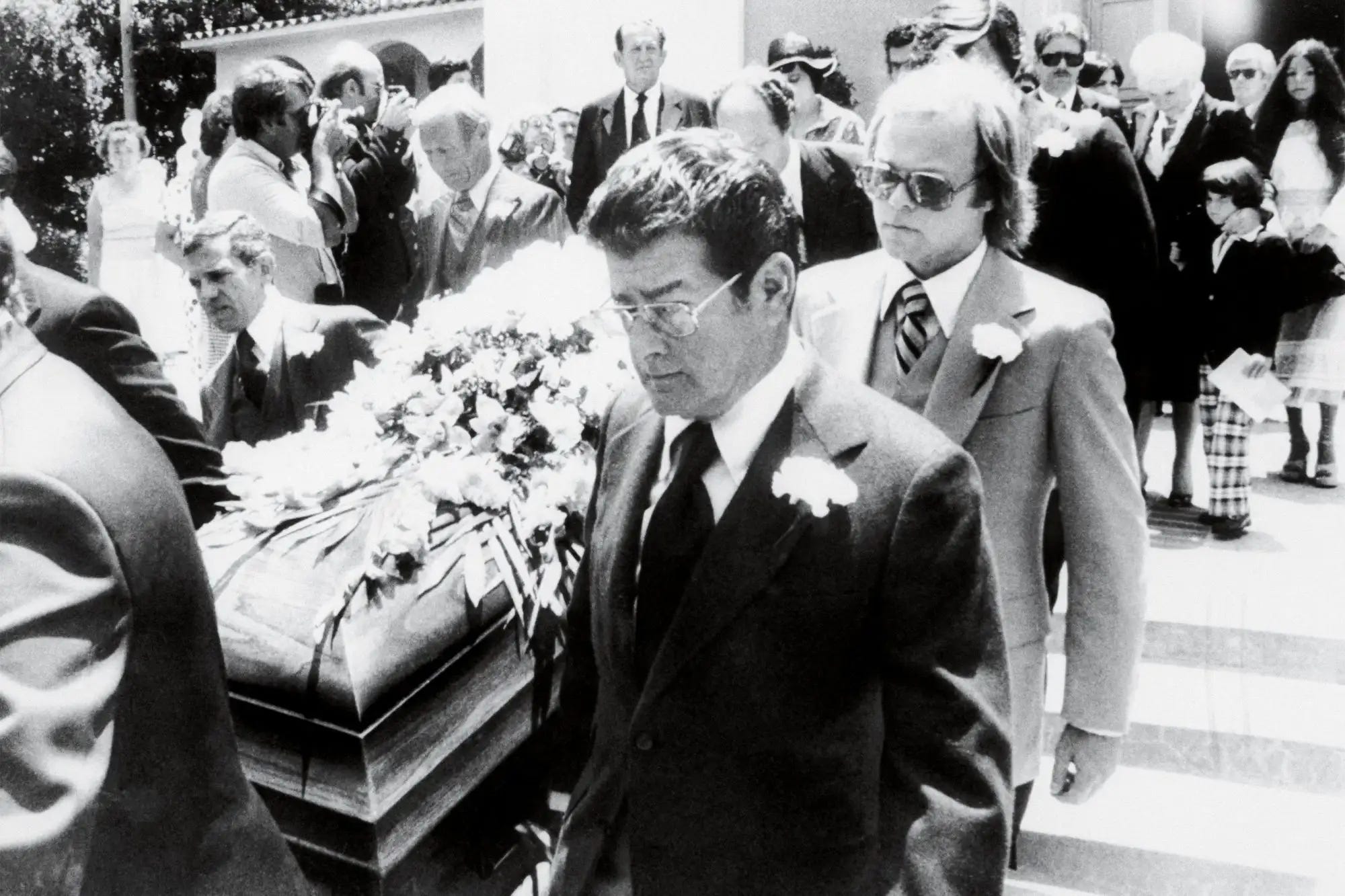
On July 5, 1978, Crane’s funeral took place at St. Paul the Apostle Catholic Church in Westwood, Los Angeles. Over two hundred family and friends attended, including many of his Hogan’s Heroes co-stars, John and Patty Astin, and Carroll O’Connor. He was buried in Oakwood Memorial Park Cemetery, Chatsworth, California.
Investigation
The investigation into Bob Crane’s death was mishandled from the start. Unfortunately, the Scottsdale police were not equipped to handle such a high-profile murder investigation. In later interviews, Crane’s son, Robert, said that he went to find out what had happened and was allowed access to the apartment. If there were any forensic clues to be found, they were compromised by the number of people who were allowed access to the crime scene.
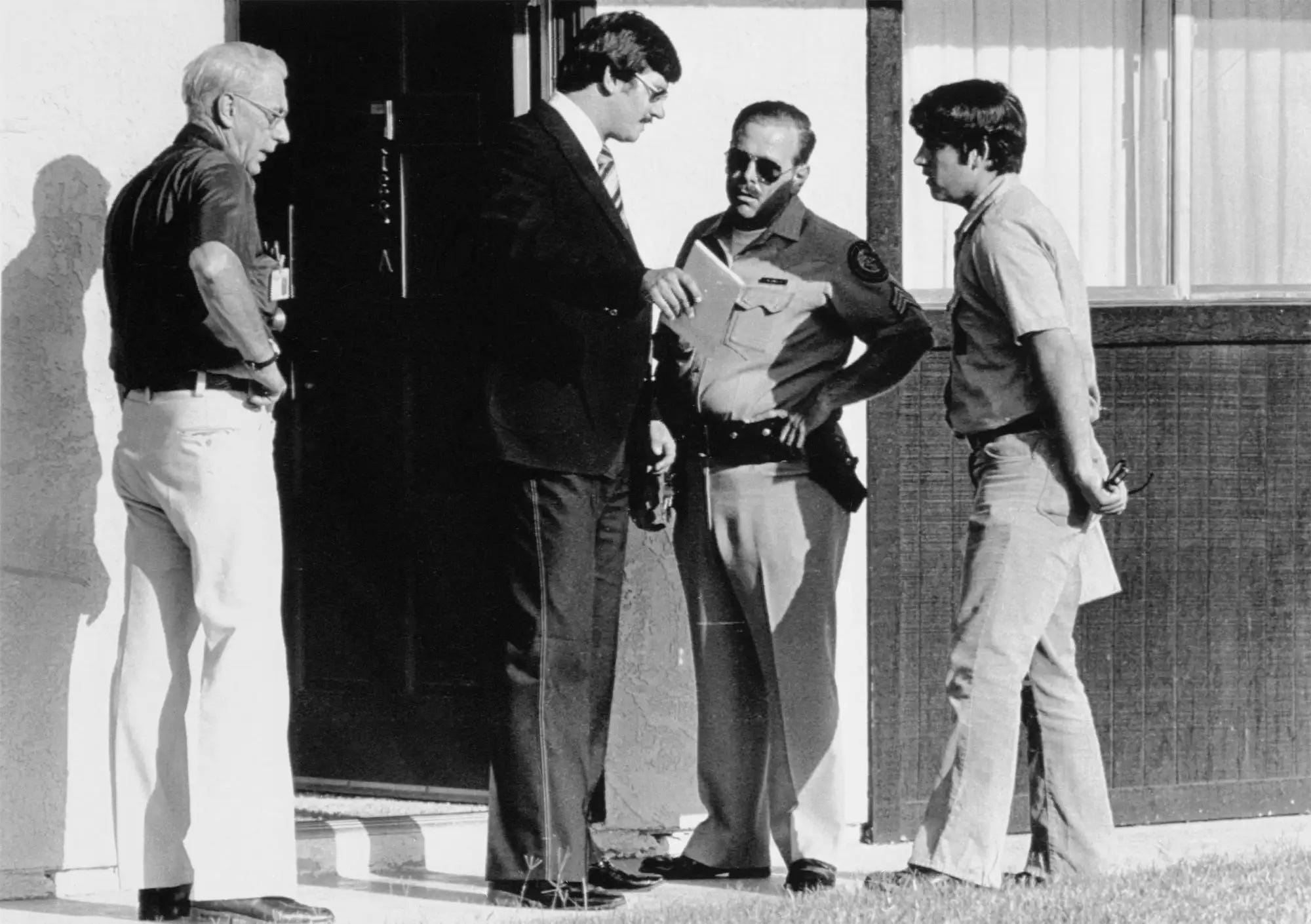
There was no evidence of forced entry, meaning Crane likely knew and trusted his killer. Nothing had been stolen, except possibly a missing camera tripod, which may have been the murder weapon, as no weapon was ever found.
A pivotal development in the investigation came with the discovery of Crane’s extensive videotape collection. The tapes led them to John Henry Carpenter. Carpenter had made a hurried exit from Scottsdale back to Los Angeles on the day of the murder. He became a prime person of interest when it was discovered that the two had allegedly argued violently the night before.
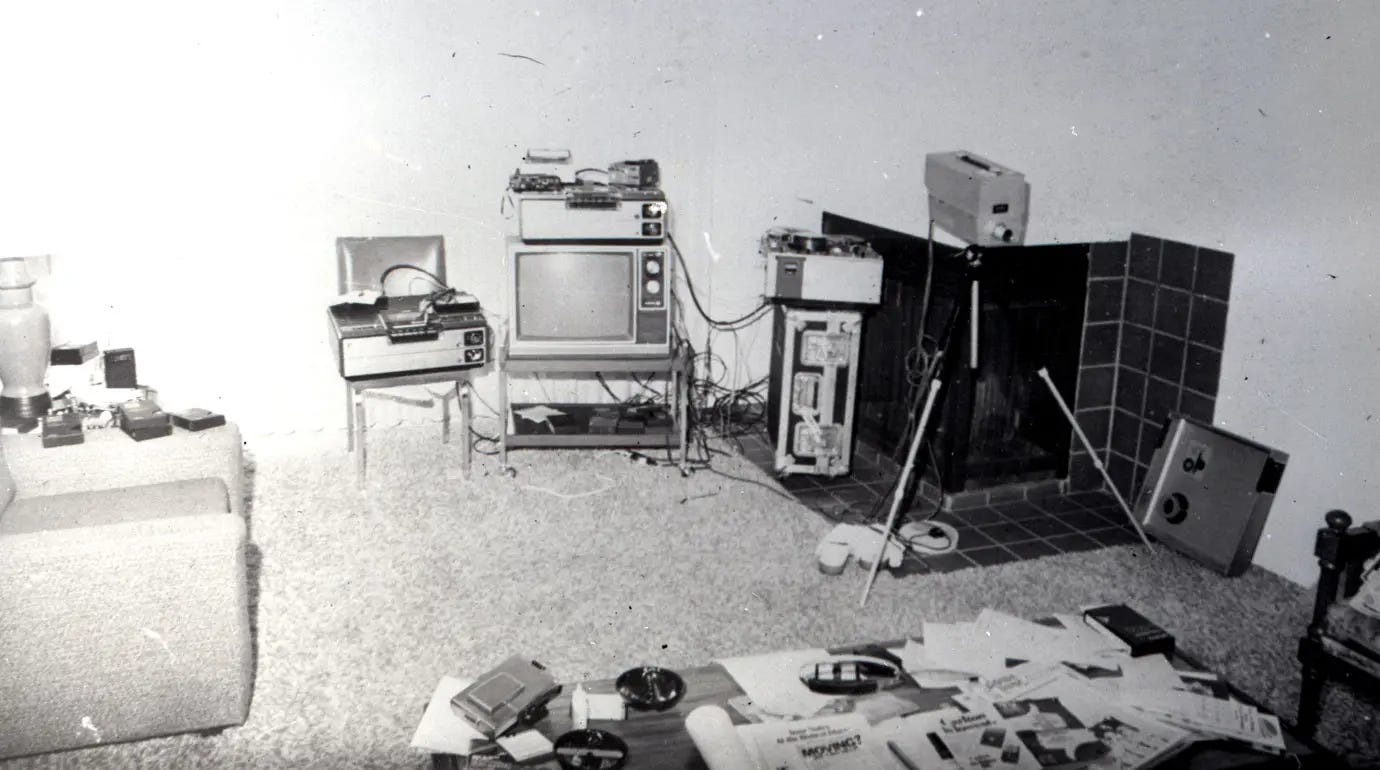
According to some sources, Crane had been speaking to a pastor who specialized in healing from sexual addiction. Later, Crane’s son, Robert, would say his father had considered Carpenter a leech and wanted to end his relationship with the man. Some speculation was that Crane and Carpenter had argued and, in a fit of rage, Crane was bludgeoned to death.
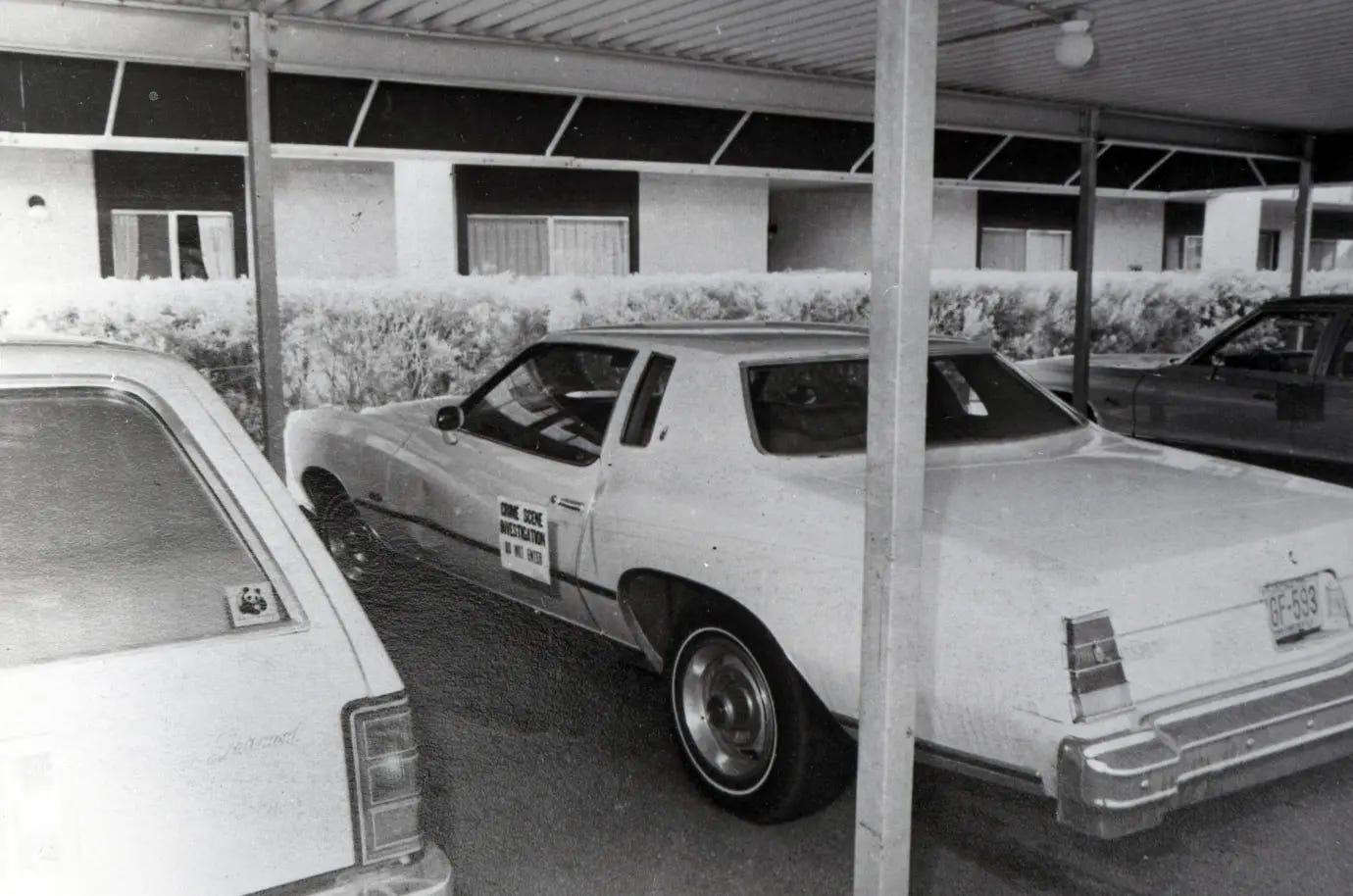
Carpenter’s rental car was impounded and searched. Blood smears were found, and because of the rare type, they indicated they might match Crane’s blood. However, at the time, DNA testing was not available, and there was no way to definitively determine whose blood it was. The Maricopa County district attorney decided not to file charges. There just wasn’t enough evidence to prove Carpenter was the killer.
Case Reopened
Even though the case went cold, the Scottsdale Police did not forget about it. In 1990, fourteen years after the crime, Scottsdale police investigator Barry Vassall and Maricopa County Attorney’s Office investigator Jim Raines reexamined evidence to attempt to reopen the unsolved case.
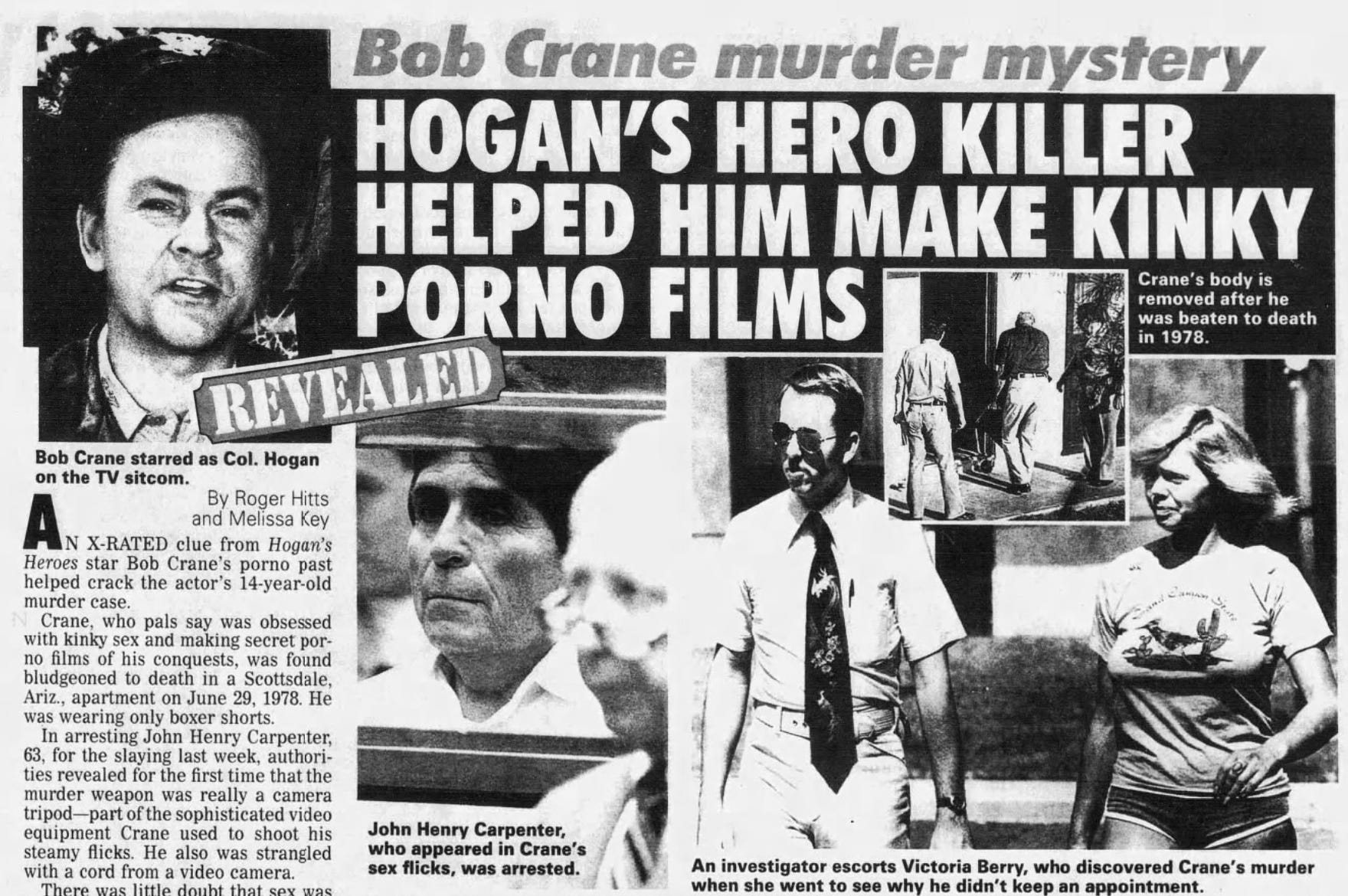
While DNA testing was available, it was inconclusive on the blood samples taken from Carpenter’s rental car. Some of the samples had deteriorated, and there were problems with the chain of custody of evidence. But the police found another way to reopen the case. Old photos of the rental car revealed what might be brain tissue in the trunk. An Arizona judge ruled that there was sufficient evidence to reopen the case.
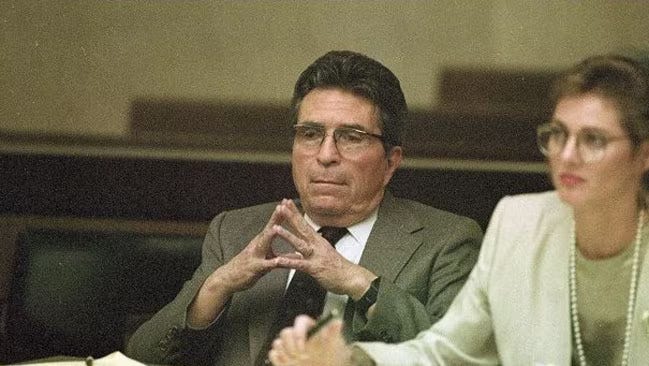
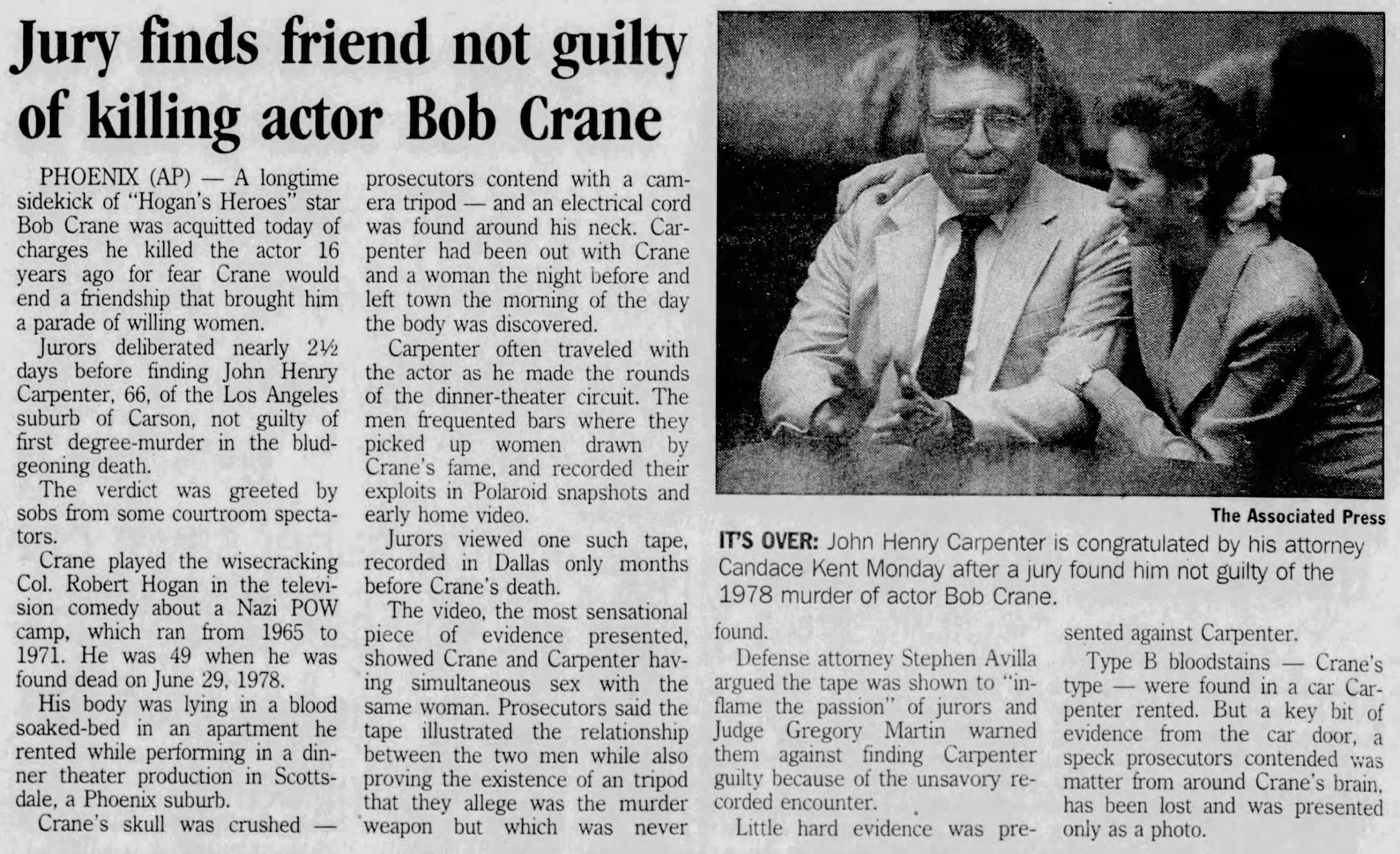
In 1992, John Henry Carpenter was arrested and charged with Crane’s murder. His trial began in 1994. Carpenter’s attorney said the prosecution’s case was circumstantial and inconclusive. There were many people who might be angry enough to kill Crane, jealous husbands or boyfriends of the videotaped women. Or even some of the outraged women themselves.
Carpenter was acquitted and continued to maintain his innocence until his death in 1998.
Aftermath
After Carpenter’s acquittal, Crane’s son, Robert, blamed his father’s death on his wife, Patricia Olson. She inherited Crane’s entire estate, excluding Robert, his siblings, and Crane’s first wife, Anne. Robert later wrote a book, published in 2015, titled Crane: Sex, Celebrity, and My Father’s Unsolved Murder.
However, Maricopa County District Attorney Rick Romley always felt that John Henry Carpenter had been the murderer. He was just unable to prove it. In 2016, with more advanced DNA testing available, the Scottsdale Police would try to prove the case once and for all. They used the last remaining blood samples, which prevented any further use; however, the tests were inconclusive.
To this day, the case remains officially unsolved.
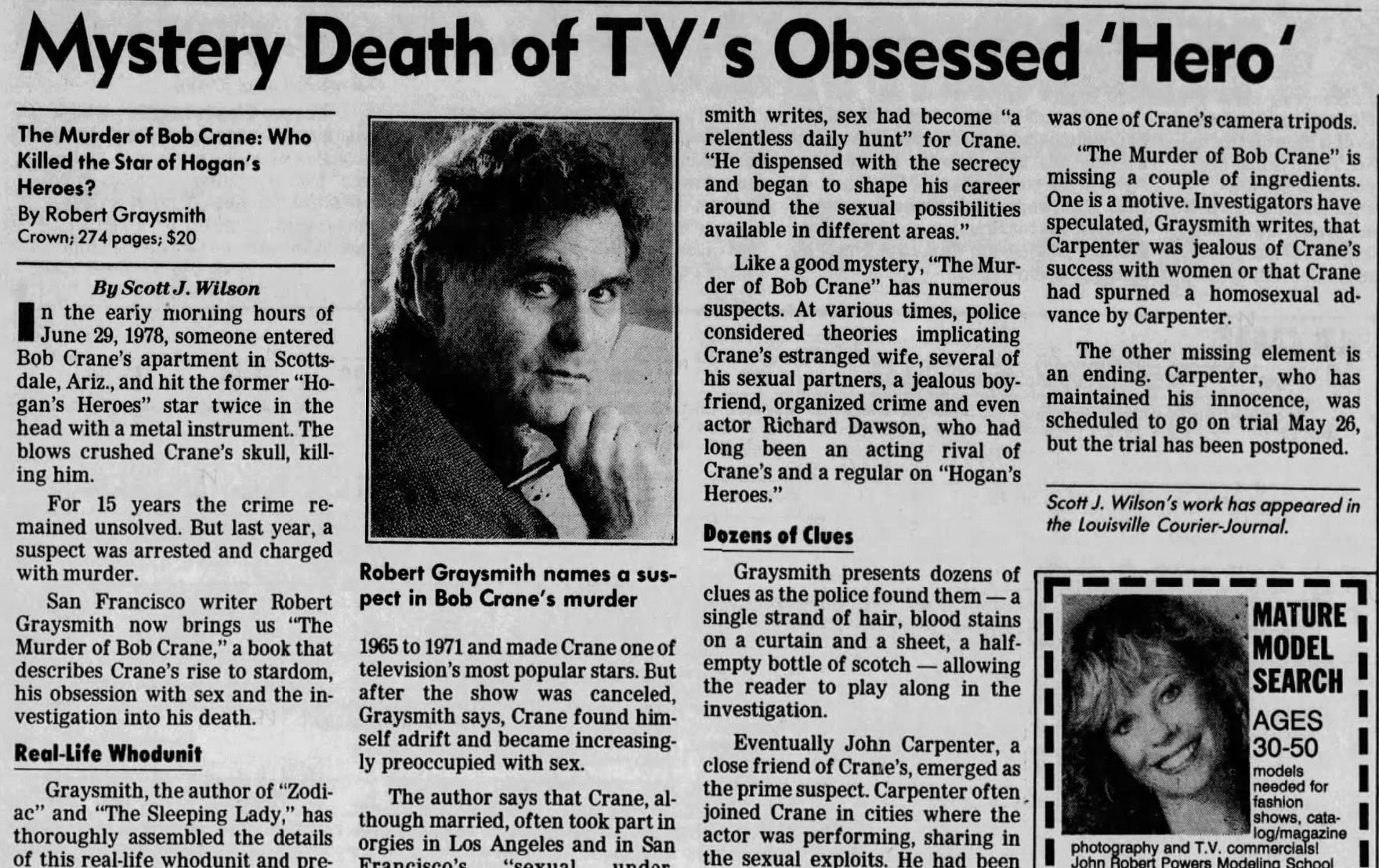
In the decades since his death, the story of Bob Crane’s life and tragic murder continues to generate public interest. Crane’s life and murder were the subject of a 2002 movie titled Auto Focus. It starred Greg Kinnear as Crane and William Dafoe as Carpenter. The movie was loosely based on Robert Graysmith's book, The Murder of Bob Crane.
Sources:
Nolasco, Stephanie. “Beloved sitcom star Bob Crane’s double life, grisly 1978 murder.” news.com.au, 5 February 2018, https://www.news.com.au/entertainment/tv/flashback/beloved-sitcom-star-bob-cranes-double-life-grisly-1978-murder/news-story/
Steele, June. “The Tragic Death and Unsolved Murder of Bob Crane.” The Vintage News, 22 January 2025, https://www.thevintagenews.com/2025/01/22/bob-crane-murder/
“Bob Crane’s murder remains unsolved, four decades later.” Fox10 Phoenix, 29 June 2018, https://www.fox10phoenix.com/news/bob-cranes-murder-remains-unsolved-four-decades-later
“The Final Truth Behind Bob Crane’s Murder: The Hollywood Scandal That Refused to Stay Buried.” The Eyota, 25 November 2025, https://www.theeyota.com/2025/11/the-final-truth-behind-bob-cranes-murder-the-hollywood-scandal-that-refused-to-stay-buried.html
"Before his rise to prominence as a television personality, Robert Edward Crane was born...” This is known in French as a "lapalissade,” after a comic poem, "Monsieur de la Palisse,” that includes lines such as "24 heures avant sa mort, il était toujours en vie" (24 hours before his death, he was still alive).
Thanks for a really interesting read. I had never heard of Bob Crane, although I have probably seen him in some of the programmes mentioned. I would be interested to see "Auto Focus": Greg Kinnear and Willem Dafoe are good actors.