


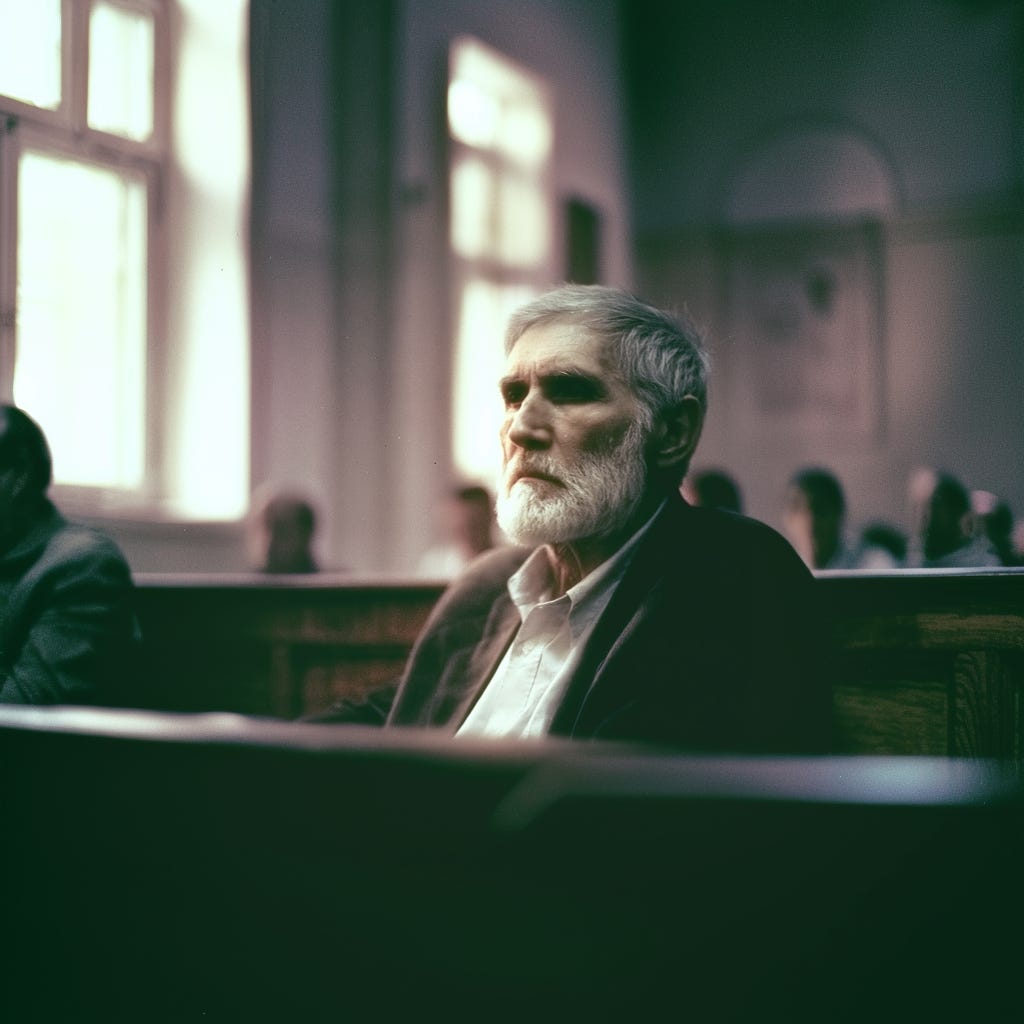
Alexander Fedorovich Taran was a beekeeper from Alexandrovskoye, in Russia's Stavropol Krai, who between 2002 and 2005 carried out a series of shootings that killed three men and wounded two more. He acted, prosecutors said, to avenge his two children, a daughter and a son, whom he buried seven years apart.
Caught in 2008, Taran was acquitted at his first trial and later convicted at a second. Russian newspapers came to refer to him as "the Voroshilov Sharpshooter" and "the Stavropol Avenger." This is his story.
Who was Alexander Taran?
Alexander Fedorovich Taran was born on June 28, 1951, in the village of Alexandrovskoye, a rural farming district in Stavropol Krai, southern Russia. It was a quiet community where families made their living through agriculture and manual work. Those who knew Taran described a man who was calm, patient, and dependable, not prone to seeking attention or trouble.

Like most young Soviet men, Taran served in the army after reaching adulthood; the discipline he acquired there remained with him. After his time in the military, Taran returned home, where he worked at the local state farm, or sovkhoz. Over the years, he worked as a zoo technician caring for animals, a fireman, and an inspector. Coworkers remembered someone who rarely complained and was diligent in his work.
When the Soviet Union collapsed in the early 1990s and the state farms closed or reorganized, Taran adapted. Rather than leave the village, he started keeping bees, selling honey and later sunflower oil. It was independent work that suited a man who liked working with his hands.
Taran married a woman named Nadezhda, and together they built a home in Alexandrovskoye and raised two children. Natalia, born in 1974, and Vladimir, born in 1977.
Family Tragedy
Alexander Taran’s seemingly peaceful life would be upended by a series of tragic events. The first of these involved his oldest child, Natalia. She became involved with a young man who was using drugs, and soon became addicted herself. Though her parents tried to help, they were ultimately unable to reach her, and in June 1994, Natalia suffered a severe overdose and was rushed to a hospital in Stavropol Krai in critical condition.
While she was receiving treatment, Natalia suffered complications — allegedly a severe allergic reaction to an injection she received — and died in the hospital. She was just 20 years old.
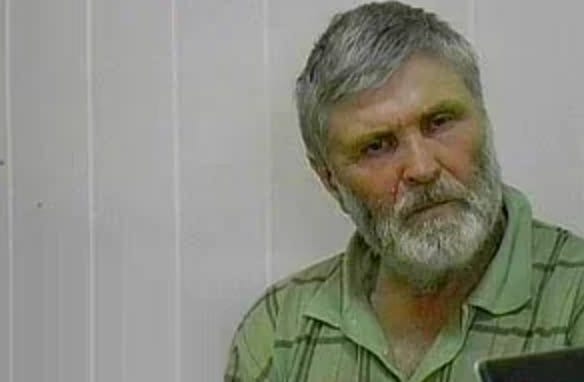
Taran refused to accept his daughter’s death as a tragic accident. He became convinced that the negligence of the hospital staff directly contributed to Natalia’s death. He focused his anger on the doctor on duty in intensive care, a man named Konoplyankin, who, according to some accounts, had a history of drinking on the job.
Taran took the hospital to court, hoping they would see things as he did. However, the court ultimately cleared Konoplyankin, and no one was held responsible for Natalia's death. Those close to Taran later said he never accepted the verdict and often spoke of how powerless he felt against the system.
Natalia's death broke the family as well as her father's heart. About a year later, Nadezhda left Russia to work in Greece, where reports say she found work caring for the elderly. The move was meant to bring in money, but it also separated the couple during the darkest period of their lives. Nadezhda stayed in Greece for good and, by several accounts, began a new relationship there; she and Taran never formally divorced, but their marriage was effectively over.
Taran remained in Alexandrovskoye, keeping his bees and caring for their surviving child, Vladimir. He found some companionship with a local woman identified in Russian true-crime accounts as Natalia Zadorozhnaya, who had a son, Ivan, from an earlier relationship. Yet despite this, Taran grew increasingly isolated, spending less time with others and more time alone.
For seven years, Taran tried to hold on to what was left of his family, watching with worry as Vladimir struggled with alcohol. He often enlisted his son to help him at the apiary, hoping work and responsibility would steady him. Yet it wouldn’t be enough.
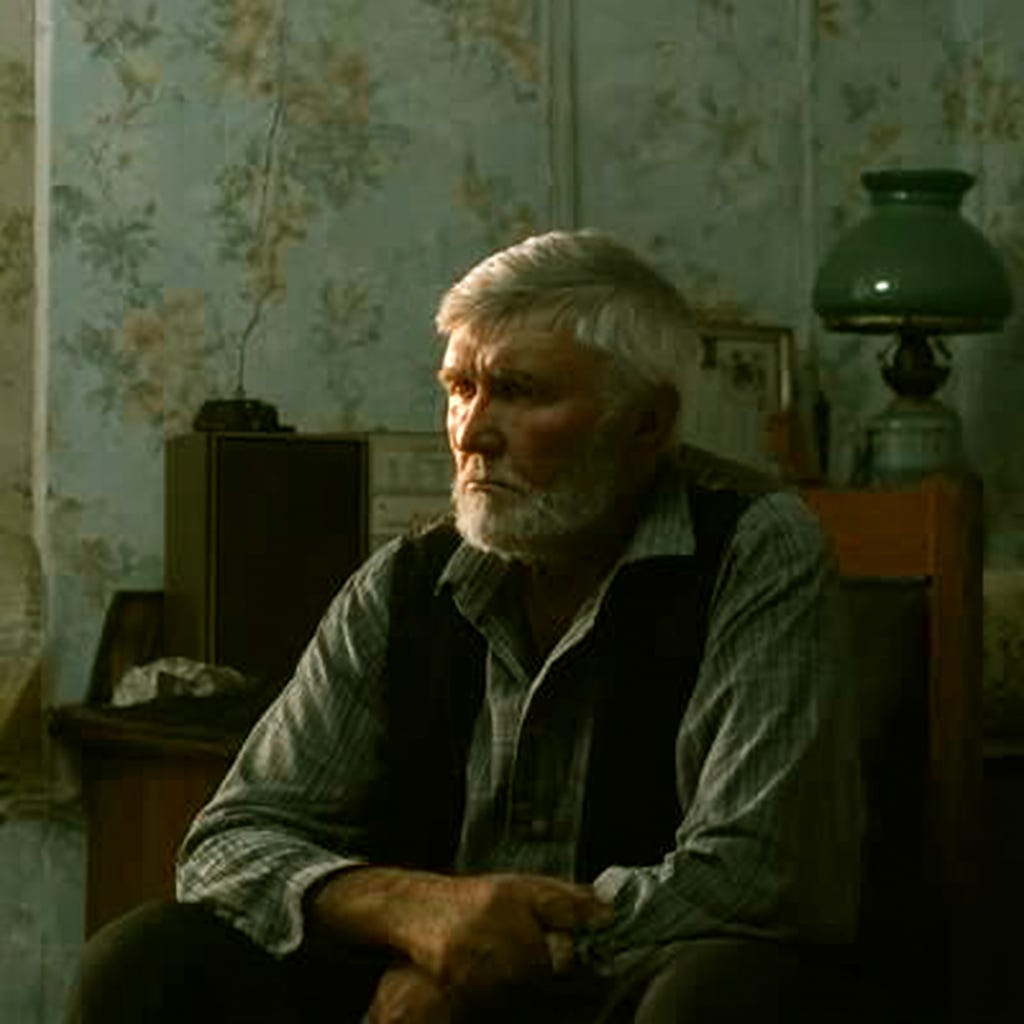
In October 2001, during the village's annual "Village Day" celebration, Vladimir went to a local disco. Late that night, a fight broke out, and in the chaos Vladimir was killed. Witnesses described a large drunken brawl involving several people; by some accounts, he was fatally injured during the struggle, and there may have been no single person who struck the fatal blow. Seven years after burying his daughter, Taran buried his only son.
Authorities opened an investigation and arrested a suspect, Izhayev, a nephew of local businessman Magomed Erkenov. But Izhayev was released, no one was charged, and investigators concluded the death resulted from a mass drunken brawl rather than a targeted attack. The case was eventually closed without a conviction.
For Taran, this was unacceptable. He became convinced that Erkenov, a man with money and connections, had used his influence to shield his nephew. Though this was never proven, in Taran’s mind, the system had failed him once again.
Campaign of Revenge
By the end of 2002, Taran had stopped expecting anything from the justice system. Investigators later alleged that it was around this time he began planning revenge against the people he blamed for destroying his family or for helping the guilty escape. They said he traveled to Mozdok, in the North Caucasus, and illegally obtained two AK-47 rifles, fitting them with homemade suppressors.
The first incident came on New Year's Eve, December 31, 2002. Just fifteen minutes into the new year, someone shattered the windows of Magomed Erkenov's home with automatic gunfire. No one was hurt, and the shooter vanished; with little evidence, police treated it as hooliganism.
Months later, on May 21, 2003, Taran confronted Erkenov directly, shooting him at point-blank range at the gate of his own house. Erkenov was struck multiple times and died at the scene. Investigators had no idea who the gunman was or that more attacks would soon follow.
The Erkenov killing left investigators searching for a motive — possible business disputes or personal feuds — and finding none. The gunman had struck with precision and left almost no clues behind.
Just over three months later, on September 5, 2003, Taran turned to Dr. Sergey Gresev, head physician of the district hospital where Natalia had died in 1994. He fired twice through the kitchen window; one bullet hit the doctor in the shoulder. Gresev survived after a long recovery but was left permanently disabled.
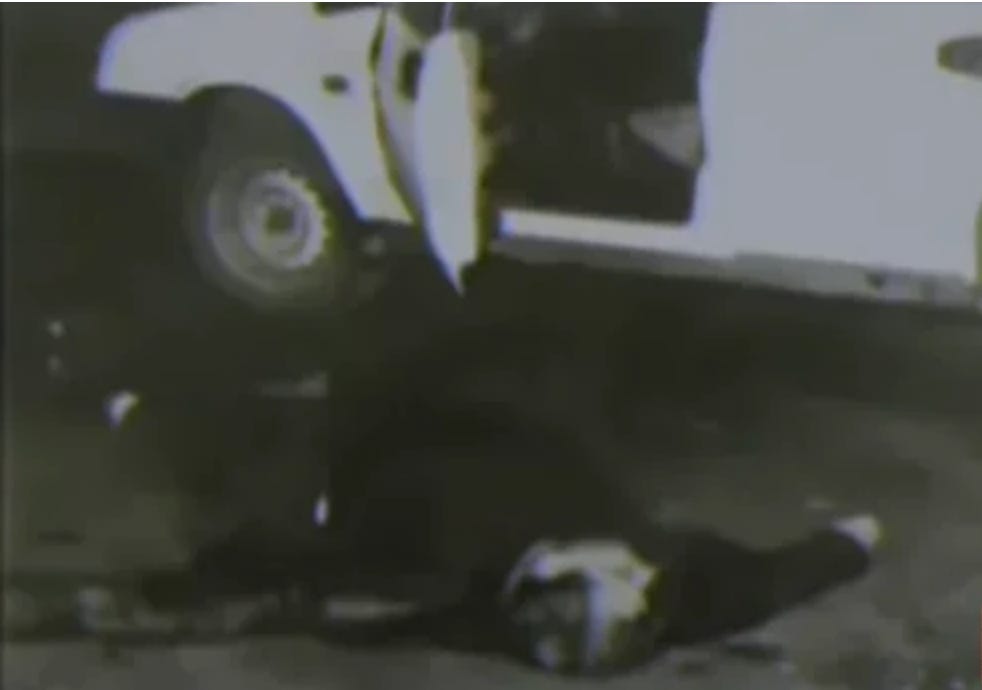
Six weeks after that, on October 20, 2003, Taran shot Oleg Tanchik, a 38-year-old senior officer who worked in economic crimes. Tanchik was hit multiple times outside his home and did not survive.
By now, fear had spread through the district. On June 21, 2004, Taran killed again. Vladimir Shtan, head of the Aleksandrovsky district's criminal investigations division, was gunned down at his own gate just as Erkenov had been. Shtan was now the third person killed.
After the murder of Shtan, the shootings stopped for more than a year, and people wondered whether the gunman had disappeared. Then, on November 27, 2005, Andrei Radchenko, the district's traffic-police commander, became the next target.
Five months earlier, Radchenko had pulled over Taran's aging Volga; when Taran refused a sobriety test, his car was impounded. Prosecutors later argued that this landed Radchenko on Taran's list. Radchenko was seriously wounded but survived.
Investigation
For more than two years, a series of carefully planned shootings had left three dead and two wounded. Eventually, investigators came to suspect the attacks were connected. The patterns were similar: the gunman appeared without warning, fired with precision, and vanished.
There were no fingerprints, no eyewitnesses, and no known motive tying the victims together. Detectives examined potential organized crime ties, business disputes, corruption, and the possibility of a shooter with military training, eventually reaching a dead end each time.
Then, in 2008, an unexpected break in the case occurred. A villager who had been walking through woods near Taran's property found something wrapped in an old bathrobe: an AK-47 with a homemade suppressor. Ballistics linked it to several of the shootings.
Because the suppressor had been made by hand, investigators traced it to a local metalworker, who recognized his own work and remembered that Alexander Taran had ordered it, having claimed he needed a nozzle for a gas burner, the kind of tool a beekeeper might use to smoke his hives. It was a plausible explanation, and it gave police their first direct link.
Upon a search of Taran's property, authorities recovered a homemade gas pistol; though not tied to the shootings, it kept their focus fixed on him. A strand of hair on one of the rifles was matched to Taran, and a friend of his came forward with a second AK-47 and admitted he had been holding it for Taran.
Forensic analysis tied both weapons to the shootings. According to later accounts, Taran's stepson, Ivan, also told investigators that Taran had test-fired one of the rifles at an old quarry; Taran reportedly never forgave him for this betrayal.
Conviction
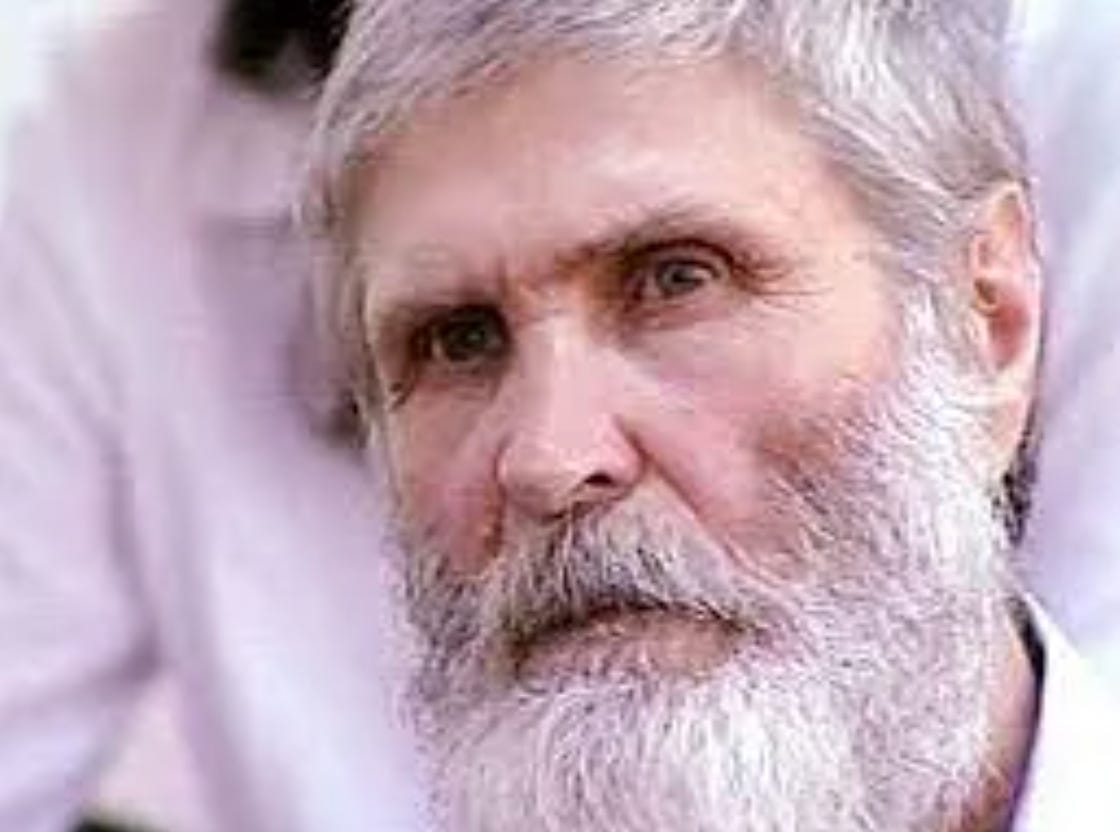
Following his arrest, the 57-year-old beekeeper initially confessed, admitting the attacks were driven by his belief that the justice system had failed him after his children's deaths. Later, though, he stopped cooperating, withdrew his confession, and maintained his innocence; his lawyers challenged the legality of how the confession had been obtained.
The case went before a jury at the Stavropol Regional Court. Prosecutors presented the two AK-47 rifles and the hand-made suppressor, the metalworker's testimony, the hair evidence, and presented the motive for the attacks, arguing every victim was in some way connected back to the deaths of Taran's children or the investigations that followed.
The defense countered that the case rested on assumptions rather than proof, that no eyewitness had ever seen Taran shoot anyone, and that suspicion alone was not enough.
On May 29, 2009, the jury acquitted him. The verdict stunned investigators and prosecutors, who quickly appealed. On September 3, 2009, the Supreme Court of Russia ruled that procedural errors had marred the trial, overturned the acquittal, and ordered a retrial.
On December 4, 2009, a second jury convicted Taran, and on December 9, he was sentenced to 23 years in a strict-regime penal colony and ordered to pay 1,050,000 rubles to the surviving victims' families. Taran never admitted guilt; he and his lawyer, Vyacheslav Savin, appealed, but on March 16, 2010, the Supreme Court upheld the conviction.
Aftermath
After Alexander Taran’s story was widely publicized, newspapers began referring to him as "The Stavropol Avenger," and, more enduringly, "The Voroshilov Sharpshooter," after the vengeful pensioner in the 1999 Russian film Voroshilov Sharpshooter, whose hero takes justice into his own hands when the law fails his family.
Senator Vladimir Lukin condemned what Taran had done but warned that in a country where trust in the courts and police was low and corruption real, more "Voroshilov Sharpshooters" would appear unless changes in the justice system were made.
Alexander Taran remains in custody, serving the sentence handed down in 2009; his name is still one of the most glaring examples of what can happen when personal tragedy, perceived injustice, and revenge become entangled together after faith in the system runs out.
Sources:
Voynov, Anatoly. “Alexander Taran: killer beekeeper.” RU Mafia, 4 Nov. 2023, https://rumafia.io/news/6385-alekcandr_taran_pchelovod_ubijtsa
“Alexander Taran, convicted of revenge killings, appealed the verdict.” RIA Novosti, 16 March 2010, https://ria.ru/20100316/214584628.html
“The “Voroshilov Sharpshooter” received almost a quarter-century of maximum security imprisonment.” Pravo.ru, 9 Dec. 2009, https://pravo.ru/story/263496/
Emelyanova, Svetlana. “The “Voroshilov Sharpshooter,” accused of killing three fellow villagers, walked out of the courtroom innocent.” RGRU, 5 June 2009, https://rg.ru/2009/06/05/voroshilovskiy.html