


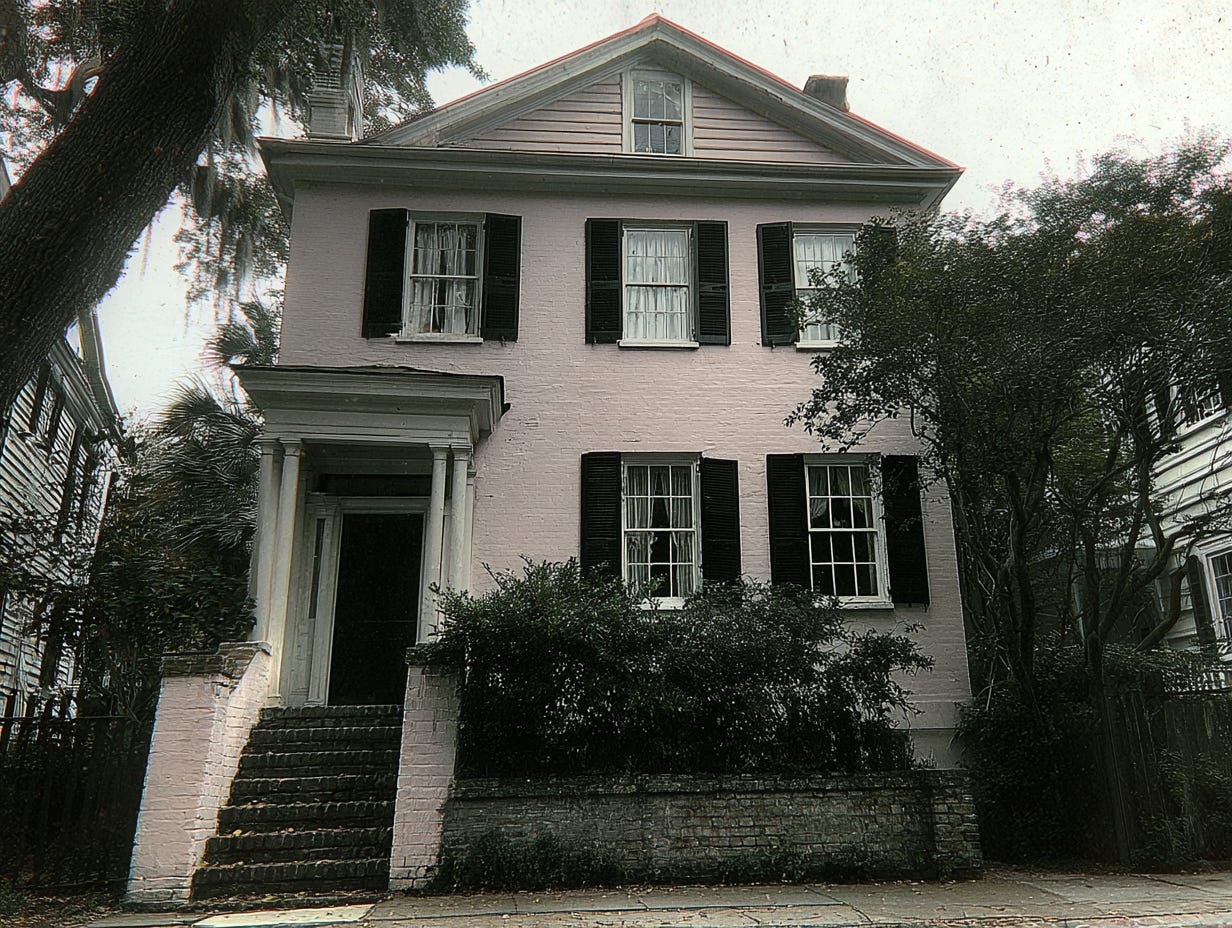
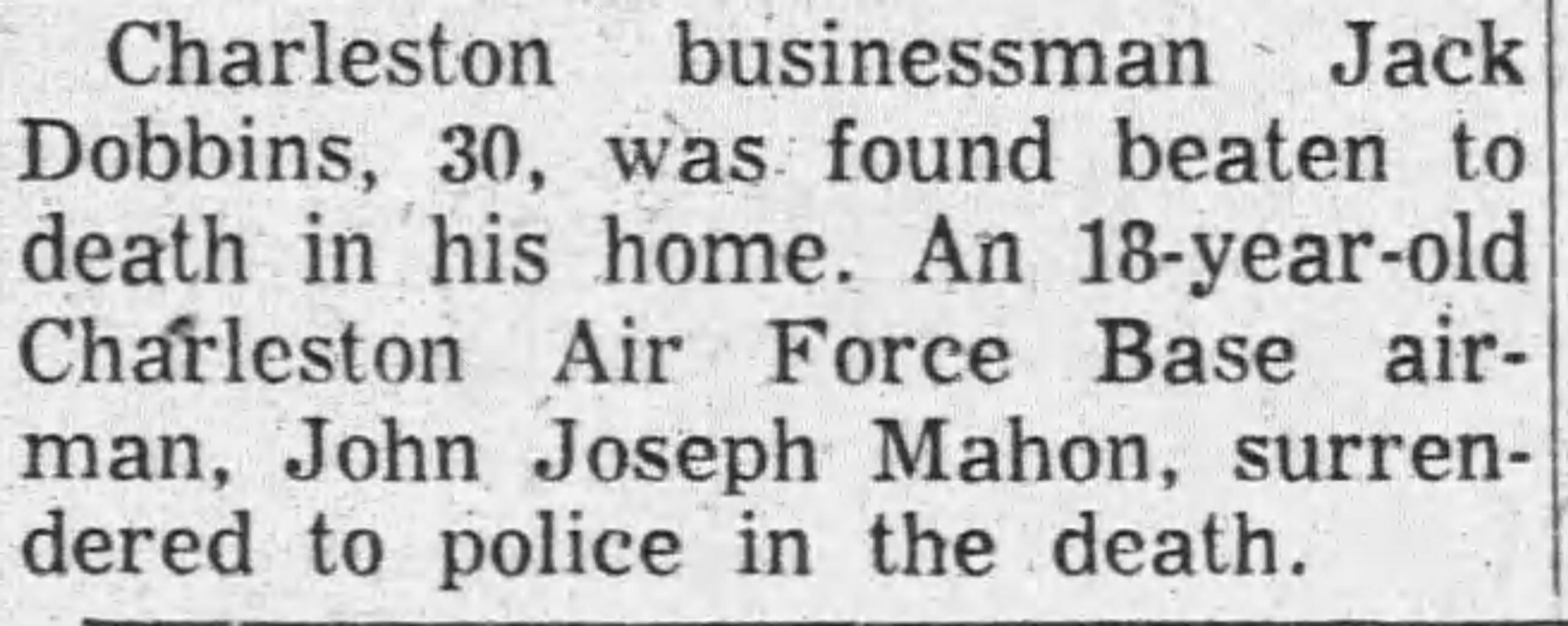
On the morning of November 1, 1958, a housekeeper arrived for work at a quiet home on Queen Street in Charleston, South Carolina. As she entered the living room, she saw 29-year-old businessman Jack Dobbins laying naked and lifeless on his sofa, with his head severely battered by a brass candlestick.1
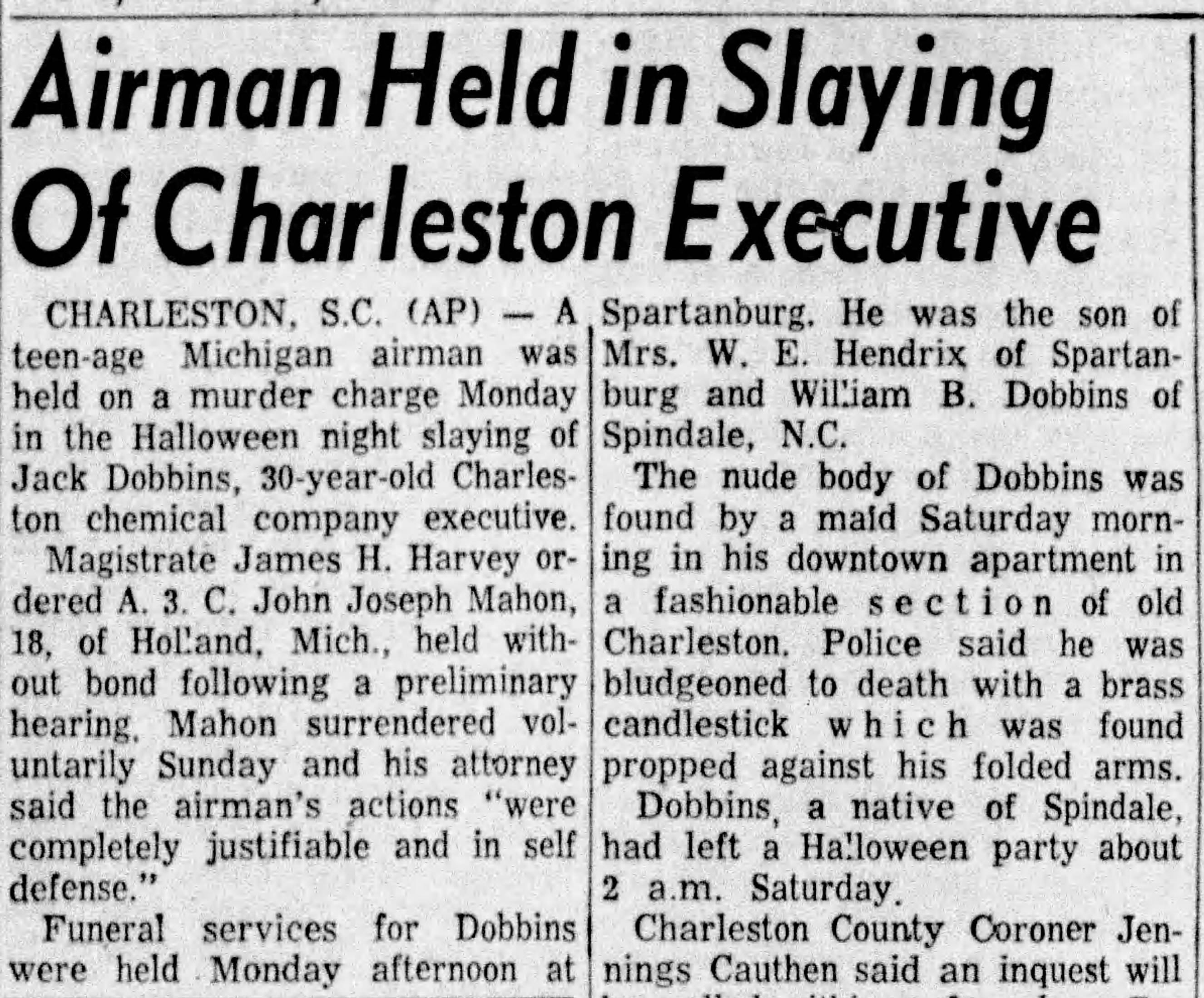
The investigation into Dobbins’ death eventually led police to an 18-year-old Air Force serviceman who admitted striking him with the candlestick, but insisted that he had acted in self-defense. What followed was a controversial murder trial and eventual acquittal.
Jack Dobbins Life
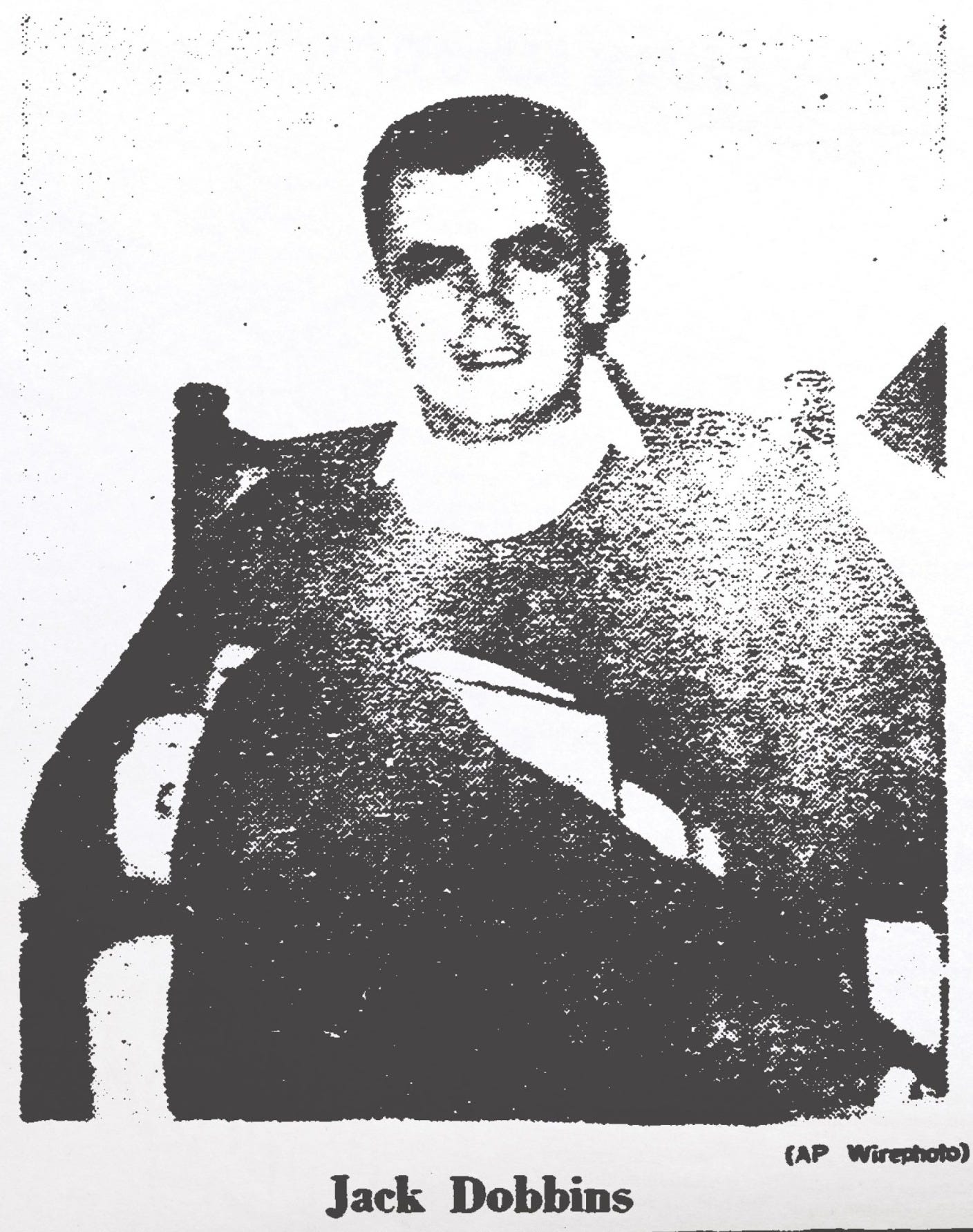
Jack Dobbins was born in November 1928 to his mother, Alma Hendrix. Little is known about his father or Jack’s early life and upbringing, other than that his family had connections to Spartanburg, South Carolina. Dobbins served in the United States Air Force during the Korean War.
After his military service, Dobbins settled in Charleston. By the mid-1950s, he was working in a division of the American industrial corporation W. R. Grace and Company as an executive for Davidson Chemical Company. His career allowed him to maintain a comfortable lifestyle.
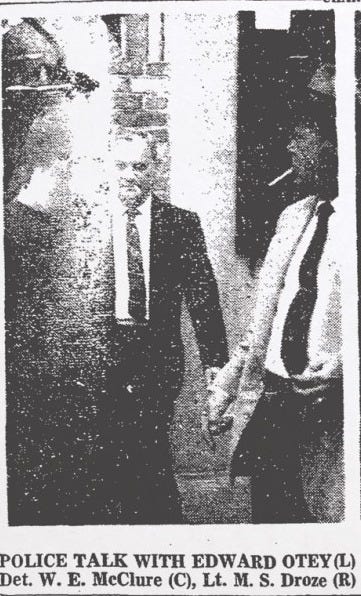
In Charleston, Dobbins lived at 14 Queen Street, a property in the city's historic downtown district. He shared the two-story residence with Edward Otey, a medical student who was around 25 years old in 1958.2 Although they maintained separate personal lives, the two men were familiar with each other's routines and occasionally spent time together outside the house.
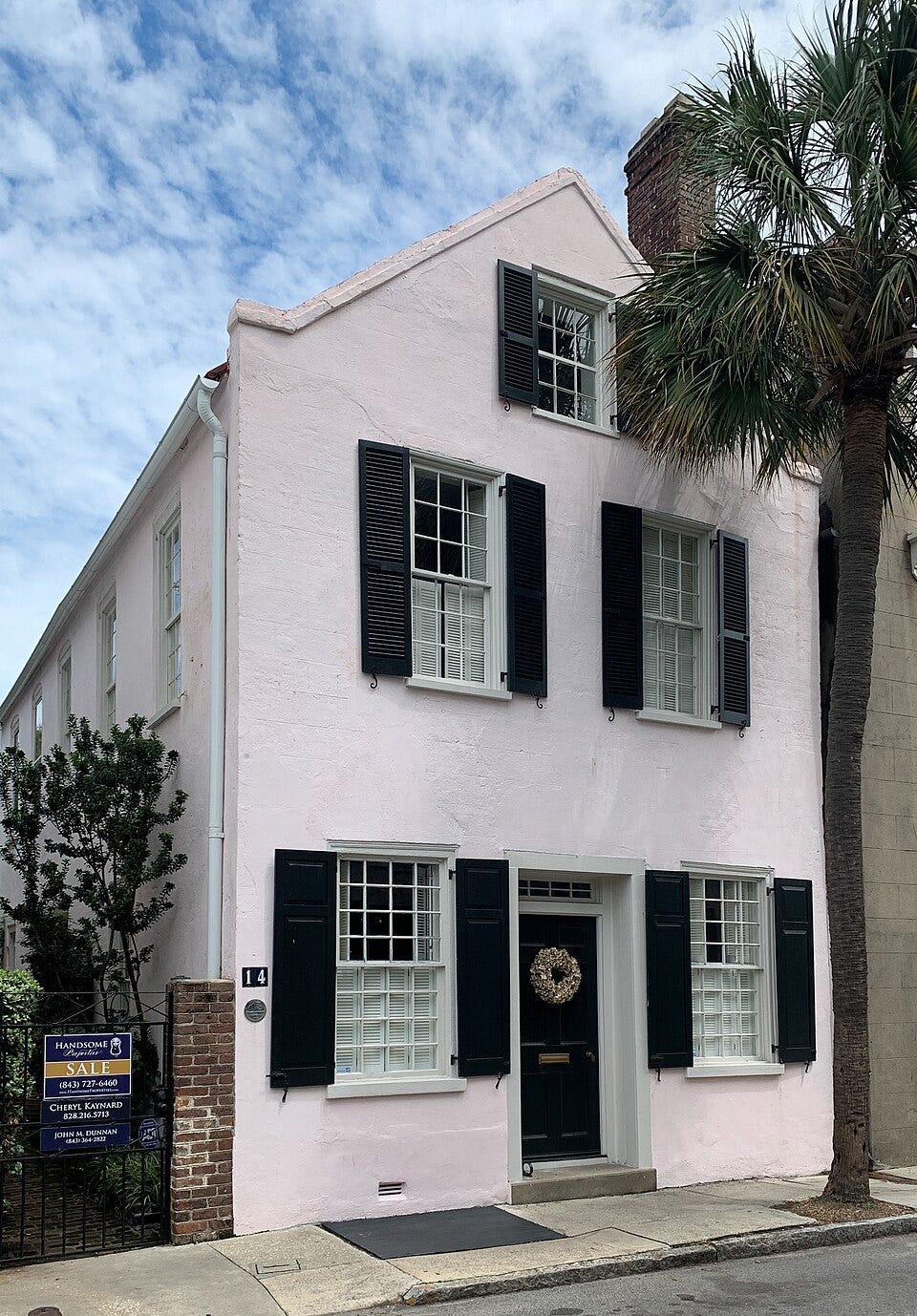
Dobbins furnished the house to reflect his personal taste. He filled the house with antiques, paintings, and decorative pieces, including a matched pair of large brass candlesticks. He was also known to be sociable and a regular at gatherings and in the city's bars.
Dobbins was also a gay man living in the American South during the 1950s, a time when homosexuality was heavily condemned and same-sex relationships faced legal and social hostility. For someone in his position, revealing his sexuality could damage his career, reputation, and relationships. Although he had achieved professional success and had established himself in Charleston, those accomplishments did not negate the risks associated with being openly gay.
For this reason, Charleston developed social spaces where gay men could meet without attracting unnecessary attention. These establishments were not always exclusively gay bars, as some welcomed a mixture of gay and straight customers, allowing people to socialize in surroundings that did not openly identify anyone's sexuality.
One of the most notable establishments then was Club 49, located at 368 King Street in downtown Charleston. The club had developed a reputation as a gathering place where both gay and straight customers could meet, drink, and enjoy themselves. Its advertising even used the expression that it was the "gayest" place in town. For Dobbins and others, Club 49 offered a more relaxed and accepting atmosphere.
Dobbins was more than an occasional customer at Club 49. According to accounts, he sometimes helped behind the bar, serving drinks and interacting with patrons. The club occupied a meaningful place in his life, allowing him to meet people beyond his workplace and neighborhood while remaining connected to a community that understood some of the pressures he faced.
Halloween 1958
On Friday, October 31, 1958, Charleston was preparing for another Halloween celebration. Across the historic city, families were getting ready for an evening of trick-or-treating, while adults made plans to attend parties or spend time with friends.3
Earlier that day, Dobbins stopped at a store on his way home to purchase candy for children who would be visiting houses in the neighborhood. Around 6 p.m., the two men sat down for dinner together before heading out for their evening plans. After dinner, they prepared to visit an apartment on Rutledge Avenue, where a small gathering of friends was taking place.
At approximately 10 p.m., Dobbins left the Rutledge Avenue apartment and headed toward Club 49. That Halloween night, Dobbins was helping serve drinks when he began talking with a young man seated at the bar. The stranger was John Mahon, an 18-year-old member of the United States Air Force stationed at Charleston Air Force Base. Dressed that night in dungarees and a leather jacket. Mahon later testified that he told Dobbins he was short of money and that Dobbins offered him some.
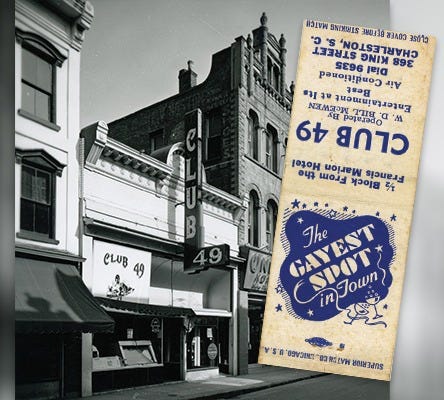
The conversation continued long enough that the two men eventually decided to leave Club 49 and visit another drinking establishment in Charleston. According to Mahon's testimony, Dobbins suggested they leave Club 49 to visit more upscale drinking establishments. Mahon accepted the suggestion, and the two men eventually left the club together.
By about 2 a.m., the two men reached the Elbow Cocktail Bar on East Bay Street. However, when they arrived, Mahon’s attire did not meet the club’s dress code, and he was denied entry. According to Mahon's later account, Dobbins suggested they go to his residence, where he had bourbon. Mahon accepted, and the two men left East Bay Street for Dobbins' home on Queen Street.
Discovery of Jack Dobbins’ Body
Shortly after 11 a.m. on Saturday, November 1, 1958, the housekeeper, Elizabeth Bryant, arrived for work. Bryant knew the property and had her own key, so she could enter without needing someone to open the door.4
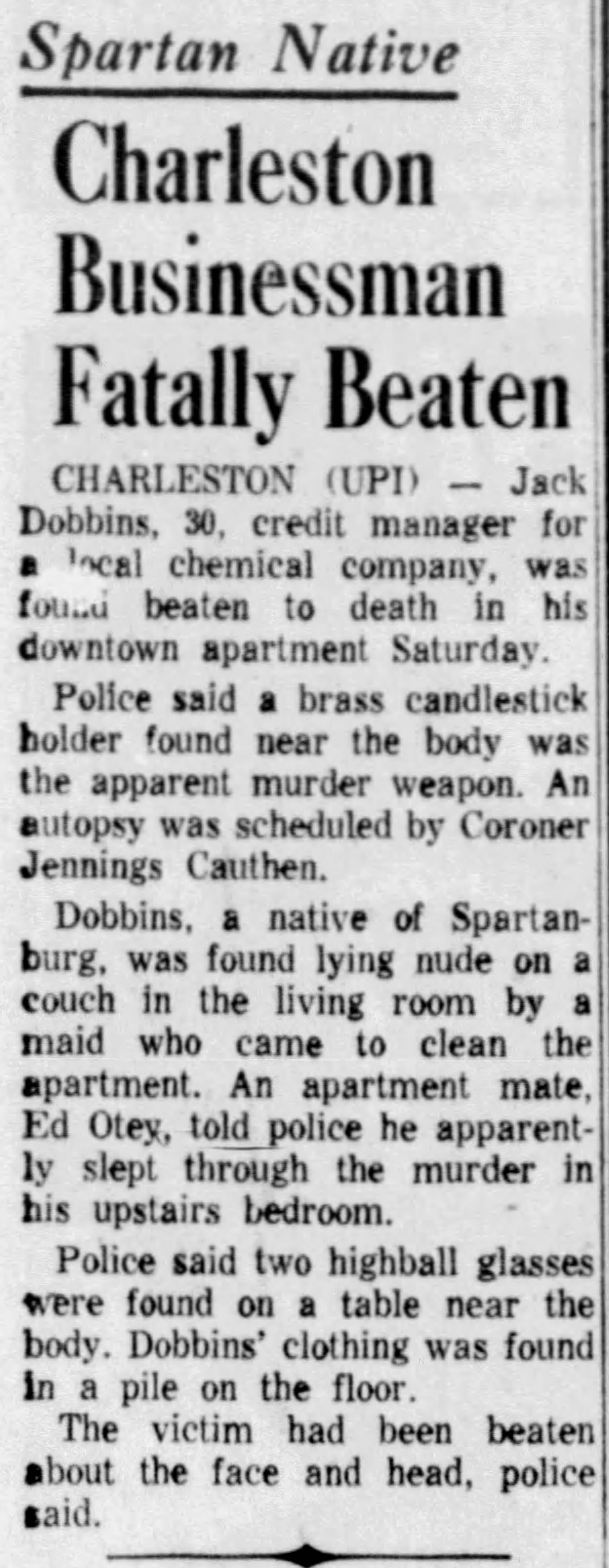
When she entered the living room, she found Dobbins lying on the sofa. He was completely naked and lying on his side on the sofa, with his body stretched out and his arms crossed in front of him. His face was covered in blood, and there were visible injuries around his head. One of the first things Bryant noticed was a heavy brass candlestick resting against Dobbins' body. The candlestick was bent and stained with blood, indicating that it had been used with considerable force.
Bryant quickly alerted Edward Otey, the medical student who shared the house with Dobbins. Otey had been sleeping upstairs and was apparently unaware of what had happened below. Otey came to know that his roommate had been found dead in the living room, and the police were contacted.
Investigation
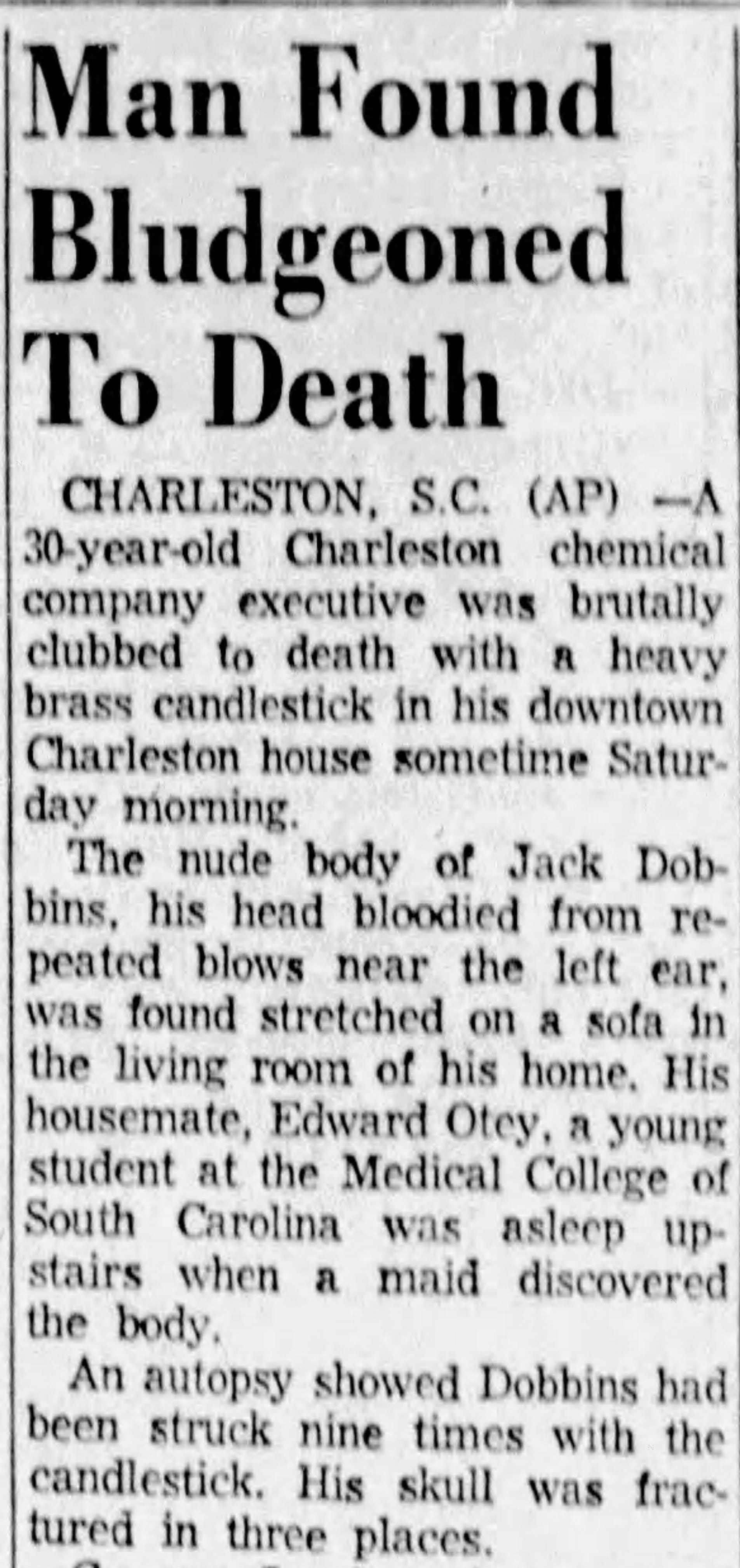
When police arrived to investigate, they found two bourbon glasses on the coffee table, cigarettes, and clothing. Blood marked the sofa and a nearby wall, but the furniture was largely undisturbed. Upstairs, the rest of Dobbins' clothing lay on a bedroom dresser, and his trouser pockets were empty—the first hint that belongings had been taken.
It was later determined that Dobbins had suffered nine blows to the head, resulting in three fractures of his skull. These findings indicated he had experienced a severe assault involving repeated impacts to the head, and the brass candlestick found with his body was identified as the weapon responsible.
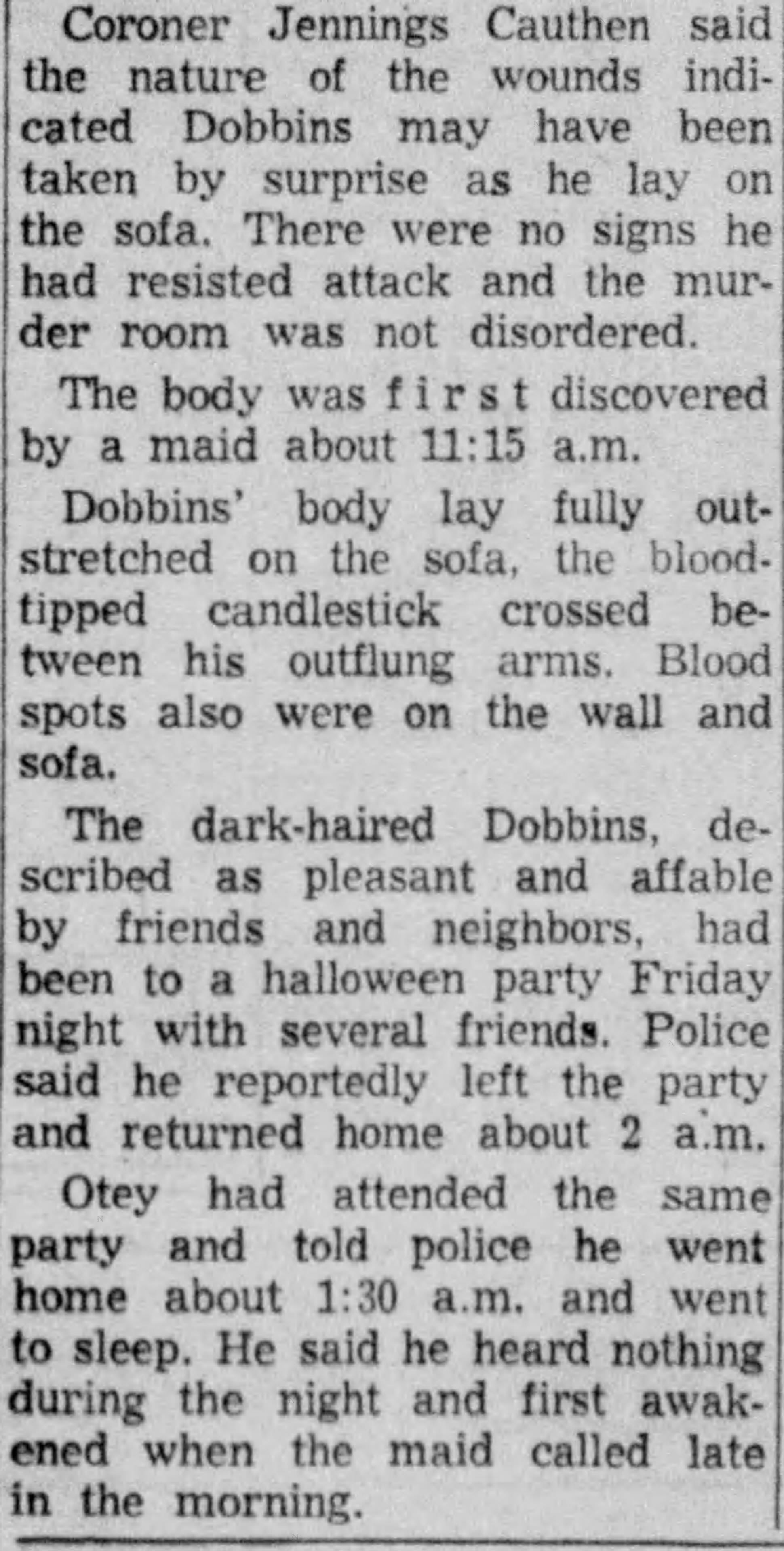
Coroner Jennings Cauthren noted the absence of a struggle, suggesting Dobbins may have been taken by surprise. Dobbins may have been lying on the sofa when the attack began, leaving him little opportunity to defend himself.
Edward Otey's presence in the house naturally made him an important person for investigators to question, but unfortunately, he could not provide a firsthand account of what happened after Dobbins returned home with a visitor. As the police worked to establish Dobbins' final movements, attention shifted to Club 49.
Witnesses traced Dobbins' last hours from Club 49 to the Elbow Cocktail Bar, where a bartender confirmed the two men had been turned away — placing Dobbins alive in the early morning with Mahon beside him. As the investigation zeroed in on Mahon, the young airman's military background became another important part of the inquiry.
John Mahon’s Account
Investigators learned that after leaving the Queen Street residence, Mahon returned to Charleston Air Force Base. Mahon's activities after returning to the base attracted attention because of statements he reportedly made about the incident. According to Harlan Greene's account in Charleston Magazine, Mahon told fellow servicemen that he had beaten up a gay man and taken money before leaving.
After learning that Dobbins was dead, Mahon voluntarily surrendered to Charleston police. While Mahon did not deny that he had used the candlestick against Dobbins, he maintained that the violence had occurred because he was trying to protect himself. He insisted that he had never intended to kill him.
According to the account Mahon later presented in court, the two men entered Dobbins' home. Mahon said he removed his jacket while Dobbins prepared drinks in the kitchen, after which they sat together on the living room sofa. He claimed Dobbins sat close to him and began touching his shoulder and lap, which made him increasingly uncomfortable.
Mahon excused himself to the bathroom, and when he came out he found Dobbins naked. Frightened, Mahon said, he ran upstairs, took a brass candlestick from a bedroom, and when Dobbins grabbed him on his way back through the room, he struck the older man three or four times before fleeing. He said he believed he had only knocked Dobbins unconscious.
After the confrontation, Mahon left Dobbins inside the house and returned to Charleston Air Force Base. He later claimed that when he left, he believed the man had merely been knocked unconscious. He also expressed regret over the outcome, explaining during his testimony that he had not meant to kill Dobbins.
However, medical evidence contradicted that account: nine blows and three fractures, not the three or four Mahon described, and the undisturbed room conflicted with his picture of a desperate struggle. The victim’s missing belongings raised the question of robbery.
Trial
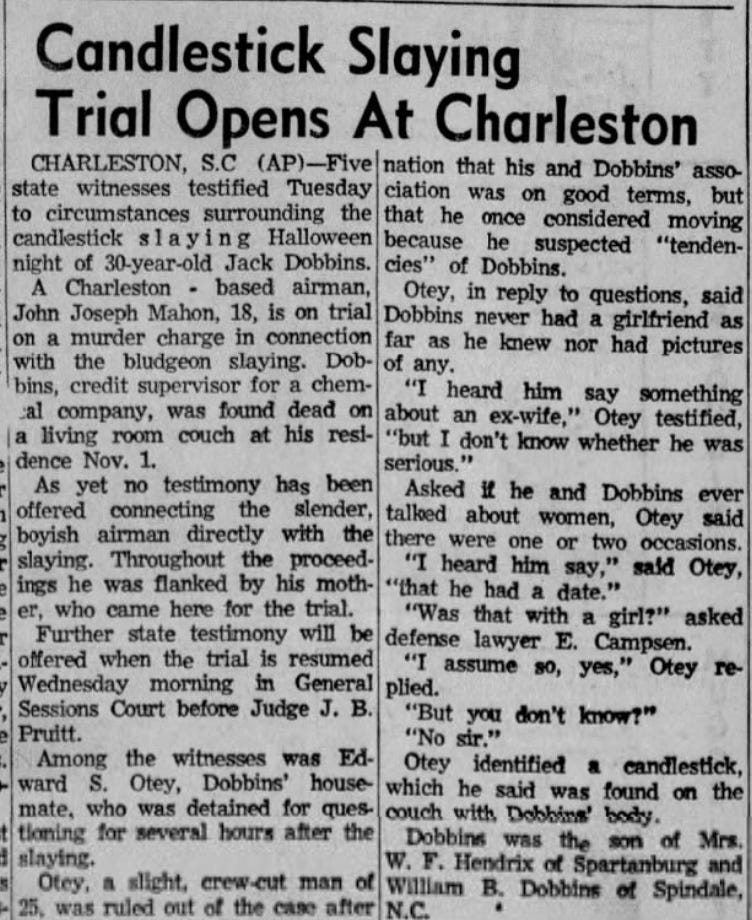
The murder trial of John Mahon began on Tuesday, December 9, 1958. For weeks, the local press covered the case, often referring to it as the "Candlestick Murder." The unusual weapon, the victim's social activities, and the circumstances surrounding the death had made the case especially intriguing to newspaper readers. Although the newspapers did not always openly identify Dobbins as gay, their descriptions often carried suggestions about his sexuality.
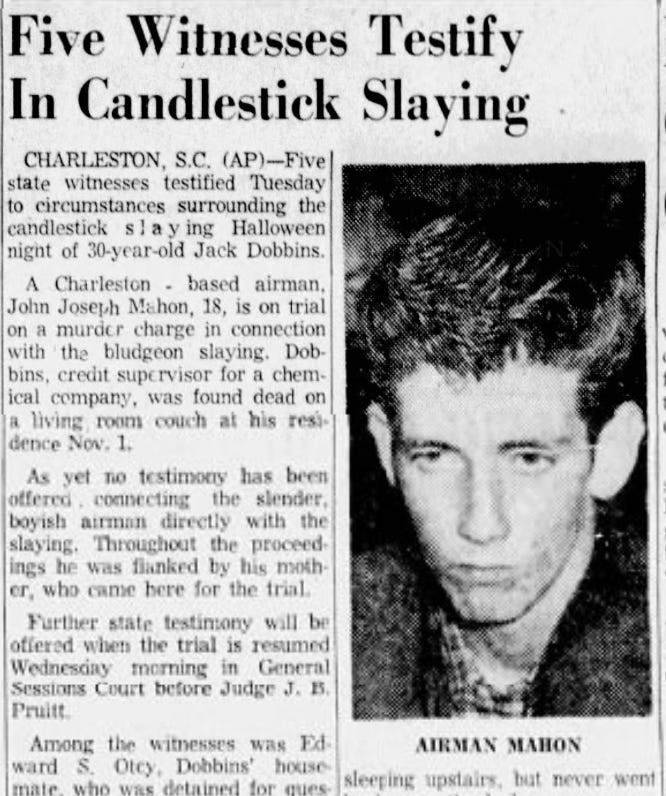
The courtroom was crowded when proceedings began, with spectators eager to hear the evidence and testimony that had been discussed in newspapers for several weeks. Mahon appeared before the court wearing his United States Air Force uniform.
The prosecution team, led by Theodore Stoney, faced the task of proving that Dobbins' death amounted to murder despite Mahon's claim of self-defense. They relied on evidence collected from the residence, medical findings, and statements from witnesses who encountered the two men that night. While Mahon had already acknowledged that he struck Dobbins with the candlestick, their job was to convince the jury that the circumstances did not justify the violence.
The opening day of testimony began with five witnesses, though none directly established Mahon's involvement in the killing. Their accounts instead helped the court understand the household and the events surrounding the discovery.
Housekeeper Elizabeth Bryant was among those called to testify, and her testimony established how the crime scene had first been discovered and confirmed the condition in which Dobbins had been found before the police began their investigation.
Under questioning by the defense, Bryant was asked whether women frequently visited Dobbins, and she explained that she had not noticed female visitors but had sometimes seen young men, including visitors associated with the Citadel. The line of questioning was designed to draw attention to Dobbins' perceived sexuality.
This was significant because homosexuality carried serious social consequences in the American South during the 1950s. For a jury drawn from that social environment, questions about male visitors and personal habits could create impressions without the lawyers having to make direct accusations.
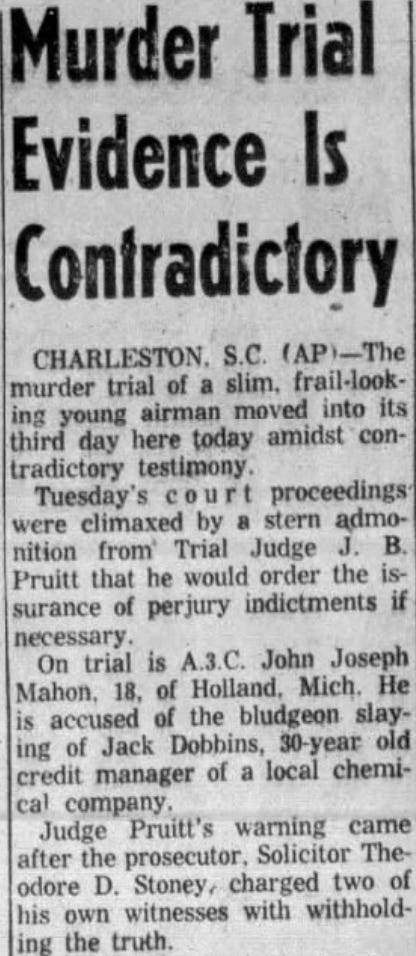
As the trial continued, the prosecution turned to evidence involving Mahon's return to Charleston Air Force Base after the killing. Two fellow airmen had provided written statements during the investigation concerning Mahon's activities that night. They had stated Mahon returned to the base carrying items belonging to Dobbins, including a cigarette lighter, door key, money clip, chain, silver nail file, and $23 in cash.
However, when both men appeared in court, they disputed parts of their earlier statements and claimed those statements had been obtained under pressure. Prosecutor Stoney believed the witnesses were withholding important information and sought permission to cross-examine them despite having called them as prosecution witnesses. The judge allowed the questioning, but the dispute undermined the reliability of their evidence.
On Thursday, December 11, Mahon took the stand to present his account of events. The defense built its argument around Mahon's claim that he had acted to protect himself. His lawyers cited South Carolina law concerning the right to defend oneself against improper advances and argued that the young serviceman had been placed in a threatening situation.
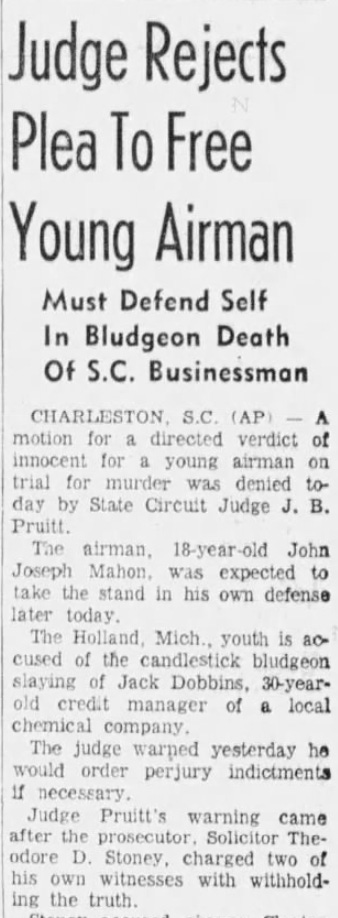
The prosecution challenged that explanation by focusing on the physical injuries and the evidence surrounding Dobbins' possessions. They argued that robbery was the principal motive and suggested that Mahon had arranged the events that led to the fatal confrontation. The defense's closing argument made a direct emotional appeal to the jury by asking them to consider what a conviction would mean for the young airman and his family.
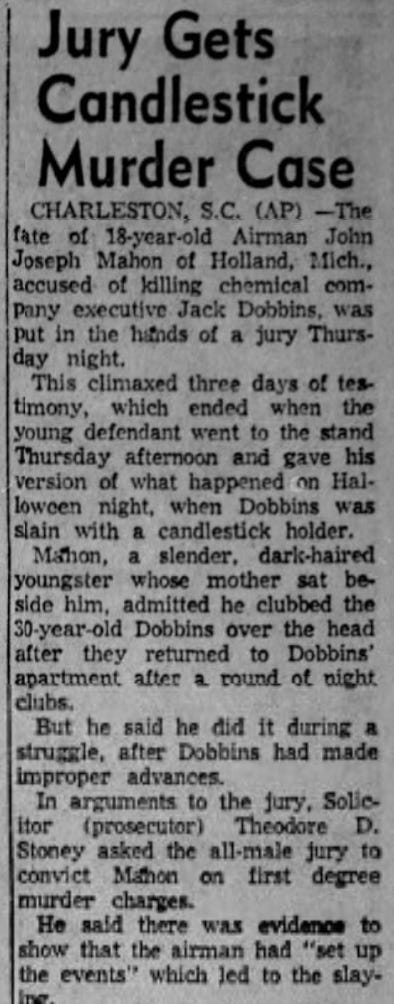
On the evening of Thursday, December 11, 1958, the case was handed to the all-male jury. Inside the courtroom, the jury's deliberations continued into the night without an immediate verdict. As midnight passed, the judge became increasingly concerned about the delay. He then called the jurors back into the courtroom and instructed them to reach a decision that night.
Verdict and Aftermath
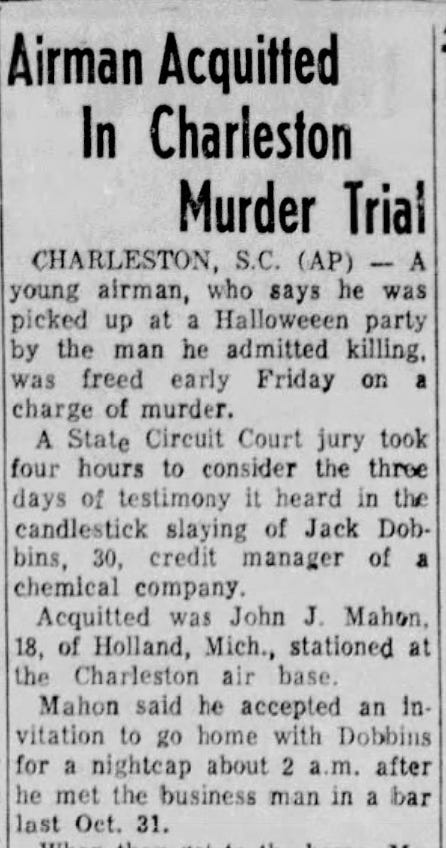
At about 1 a.m. on December 12, 1958, the jury found John Mahon not guilty. According to newspaper accounts, applause broke out among people sitting in the gallery while the young airman embraced his mother, who had been present during the trial. The reaction reflected the relief felt by those who had supported the young serviceman throughout the proceedings.
Meanwhile, Dobbins' family had to live with the outcome of a case that had placed his private life before the public while offering no conviction for his death. His mother, Alma Hendrix, remained largely outside the public attention surrounding the trial and its aftermath. Later recollections suggested that the publicity and discussion of her son's sexuality had been deeply painful for her.
For members of Charleston's gay community, the acquittal carried a meaning that extended beyond the fate of one young serviceman. At a time when gay men already faced discrimination and feared public exposure, the acquittal raised questions about whether they could expect fair treatment if they became victims of violence.
Jack Dobbins was buried in Spartanburg, South Carolina. On January 5, 1959, Alma Hendrix submitted an official application for a military headstone for her son's grave. Through the headstone application, his mother ensured that his identity as a veteran was preserved.
Legacy
The case received renewed public attention on September 11, 2019, when journalist Dustin Waters published a detailed investigation in the Charleston City Paper. The article revisited the events, the discovery of Dobbins' body, Mahon's statements, and the testimony presented during the trial. It also examined the experiences of Charleston's gay community and the influence of prejudice on the case. By bringing together all accounts, Waters presented a fuller picture of Dobbins' life and death.
The Charleston City Paper also brought the story to listeners through a three-part podcast series titled “Revisiting Charleston's Candlestick Murder.” The episodes were released on September 11, 12, and 13, 2019, with Dustin Waters guiding listeners through the historical investigation. Across the three episodes, the murder was presented alongside its broader effect on Charleston's gay community.
Also, in October 2022, Charleston historian and author Harlan Greene revisited the case in Charleston Magazine. His article, titled “Remembering a 1958 Halloween Night Murder and the Verdict That Still Haunts the City”, examined how the legal proceedings placed Dobbins' personal life under public scrutiny.
Further podcast coverage followed years later. On October 4, 2026, a True Crime Podcast released an episode titled “The Halloween Night Murder of Jack Dobbins”, where they revisited the killing and its connection to prejudice in 1950s Charleston. The following day, October 5, another True Crime Podcast, Beers with Queers, published an episode titled “The Halloween Candlestick Murder.”
The case also became connected to wider discussions about what is commonly called the gay panic defense. This term describes a legal argument in which a defendant attempts to explain or justify violence by claiming to have reacted to an unwanted same-sex advance. Although Mahon's lawyers did not present a separate legal defense under that modern name, their argument relied heavily on the allegation that Dobbins' behavior caused the young serviceman to fear for his own safety.
Almost seven decades after the killing, Jack Dobbins is still remembered as more than the victim of an unusual Halloween murder. Through the efforts of his family, historians, journalists, and researchers, Dobbins' life has gradually received recognition beyond the circumstances of his killing.
"Candlestick Murder." Wikipedia, Wikimedia Foundation, August 11, 2026. https://en.wikipedia.org/wiki/Candlestick_murder.
Waters, Dustin. "The Sensational Candlestick Murder Trial of 1958 Struck Fear in Charleston's Gay Community." Charleston City Paper, September 11, 2019. https://charlestoncitypaper.com/2019/09/11/the-sensational-candlestick-murder-trial-of-1958-struck-fear-in-charlestons-gay-community/.
Greene, Harlan. "Remembering a 1958 Halloween Night Murder and the Verdict That Still Haunts the City." Charleston Magazine, October 3, 2022. https://charlestonmag.com/features/remembering_a_1958_halloween_night_murder_and_the_verdict_that_still_haunts_the_city.
Scott, Mr. "The Candlestick Murder of 1958." Charleston Terrors, July 21, 2025. https://charlestonterrors.com/the-candlestick-murder-of-1958/.