


Background
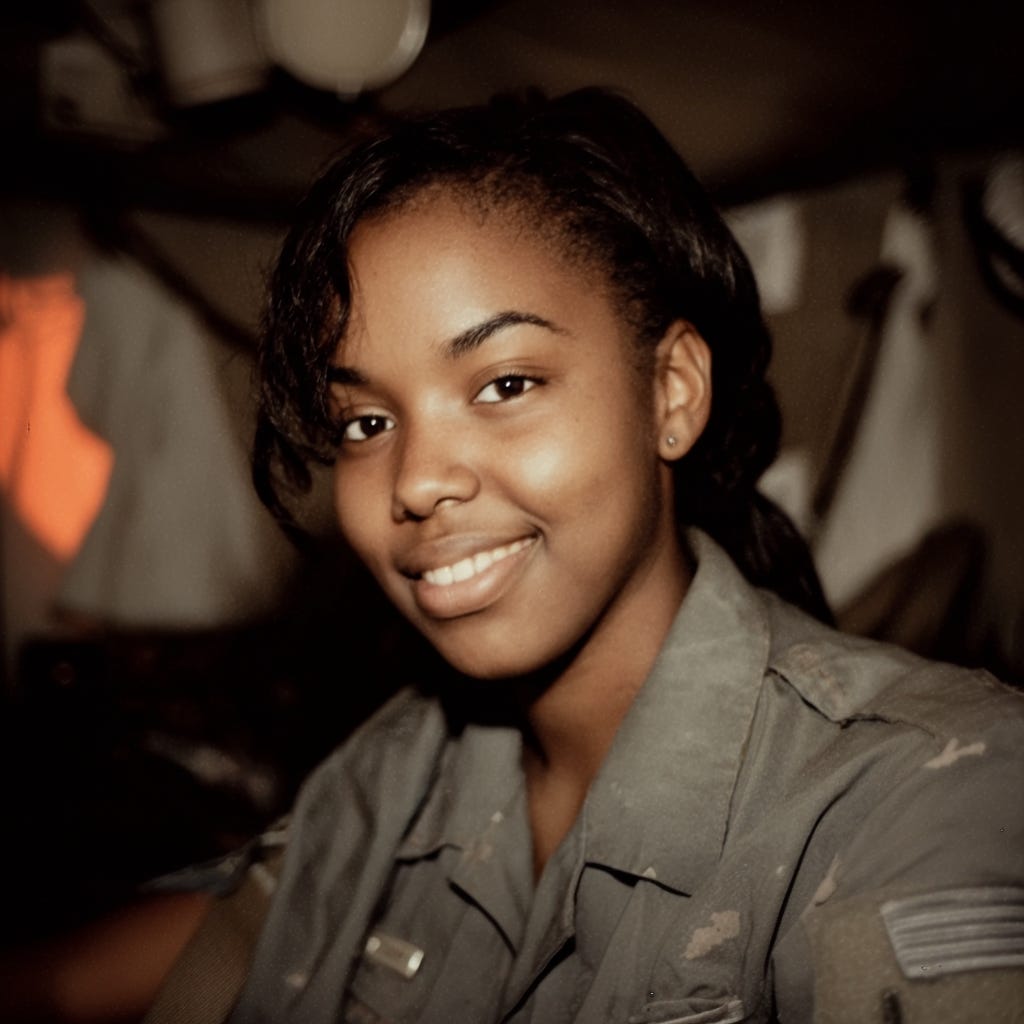
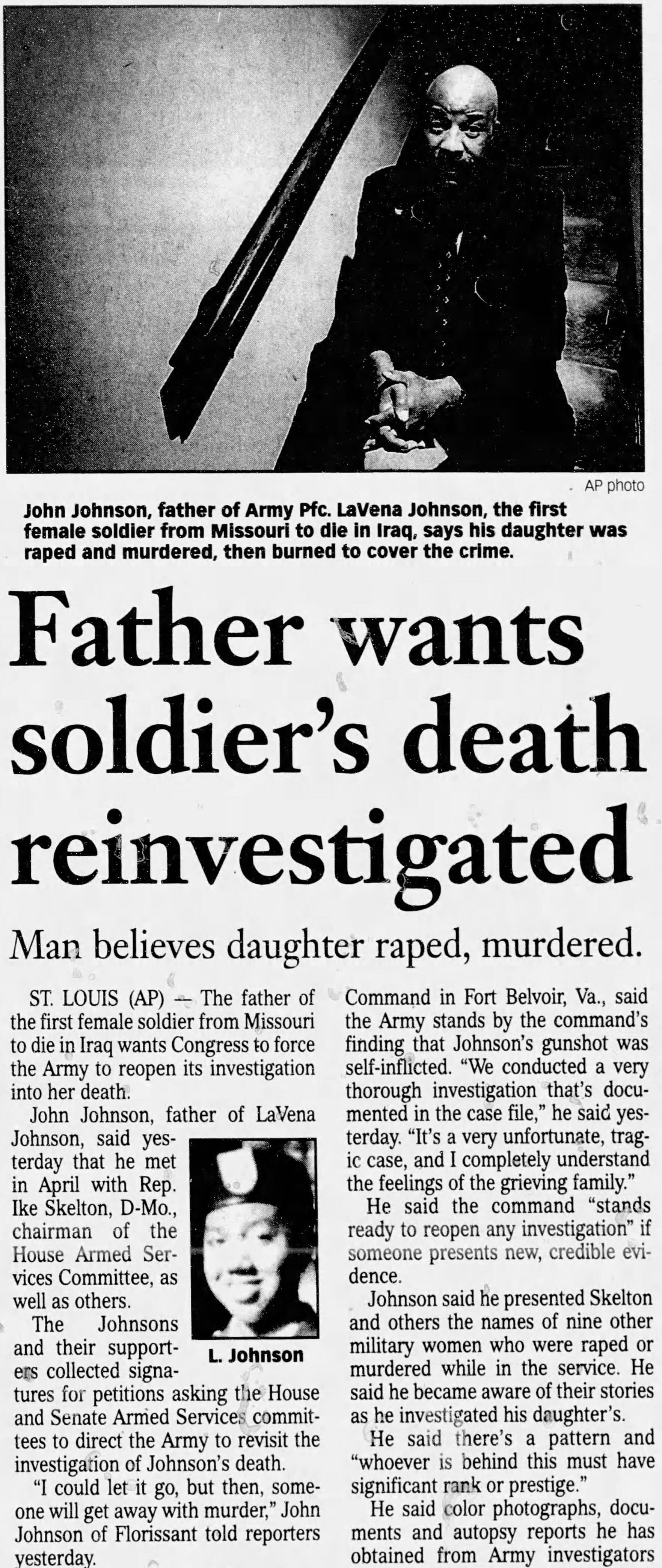
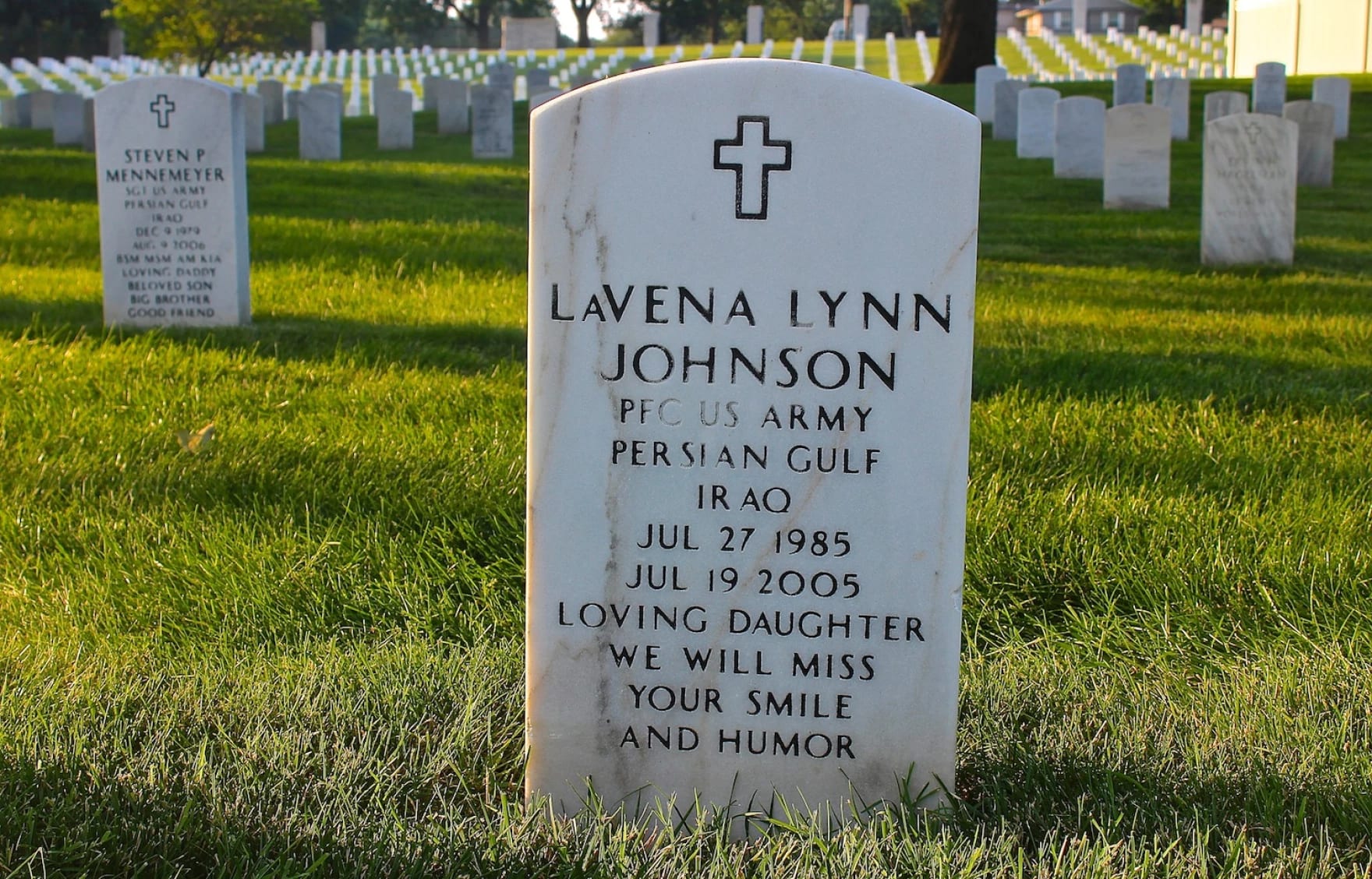
Early in the morning of July 19th, 2005, the parents of 19-year-old LaVena Johnson were visited by representatives of the United States Army. What they were told was both shocking and unfathomable. According to the Staff Sergeant, LaVena had taken her own life with a self-inflicted gunshot wound. The official statement from the Army corroborated this story.
However, when Lavena Johnson’s parents began to independently look into the circumstances surrounding their daughter’s death, what they discovered was deeply disturbing. They uncovered credible evidence that LaVena was sexually assaulted and murdered, and that the Army was implicated in a scheme to cover it up. More than 20 years later, LaVena’s parents continue to seek justice for their daughter.
A Promising Future
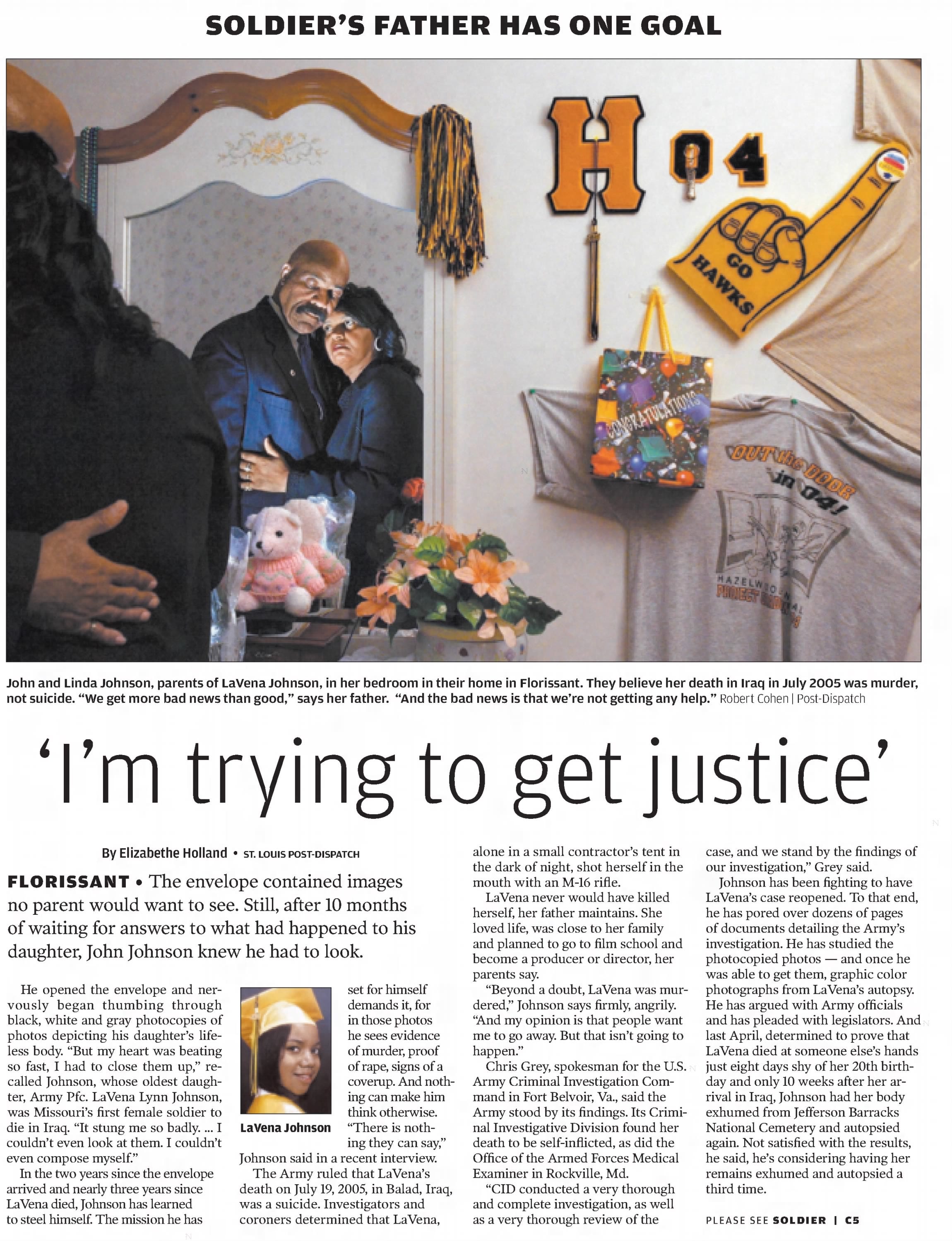
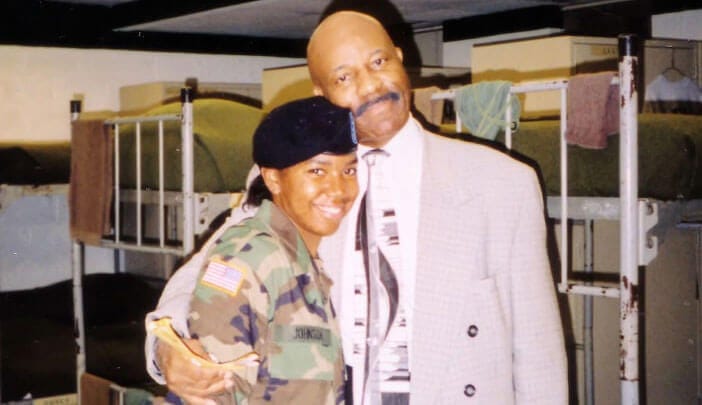
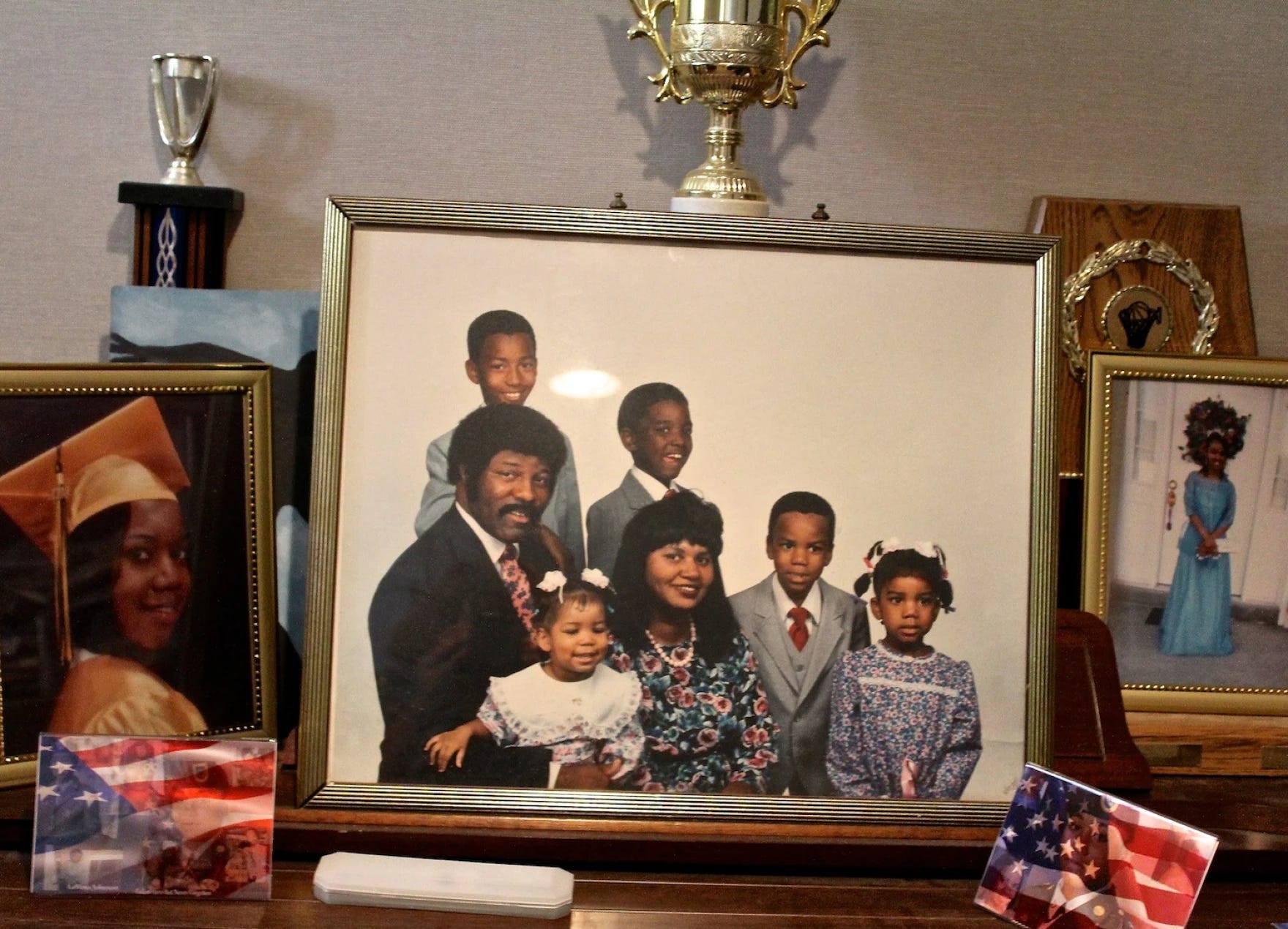
LaVena Johnson was born in Florissant, Missouri, on July 27th, 1985. Her parents, Dr. John Johnson and Mrs. Linda Johnson, were exceptionally proud of their daughter. LaVena grew up as a bright young woman, consistently earning honor roll placements. Her parents thought that when she graduated from Hazelwood Central High School, she would enroll in college courses.
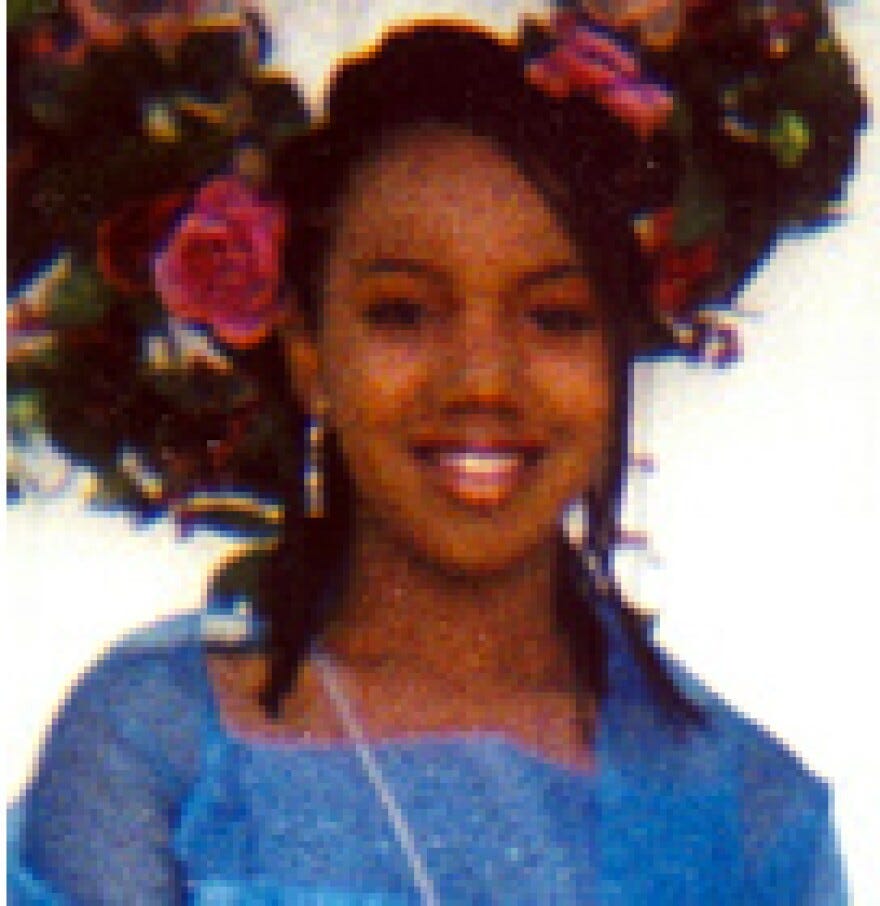
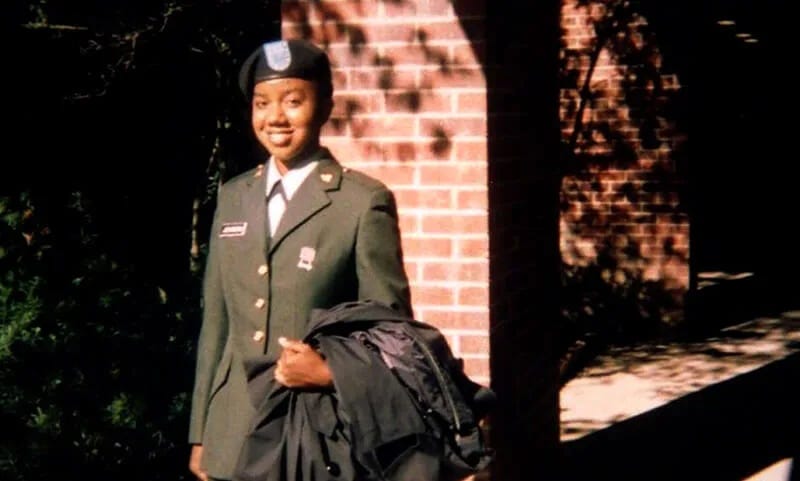
However, LaVena had different plans. On September 15th, 2004, she enlisted in the U.S. Army. Though her parents were understandably apprehensive, her father, a veteran himself, was particularly proud of her desire to serve.
At the time, the United States was in the early stages of Operation Iraqi Freedom, which lasted until 2011. At its peak, the war would see over 170,000 U.S. service members deployed. Private First Class LaVena Johnson was deployed to Iraq, where she was stationed in Balad.
Though her parents were worried, LaVena tried to reassure them and kept in frequent contact. On July 17th, 2005, LaVena called her mother. During their conversation, she was happy and bubbly, and the two discussed plans for later that year, including Christmas. The very next day, everything would change.
Tragic News
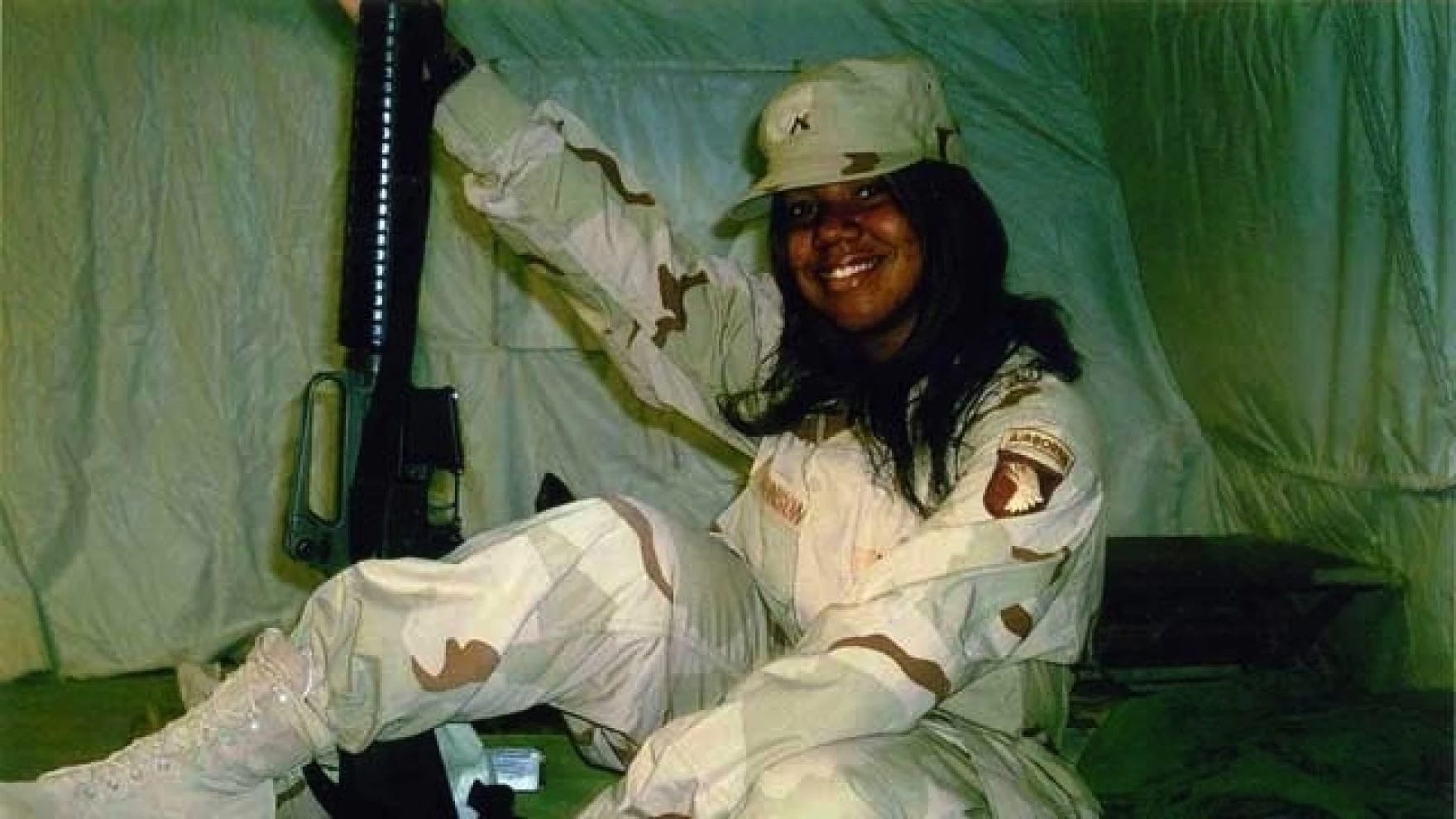
Around 7:30 a.m. on July 19th, Dr. Johnson and Mrs. Johnson were awoken by loud knocks on their door. Peeking out the window, Mrs. Johnson saw a soldier standing on the porch. Both their hearts sank, fearing something had happened to LaVena. Upon greeting them, the staff sergeant solemnly informed them that LaVena had died of self-inflicted wounds.
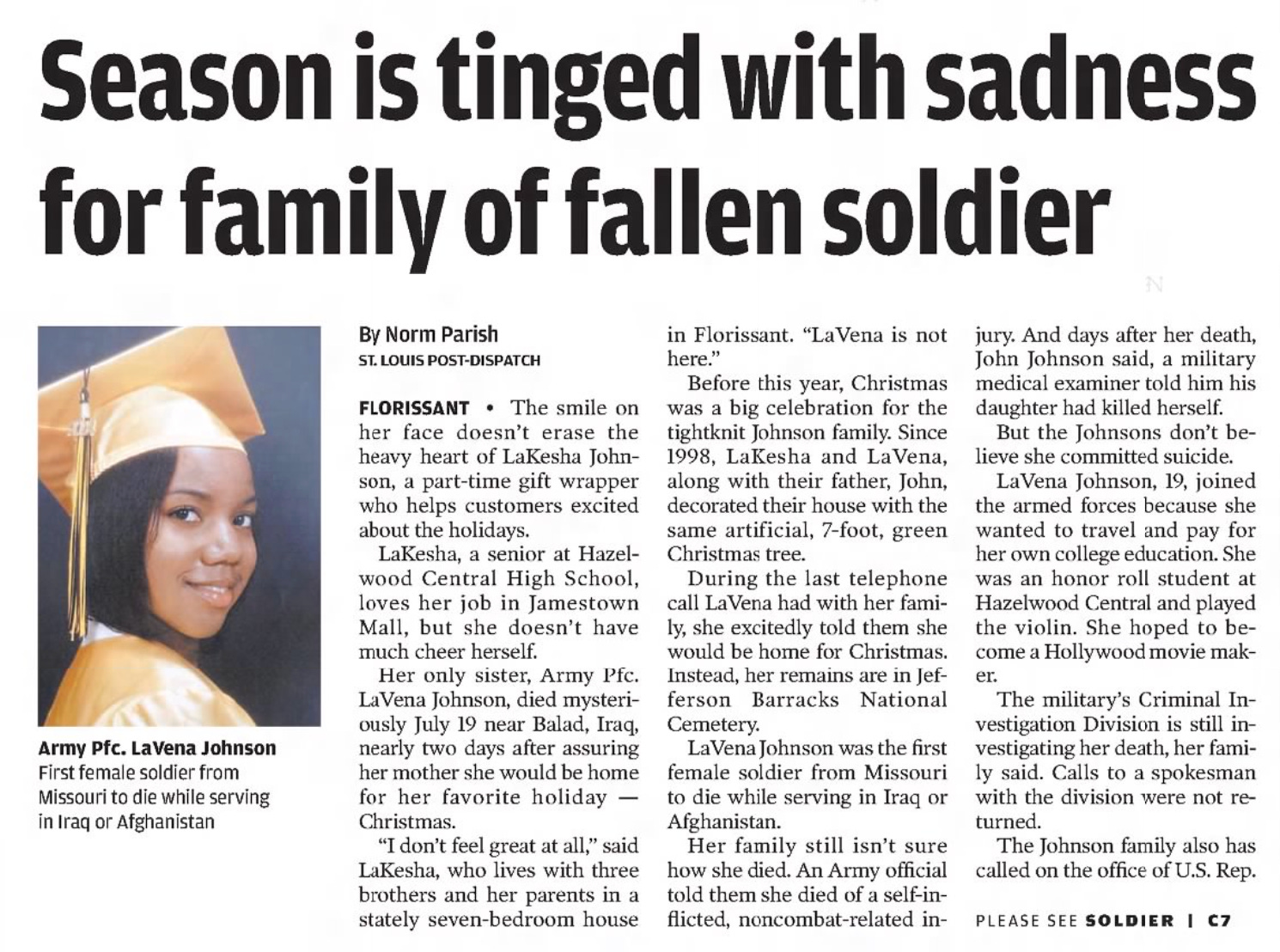
Her parents were in shock and disbelief. They had just spoken to her, and she was happy. She was making plans for holiday celebrations. Dr. Johnson, who had earned a Ph.D. in behavioral psychology and worked for the Department of the Army in the drug abuse program, knew what the signs of suicidal ideation looked like. His daughter had none of them.
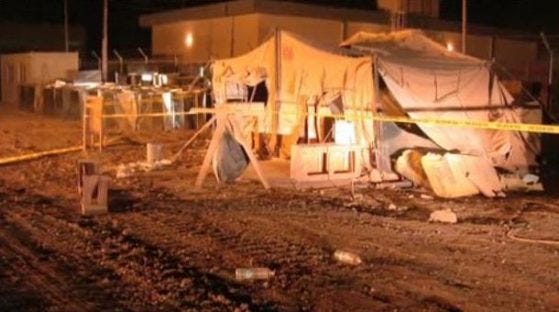
The same day he was told LaVena took her own life, Dr. Johnson reached out to contacts who knew people in Iraq. It was through these connections that Dr. Johnson learned that LaVena had been found in a contractor’s tent, not in her barracks as initially reported. Immediately, the Johnsons realized that they were not being told the full story.
Push for Truth
The U.S. Army Criminal Investigation Command performed an investigation into LaVena’s death, which was not made available until Congress pushed for it to be released under the Freedom of Information Act (FOIA). This report concluded that LaVena Johnson had shot herself with her Army-issued M16, and that the fire in the tent, not initially disclosed to her parents, was a result of her attempting to burn pages of what seemed to be a diary.
When LaVena’s body was returned home for her funeral, Dr. Johnson’s suspicions were confirmed. LaVena had various injuries and abrasions that were not consistent with her listed manner of death. The Johnsons hired a top pathologist to perform a second autopsy, independent of the Army’s autopsy, which had ruled LaVena’s death a suicide. However, the pathologist disclosed a conflict of interest- he was friends with one of the Army personnel who signed off on LaVena’s initial autopsy.
Though he agreed to perform the autopsy, he failed to include the physical damage to her body in his report, and did not rule her death as murder or suicide, instead choosing to stay neutral.
Obtaining information from the Army was extremely difficult. It wasn’t until ten months after LaVena’s death that her parents finally received black and white copies of photos and documents from the investigation. Dr. Johnson took this evidence to his brother, Joseph Johnson, who had a degree in criminal science. After 45 minutes, Joseph called with a resolute conclusion: LaVena had been murdered.
Controversy and Coverup
The photos the Johnsons had finally received of LaVena were graphic and horrifying. She had bruises all over her face and scratches all over her arms. Her nose was broken as if struck from right to left, and her lip was busted and bloodied.
The most horrific damage had been done to her pelvic region. According to Dr. Johnson, her vaginal area had been terribly torn, and something had been poured over it, potentially lye, likely to cover DNA evidence left behind. The conclusion was grim but clear. LaVena did not take her own life: she was raped and murdered, and the scene was staged to look like a suicide.
LaVena also had severe burns, running from her shoulder to her thighs, as if someone had poured an accelerant on her body and lit it. Reports indicated that a small bench was lying on top of LaVena’s body. There was no way LaVena could have placed it there after she died from a self-inflicted wound.
There was no way for LaVena to self-inflict these wounds. As for the fire, the Johnsons, and many others, believe the fire was started in an attempt to burn LaVena’s body and dispose of the evidence.
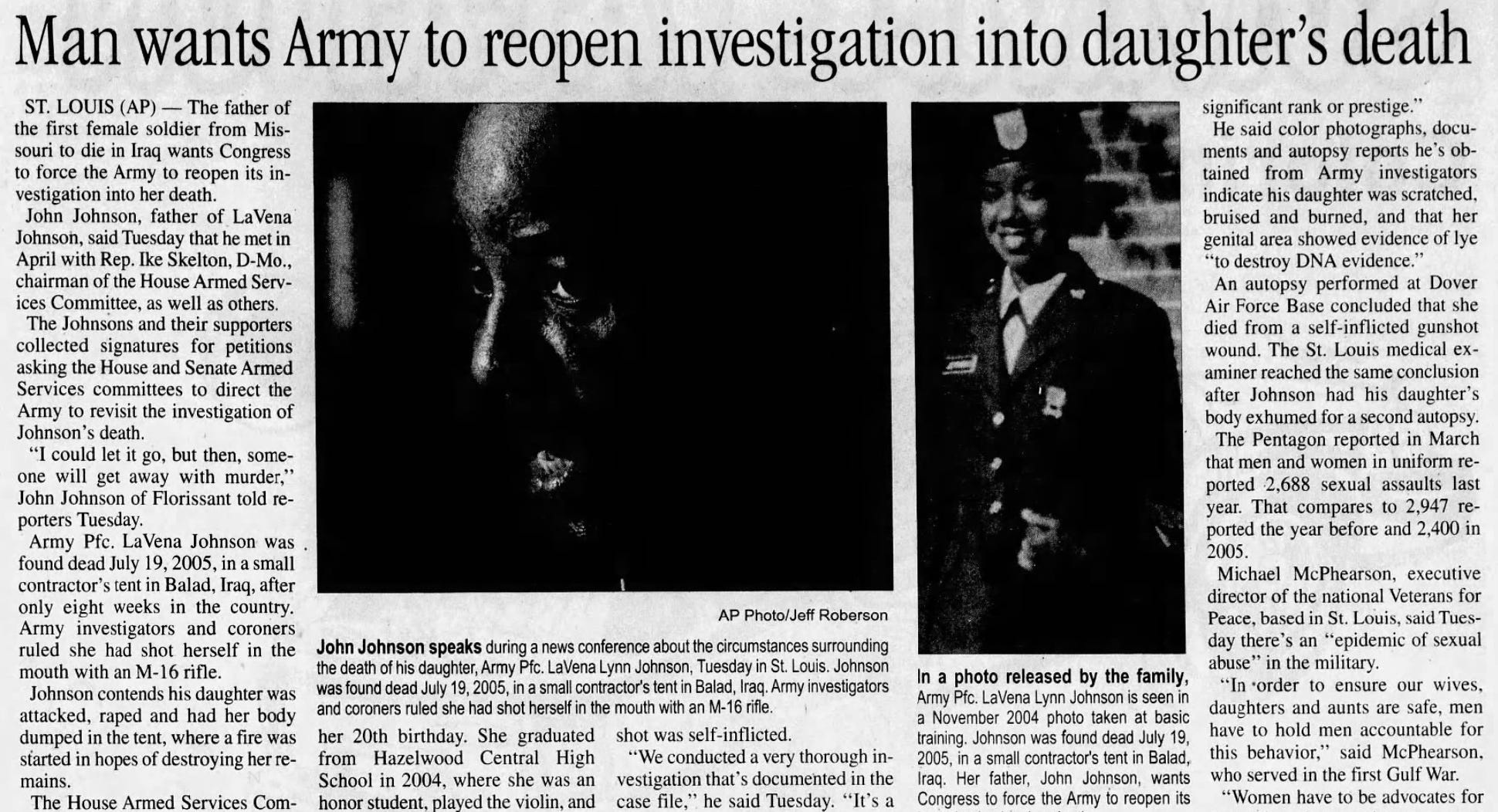
The photos told a very clear story. Why, then, would the Army and the Department of Defense continue to stand by a suicide ruling that made no sense in light of the evidence? When asked on an episode of Tell Me More from NPR News in 2008, Dr. Johnson suggested that a high-ranking or prestigious official may have been involved, and as such, the military and government engaged in a cover-up.
The Johnsons sent the Army a package back with the photos depicting clear physical evidence that this was not a suicide, and that evidence was ignored in favor of pursuing the narrative that LaVena took her own life. Dr. Johnson made a promise to LaVena after her death: that he would keep fighting for the truth.
The Fight for Justice
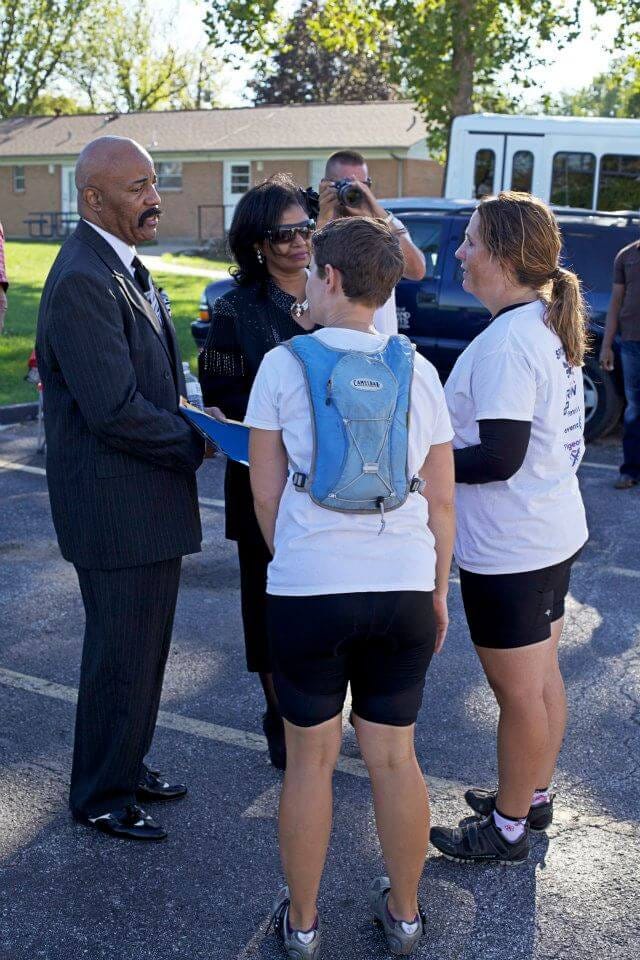
The Johnsons lived up to their promise to continue fighting to expose the truth of what actually happened to their daughter. They have been very vocal in their assertions that LaVana was sexually assaulted and murdered. Despite their efforts, the Army has not changed its ruling on LaVena’s cause or manner of death. The Johnsons’ ongoing fight for justice was documented in a 2010 film, LaVena Johnson: The Silent Truth.
Numerous petitions have been circulated, amassing tens of thousands of signatures, all calling for a proper reinvestigation of LaVena’s death. Not only has LaVena’s story sparked conversation regarding the Black Lives Matter movement, but it also stands as a testament to the widespread issue of sexual assault in the military.
In 2018, 6.2% of women in the armed forces reported experiencing sexual assault. Roughly 1 in 3 women who seek treatment from VA providers report experiencing sexual trauma from their time in the military. Colonel Ann Wright, a retiree from the U.S. Army Reserve and advocate for the issue of sexual assault in the military, has pointed out that these numbers only reflect cases that are reported.
Many cases of sexual assault and abuse are never reported, leaving victims to suffer in silence. LaVena’s story, though tragic, has inspired righteous anger over both how racial inequality impacts access to justice and how women are disproportionately affected by sexual violence, even and perhaps especially in the military.
Closing Thoughts
More than 20 years after her tragic death, LaVena Johnson’s case remains closed. According to the Department of Defense, the U.S. Army, and the House Armed Services Committee, LaVena took her own life.
According to her parents and countless others who have found LaVena’s story and reviewed the facts for themselves, LaVena was murdered, and her death was swept under the rug by a corrupt system designed to protect the powerful at any expense.
Despite the time that has passed, the fight is not over. Even if the truth of what happened to LaVena is never revealed, the injustice of her story has sparked cries for reform. Her name will be remembered, and her case will stand as proof that justice is selectively applied and the truth can be obfuscated even by those sworn to serve and protect.
Sources:
“LaVena Johnson | Say Their Names - Spotlight Exhibits.” Stanford University Libraries, https://exhibits.stanford.edu/saytheirnames/feature/lavena-johnson
Leonard, Mary Delach. “10 Years Later, a Soldier’s Family Still Grieves and Questions the Army’s Version of Her Death.” STLPR, 13 Dec. 2021, https://www.stlpr.org/government-politics-issues/2015-07-19/10-years-later-a-soldiers-family-still-grieves-and-questions-the-armys-version-of-her-death
“Soldier’s Family Challenges Army Suicide Report.” NPR, 11 Aug. 2008, https://www.npr.org/transcripts/93493468
Statement From the U.S. Army Criminal Investigation Command on the PFC Lavena Johnson Investigation. https://www.cid.army.mil/Portals/118/Documents/FOIA-Privacy-Act/CRC_Johnson-Lavena.pdf
The government would not be involved in a coverup of one mere general, and a general being arrested for rape and murder would not upset the apple cart - that is the first time I used that phrase in public - since the general would be thrown under the bus to avoid systemic change. People can hide depressive symptoms, and the depressed can be exploited: since the army did not conclude it was a suicide, I conclude it was a B.D.S.M attempt which went horribly wrong and the general involved was too embarrassed to admit it, only saying that they had rough sex and she blew off her face and jaws just as he was about to pour lye on her genitals. The general would have thought based on her depression that she killed herself and used the B.D.S.M to cover it up because she was concerned about being seen as an object of pity or people thinking she couldn't handle war.
She burnt the pages to cover up the B.D.S.M and the fact she had P.T.S.D from the war, combined with accumulated stress from her childhood as a marginalized person. It is also possible she sympathized with the Iraqis due to them being victims of imperialism at the hands of Turkey - an ally of the West - and the West, which caused her to be stressed due to participating in imperialism and the fact she participated despite being a victim of intersectional oppression. As well, women and nonwhites go through hell in the military, which is rampant with sexual assault and racism: the military has always supported Republicans whether Moosehead Republicans - now Log Cabin Republicans - Rockefeller Republicans, or the modern Republicans who used to be Southern Democrats, and before Abraham Lincoln (the Moosehead Republicans evolved from the Lincoln Republicans) the military was divided between Southerners who wanted expansion into Native land and the Hispanidad for plantations and northerners who wanted expansion into Native land and Canada for yeoman farming.