


Background
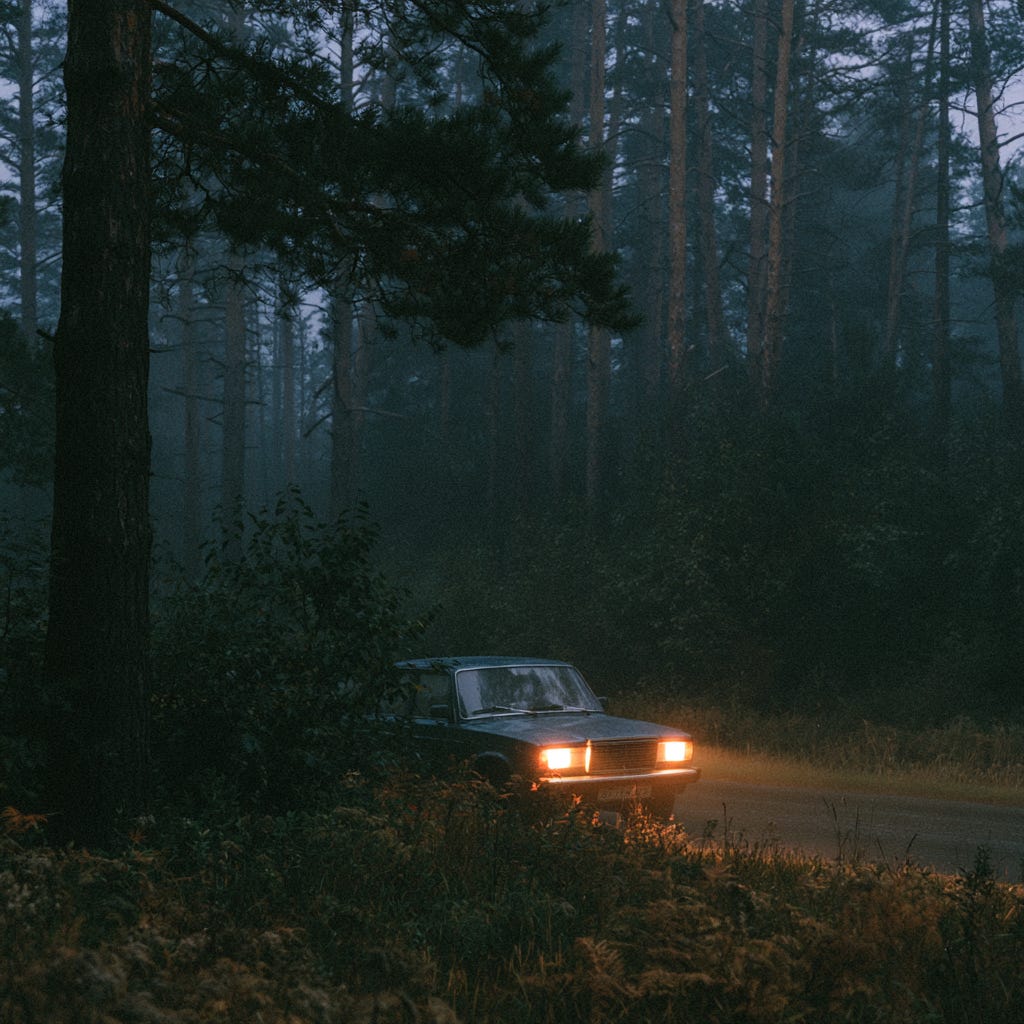
Between 1993 and 1997, at least twelve people were murdered by an unidentified killer in the forests surrounding the Russian city of Samara. The killer mainly targeted couples parked in their vehicles.
The crimes led to an intensive investigation, and though numerous suspects were interviewed and one man was even convicted of two of the killings (though his guilt remains a subject of debate), police were unable to apprehend or identify the unknown killer who came to be known as the “Forest Maniac.”
The “Triangle of Love”
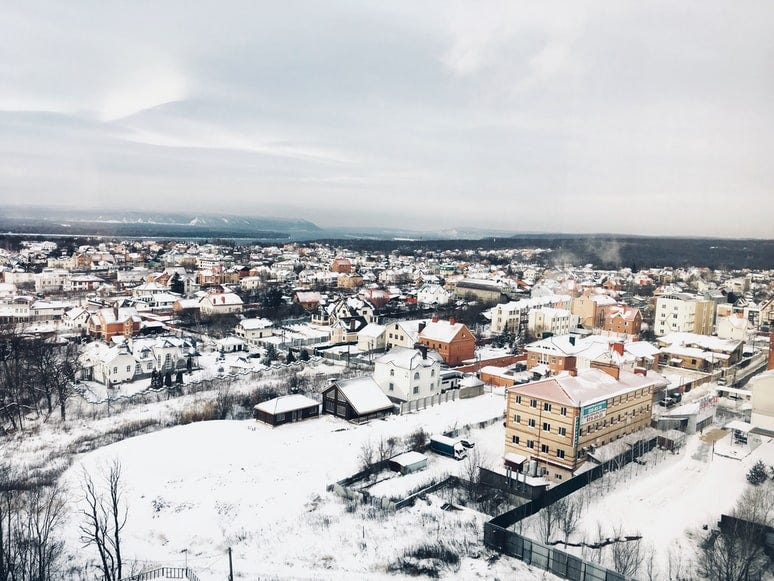
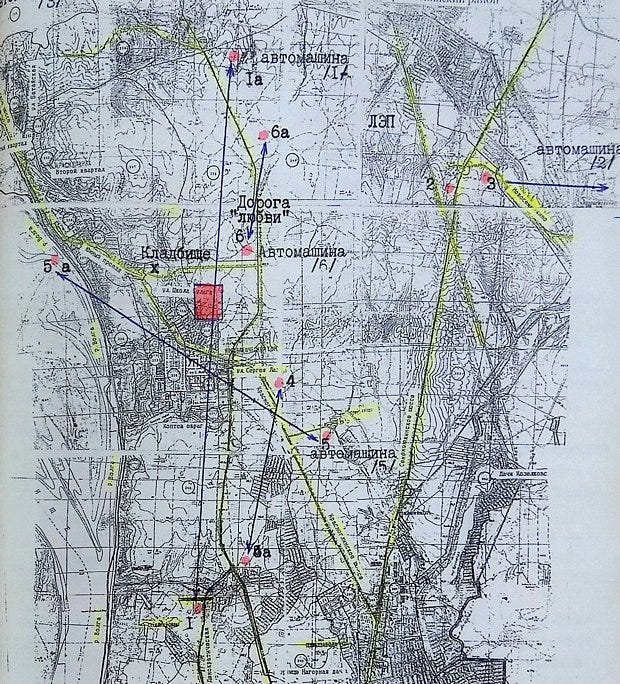
During the 1990s, Samara was a large industrial city on the Volga River with many factories, apartment blocks and universities. Yet just past these urbanized districts lay woodlands, ravines and winding roads. Outside the Krasnoglinsky district, three settlements — Upravlenchesky, Gorny and Starosemeykino — sat close enough that the woods between them formed a rough triangle locals called the Treugolnik Lyubvi, the “Triangle of Love.” [2]
Once a car left the main road, it could vanish among the trees. Young couples often drove out to the forest at night, parked somewhere quiet, and had a few hours to themselves. The route became known as the “Road of Love.” For years the arrangement worked fine. Until the summer of 1993.
September 1993
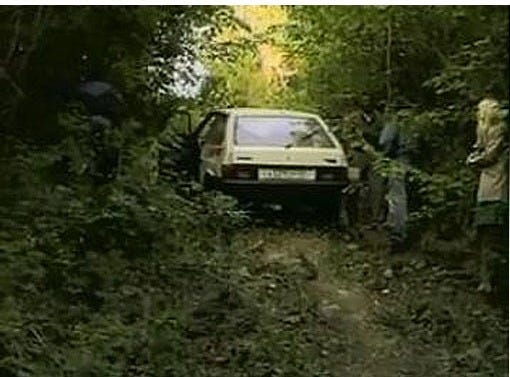
On September 1, 1993, police found an abandoned Lada hatchback in the woods near Upravlenchesky. It belonged to a young man identified by Russian accounts as Kozlov. Not far away, investigators found his body and that of a woman, Perova; both had been stabbed repeatedly in the chest and neck, and had died the same night. Relatives said the two were romantically involved. [2]
1993 was a violent year in Russia. The Soviet Union was gone, and gangs were carving up cities, and a double stabbing in the woods looked to detectives like exactly the kind of thing a local gang did over money or turf. It would be several years before the murders were recognized as part of a larger pattern.
1996 Murders
For almost three years, the forests were quiet. Then, on the night of May 18, 1996, Yegor Sidorenko and his girlfriend, Kolmychkova, parked near a hamlet called Sorokiny Khutor. Around three in the morning, she got out and saw someone among the trees, watching. Sidorenko got out to talk to the stranger and was stabbed about eleven times. Wounded, he watched the attacker chase Kolmychkova down and stab her, then drive off in their car with her still inside.1
Sidorenko survived. He crawled to the highway and was picked up by a passing driver. He later gave police a description detailed enough for a facial composite: a man in camouflage and a mask, carrying a knife and a spade. [1]
Three days later, the couple's car was found empty and abandoned about 15 kilometers away; Kolmychkova's body was found the next day roughly 150 meters from the car. She had been stabbed nine times in the chest.
For the first time, investigators wondered whether there may be a link between this crime and the unsolved 1993 case. The pattern —a couple attacked as they were parked in the woods at night—was too similar to ignore.
Through the summer of 1996, the attacks continued around the same stretch of forest. On July 24, 1996, investigators found a burned car near Studenyi Ovrag with the body of its owner, Isaichev, inside and the body of 19-year-old Vedernikova in the trunk. The fire destroyed most of the evidence, but it was determined that both victims had been stabbed before being set on fire. 2
On the night of August 1, two more victims were attacked in the same area. One was seriously injured but survived; the other went missing, and their body was discovered a week later near the village of Vodino. [1]
Then, early on September 3, 1996, near Novosemeykino, a man named Mamuka Santaladze and his girlfriend, Alevtina Butkevich, were fired on through their car window with a sawed-off shotgun. Santaladze was hit and then knifed. However, he managed to grab Butkevich's hand, and the two ran through the forest and made it to the highway, where they flagged down a car. Both victims survived and gave a second description of the assailant. [1]
The couple’s stolen car turned up the next day with the radio and cassette tapes gone, a curious detail investigators had noticed at almost every scene. On October 6, two more victims, Bochkarev and Goleva, disappeared from the same forest. Goleva’s body was found nine days later, her hands bound, while Bochkarev’s body was not discovered until November 13, more than fifteen kilometers away. [1]
By the autumn of 1996, the press had named the killer the “Forest Maniac,” and in Russian reports “Leshy,” the forest spirit of folklore said to lure travelers off the road forever. There were unsubstantiated rumors that he called out for help in a woman's voice to draw victims in, and that one body had been posed. Though these claims were never confirmed, they only added to the growing fear. [1]
The Chase
By November, the investigation was intensified, with patrols increased and concentrated around the forest roads. In the early hours of November 23, 1996, Dmitry Korotkov and Elena Kulakovskaya were killed as they sat together in a blue Lada near the Upravlenchesky–Gorny road.3
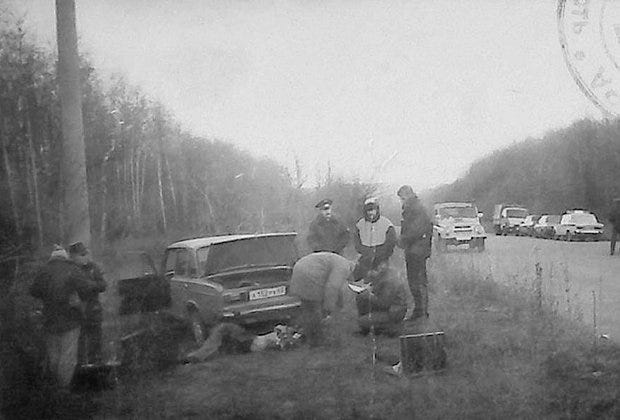
The attacker took Korotkov's car toward the Krasnoglinsky Highway, where inspector Pavel Esipov and 21-year-old officer Yevgeny Zemlyakov noticed the car pull from the forest with its headlights off. They signaled for it to stop, but the driver sped up.
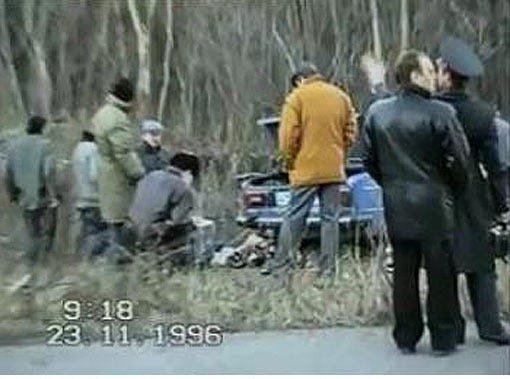
The chase ran several kilometers before the driver jumped out and ran into the trees. Zemlyakov followed on foot, and the man turned and fired the sawed-off shotgun into his stomach before escaping into the dark. Luckily, Zemlyakov survived.
In the abandoned car's trunk, officers found Korotkov's body, and beside it a camouflage jacket which his family said did not belong to him. Kulakovskaya was missing. Her decomposed remains were found the following May, about 300 meters from the Lesnoye cemetery. [1]
By spring 1997 the pressure was enormous. After the shooting of Officer Zemlyakov, the regional prosecutor assembled a task force of 29. Officially, they were investigating the attempted murder of a policeman, but everyone knew they were hunting the Forest Maniac, who by then was linked to at least nine deaths. [2] The killer clearly knew the woods, and investigators focused on people familiar with the area, including those whose work took them into isolated country.
Decoy officers even posed as couples in an attempt to draw out the killer. During the investigation, evidence began to point in an unsettling direction. Some of the crimes occurred near penal colonies, and in one case a victim's hands had been restrained with a trouser belt fitted with handcuffs that were standard issue for prison-colony officers. [1] The search widened to police and correctional staff.
Ultimately, about 1,500 law-enforcement personnel were checked. Four fit the profile, and in April 1997, blood, hair, and clothing from the four as well as from the crime scenes were sent to labs in Moscow. As they waited on the results, one suspect drew particular attention: Dmitry Viktorovich Voroshilov. [1]
Arrest of Dmitry Voroshilov
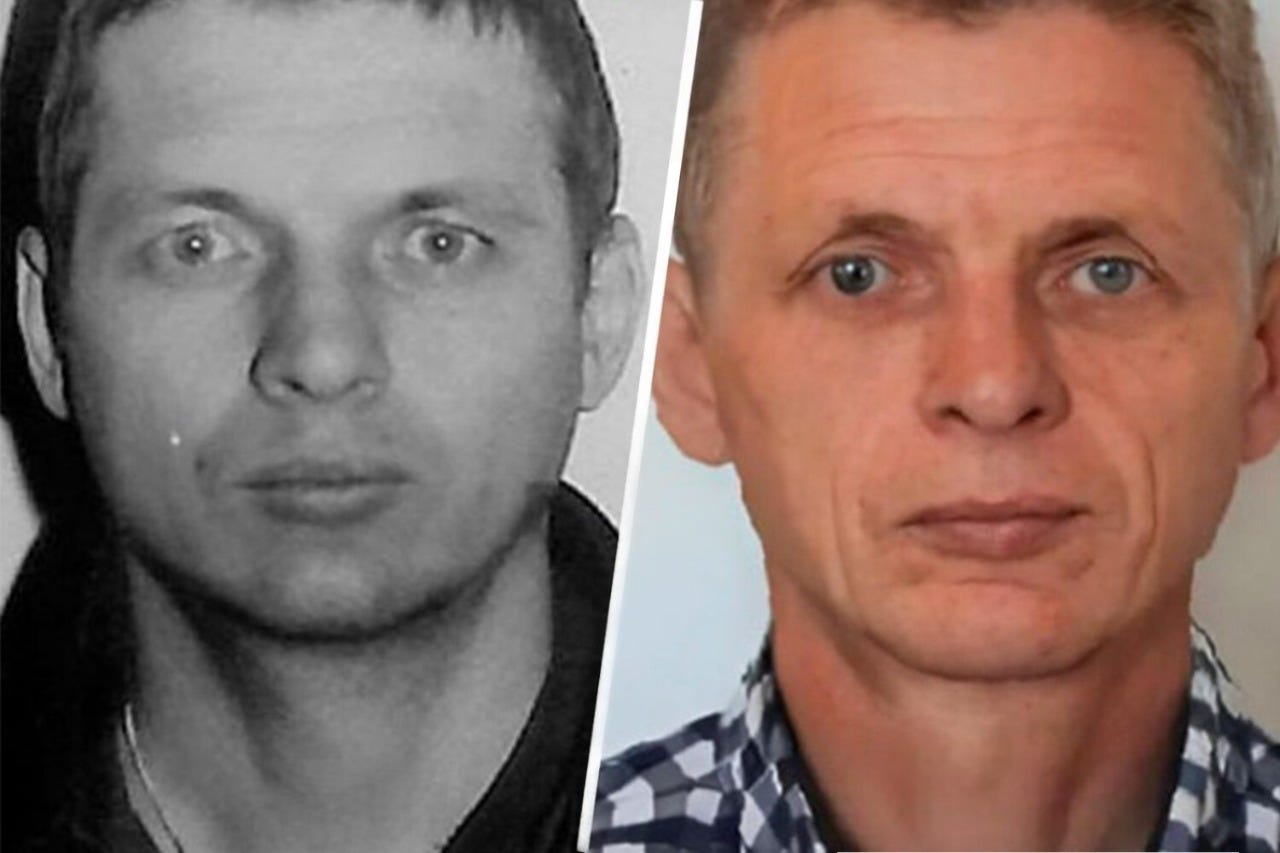
Dmitry Voroshilov was a 30-year-old Major of the Internal Service and Chief of Security at a penal colony near Samara that held convicts being treated for tuberculosis. His job put him around weapons, restraints, and the surrounding country, and his build matched survivors' description of a physically powerful man. [1]
Colleagues painted an unsettling picture: complaints from female staff, a slap, a threat to kill a doctor, a habit of calling women “witches.” A psychiatric evaluation flagged a personality disorder and epilepsy yet cleared him for duty. His martial-arts trainer called him an unusually capable fighter who could strike with either hand [1]
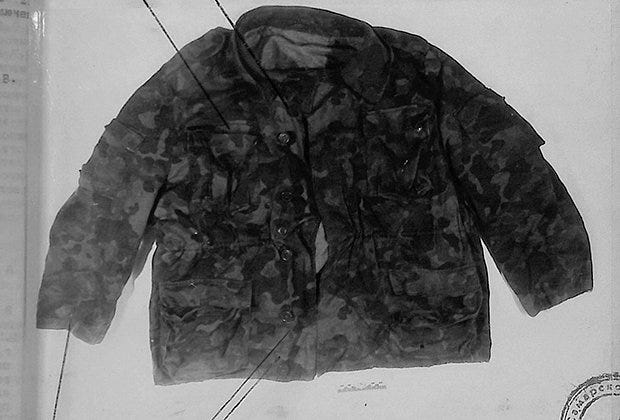
When the lab results came back in mid-1997, the case rested on the camouflage jacket left in Korotkov's car, but the forensics were far from clean. This was blood-group and trace analysis, not DNA, and the blood-group results were inconclusive because the stains matched three different groups and Korotkov and Voroshilov shared the same one.
Investigators arrested Voroshilov at correctional colony No. 65/19 on July 30, 1997; and within days he was charged with two murders and three assaults. He denied all of the charges, saying he'd been set up. Voroshilov was sent to the Serbsky Center in Moscow for evaluation; he was ruled sane but showed signs of epilepsy and a mixed personality disorder. [1]
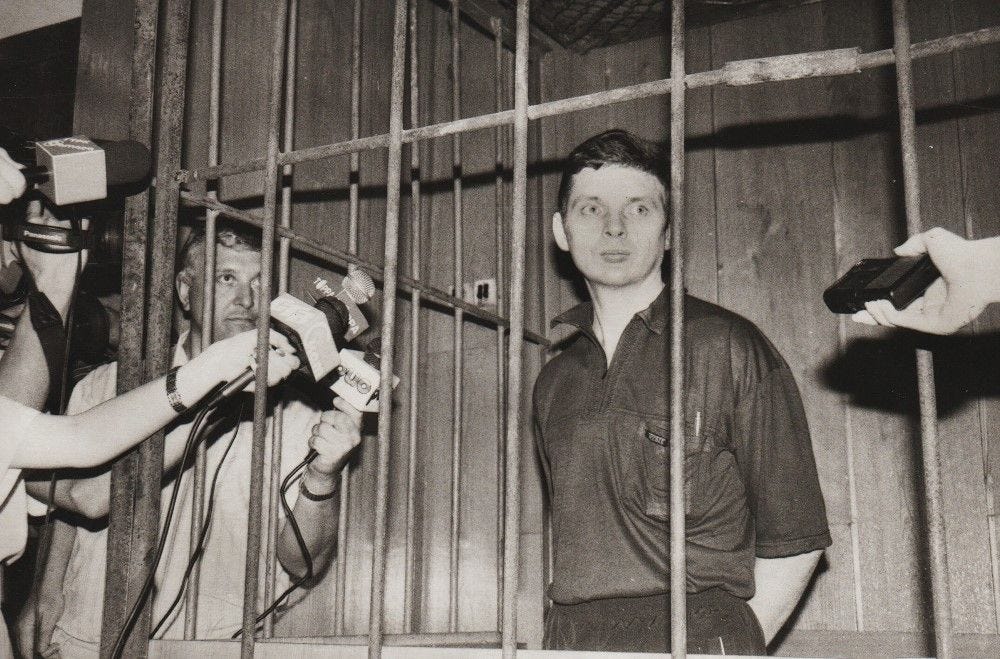
Conviction and Sentence
At trial in 1999, before Judge Valery Kurylev, the prosecution relied heavily on jacket forensics and eyewitnesses. One of the officers who chased Voroshilov identified him but admitted he'd seen the fleeing man's face lit by headlights for only seconds; thus, the identification was ruled shaky.
Worse for the state, the two survivors who had seen their attacker up close — Santaladze and Butkevich could not identify Voroshilov; Santaladze insisted their attack was an unrelated carjacking, not the Forest Maniac. [1]
The case also drew scandal. Almost immediately after his arrest, Voroshilov said he'd been tortured into cooperating during a September 1997 interrogation. Six officers were investigated, and the case dragged into 1999, ending in acquittal, though all six officers were quietly dismissed. [1]

In the end, the Samara District Court convicted Voroshilov of murdering Korotkov and Kulakovskaya and of the assaults on Santaladze, Butkevich and Officer Zemlyakov. He was sentenced to 15 years: the maximum under the code at the time. The Supreme Court of Russia upheld the conviction on March 6, 2000. A complaint to the European Court of Human Rights was rejected on December 8, 2005.
Voroshilov served his full term and was released in July 2012. [1]
Case Remains Unresolved
At first, it seemed that Voroshilov’s conviction had put an end to the case. However, even after his arrest, six similar murders occurred in the woods around Samara between 1997 and 1998, leaving many to believe that the killer was still out there. However, authorities maintained that they had arrested and convicted the man responsible for the “Forest Maniac” killings. [1]
Then, in February 1999, a fire tore through the Samara Regional Interior Ministry building, killing 57 officers and injuring hundreds. According to Russian accounts, it also destroyed huge volumes of evidence and files, including the camouflage jacket on which every forensic match had depended. [1]
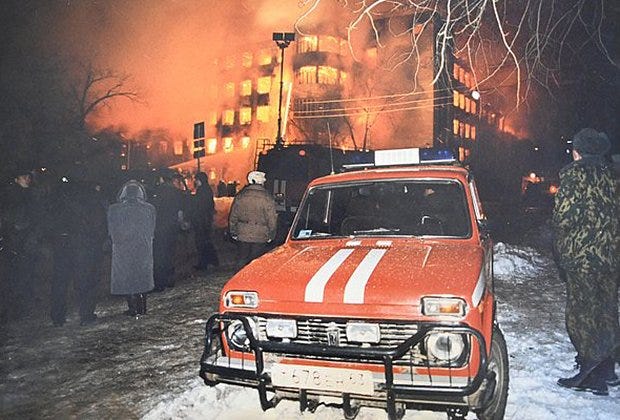
The questions kept coming. In 2023, Russia's Investigative Committee reportedly reviewed the case, leading to doubts about Voroshilov’s guilt, citing a claim that he couldn't drive, a claim that sat oddly beside a driver's license in his own file. [1]
In June 2025, Russian outlets reported that Voroshilov, by then around 58, had moved to Dnipropetrovsk Oblast around 2022 and joined the Ukrainian armed forces.4
Today the forests around the old Triangle of Love are quiet. Couples still go there, and there have been no killings matching the Forest Maniac in close to thirty years. With the key evidence long destroyed, the Forest Maniac case endures as an unresolved chapter in Samara's history.
Nadezhdin, Igor. “Лесной маньяк…” Lenta.ru, August 3, 2024. https://lenta.ru/articles/2024/08/03/maniac/
“Лесной маньяк под Самарой.” TLTgorod.ru, 2013. http://tltgorod.ru/crime/article-30154/1/
Fedorov, Andrey. “Тюремный охранник стал маньяком.” Kommersant, June 25, 1999. https://www.kommersant.ru/doc/220714
“Серийный маньяк из 90-х вступил в ряды ВСУ.” RIA Novosti, June 9, 2025. https://ria.ru/20250609/vsu-2021760313.html