


Final Patrol
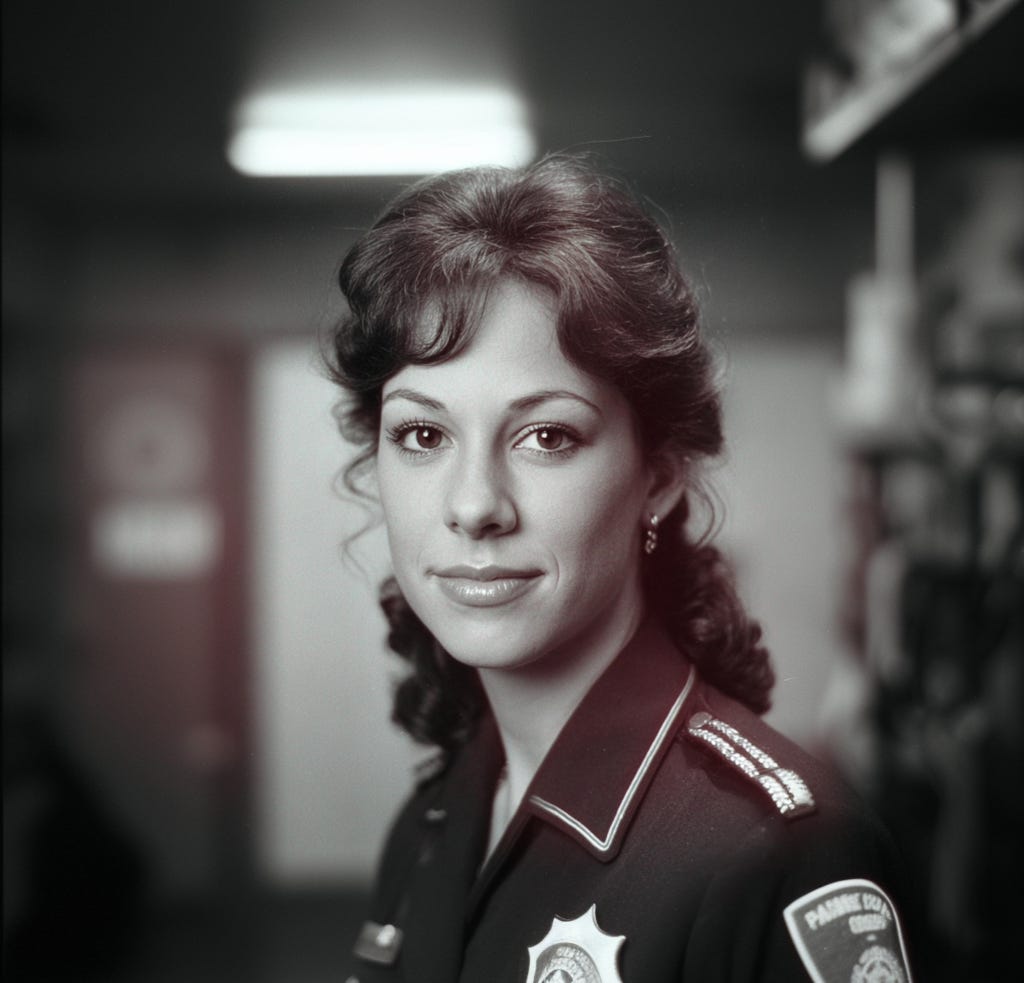
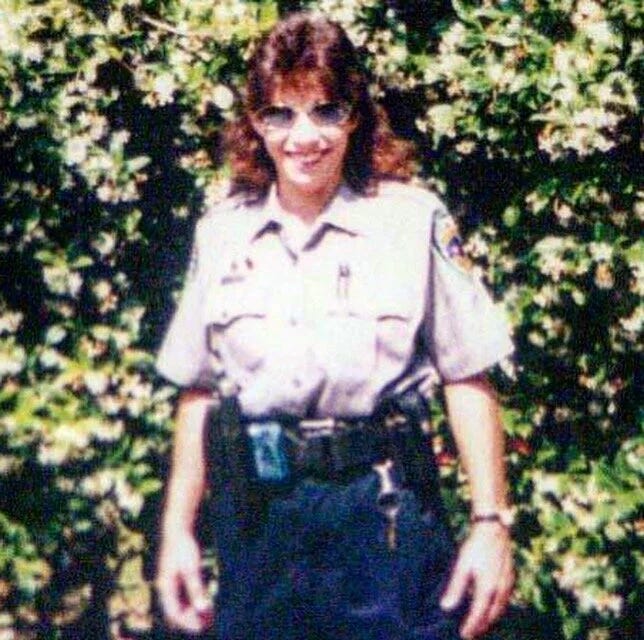
During her brief law enforcement career, 33-year-old Davina Jones, also known as ‘Dee,’ had patrolled Bald Head Island, North Carolina, without many incidents. Bald Head Island had few of the traditional dangers that define a police officer's life in the larger cities: no back-alley shootings, no gang conflicts, or midnight chases through the streets, but for its calm surface, the island certainly had its shady undercurrents.
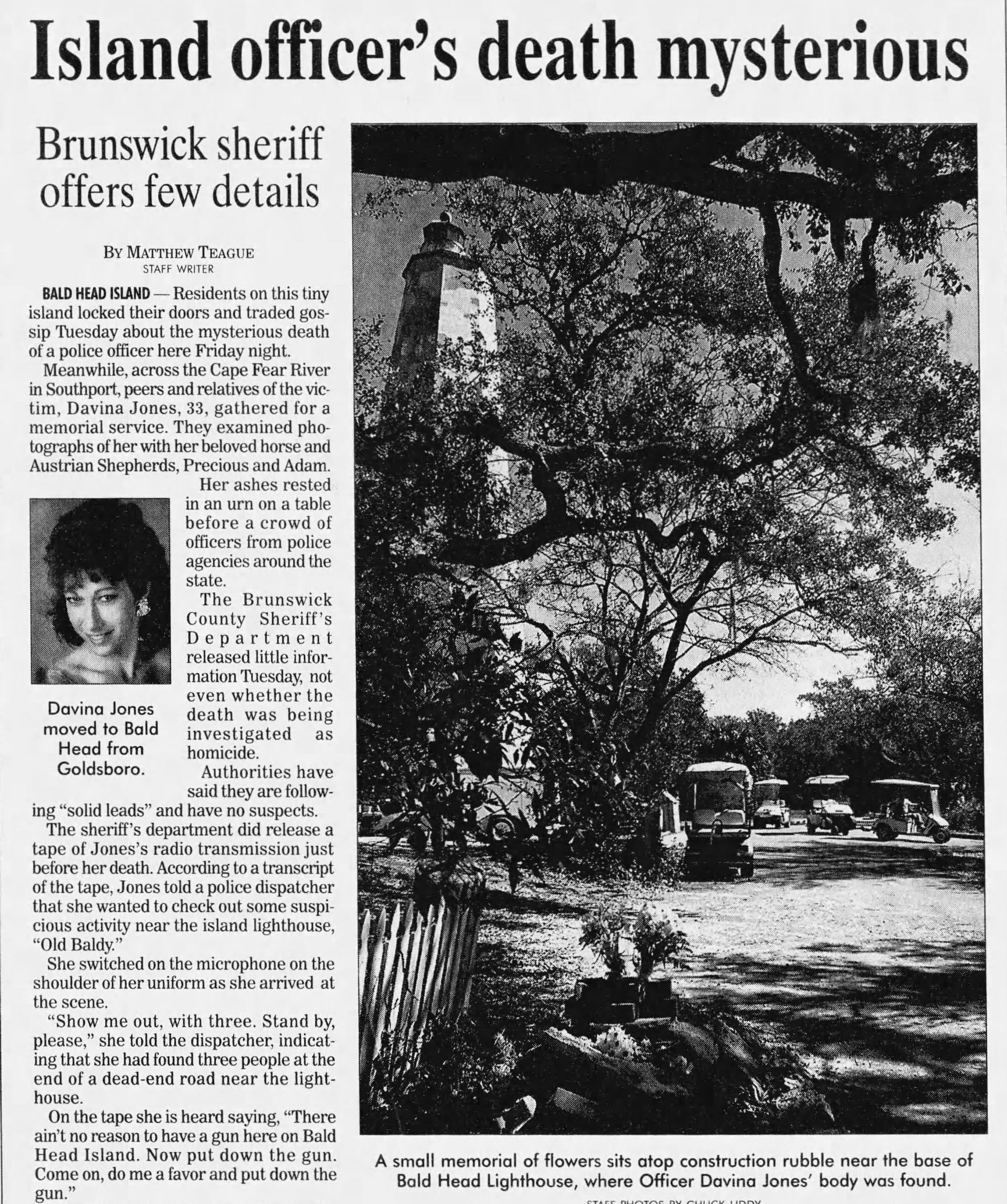
On the night of October 22, 1999, Davina set out on a routine patrol around 11:48 p.m. Her partner, Officer Keith Cain, would later recall that she left the station without him at some point during their shift, and minutes later, dispatch received her first transmission - she was ‘out with three.’
The phrase meant she had encountered three individuals, and it was her last, clearly recorded signal. Next, her voice, steady and clear, came over the radio a second time: “There ain’t no reason to have a gun here on Bald Head Island… you want to put down the gun — …” The transmission cut off mid-sentence, leaving the air ringing with static.
About 15 minutes later, Davina’s partner, Keith, arrived on scene. Davina was found lying on the ground with a single gunshot wound to the back of her head, with her service pistol nearby. Testing would confirm that the fatal shot had been fired from her gun.
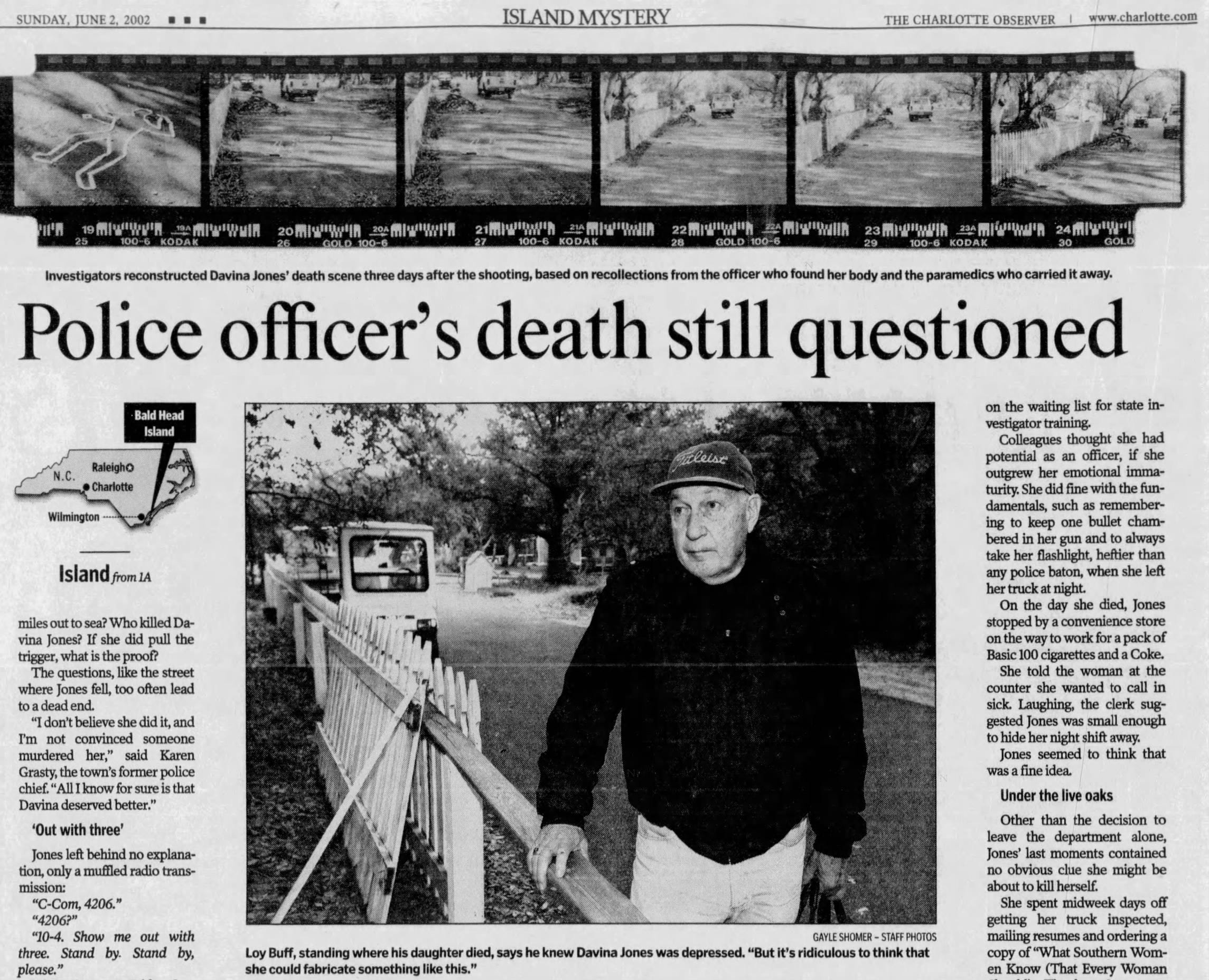
Davina’s patrol vehicle was parked at the dark base of the lighthouse, with its engine still running, and the headlights shining a bright white beam across a scene that would become the center of one of North Carolina’s most controversial investigations.
A Controversial Ruling
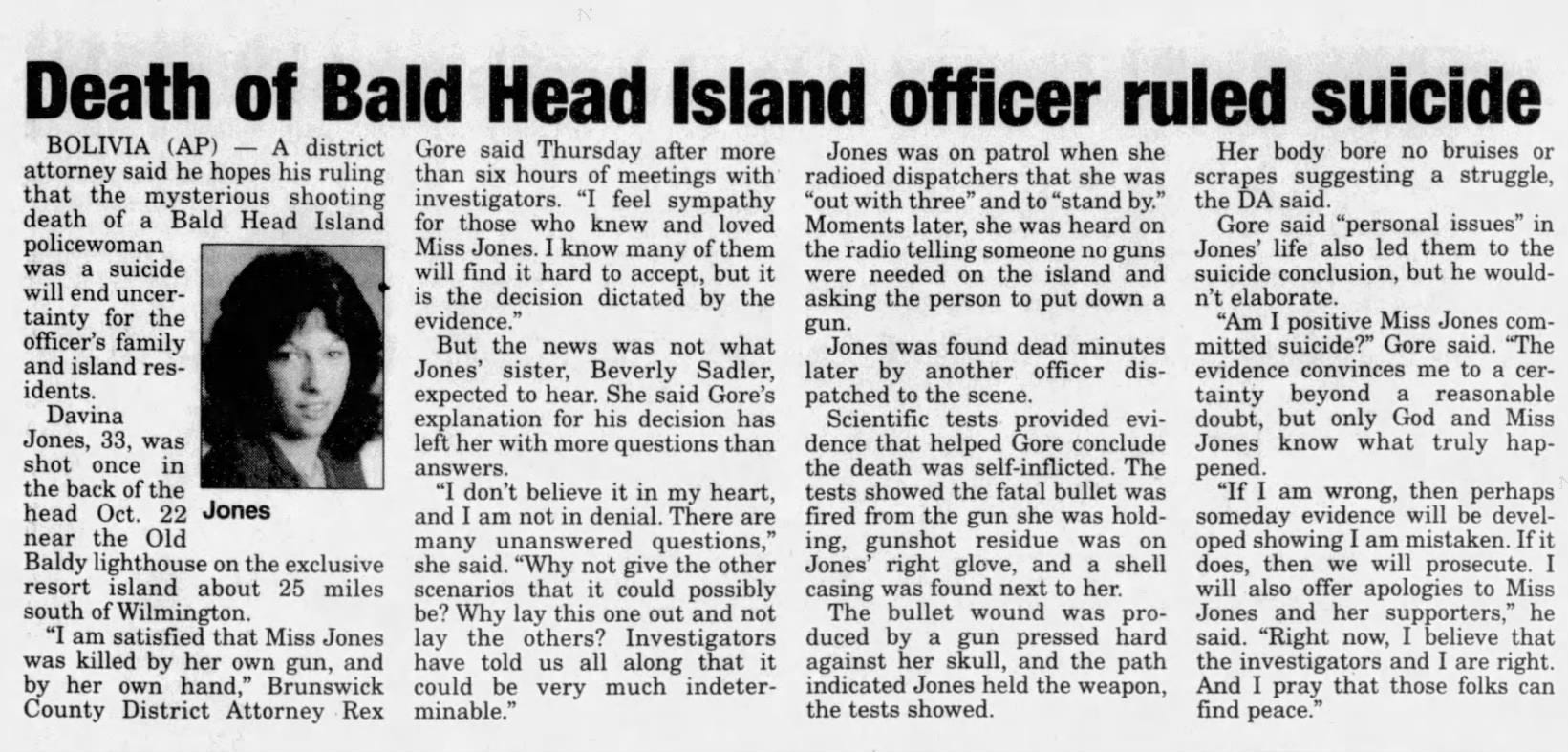
The Brunswick County Sheriff's Office and the State Bureau of Investigation were called in to investigate Davina Jones’ death, and within weeks, then-District Attorney Rex Gore announced a ruling: Davina had died by suicide.
This conclusion, which seemed to be made hastily and with apparent finality, shocked her family as well as many others. For a community that prided itself on its peaceful image, the idea that a police officer had taken her own life while on duty was unsettling. For Davina’s family, there was no way to reconcile the circumstances with that ruling.
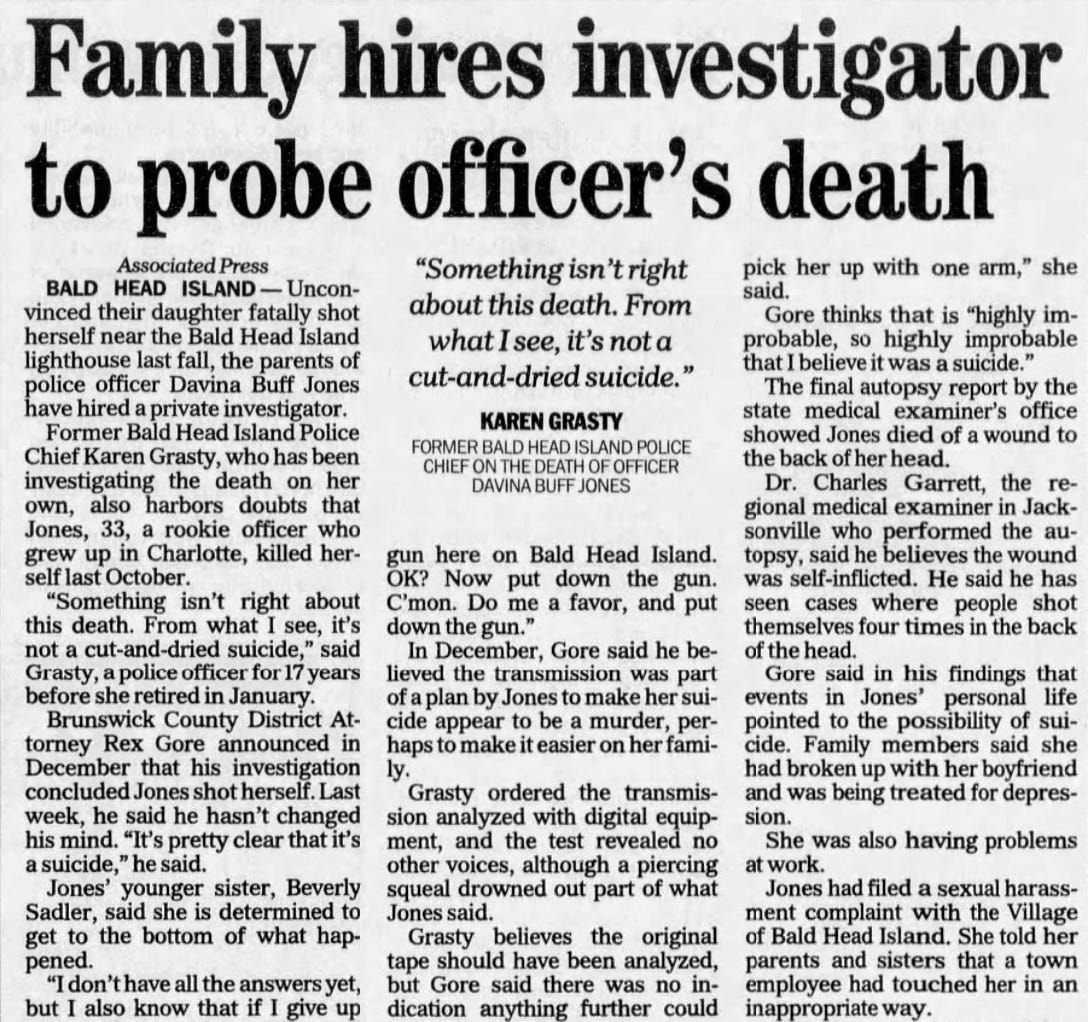
The surface details were unusual: a shot to the back of the head, her vehicle left running, and a radio call that suggested a violent confrontation, but the backstory was also perplexing. According to reporting at the time, Davina’s father told news crews that his daughter had recently told him she believed she had stumbled onto illegal activity on the island - drug activity near the lighthouse that had gone beyond simple ‘tourist mischief.’ He claimed she had discussed it with him before her death.
To her family and attorneys, that detail carried some weight - it painted a portrait of someone not ready to end her life, but of an officer increasingly concerned about what she was seeing happening on her beat.
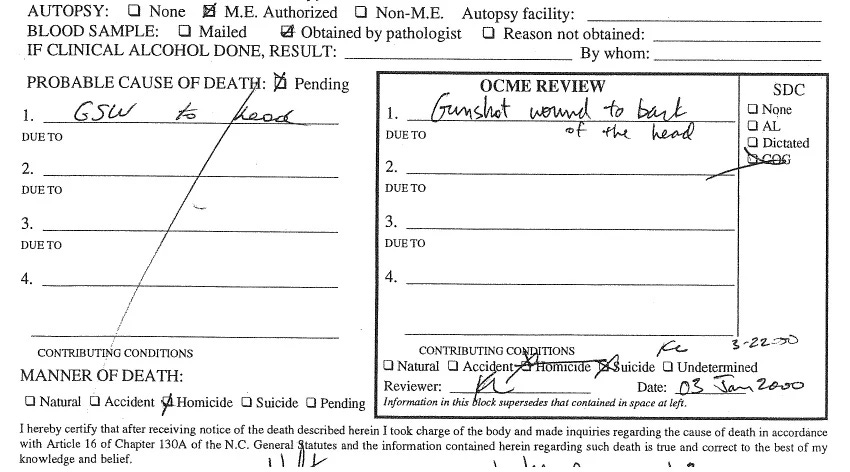
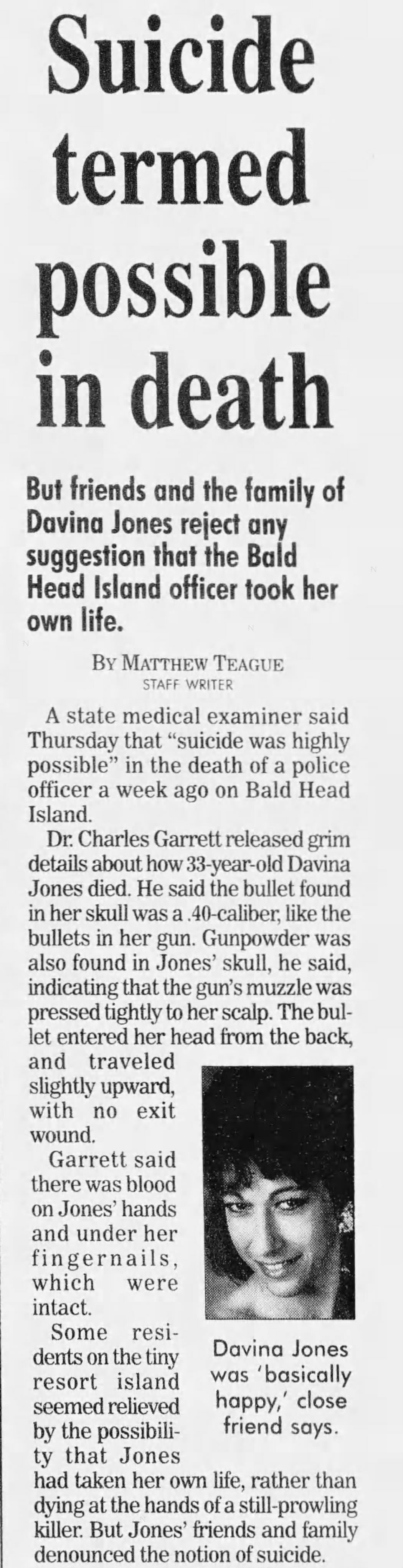
Perhaps one of the most glaring inconsistencies was the wound itself: a shot to the back of the head. This type of wound is a very uncommon trajectory for a self-inflicted injury - attorneys argued that the physics of such a shot would make suicide highly unlikely, especially given the angle and position described in autopsy reports.
There were also questions about how the scene itself was handled. Though not covered in early news reporting, subsequent accounts have suggested that the crime scene was hosed down before all of the evidence could be fully documented, reportedly in preparation for a wedding at the lighthouse the following day. That cleanup allegedly destroyed bloodstains and other forensic clues that might have provided a clearer picture of what actually happened that night.
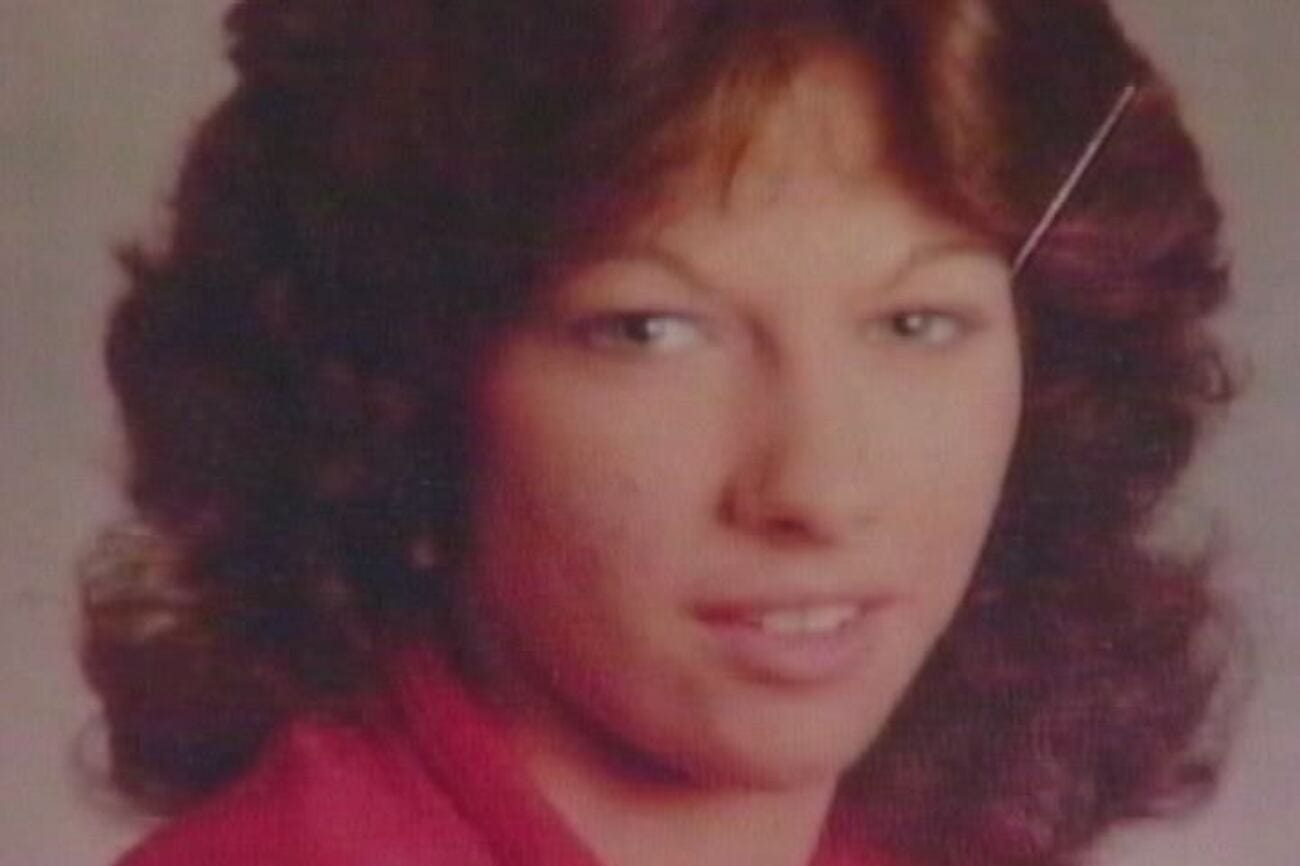
Davina Buff Jones
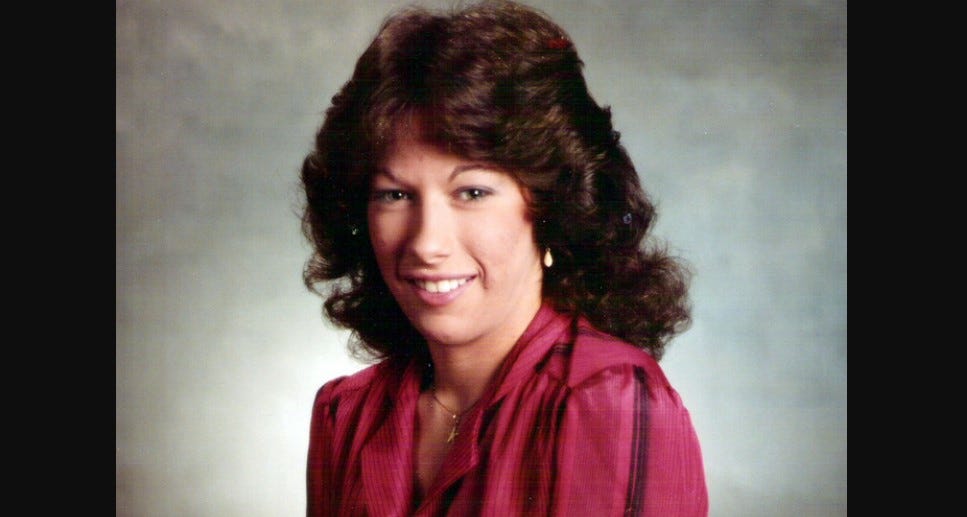
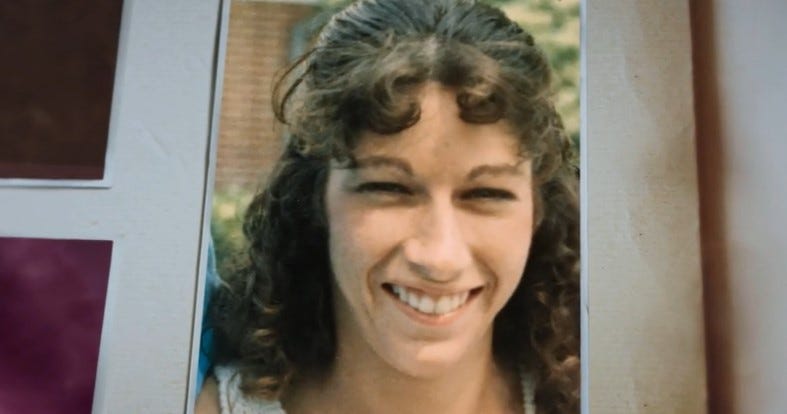
Before her name became attached to headlines, hearings, and controversy, Davina Buff Jones was simply “Dee” to the people who knew her best. Born and raised in Charlotte, North Carolina, she was the second of three daughters in a close-knit family.
Those who grew up with her described a child who seemed to possess boundless energy. She was small in stature but large in personality, the kind of girl who talked louder than necessary, laughed easily, and argued just as easily. She was fearless in a way that sometimes bordered on stubbornness - it was not recklessness so much as determination; if she believed something was right, she held her ground.
Friends and former partners would later describe her as outgoing, talkative, and strong-willed. One ex-boyfriend recalled that she was rarely quiet and that she filled a room with conversation. Her path to law enforcement was not typical. By the time she joined the Bald Head Island Department of Public Safety in 1998, she was 32, older than most rookie officers. She had worked other jobs before deciding to pursue a career in policing.
Charlotte Magazine later noted that in the mid-1990s, she had received outpatient treatment for adjustment disorder and chronic depression. These details would be cited by prosecutors after her death as part of the rationale for ruling her death a suicide; her family, however, insisted that those earlier periods did not define her state of mind in 1999.
At the center of her world was her family, particularly her father, Loy Buff, who would become one of the most persistent voices challenging the official conclusions about her death. His willingness to speak publicly, to relive the worst night of his life repeatedly in interviews and hearings, spoke to the closeness they shared.
The Buff family’s sustained fight for reclassification, a fight that would last more than a decade, reflected not only doubt about the investigation, but deep conviction about who Davina was - they believed she was not someone who would quietly end her life on a darkened path beside a lighthouse.
Small Town Secrets
Long before Davina Jones stepped out on that final patrol, she had already felt the weight of that island’s gaze. Bald Head Island was designed to seem timeless, a place where the Atlantic’s rhythms marked the hours more than clocks ever did, but beneath its beautiful skies and beachfront homes lay a community defined by old money, tight circles, and a desire to protect its image.
Davina was nine months into her job with the Bald Head Island Police Department when those social tensions first began to surface; she was a small-town officer in a place where everyone knew everyone else, and yet she hadn’t learned to walk softly through those interconnected lives. Davina did her job as she saw it: enforcing the rules without regard for who might be upset by it, and in a community that prized connections and favors, that made her an outsider.
Locals didn’t always appreciate her style, and letters were written to island authorities complaining about her enforcement of ordinances; vacationers grumbled about her refusal to bend the rules, which earned her the ire of many tourists and full-time residents.
Then came what would be the most consequential decision of her short tenure: she filed a sexual harassment complaint against an emergency medical services worker on the island. The complaint was not a trivial matter - in a setting where everyone went to the same functions, ate at the same restaurants, and belonged to the same tiny social circles, raising accusations of harassment was like upending a fragile ecosystem.
Some residents were rattled, some were angry, and just as importantly, some began to view her differently, not as an officer doing her duty, but as someone who had crossed a line in a community that valued silence over confrontation.
Whether the tensions that built up around her before October 22, 1999, had any direct connection to what happened that night will never be known with certainty, but understanding how Davina was viewed by part of the small community she had sworn to protect adds an essential layer to the mystery.
It reveals that this was not simply the case of a young officer on patrol; it was the story of an officer at odds with her environment, struggling with dissent on and off the job, and trying to navigate a world that may not have been prepared to welcome her.
Legal Challenges
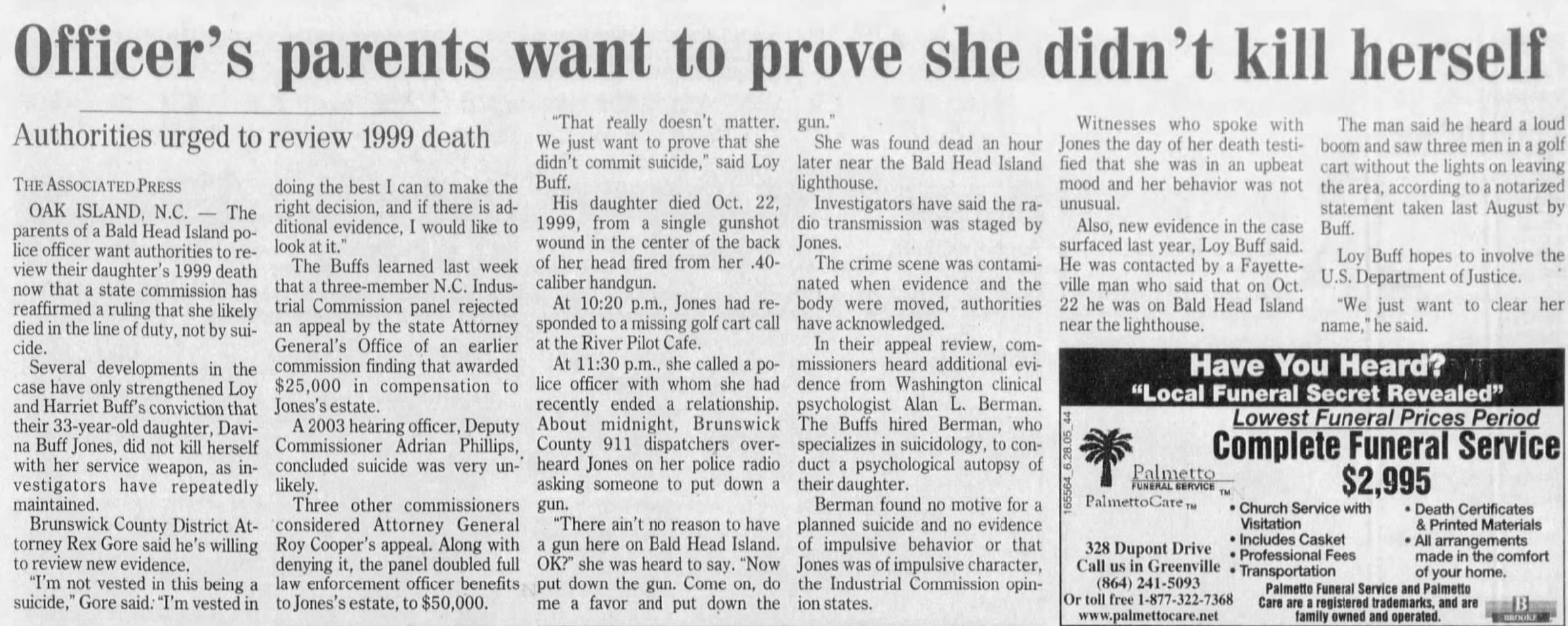
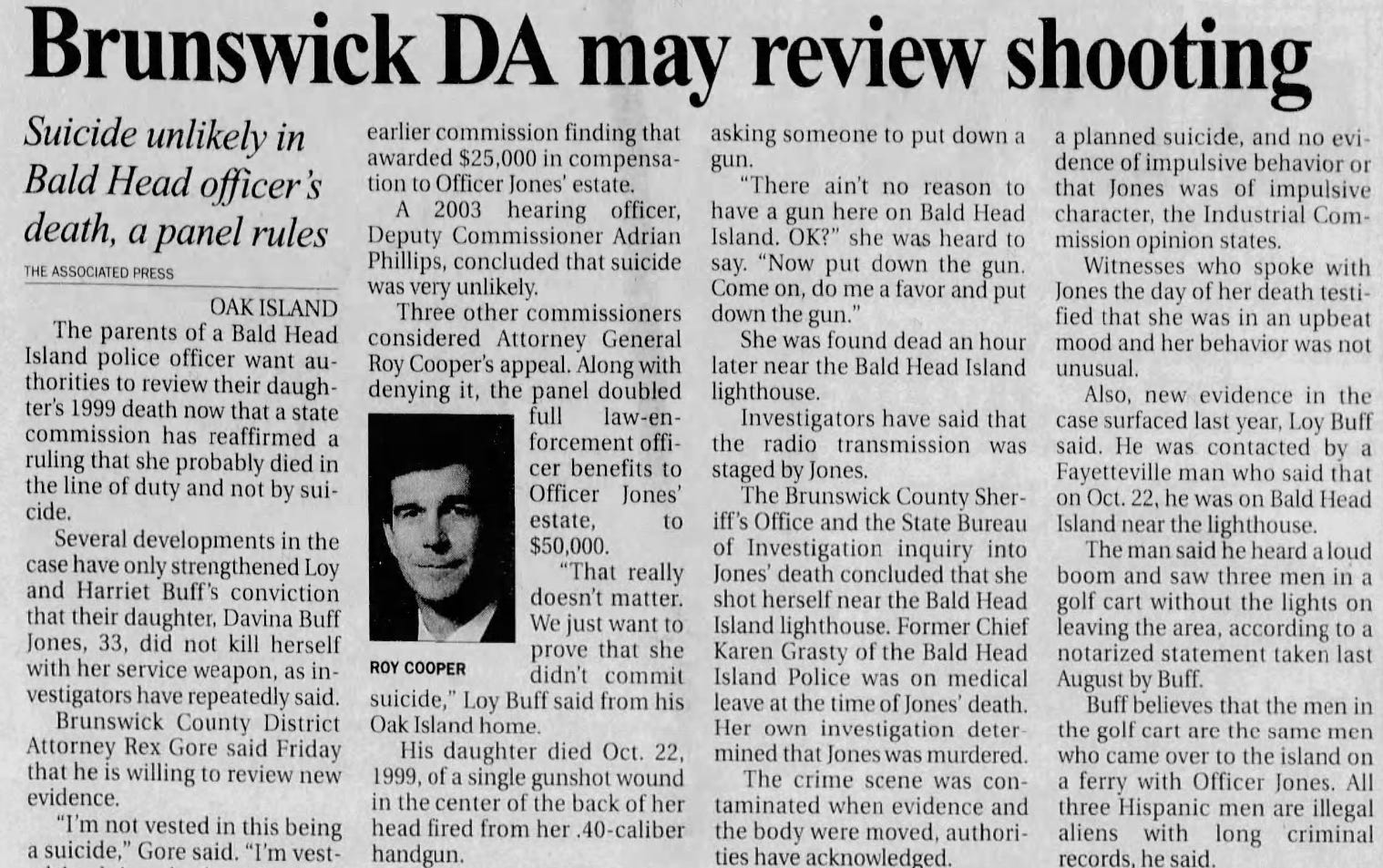
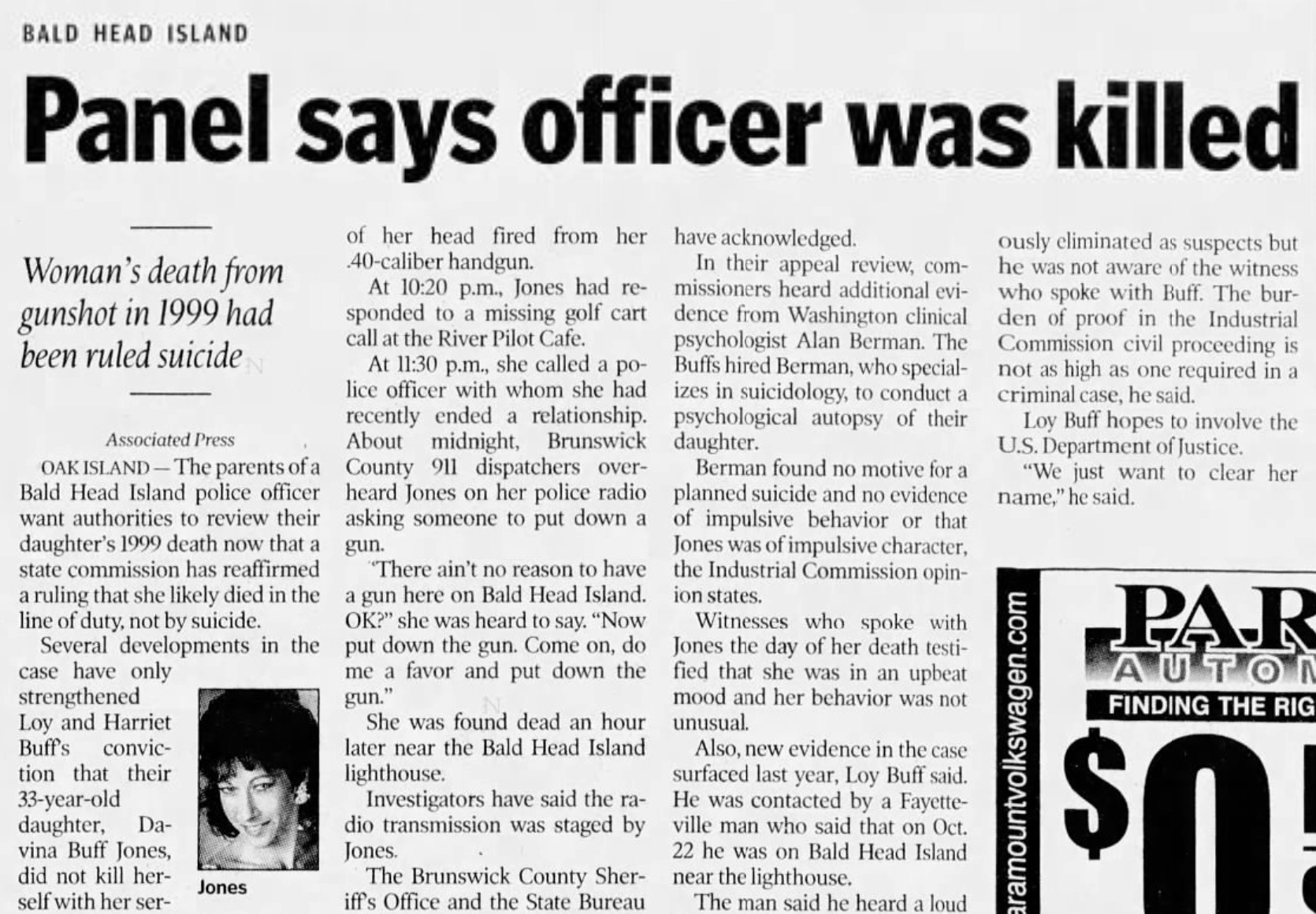
Davina’s family refused to accept suicide as the ruling, and in 2003, they took the matter to the North Carolina Industrial Commission - not as a criminal appeal, but to challenge the cause of death for purposes of death benefits. In those proceedings, across several hearings where evidence was presented and witnesses examined, the Commission ruled her death a homicide under state law.
That ruling did not legally overturn the suicide classification, but it was deeply symbolic. It recognized what the Buff family had long argued: that at least in a civil context, it seemed more likely someone else had been involved or, at the very least, that the suicide ruling could not be justified without serious doubt.
The Buff family continued to push, spending tens of thousands of dollars on private investigators, legal fees, and interviews in pursuit of clarity. It wasn’t until 2011, more than a decade after Davina’s death, that the case gained renewed official scrutiny. Newly elected Brunswick County District Attorney Jon David publicly announced a decision to re-examine the case.
He acknowledged the sharp contrast between the original suicide ruling and the Industrial Commission’s homicide findings, saying that the differences in conclusions demanded a fresh look. An outside review was conducted by investigators who had not been involved in the original case.
In December 2013, the results were released: rather than reaffirming the suicide ruling, the review concluded that the available evidence did not support a definitive finding of suicide - there simply wasn’t enough to say conclusively what happened. As a result, the official cause of death was reclassified as undetermined, and the case file was left open for future leads.
For the Buff family, it was a bittersweet victory: the state no longer stood behind the suicide classification, but there was still no closure, no named suspect, and no accountability for a life lost under such strange circumstances.
Closing Thoughts
More than twenty years later, the mystery surrounding Officer Davina Buff Jones’ death continues to linger. What began as a seemingly quick ruling of suicide evolved into a deep and unresolved mystery that continues to challenge assumptions about how unexplained deaths are investigated and understood.
Today, her death is officially listed as undetermined, an acknowledgement that the circumstances cannot be conclusively defined as suicide or homicide based on the evidence currently available.
Sources:
Rhew, Adam. “Shadows by the Sea.” Charlotte Magazine, 19 March 2014, https://www.charlottemagazine.com/shadows-by-the-sea/
Vanapalli, Viswa. “Davina Jones’ Death: How Did She Die? Who Killed Her?” The Cinemaholic, 16 November 2021, https://thecinemaholic.com/davina-jones-death-how-did-she-die-who-killed-her/
Dittrich, Stacy. “Analysis Of 13-Year Mysterious Death Of Cape Fear Police Woman.” Forbes, 27 June 2012, https://www.forbes.com/sites/crime/2012/06/25/analysis-of-13-year-mysterious-death-of-cape-fear-police-woman/
WECT Staff. “1999 officer death reclassified from suicide to 'undetermined'.” WECT, 21 December 2013, https://www.wect.com/story/24240600/1999-officer-death-reclassified-from-suicide-as-undetermined/
Flowers, Ashley & Prawat, Brit. “MYSTERIOUS DEATH OF: Davina Buff Jones.” Crime Junkie, 22 August 2022, https://crimejunkiepodcast.com/mysterious-death-of-davina-buff-jones/
Definitely some kind of cover up.
I lived on Bald Head during that time. You're talking lots of monied people who just wanted it to go away.