




Background
In August 1978, five young women disappeared in Singapore after they were hired as social escorts to attend a party aboard a ship. The women, four of whom were Malaysian, with the fifth being Singaporean, were all between 19 and 24 years old at the time of their disappearances.
An investigation would determine that the women had been hired by an individual claiming to be a Hong Kong businessman, accompanied by two other men who claimed to be Japanese. However, the identities of these men, as well as their actual nationalities, would become the source of debate and speculation.

Off the Books
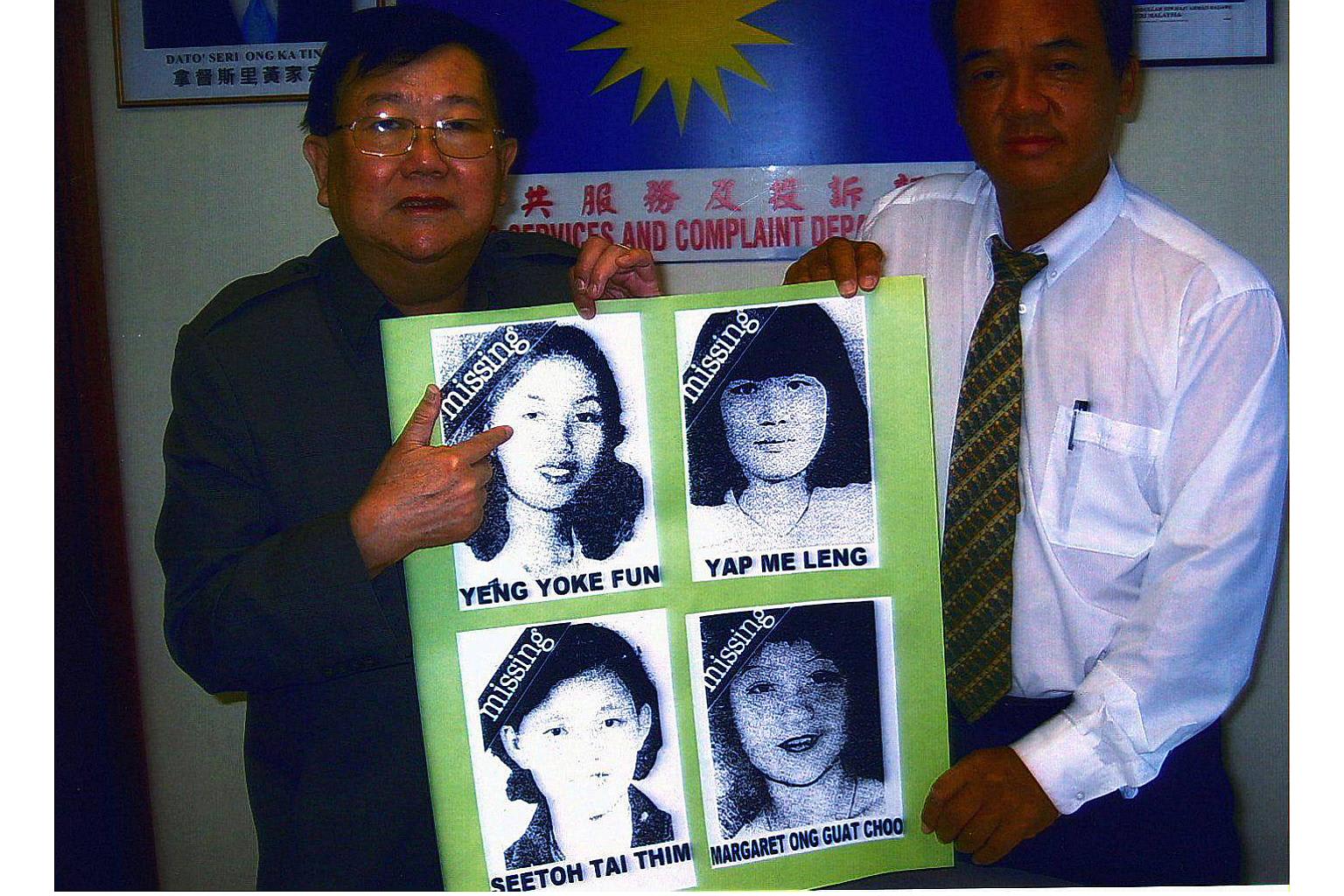
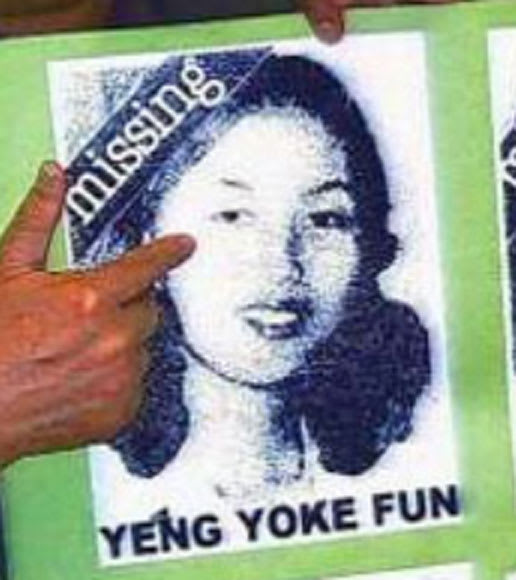
In 1978, Diana Ng Kum Yim, Yeng Yoke Fun, Yap Me Leng, Seetoh Tai Thim, and Margaret Ong Guat Choo were working as social escorts in Singapore. Diana was 24, the oldest among them, and the only Singaporean. The other four were Malaysians, with Yeng Yoke Fun being 22-years-old, Yap Me Leng also 22, and 19-year-olds Seetoh Tai Thim and Margaret Ong Guat Choo.
The women worked out of a quiet apartment on Clemenceau Avenue in Singapore. There was no indication to strangers that any business was being run there. There were about ten women working there at the time.
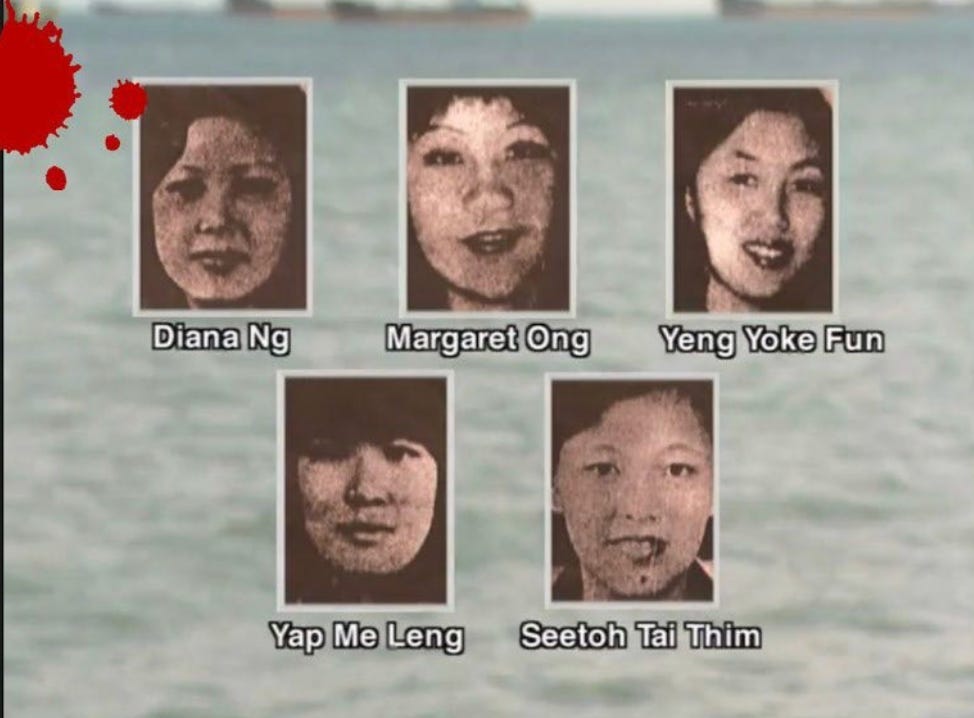
They were paid to accompany men, usually wealthy businessmen or visitors, to dinners, parties, or private gatherings. They were expected to be friendly, well-dressed, and good company. Sometimes it was just conversation and presence. Other times, the expectations went further. The rules were not always clear, and the boundaries often depended on the client they met. Still, the job offered money, independence, and a chance to support themselves or even their families back home.
During the late 1970s, Singapore was growing fast, and by 1978, the economy was improving, with more foreign businessmen entering the country. For young women with limited education or connections, high-paying jobs were not easy to find. Many low-paying jobs required long hours and offered little reward. So, some turned to unofficial work that was more profitable.
The agency focused on keeping business running smoothly rather than ensuring security. Background checks on clients were minimal or non-existent. If someone appeared wealthy and polite, that was often enough. This made the women vulnerable.
Invitation and Disappearance
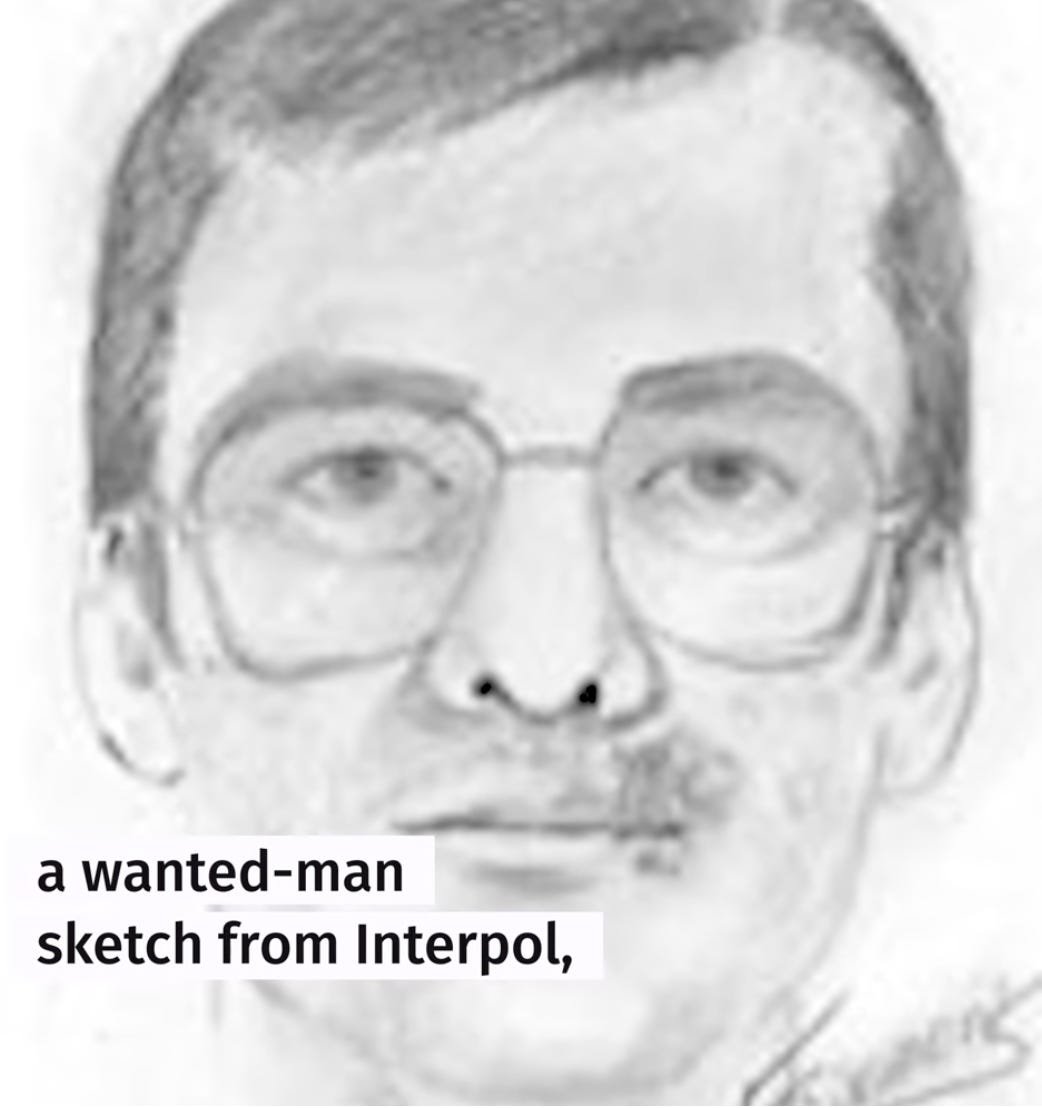
Diana Ng Kum Yim first met the three men approximately two weeks before the disappearances. She then introduced them to the other four young women at the agency. One of the men introduced himself as a Hong Kong businessman named “Wong.” He was described as a well-dressed man in his forties. His two associates were described as Japanese businessmen, also well-dressed and well-mannered.
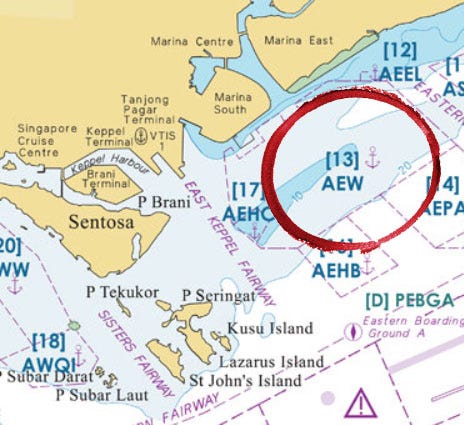
Over the next few days, Wong and his “clients” invited the women out to eat and took them shopping. They were then invited to attend a party aboard a cargo ship that was docked at the Eastern Anchorage. The party was scheduled for Sunday, August 20, 1978. Each woman was offered $100 per hour as well as a diamond ring for attending.
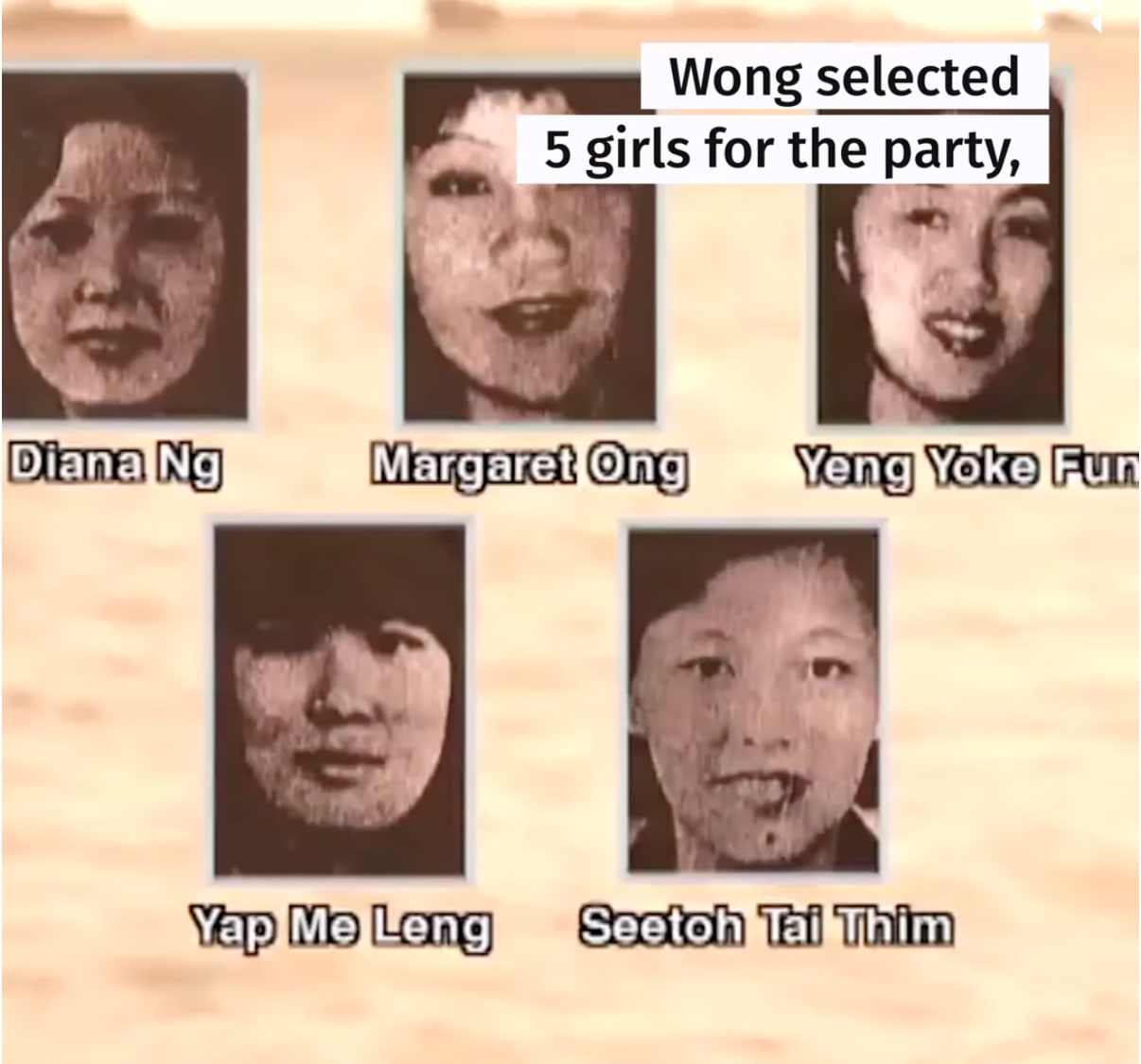
On Saturday, August 19, the day before the party, the women were taken on a shopping spree to buy outfits and accessories for the party. The following day, the five women joined their hosts for a picnic in the early afternoon before the evening’s event.
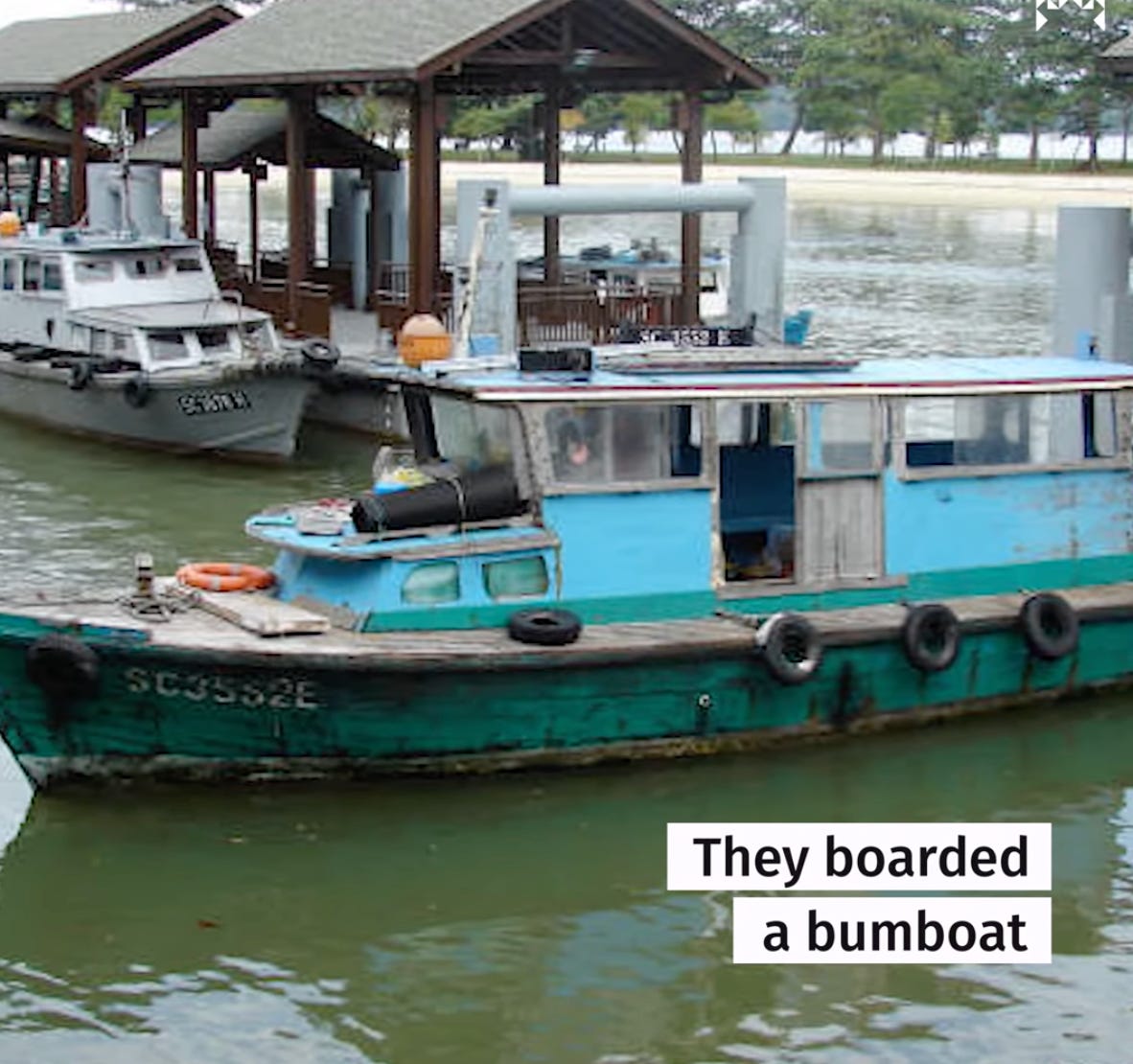
Later that afternoon, the five women were ferried from the Jardine Steps (now called Harbourfront) to the ship at the Eastern Anchorage. The boatman then watched the women board the ship. He would be the last known person to ever see them.
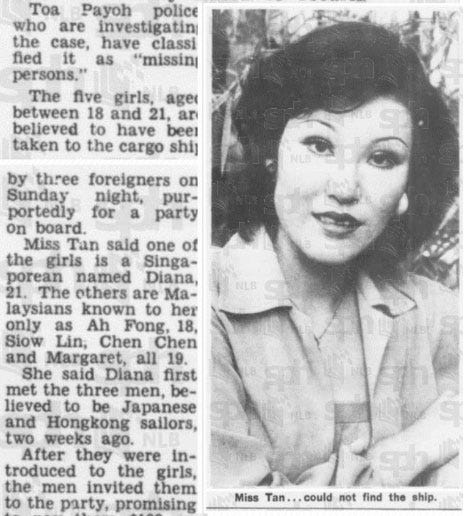
The following day, 22-year-old Helen Tan, a friend of the women, attempted to locate her friends after not hearing from them. Tan was aware of the party they had supposedly attended the night before, as she had nearly gone herself, but had a prior commitment.
She spoke to people who might have seen them. With the help of a taxi driver, she was able to confirm that the women had gone to Jardine Steps and boarded a boat. When they checked the Eastern Anchorage, the ship was gone. With little to go on, Helen Tan notified the police and reported her friends missing.
Investigation
Once the report was filed, authorities began investigating. Investigators began by retracing the women’s last known movements, searching the harbor area, and trying to identify the ship. They looked for records of vessels anchored offshore that day. The vessel was described as a cargo ship used for hosting foreign sailors. However, it has never been located.
The boatman who had taxied the women out to the ship was located and questioned. He confirmed that he had taken them out to a cargo ship anchored offshore, but when investigators tried to locate that ship, it was gone.
On August 26, six days after the disappearances, a severed right hand was discovered by a worker floating near Keppel Shipyard, not far from Eastern Anchorage. When investigators examined the hand, they confirmed that it belonged to a young woman. The hand showed evidence of torture. But even in its decomposition state, the fingernails were well-kept and manicured, with traces of nail polish still visible.
It suggested that whoever this woman was, she had taken care of her appearance, which the missing women often did. Despite the potential connection, the hand could not be conclusively identified or linked to any of the missing women.
International Attention
By early September 1978, the case had grown too big for Singapore alone to handle. The Singapore authorities reached out to Interpol, the international police organization that helps countries track criminals across borders.
As Interpol and local investigators worked together, they found that the identities of the three men could not be confirmed. The names they gave turned out to be false. There were no records linking them to real businesses in Hong Kong or Japan. The passports they had used were believed to be forged. Some investigators began to suspect the involvement of international crime groups, including human trafficking rings operating across Asia.
Some investigators believed the women may have been targeted specifically because of their work. They were accessible, less protected, and used to dealing with unknown clients. But again, despite its reach, the investigation found no solid proof. The three unidentified men may have been part of a vice syndicate based in Hong Kong or Japan, targeting young women working as escorts who could be lured with money and promises.
Another theory was explored in a 2005 Japanese television special detailing the 1978 disappearances. The program contained accounts of individuals who had been abducted by North Korean agents. Included were people from countries like Japan, Hong Kong, Macau, and South Korea. It was revealed that the abductees were often used to educate foreign spies or support intelligence operations.
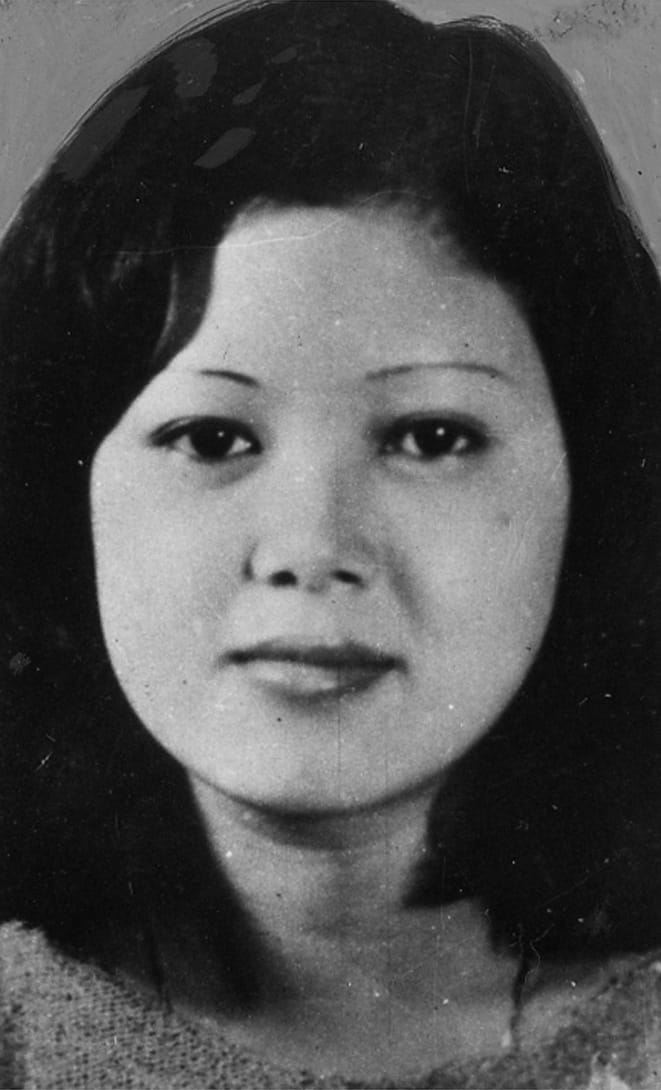
A South Korean actress named Choi Eun-hee, who was kidnapped in 1978, later said she had heard about foreign women living in Pyongyang who were possibly abductees. Then there was Charles Robert Jenkins, a former U.S. soldier who lived in North Korea for decades. He said that around 1980 or 1981, he saw a woman in Pyongyang who looked very similar to one of the missing women, Yeng Yoke Fun. He remembered her face, and he believed she was not there by choice.
There were also reports of other women in Asia being abducted in 1978, lured by men posing as foreigners, then taken onto boats and never seen again. These accounts changed how some people viewed the case. However, there is still no hard evidence of any link between North Korea and the disappearances.
Aftermath
Nearly 50 years later, the disappearances of the Singapore social escorts remain unsolved. In 2004, the Singapore documentary series Missing featured the case in one of its episodes, introducing the story to a newer generation. Programs like Solving Singapore and newer true crime discussion forums also brought the story back into public conversation, especially among younger audiences interested in unsolved cases.
In 2017, interest in the case was renewed after the assassination of Kim Jong-nam in Malaysia by suspected North Korean agents. The incident caused many people to revisit old theories about North Korean involvement in the disappearance of the five women.
The case also highlighted larger questions about safety and exploitation. In 1978, much like today, there was little protection for women working in escort services or nightlife-related jobs on the fringes of society. It is a tragic reminder that the most vulnerable and least seen in society are often the most at risk of violence and exploitation.
Sources:
Lay, Belmont. “5 social escorts in S’pore disappeared in Aug. 1978 after following sailors to cargo ship party.” Mothership, 1 September 2018, https://mothership.sg/2018/09/5-social-escorts-singapore-1978-missing/
“The Mysterious Disappearance of Five Women.” YouTube, Uploaded by YG from SG, 16 October 2020, https://www.youtube.com/watch?v=DXKaKtU9YAg
“Singapore's Lost: 5 Escorts At Sea.” YouTube, Uploaded by MustShareNews, 9 May 2018, https://www.youtube.com/watch?v=tRi2zA2ny4g
“1978 disappearance of Singapore social escorts.” Grokipedia, https://grokipedia.com/page/1978_disappearance_of_singapore_social_escorts