


Background
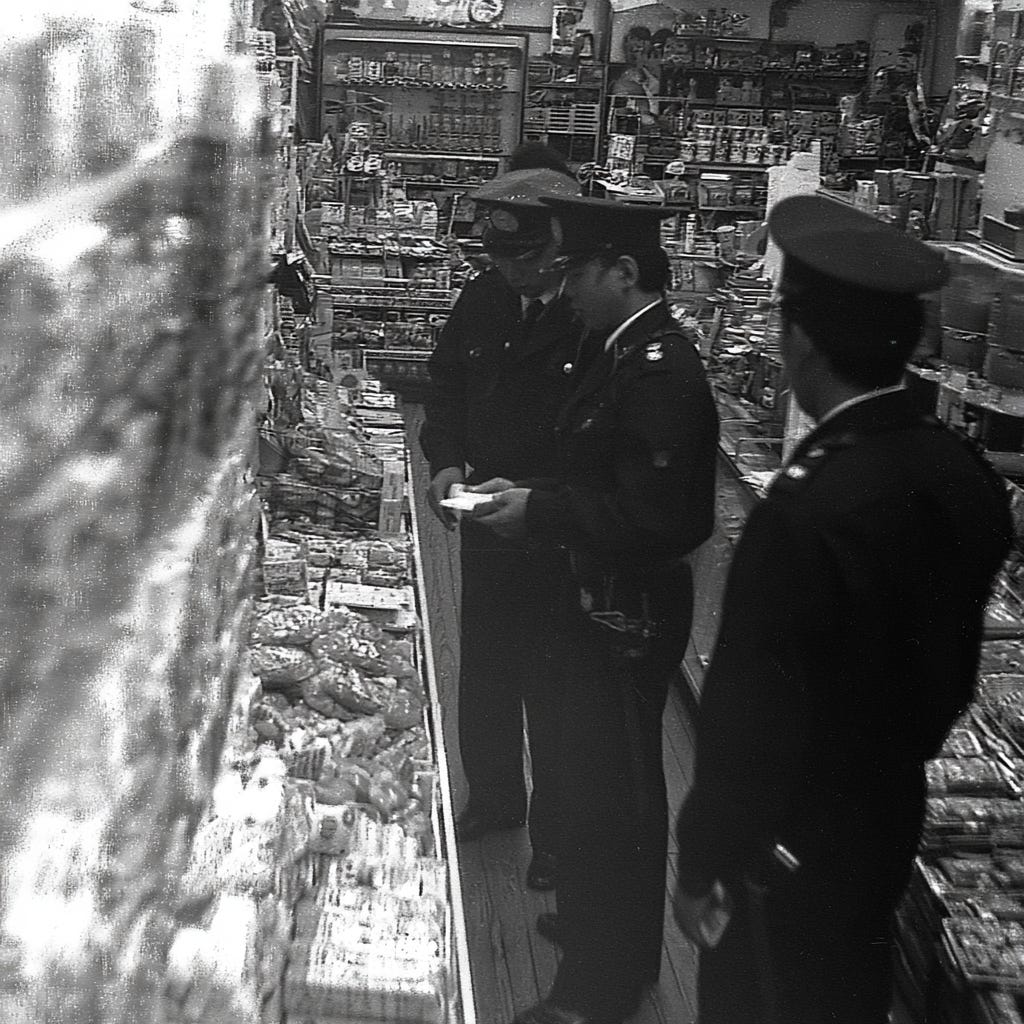
On a quiet night in March 1984, the president of one of Japan's most famous candy companies was abducted from his home by masked men. What first looked like a frightening kidnapping soon morphed into something much bigger and stranger.
Ransom demands, poisoned candy, taunting letters, public humiliation of the police, and a criminal group that always seemed one step ahead.
For more than a year, Japan was haunted by an unknown group calling itself “The Monster with 21 Faces.” More than forty years later, the questions remain. Who were they? Why did they target Japan's biggest food companies? And how did they vanish so completely that no one was ever charged?
The Monster Emerges
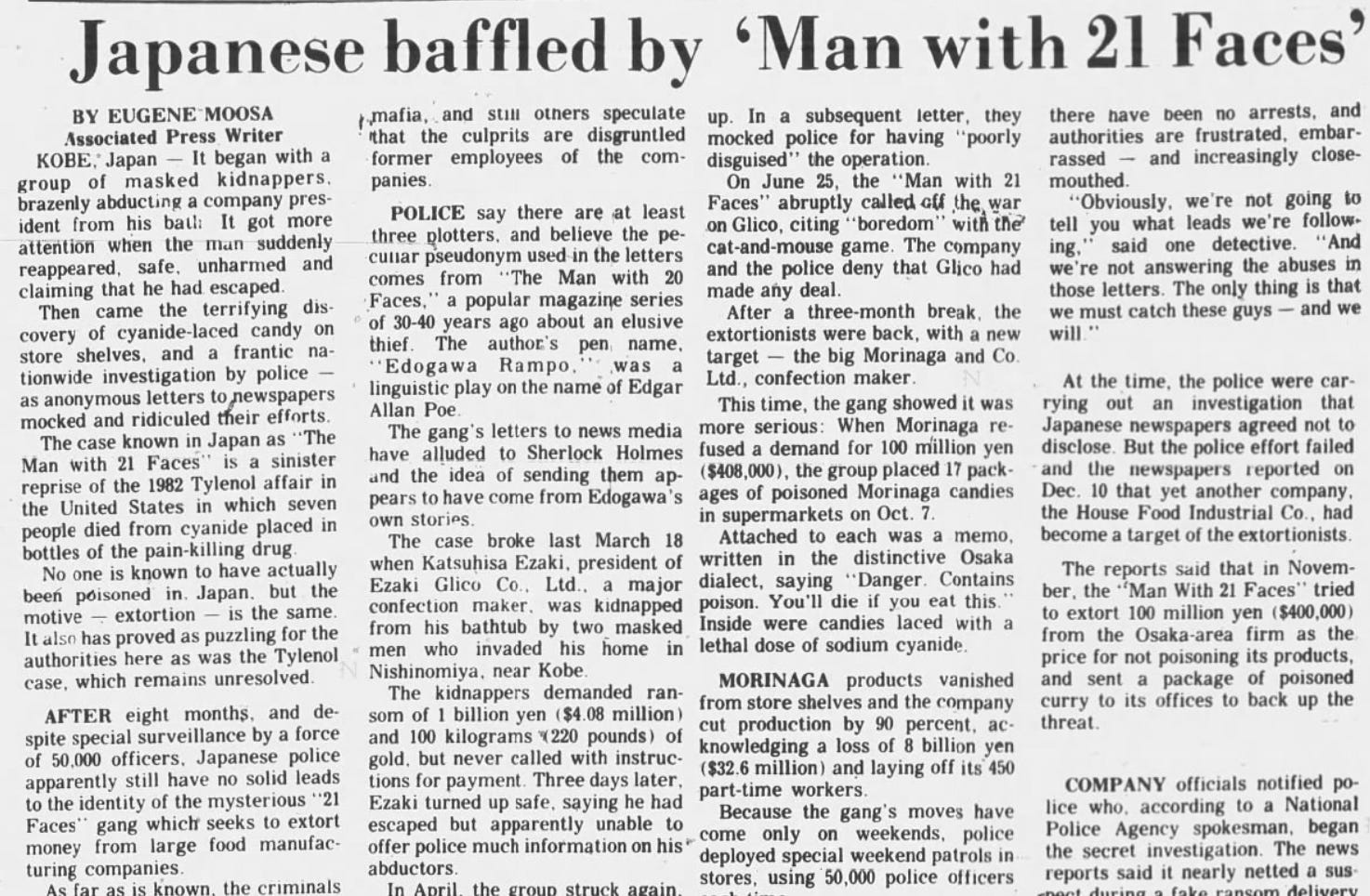
During the 1980s, Japan was seen as one of the safest, most disciplined, and modern countries in the world. Its cities were busy, its companies powerful, its police respected. People trusted the food they bought. Families bought sweets for their children without a second thought. However, in 1984, a shadowy group of criminals would shatter that sense of safety.
The criminals later took the name “The Monster with 21 Faces,” or Kaijin Nijūichi Mensō. The name was adapted from a fictional villain — "The Fiend with Twenty Faces" — created by the mystery writer Edogawa Rampo.1 The gang simply added one more face. Yet this monster was not a work of fiction; it was hauntingly real.
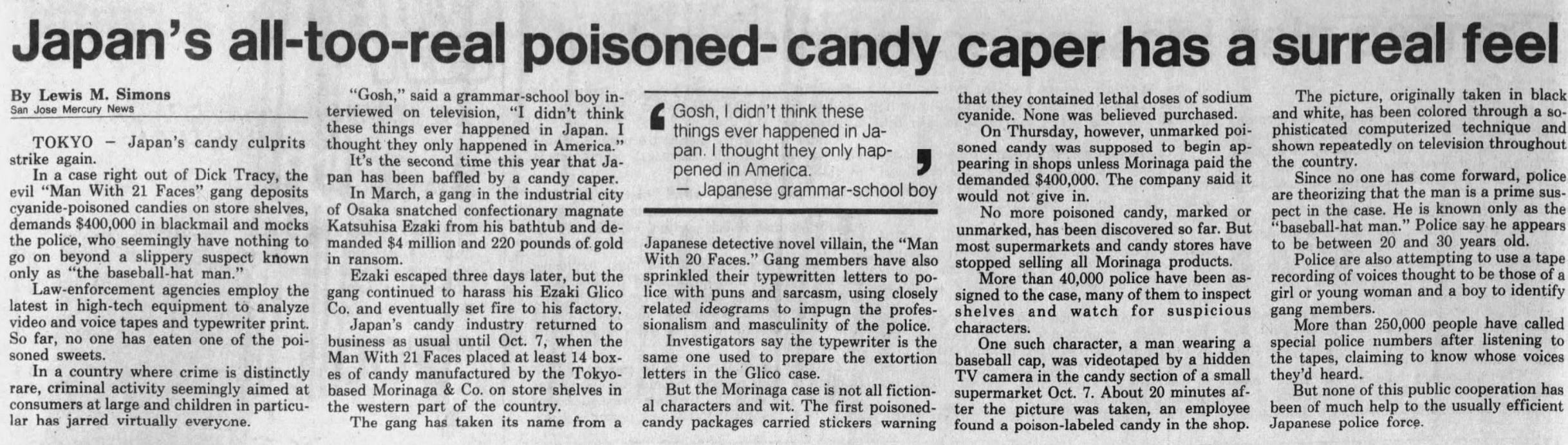
The group committed crimes, wrote taunting letters, mocked the police, threatened powerful companies, poisoned food, and turned candy into something to be feared.
