


Background
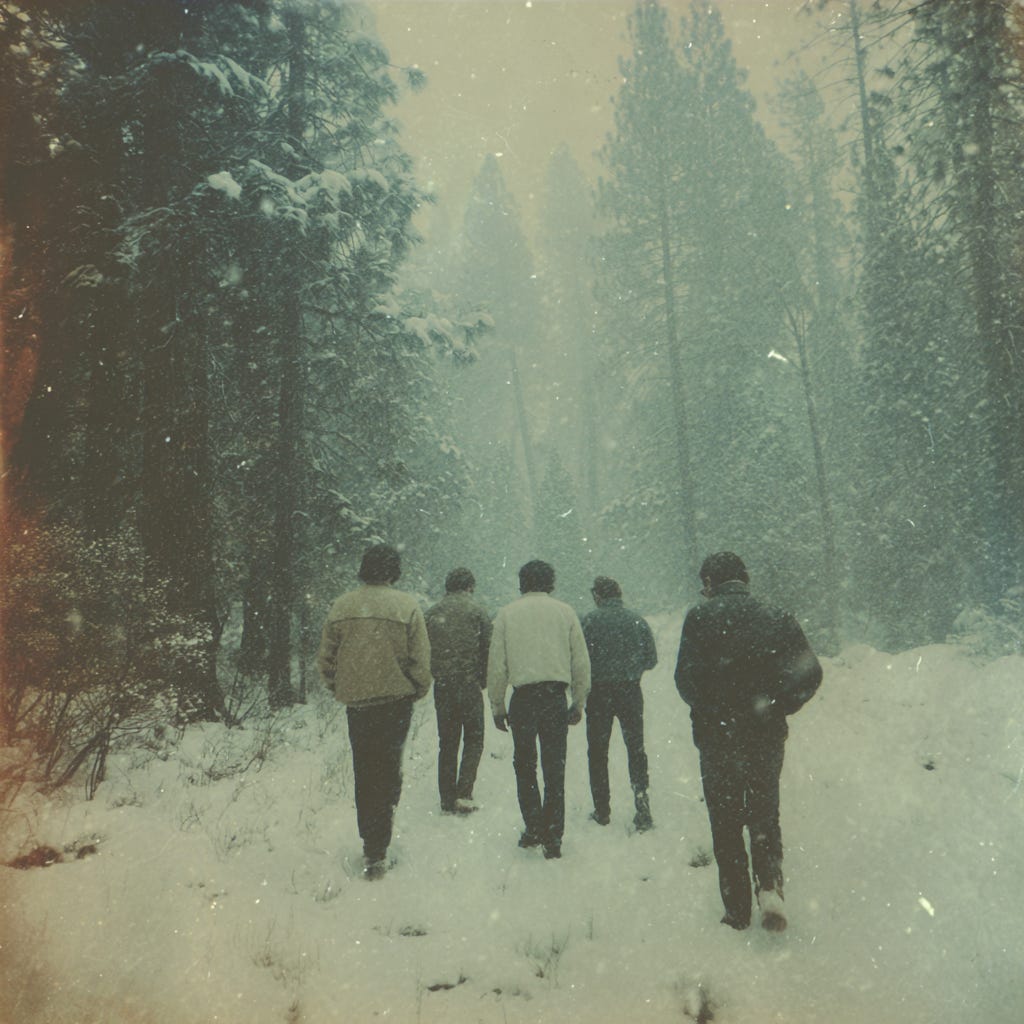
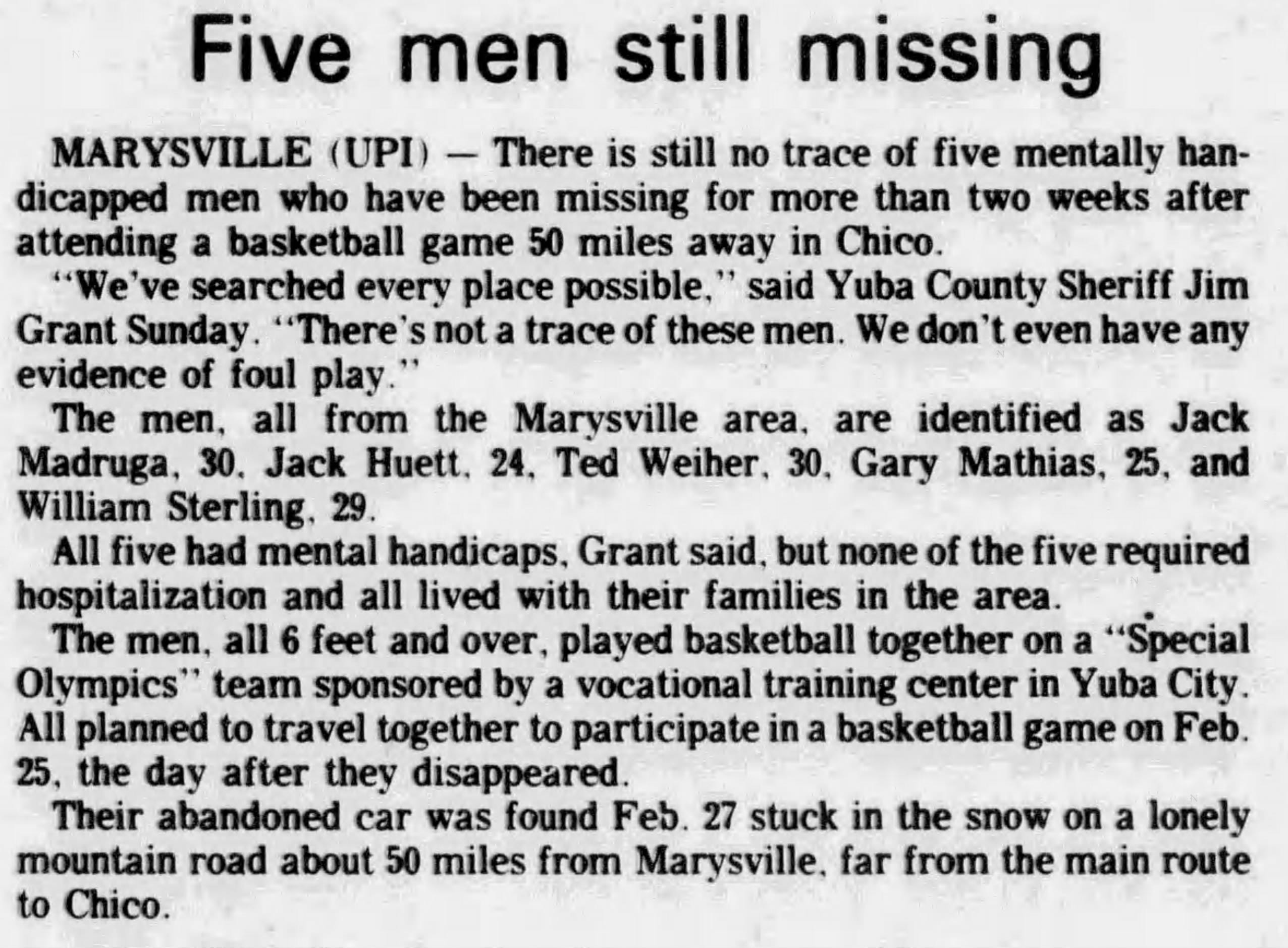
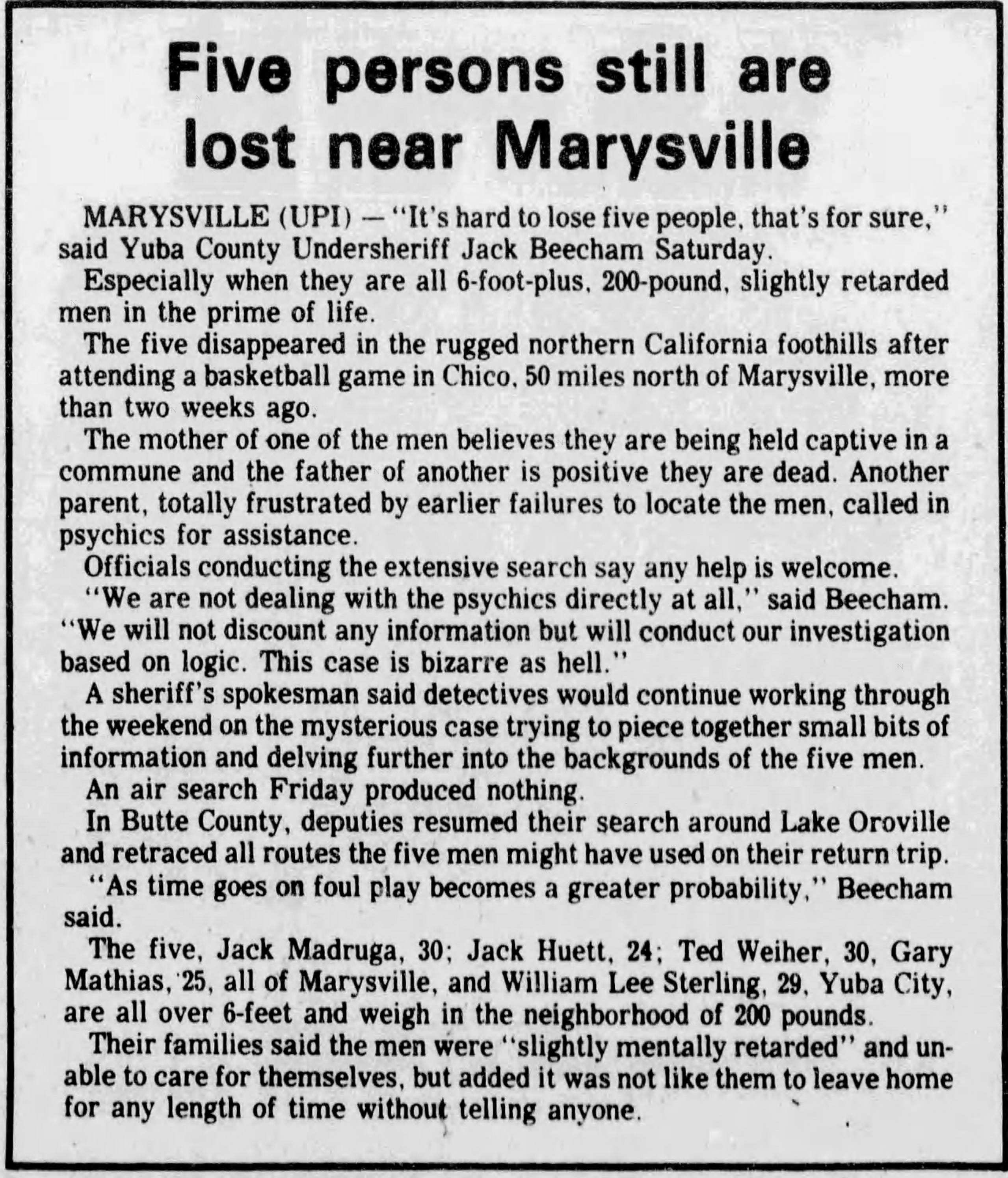
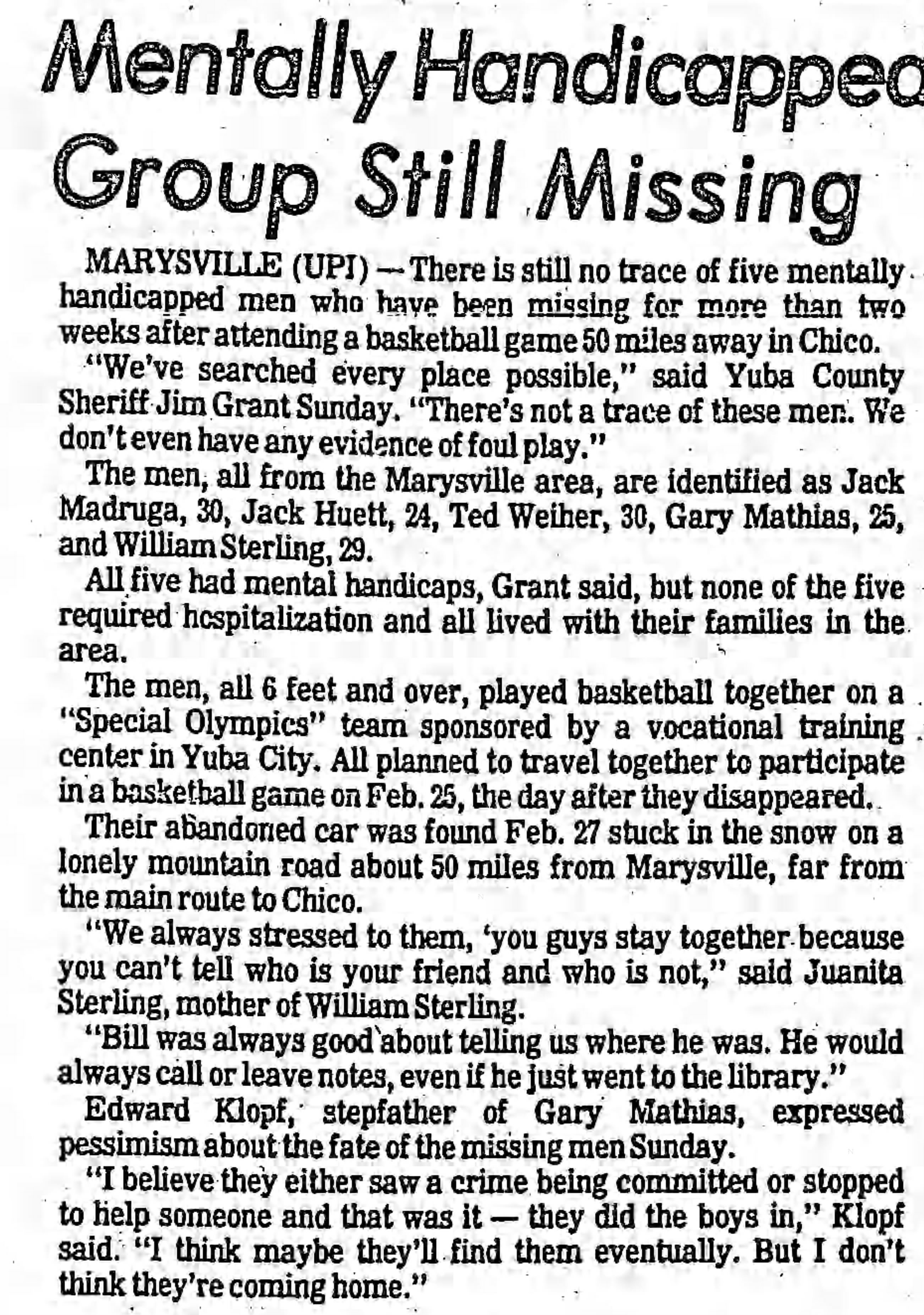
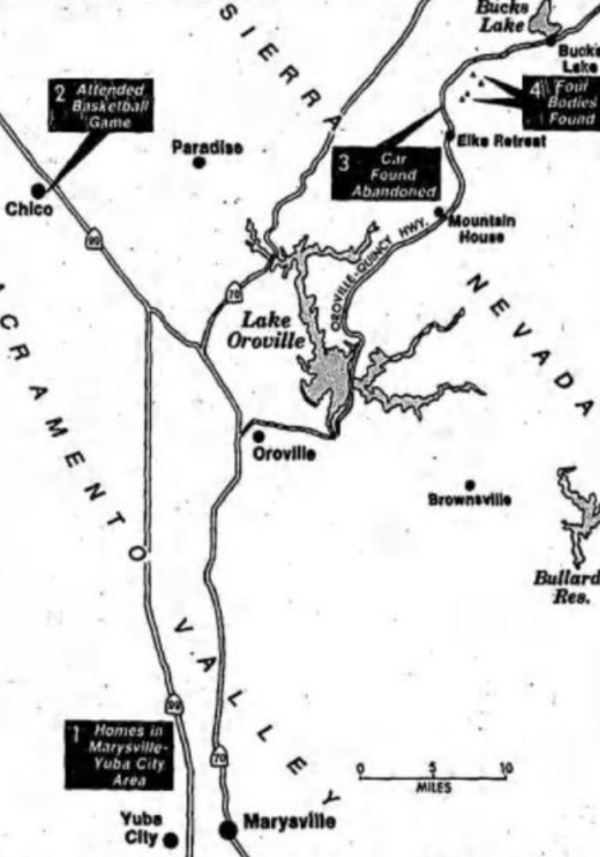
In February 1978, five friends from Yuba County, California, disappeared after attending a college basketball game in Chico. A few days later, their abandoned car was found in a remote area of the Plumas National Forest after being spotted by a forest ranger. The area was approximately 70 miles from Chico and far from any route that would have taken them home.
It would be several more months until the bodies of four of the five would be discovered miles from the car and in varying states of decomposition. However, one of the men has never been found, and his fate remains a mystery.
For decades, authorities and family members have tried to make sense of what happened. Many questions still remain. Why were they in an area that they had no ties to during severe weather conditions? Why had they abandoned their car, which was later found to be running fine with more than a quarter of a tank of gas? And what ultimately befell Gary Mathias, the only member of the group who has never been found?
February 24, 1978
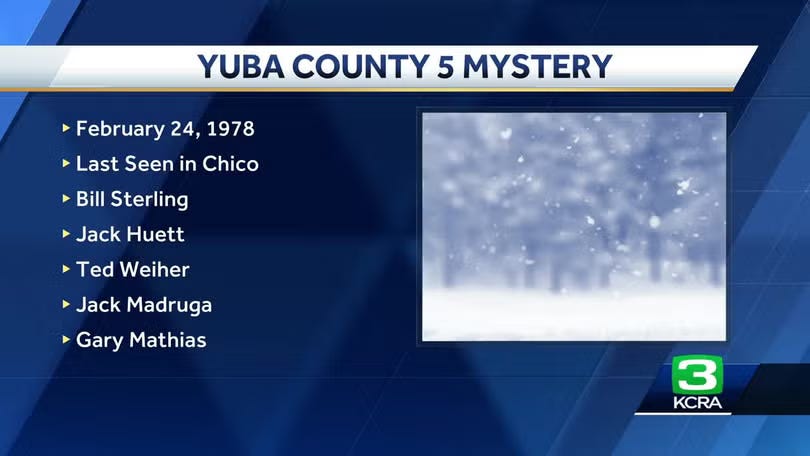
On February 24th, 1978, five young men set out to cheer on the UC Davis college basketball team at their away game at California State University, Chico. Chico State, as it’s more commonly known, is a campus located approximately an hour from Yuba County, where these five friends resided.
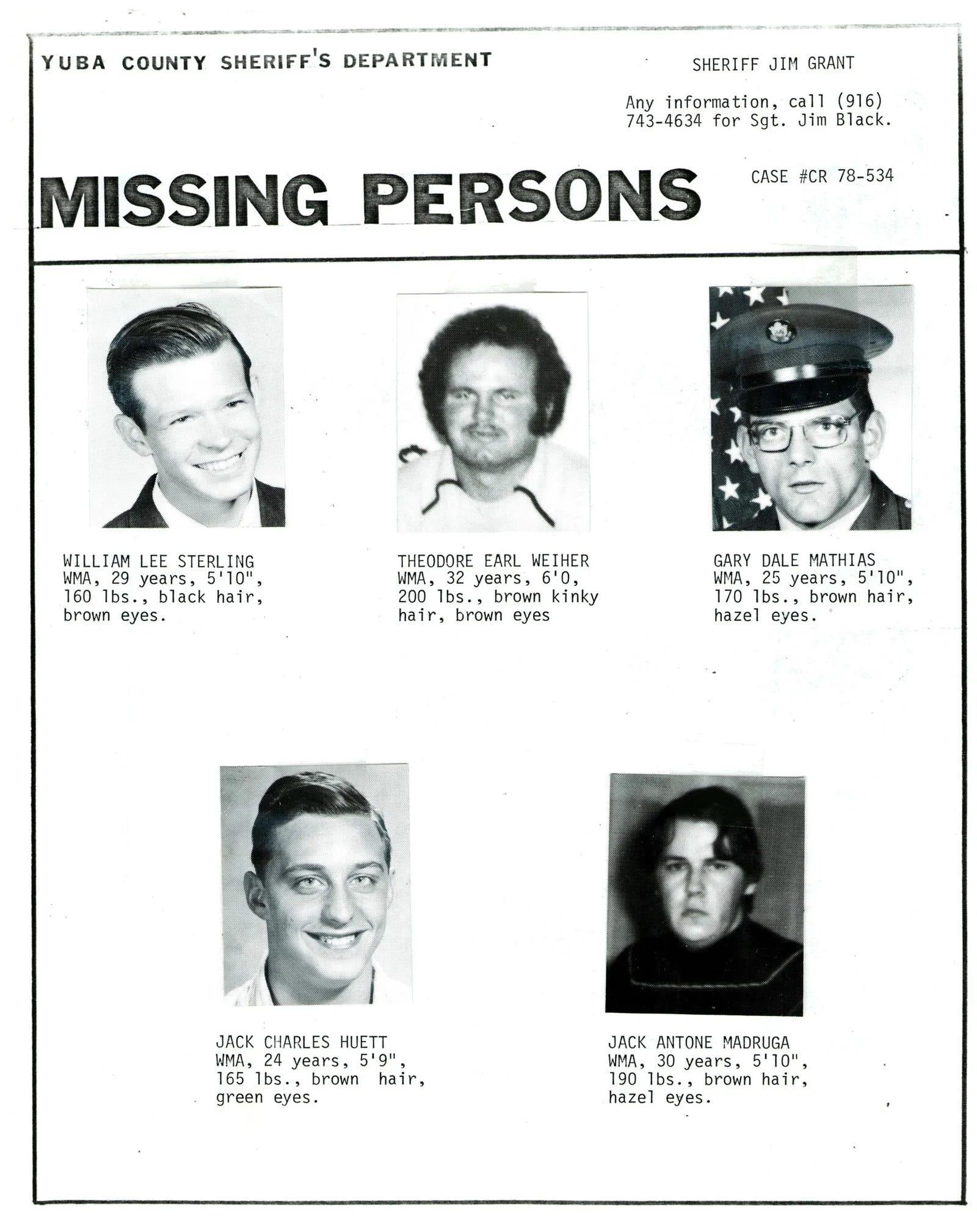
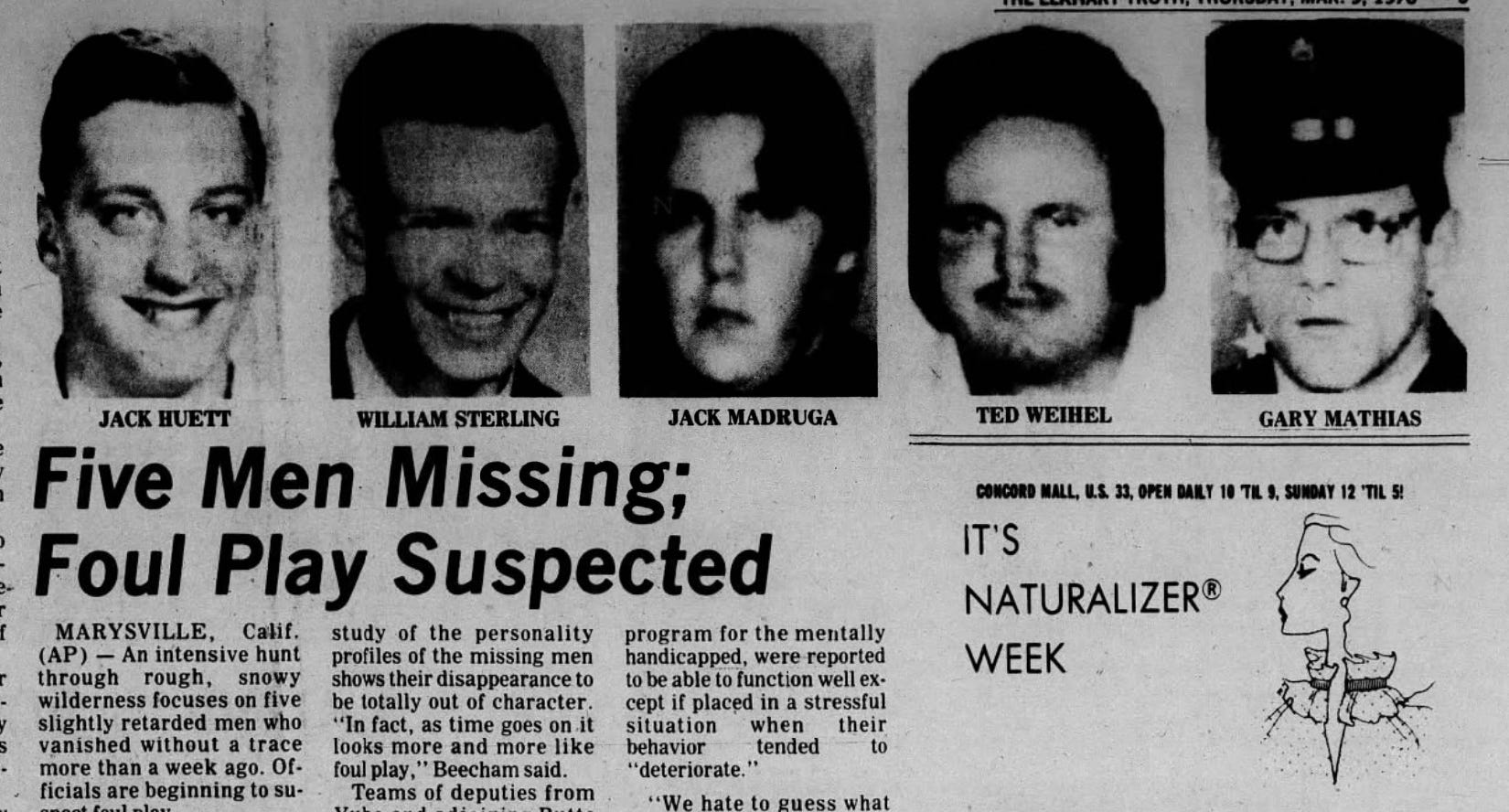
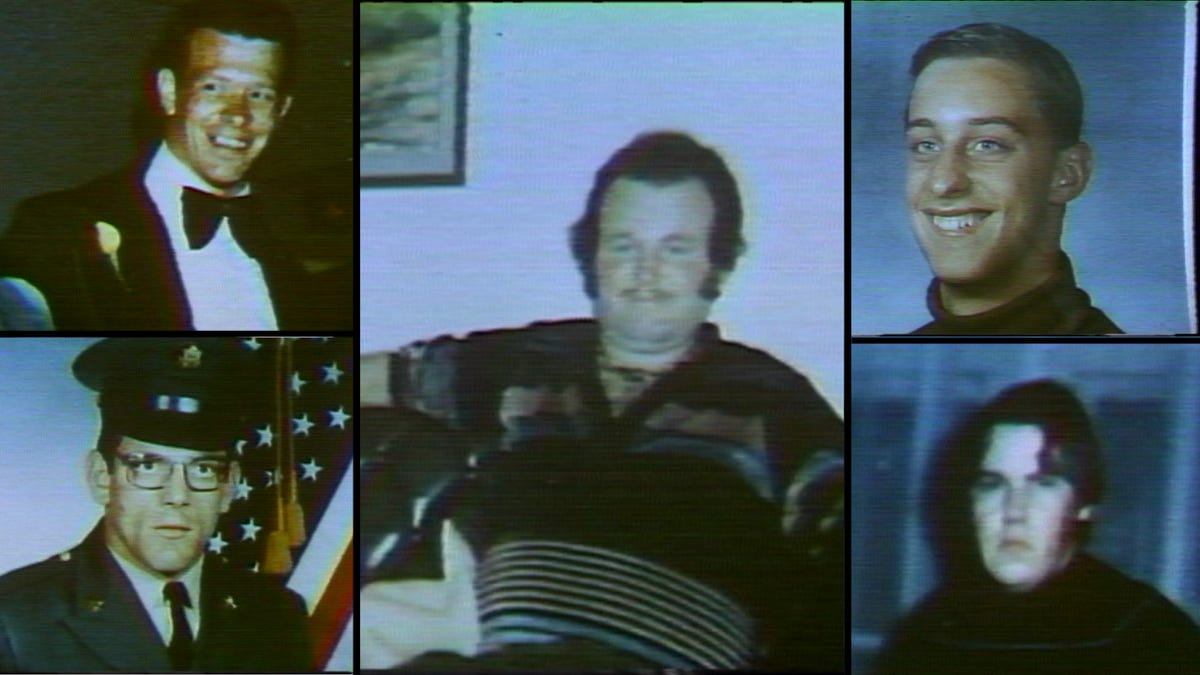
Bill Sterling (29), Jack Huett (24), Ted Weiher (32), Jack Madruga (30), and Gary Mathias (25) were avid sports fans, particularly fond of basketball. They played for a local recreational team, the Gateway Gators, and they were set to play their first game in a weeklong tournament the following day.
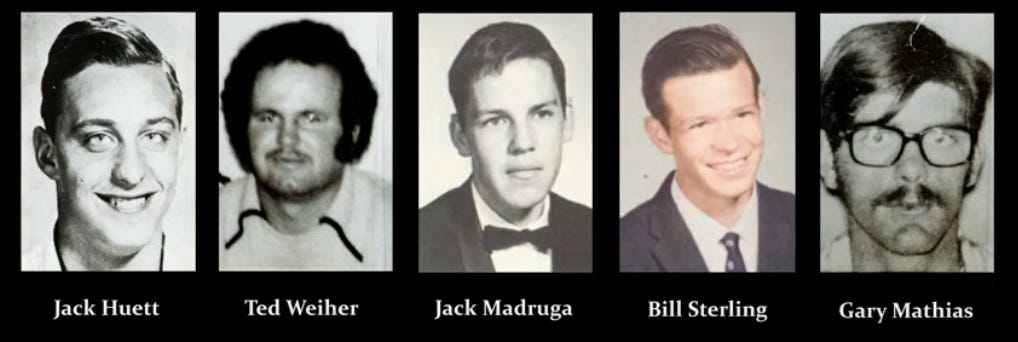
All five men in the group had either a form of intellectual disability or a psychiatric condition. They all lived with their parents, who referred to the collective as “The Boys.” On the evening of February 24th, despite mounting anticipation for the upcoming tournament, the group couldn’t resist the opportunity to go watch a collegiate game.
Madruga, who was one of the oldest of the group and one of two with a driver’s license, drove himself and his friends to the game in his 1969 Mercury Montego. After UC Davis pulled off a victory against Chico State, the men left and made their way to Behr’s Market. It was nearly 10 p.m. by then, and the store clerk was frustrated by an influx of customers right at closing time. The men purchased snacks and drinks and then left the store.
Disappearance
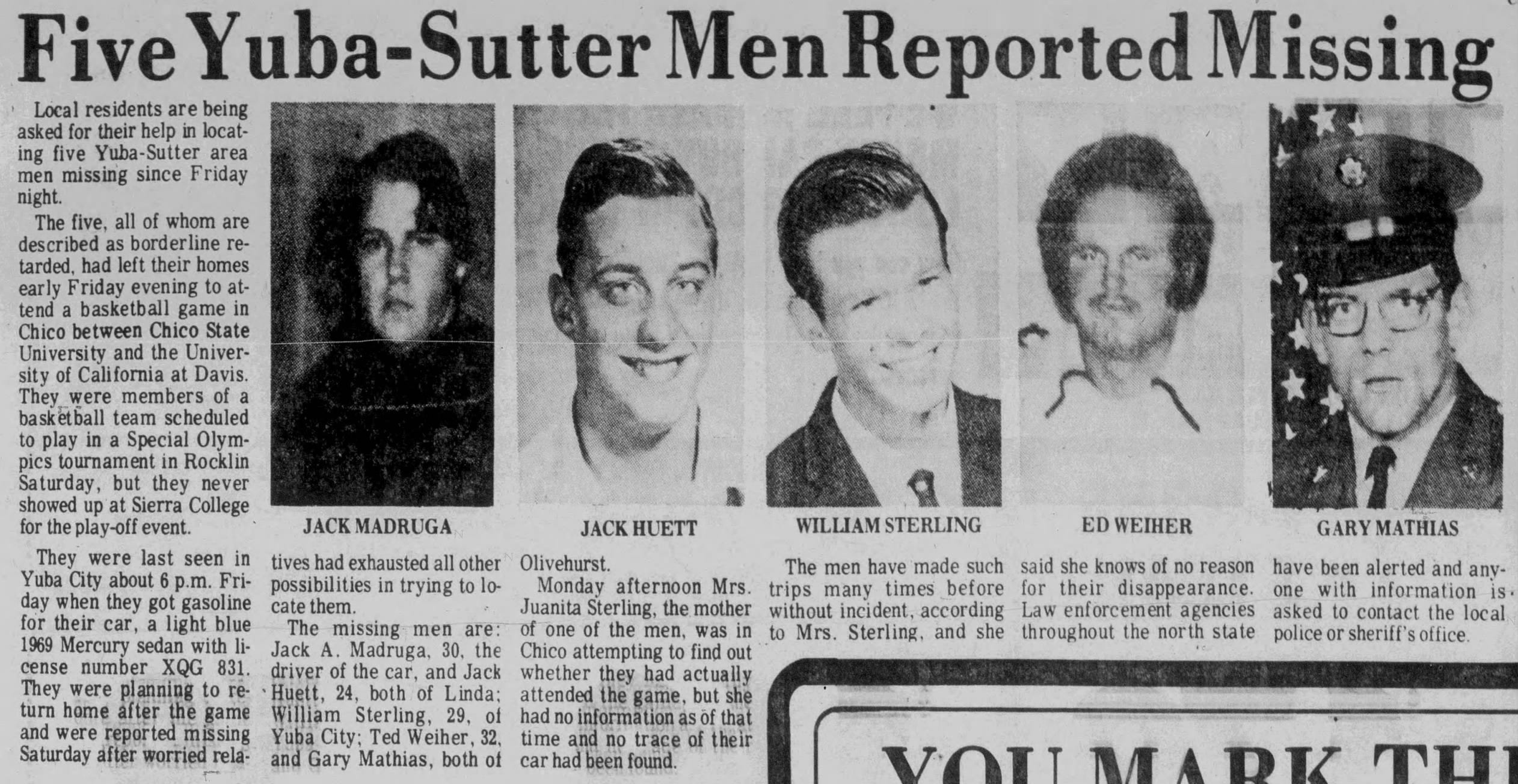
When the group hadn’t returned by morning, their parents became immediately worried. They would never have intentionally missed their big basketball game. The families called the police, who began to look for the missing men. Officers in both Butte and Yuba counties responded, searching along the route from Yuba County to Chico State, but there was no sign of the group or Madruga’s coupe.
A few days later, a ranger with Plumas National Forest reported seeing a Mercury Montego parked in the forest just off Oroville-Quincy Road. The ranger hadn’t thought much of it at the time, as many people would pull off that road in the winter to go skiing in the Sierra Nevada mountains, but when he saw the bulletin, he immediately alerted the police.
On February 28th, the ranger led officers to the parked car. An initial search of the vehicle revealed empty wrappers and containers from the food and drinks purchased at Behr’s Market, suggesting the men had gotten back into the car and driven there after leaving the shop.
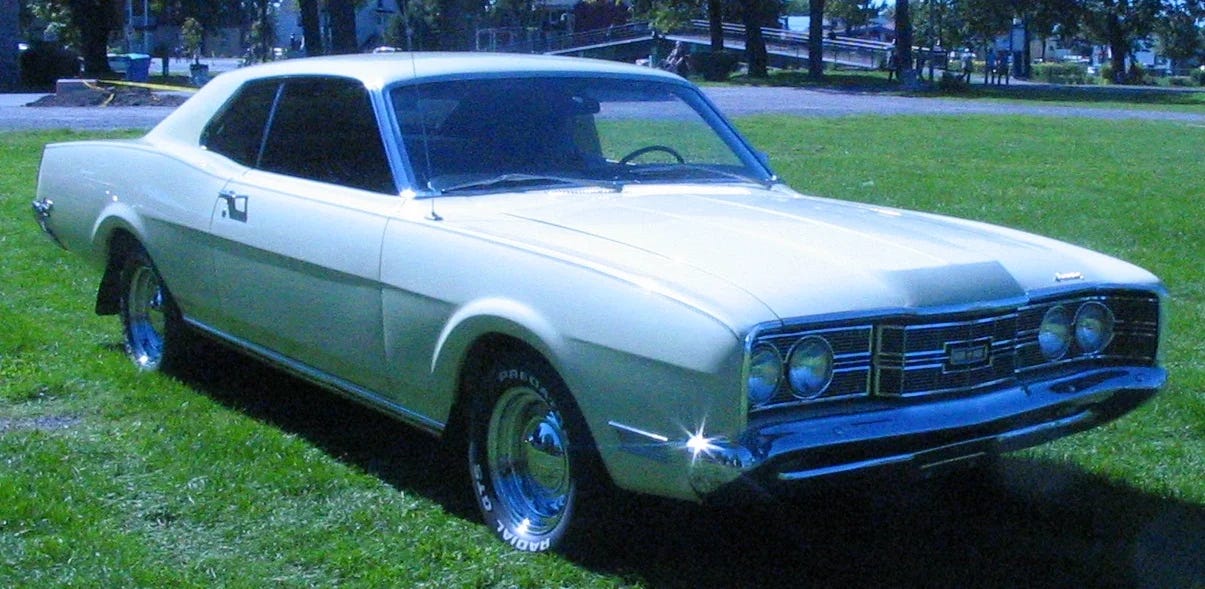
Despite this, the car was found 70 miles outside of Chico and well off any route the men would have taken back to Yuba County. The five men had also left home with only light jackets, and their families could not understand why they would drive up into the mountain forest on a cold winter night. The group was not equipped for any sort of hiking or skiing expedition, and according to their parents, some of them had never been to the mountains or actively disliked going there.
The car appeared to have been abandoned, and police began searching for potential reasons. This road led to a high elevation, and the car was found not far from where the road was closed for the winter. It appeared the car had become stuck in a snowdrift, and tire marks indicated the driver had attempted to free it by spinning the wheels.
Despite this, the snow was very shallow at the time, and police could not understand how five able-bodied young men could have failed to easily dislodge the car. Since the keys were missing, police thought perhaps the car had been abandoned due to some mechanical issues. However, when investigators started the car, the engine cranked without issue, and there was still a quarter tank of gas left.
After towing the car, investigators were able to take a better look at the vehicle. Curiously, there were no dents or scratches on the underside of the car, which struck authorities as odd. The Mercury had a low-hanging muffler, and it was without so much as a scrape. Driving that car up a steep and bumpy mountain road without damaging or even scratching the undercarriage would be a difficult feat, suggesting that the driver likely knew the area and was familiar with the road conditions.
Interestingly, Madruga had never once been in the mountains or on this road, and according to his parents, he would not have allowed anyone else to drive his car. Madruga was careful about protecting his car, and his parents also found it odd that it was left unlocked with a window rolled down. This investigation was shaping up to be quite the mystery, but this was only the beginning.
Search Efforts and Possible Witness Sighting
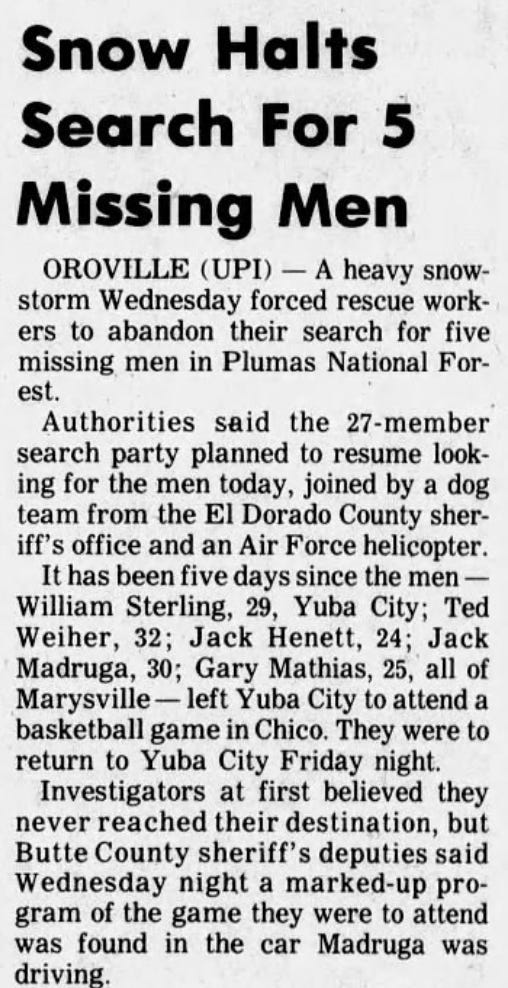
The initial search of the area around the car was made more difficult by a severe snowstorm that was bearing down on the region. After two days of searching for the missing men, the search had to be temporarily suspended due to increasingly dangerous weather conditions.
While the search efforts were paused, police turned their focus to tracking down leads from the public. The story had been picked up by local news outlets, and after that, tips began pouring in. As with many cases, a majority of the tips were quickly ruled out and dismissed. However, there were two potential witnesses whose stories seemed to be credible.
Joseph Schons, a resident of Sacramento, was headed up to the mountains for a weekend ski trip. On the night of February 24th, he had been on his way to the cabin to check the snow conditions ahead of the trip. At approximately 5:30 p.m., Schons had become stuck in the snow, not too far from where the Montego was later found.
As he worked to free his car from the snow, he began feeling pain and discomfort in his chest, which he believed to be the onset of a heart attack. Instead of continuing to struggle, he got back in the car and kept the engine running to stay warm. Schons remained there, in pain, for six hours. At some point, headlights appeared behind him. The car then parked, and Schons saw a group of people around the vehicle.
He thought he saw a woman holding a baby with them. Schons called out to the group and asked for help. The voices ceased, and the headlights turned off. Sometime later, Schons saw lights behind him again, but this time they were flashlights. He again tried calling for help, but after doing so, the flashlights turned off.
After these two incidents, Schons believed he saw a pickup truck briefly stop behind him, then continue down the road. However, he later clarified that he couldn’t be sure that this experience actually happened, since by that point, he had become nearly delirious from the pain.
Schons received medical care after the incident, and the doctors confirmed he had indeed suffered a heart attack. His story was deemed credible because the details aligned with the time and location where the Montego was found abandoned. However, there were a few odd points to be considered. First, there was no explanation of who the unidentified woman, possibly carrying a baby, might have been, or why she would have been in this remote area with the group.
Secondly, Ted Weiher’s mother found it strange that if the group had actually been her son and his friends, they would have helped Schons. She said that Ted and Bill Sterling had previously helped someone experiencing a Valium overdose get to the hospital. If they’d heard Schons calling for help, she believed the men would have done whatever they could to help him.
Second Alleged Sighting
The second sighting, which authorities deemed potentially credible, came from a woman in Brownsville, a small town 30 miles from where the car was found. If the group had continued down the road, they would have arrived in Brownsville and passed by the store where this witness worked.
After seeing the missing-persons fliers, the woman reached out to the police on March 3rd. She said that four of the men had stopped by the store on February 25th, driving a red pickup truck. The store owner also confirmed the woman’s account of the incident, saying he had also seen the four men in the pickup that day.
The woman and the store owner described seeing Huett and Sterling using the phone booth outside the store. Weiher and Huett entered the store and purchased food and drinks. The woman said that she could tell these men were not from this area, noting their “big eyes and facial expressions.”
The men’s families were conflicted in how to interpret this sighting. None of them owned a red pickup truck, and it would be extremely unusual for them to drive to Brownsville rather than return home for their basketball tournament, but their appearances and behavior, as described by the employee and store owner, were accurate.
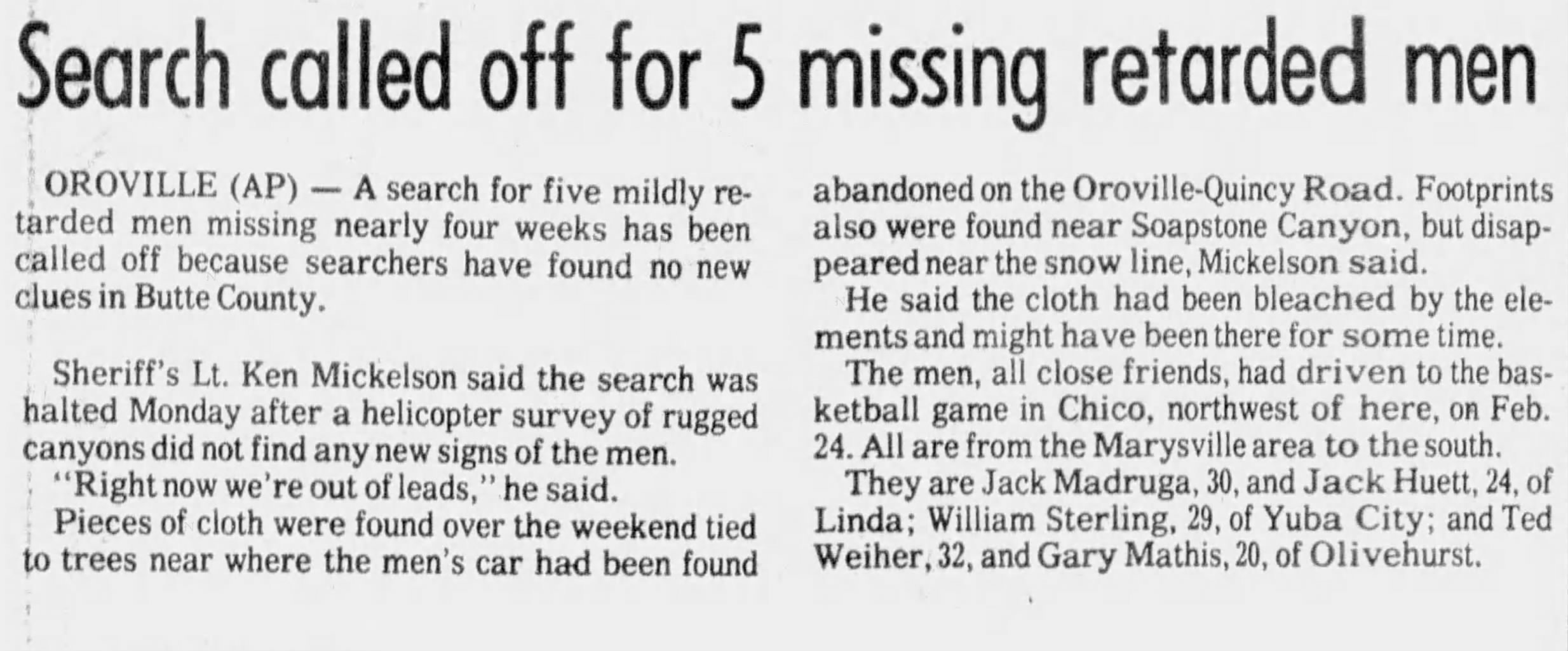
With weather conditions continuing to prevent further search efforts, these two eyewitness accounts became the only credible leads authorities had to work with. Both accounts provided potential insight into the events of the evening the men went missing and the following day, but they brought investigators no closer to finding the group.
Bodies Found
On June 4th, the snow had melted enough to allow safe passage up the mountain road. A group of motorcyclists who were making their way up the road stopped at a campsite roughly twenty miles from where the Montego was found. At this campsite, there were trailers owned and maintained by the United States Forest Service.
The motorcyclists made their way up to one of the trailers, which had a broken front window. Upon opening the door, they were met with an overwhelming odor. Inside the trailer was the decomposing body of Ted Weiher.
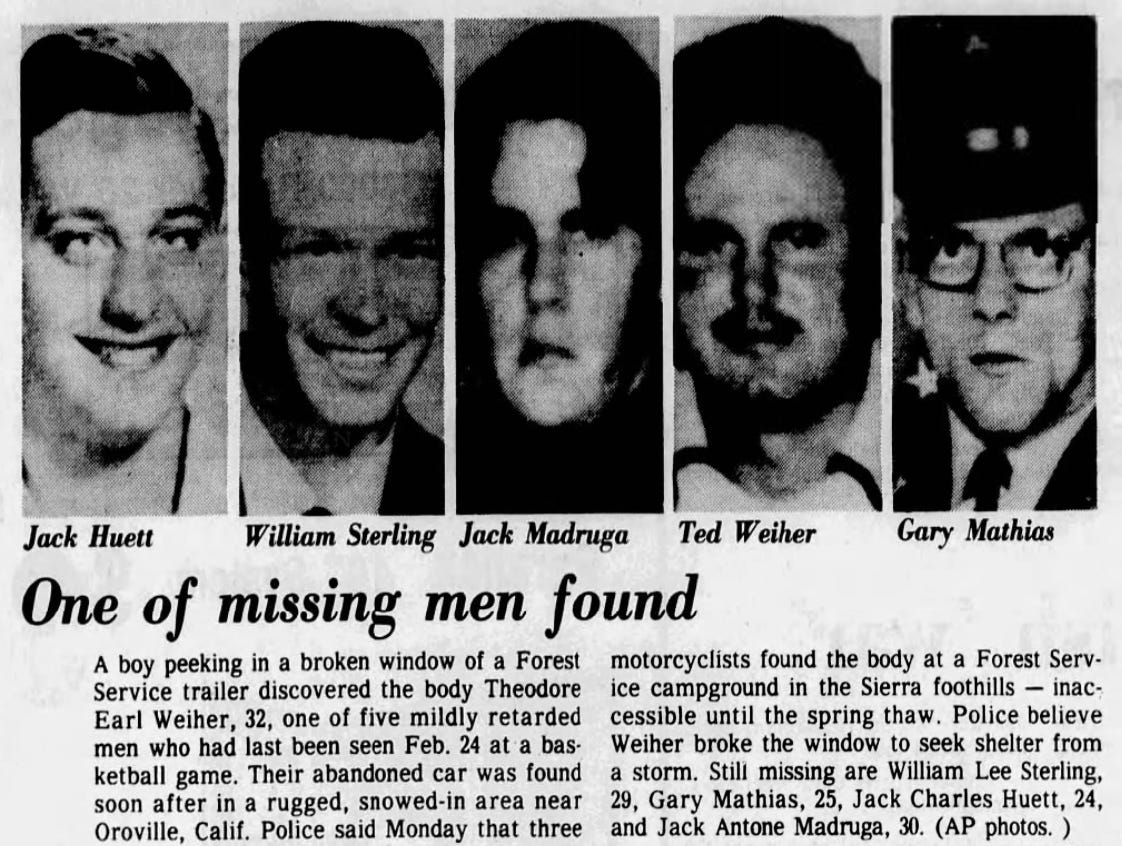
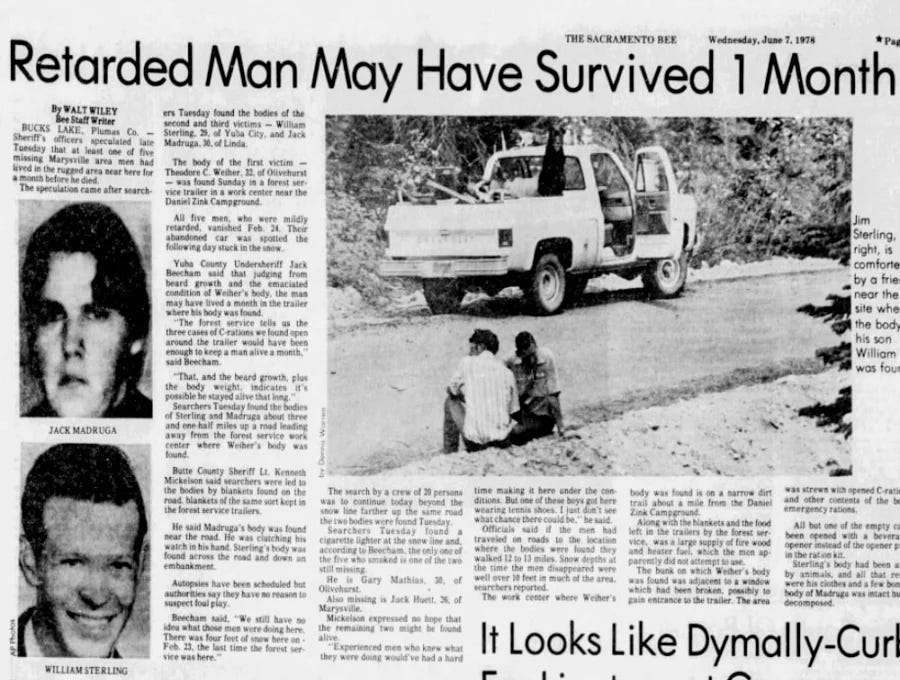
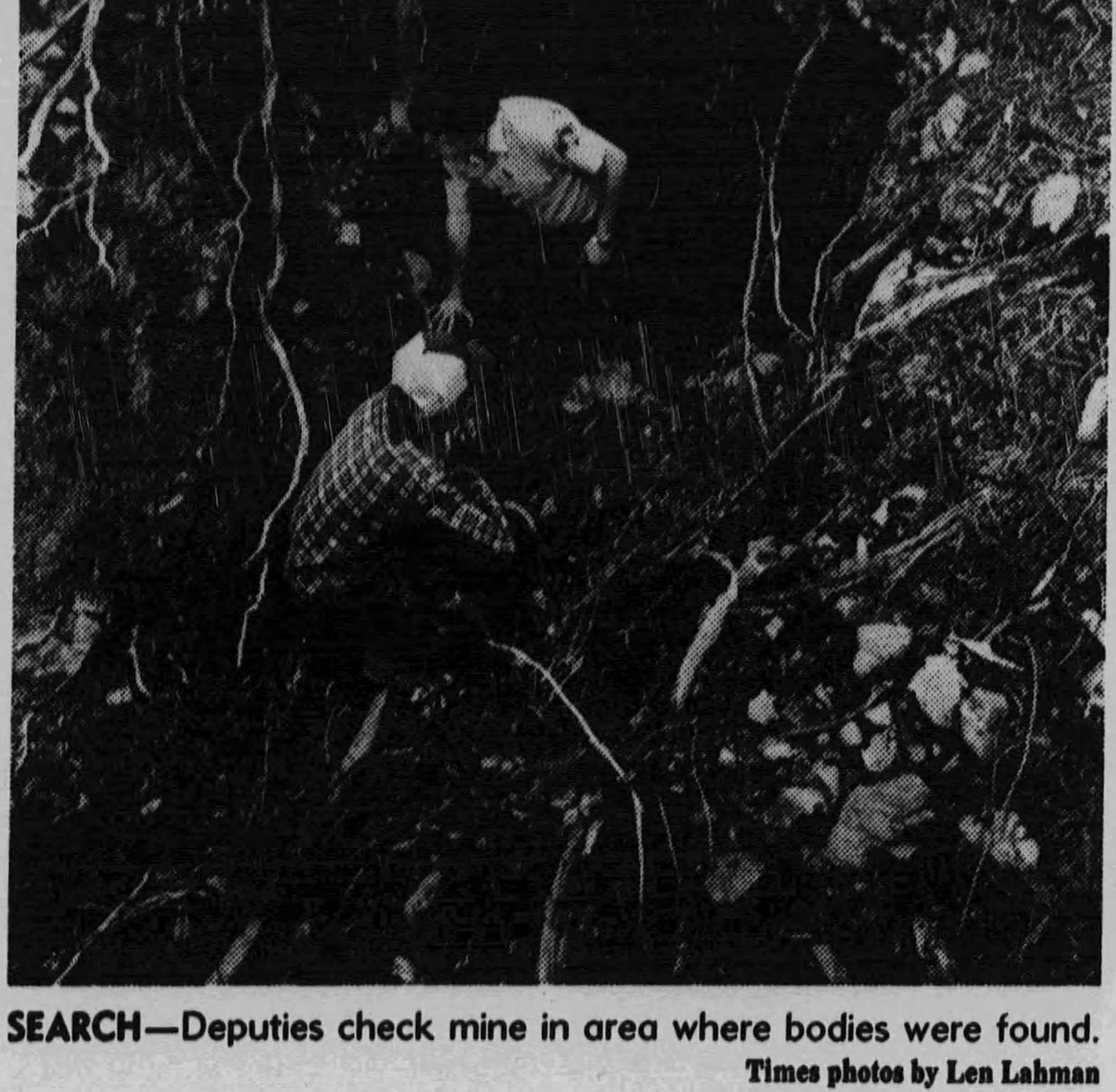
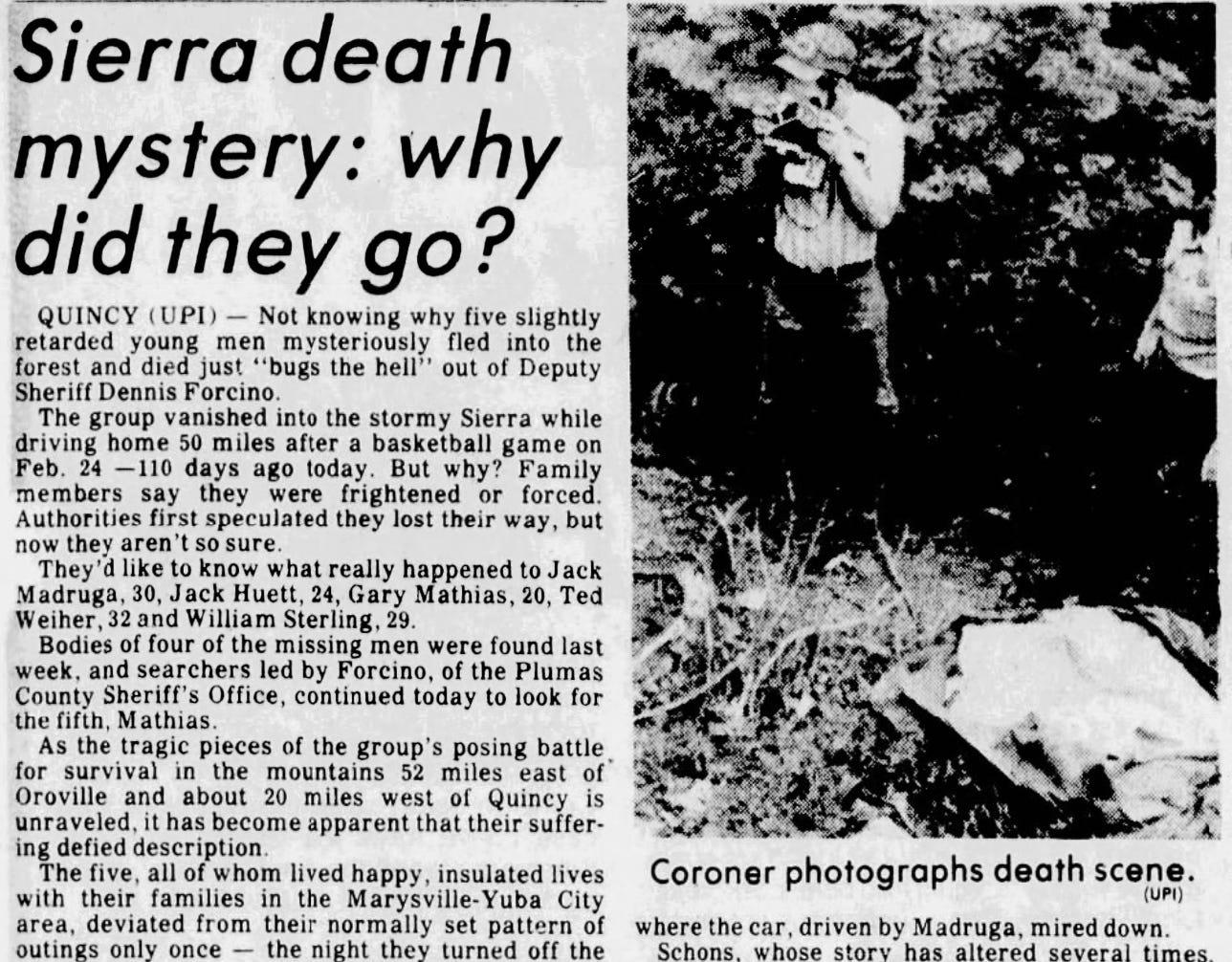
Search parties returned and scoured the area. On June 5th, the remains of Jack Madruga and Bill Sterling were found, on opposite sides of the road, approximately eleven and a half miles from where the car was left. Madruga’s body had been scavenged heavily by animals, and Sterling’s remains were only bones. Autopsies indicated the pair had died from hypothermia.
Two days later, Jack Huett’s father recovered his son’s spine from under a bush two miles from the trailer. Huett’s shoes and pants were found nearby, which helped confirm his identity. The following day, a police officer found Huett’s skull 300 feet from the bush. His cause of death was also determined to be hypothermia. Not far from Huett’s body, approximately a quarter mile away from the trailer, three Forest Service blankets and a rusted flashlight were found.
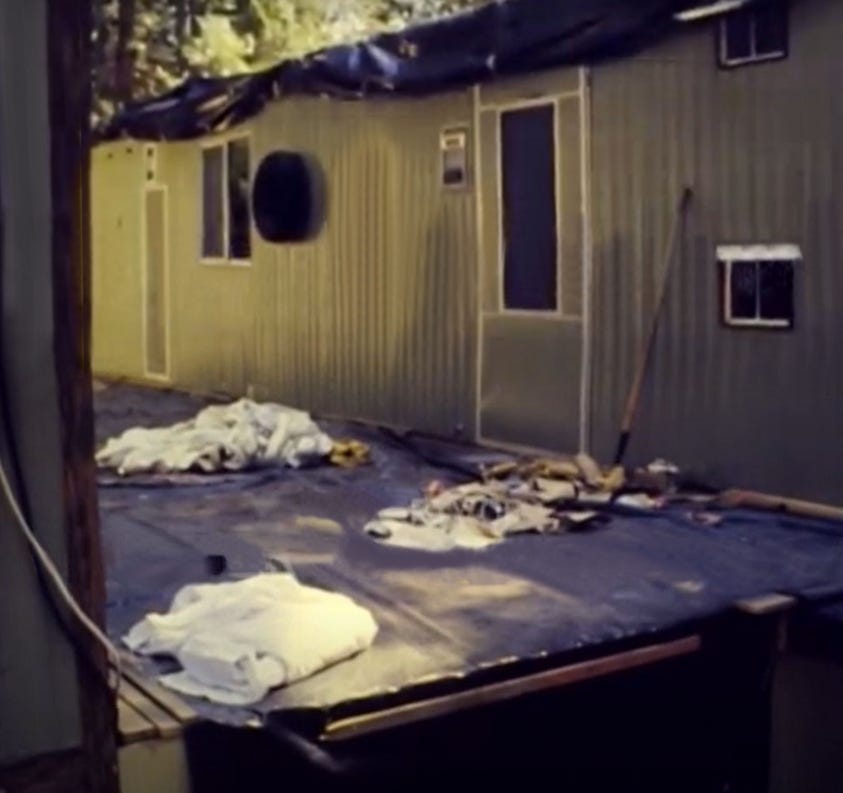
Back inside the trailer, authorities were working to process and analyze the scene. Weiher’s body had been found wrapped in eight sheets and was lying on a bed. He had lost roughly half of his body mass, and based on the growth of his beard, it was estimated that he’d lived several weeks after the group had gone missing.
Some of his personal belongings were found on a bedside table, along with a gold watch that his family said did not belong to him and a partially melted candle. His shoes were missing, and his feet had suffered severe and advanced frostbite. Weiher’s cause of death was said to be a combination of hypothermia and starvation, which made this case even more puzzling.
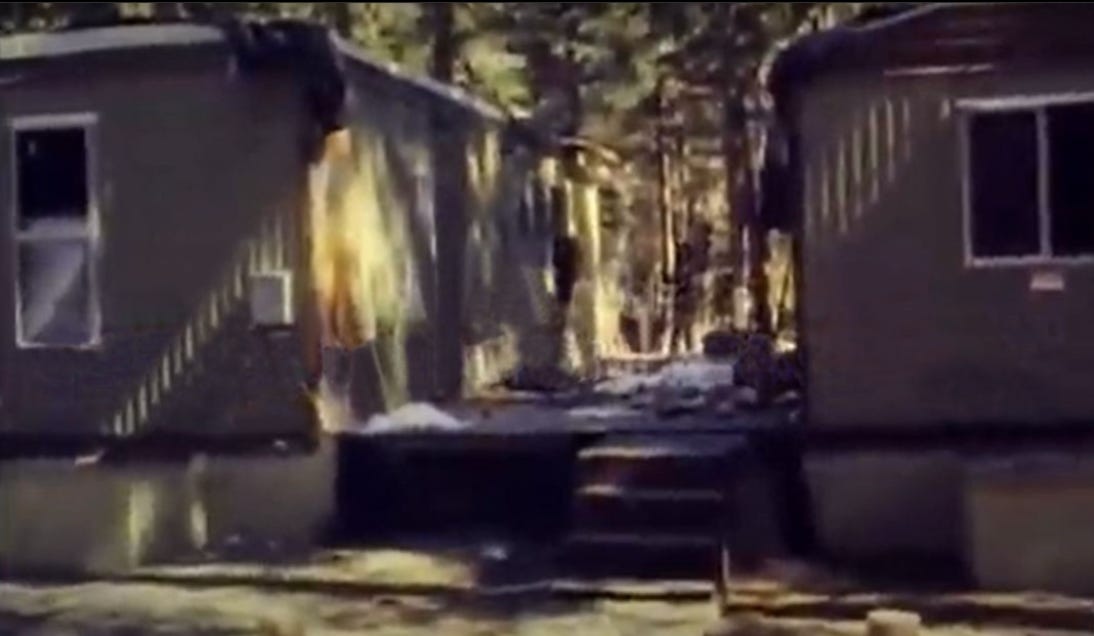
Inside the trailer, there was a fireplace, but it had not been used. There were plenty of matches and books that could have been used to keep a fire going, but the fireplace had not been lit. There was also a supply of heavy, warm forestry clothing, but all of it was left stored away. There was a storage shed outside, and three dozen military rations had been opened and consumed.
Another locker in the same shed contained enough dehydrated food to feed the entire group of five men for a year, but those supplies had not been touched. Another shed nearby housed a butane tank that could have heated the trailer for an extended time with a simple turn of the valve. All the supplies were there to keep Weiher warm and fed, but he’d died from starvation and hypothermia.
His family cited his cognitive disability as the most likely explanation, sharing that Weiher had to be dragged from his bed during a house fire because he said he needed to get enough sleep or else he’d be late to work.
Where Was Gary Mathias?
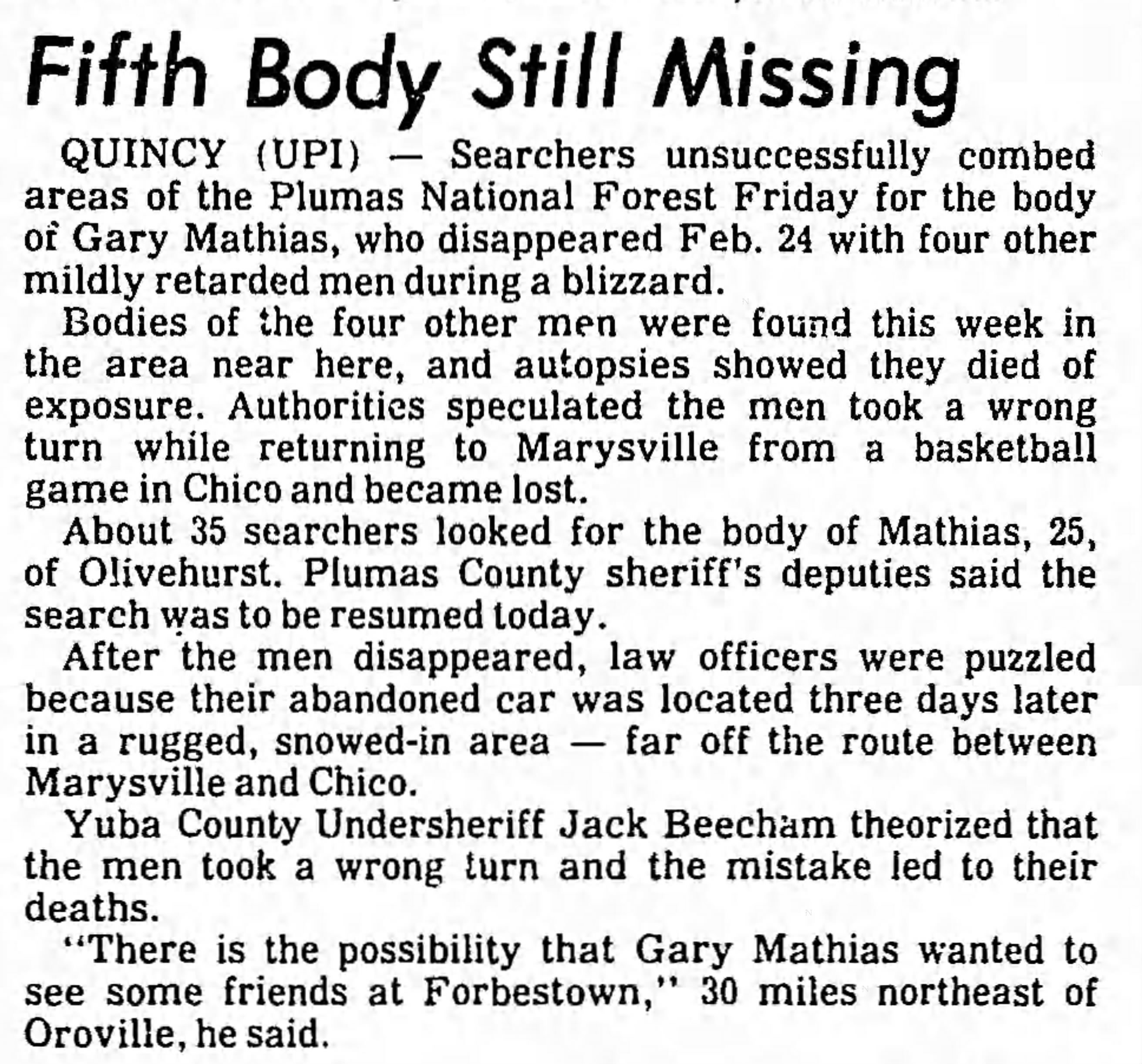
With the remains of four of the five missing men recovered, the question then became, where was the fifth? 25-year-old Gary Mathias was still missing, though evidence showed he had been in the trailer with Weiher. Inside the trailer, police recovered Mathias’ shoes. Additionally, all the C-rations had been opened using a P-38 can opener, which only Mathias or Madruga would have known how to use, as they’d both served in the military previously.
This still left the mystery of where Gary Mathias had gone. Mathias had served in the U.S. Army in the 1970s and spent time serving in West Germany. While in the military, Mathias began having issues with substance abuse. The substance abuse led to more problems, and Mathias was eventually diagnosed with schizophrenia. He was given a psychiatric discharge and returned home to California, where his parents supported him in pursuing treatment through a local psychiatric hospital.
The first few years were difficult, with Mathias experiencing psychotic episodes that twice led to him almost being arrested for assault, and often sent him to the Veterans Administration hospital. The combination of substance abuse and a difficult mental health diagnosis, along with any trauma he’d sustained in his military service, made the road to recovery very challenging.
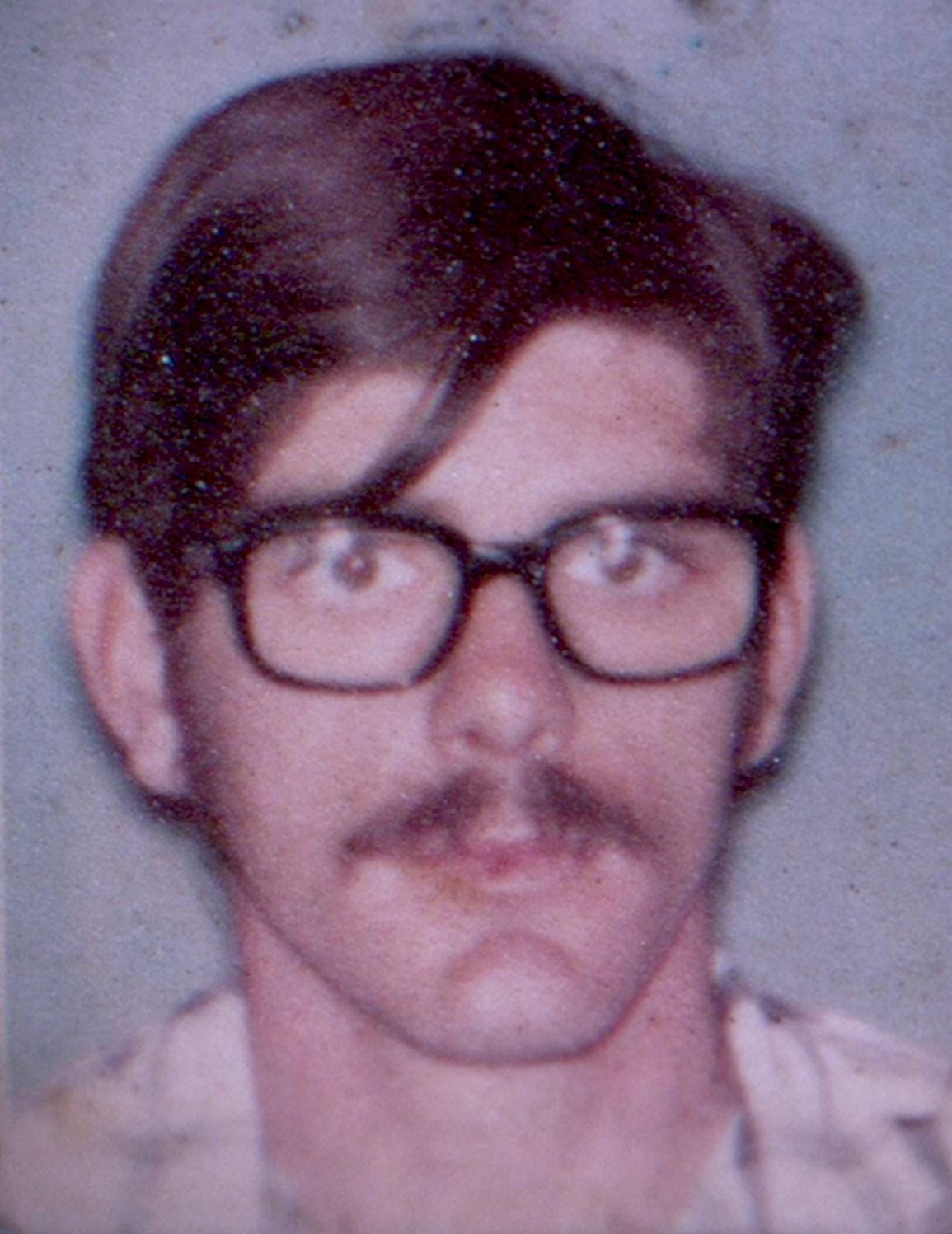
Remarkably, by 1978, Mathias had seemingly turned things around and was only being treated on an outpatient basis. His doctors described his incredible recovery as one of their top success stories. After his recovery, Mathias worked for his stepfather’s gardening business to supplement the money he received from Army disability pay.
The prevailing theory regarding what happened to Mathias is that after Weiher died, or perhaps when he was close to death, Mathias had set out to make his way back to civilization alone. This could explain why Weiher’s shoes were missing, as Mathias may have taken them for the journey. Some speculated that Mathias may have suffered a form of psychotic break, which may have been triggered by being off his medications for an extended time.
Those with a more optimistic outlook believed Mathias may have been rescued. His photo has been widely circulated, but to this day, there have been no confirmed sightings or credible leads. With so much time passed, if Mathias had been rescued, it’s likely that he would have been found by now.
Speculation and Theories
Though there was much about the case that defied explanation, the two main questions were: why were the men driving up a snowy mountain road at night, and what happened to Gary Mathias? There were plenty of theories about both. During the investigation, police learned that Mathias had some friends in Forbestown, located in Yuba County. It was possible that after leaving Chico, the men had decided to visit them on their way home, leading them to take a route they would never otherwise take.
There was a map of California in the car, but investigators theorized that the men may have taken a wrong turn, potentially near Oroville, which would have brought them to the road where the Montego was found. For some unknown reason, instead of walking back the way they had come, the men had exited the car and seemingly continued in the direction they’d been heading.
The day before the disappearance, the USFS had driven a snowcat up that road to clear snow from the trailer roof. Police thought the group may have exited the Montego and seen the tracks, and followed them through 4-6-foot snowdrifts in the hope of finding shelter nearby.
It appeared that halfway through the trek to the trailer, Madruga and Sterling had succumbed to hypothermia, and Huett a short while after. Presumably, Mathias and Weiher continued on and eventually reached the USFS trailers. Finding them locked, the men may have broken the front window to enter. The locked trailer may have further discouraged the men from taking advantage of the ample supplies inside, as they feared legal trouble for taking or using items that weren’t theirs.
There was no explicit evidence of any foul play, but some believe it cannot be ruled out. Dallas Weiher, Jr., Ted Weiher’s nephew, is confident that there was foul play involved. He said that despite the men having some intellectual disabilities, as a group, they were more than capable. They had made the trip between home and Chico numerous times, and in his mind, there’s no explanation for why they would make a random turn up a winding mountain road.
Tony Wright, who authored a book on the case, agrees. He cites Madruga as having grown up in the area and knowing his way around, calling him reliable and noting that he was not prone to getting lost while driving. Both these men, along with their families, agree that the details of the case don’t make sense. There was nothing that would have been more important to the group than getting back for their big tournament kickoff game, and they wouldn’t have done anything to jeopardize that.
There is also the account of Joseph Schons, who reported seeing a woman with the group. The other details of his account seem to align, but that specific detail suggests that other people outside the group of five may have been present and somehow involved.
Dallas himself suspects that Mathias’ own brother-in-law may have had something to do with the death of these men, and while there’s no solid proof to support that theory, it did make it to the Yuba County Sheriff’s case file in 1994. Whether it was a tragic accident or a result of something more sinister, the families are still awaiting the answers that could someday bring them closure.
Closing Thoughts
Nearly fifty years have passed since the unexplained disappearance of the Yuba County Five, and to many, the case remains a chilling unsolved mystery. What began as a fun night out among friends turned into tragedy on a cold, dark mountain pass, leaving their families and investigators searching for answers.
For the families of these five men, the case has always been more than the strange circumstances and unanswered questions. It is the story of sons, brothers, and friends who left home in high spirits and never returned. Despite decades of investigation, the full story still eludes us. What exactly transpired that night after the group left Chico may never be fully understood.
We may never know what happened to Gary Mathias, and why he was the only one who was never found. Until those answers come, the mystery of the Yuba County Five will continue.
Sources:
Elias, Roxanne. “Families Plead for Answers in the Mystery of the Yuba County Five Almost 50 Years Later.” ABC 10, 29 Aug. 2024, https://www.abc10.com/article/news/local/families-plead-for-answers-mystery-yuba-county-five/
Janos, Adam. “What Happened to the Yuba County Five?” | A&E, 17 Oct. 2025, https://www.aetv.com/articles/what-happened-to-the-yuba-county-five
Ayestas, Jonathan. “47 years later, the disappearance of the Yuba County Five remains an unsolved mystery.” KCRA3, 24 Feb. 2025, https://www.kcra.com/article/yuba-county-five-mystery-disappearances/
Excellent, captivating, writing. Scary stuff :(
This one has stuck with me for years.