


Background
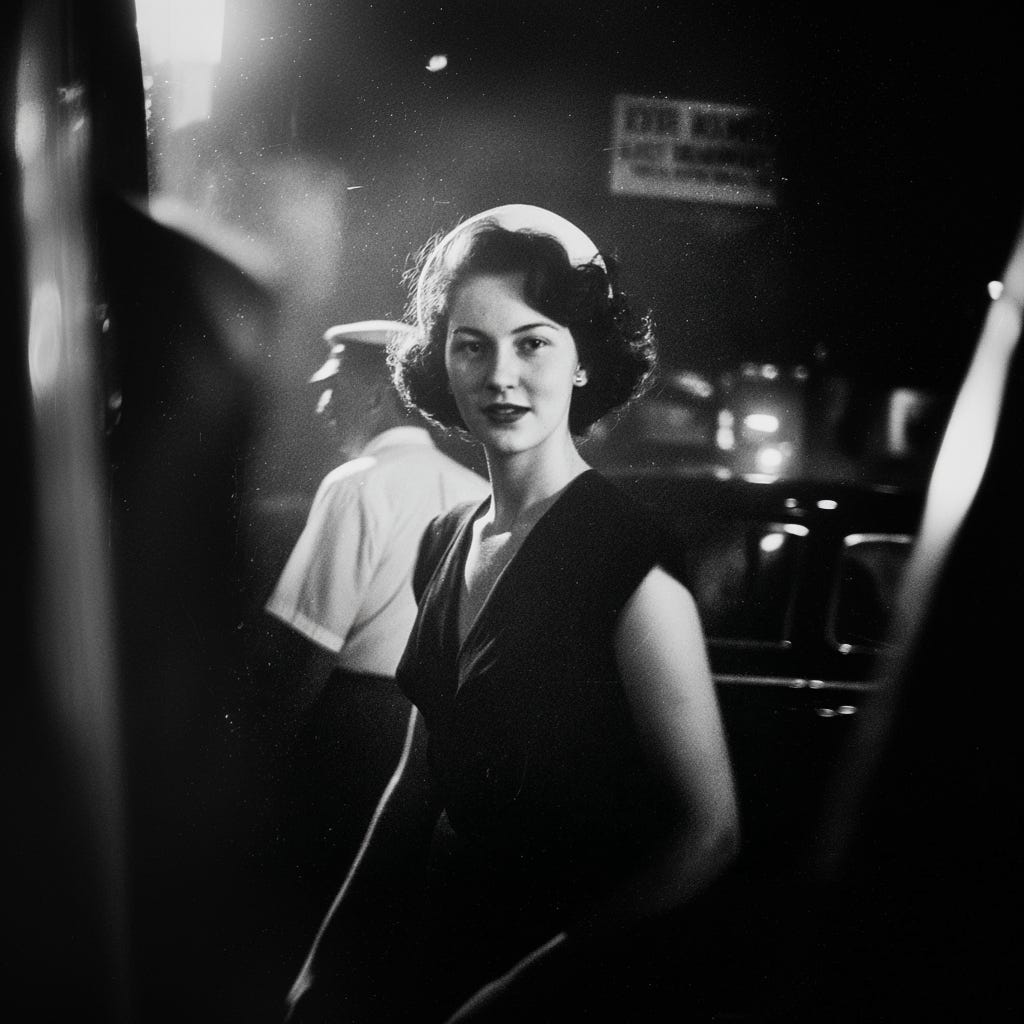
On September 19th, 1952, the growing community of Brisbane was rocked by the violent murder of a young woman. The area was safe with virtually no violent crime to speak of, but this night would change that- later, it would come to be known as the night that Brisbane lost its innocence.
The resulting investigation became the largest in Queensland’s history. Yet after countless hours spent searching for the killer, the case remained unsolved, as it does to this day. This is the story of Betty Shanks and Australia’s oldest cold case.

Betty Shanks
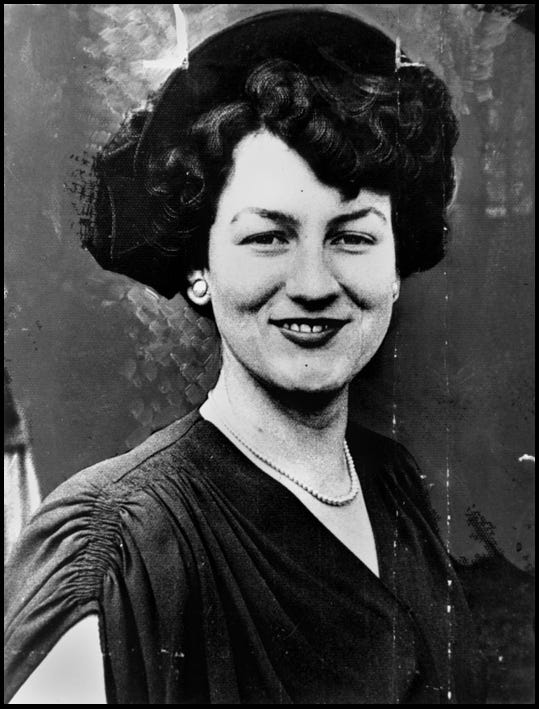
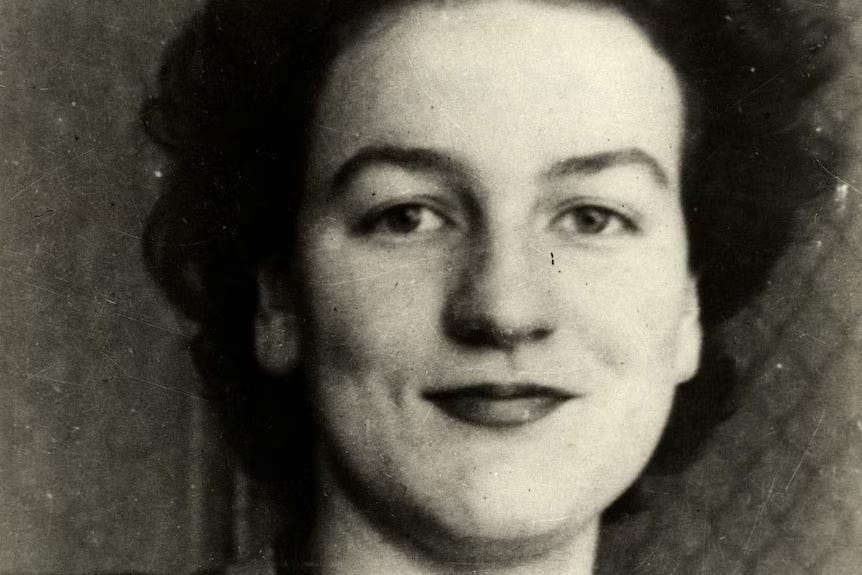
Betty Shanks was a 22-year-old woman and a resident of the Brisbane suburb of Grange in Queensland, Australia. She had grown up in the quiet town with her parents and continued to live with them after graduating from the University of Queensland.
Betty began her career in public service after graduating, working for the Commonwealth’s Department of the Interior. She was described as exceptionally bright and beautiful, and she had grown into a confident young woman.
Grange was known for being a safe neighborhood with no violent crime, and as such, Betty and other young women did not fear walking alone at night.
September 19, 1952
On September 19th, 1952, Betty attended a night lecture at Brisbane’s Commercial High School, which was eight kilometers away from her parents’ home. Betty, along with two other students, caught a ride back from their lecturer, Edward Milliken. He took Betty to Tram Stop 19 in Windsor, and from there, Betty boarded a tramcar that would take her directly to her neighborhood.
Betty exited from the tram terminal at Grange at 9:32 p.m. and began the short walk home down Thomas Street. Her parents lived on Montpelier Street, only four blocks from the tramcar terminal. Tragically, Betty would only make it a block or so from the terminal before she was attacked.
Around 9:40 p.m., residents in the neighborhood reported hearing screams. Alex Stewart, a police officer, lived just off Thomas Street across from Wilston State School. He heard the screaming and went to his window to find the source of the sound. He did not see anything out of the ordinary, so he and other residents mistakenly assumed the screams were coming from children playing late on the school playground.
Betty’s father stayed up late to wait for her, and at 1:30 a.m., he had notified the local police to report Betty missing.
Discovery
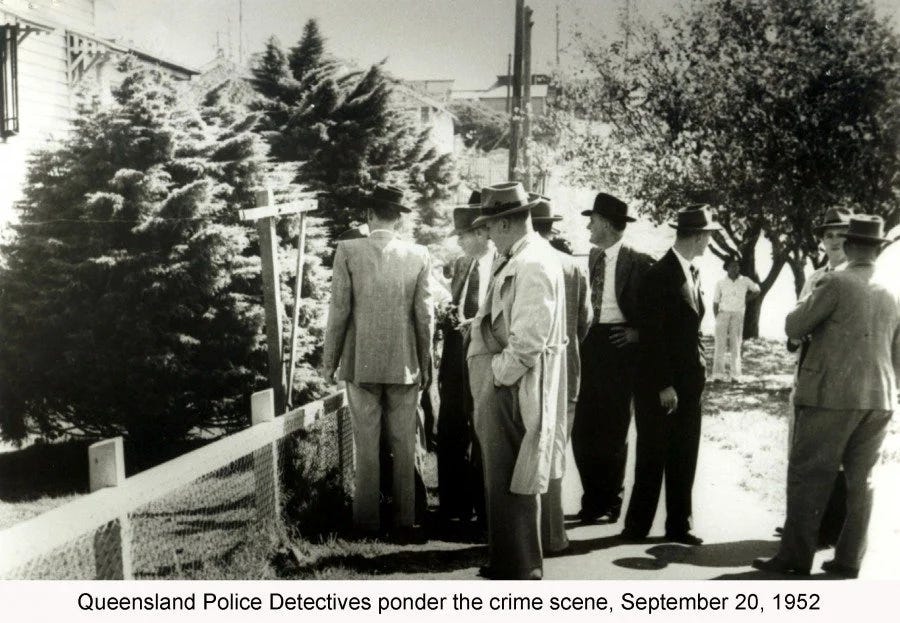
Early the next morning, Alex Stewart walked outside to retrieve the morning paper. Upon doing so, he discovered the body of Betty Shanks, lying in his neighbor’s front yard at the corner of Carberry Street and Thomas Street.
Betty had been savagely brutalized. Both her face and legs showed markings found to be consistent with black boot polish, indicating the young woman had been kicked repeatedly. Several of Betty’s teeth were found meters from her body, and her jaw was fractured, indicating the intensity of the beating she had received.
Her bra straps were broken, and her underwear had been removed, but there was no indication of sexual assault. Bloodied handprints were found at the scene, but they were too smudged to obtain fingerprints.
Betty’s purse was left behind, with its contents scattered about the yard. Her jewelry, including her watch, was also left with her body. Her watch was frozen at 9:53, indicating that she had been killed 21 minutes or less after leaving the tram terminal. Her tram ticket, now covered in blood, was still held tightly in her hand.
In the blink of an eye, Betty’s life had been cut short by an unknown attacker. Her body was discarded like trash in a yard only a few blocks from her home. Her family may have even heard her screams echo in the distance, but assumed, like everyone else, that it was nothing to worry about. In an instant, a quiet, safe, country town had been turned upside down in what is now referred to as the night that Brisbane was robbed of its innocence.
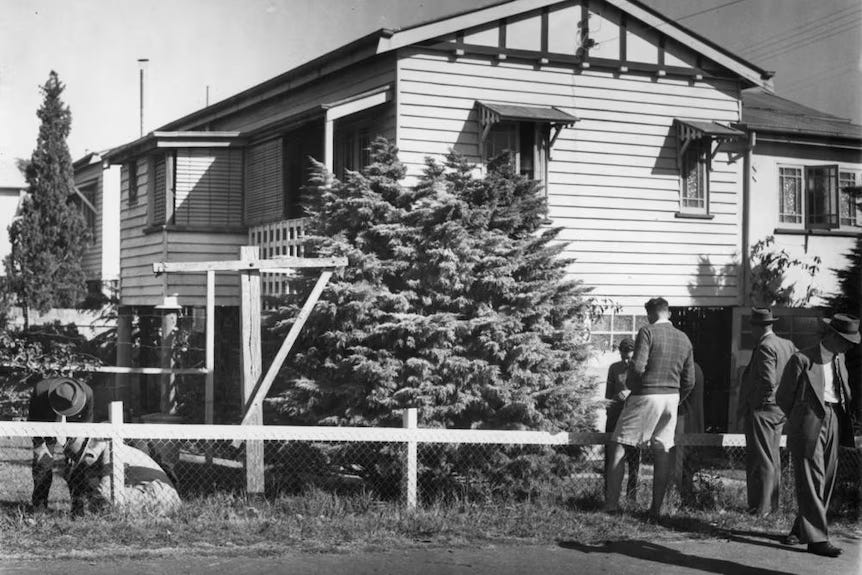
Investigation
Immediately after Betty’s body was found, a full investigation was launched. Detectives searched for clues, digging through dirty laundry and garbage bins for any bloodstained clothes, knocking on hundreds of doors, and interrogating thousands of people.
Based on the physical evidence at the scene, the police concluded that the killer must be a physically large man due to the severity of Betty’s injuries and the size of the bloody handprints left behind.

Police also suspected that the killer likely had experience, as Betty must have been attacked, killed, and dumped within the span of only twelve minutes. Evidence pointed to Betty being a victim of opportunity, as she had no enemies, kept to herself, and was devoted to her work and studies.
Nothing of value was stolen, and Betty had not been sexually assaulted, ruling out both motivations for murdering her. There was a line of trees adjacent to the school and directly across from the yard where Betty had been dumped; the prevailing theory was that the killer had pulled Betty into the cover of the trees, killed her, then dumped her body over the fence of the yard on Carberry Street.
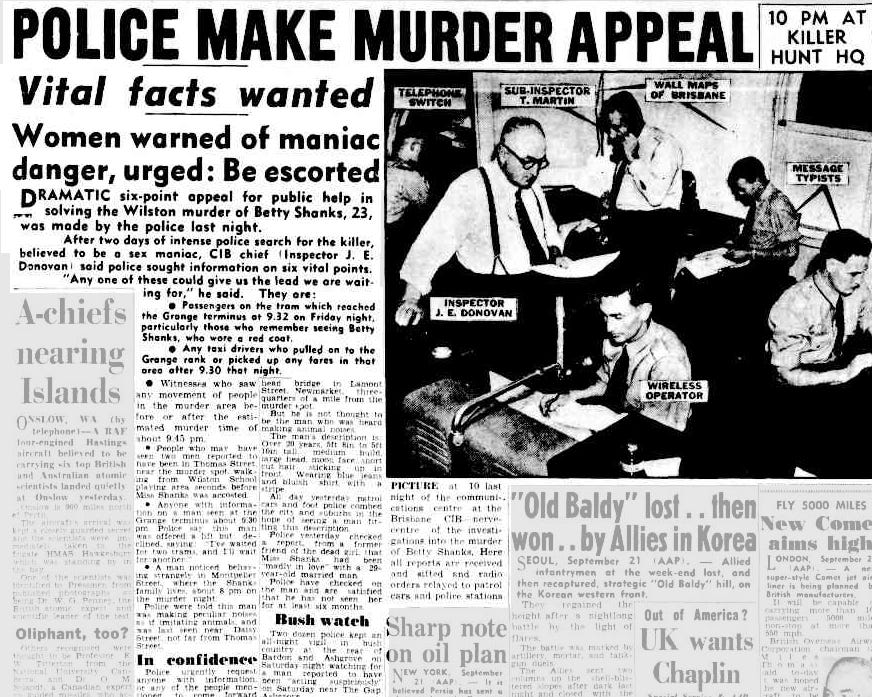
Possible Suspect
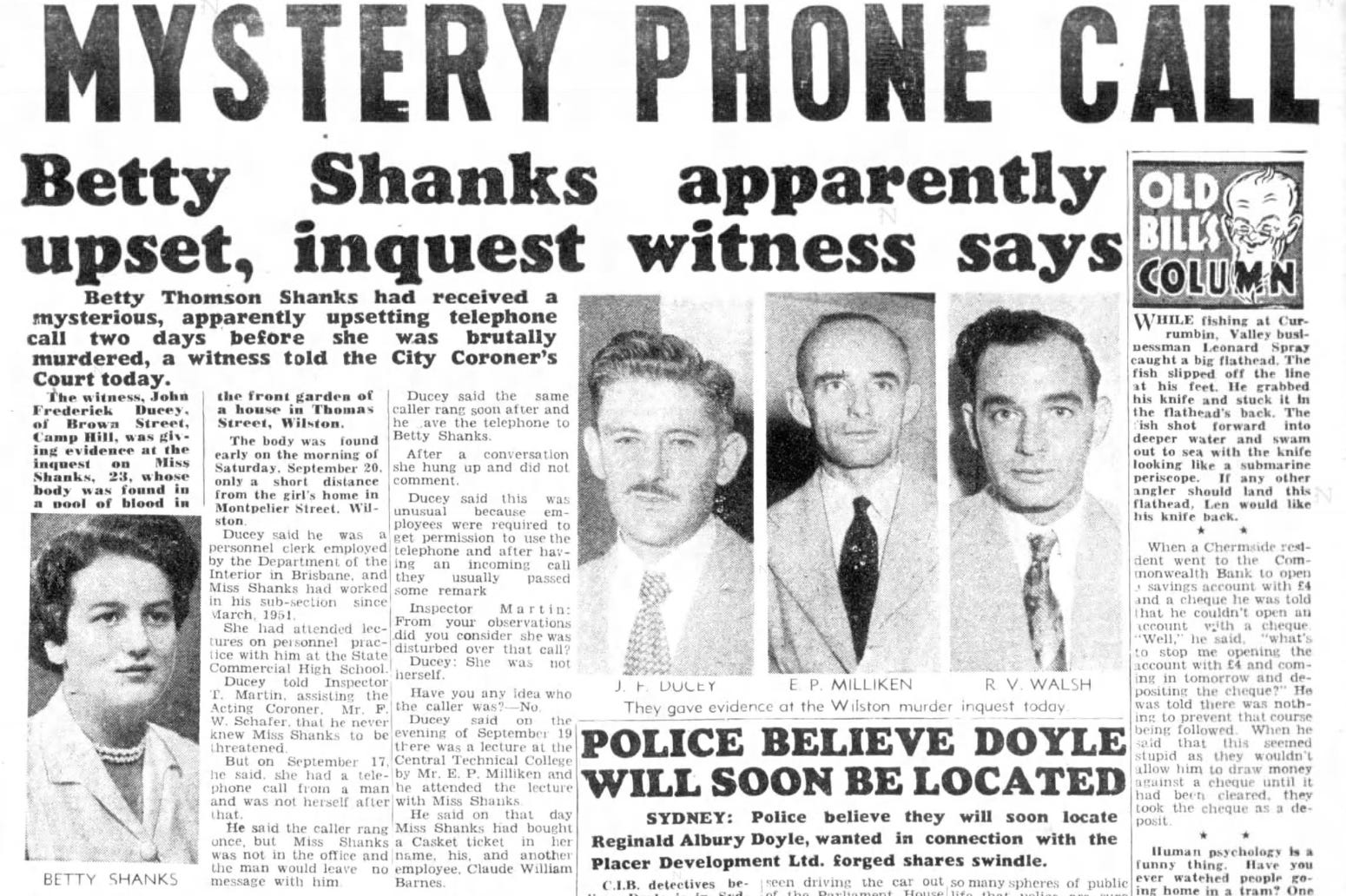
Anyone with ties to Betty was interviewed, including her supervisor, John Ducey. According to Ducey, two days before her murder, Betty had received a strange and upsetting phone call from an unknown man.
He said this call had rattled Betty and that she had not been her usual self since receiving it. Additionally, four eyewitnesses at the tram terminal the night of Betty’s death reported seeing a tall man in a brown suit pacing around the terminal.
The man in the brown suit may be connected to Betty’s murder, but his identity remains unknown. However, a woman named Desche Birtles believes that she knows who this man was- her father, Eric Sterry.
Sterry worked as a locksmith and had changed the locks at Betty’s parents’ home, after which his daughter believes Sterry became obsessed with Betty. Desche attempted to report her father as the killer to the police on numerous occasions, and stated that she saw him burning clothes on the night of the murder.
Interestingly, Sterry had been a former soldier- a detail that makes his involvement a bit more likely. Betty had a patterned marking on her forehead, a pattern identical to the canvas gaiters worn by soldiers.
Many soldiers frequented the area, and in fact, an army dress rehearsal was happening at the RNA Showgrounds not far from Betty’s neighborhood on the night of her murder. Because so many soldiers were in the area, Sterry being a soldier does not automatically cast suspicion on him, but coupled with the other details, it does lend credibility to the theory.
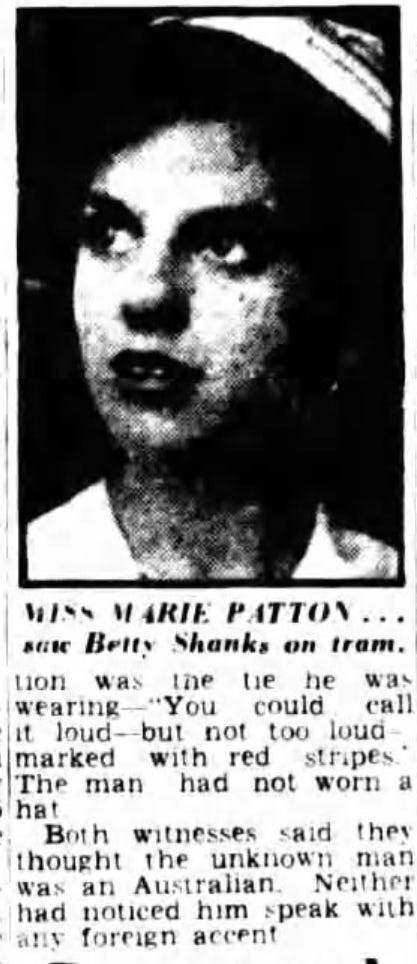
A witness who saw the man in the brown suit confirmed that Sterry does match the description of the man she saw at the train terminal. Author Ted Duhs, who believes that Sterry did kill Betty Shanks, claims that his medical records indicate a history of violent behavior and diagnoses from two psychiatrists of potential psychotic behavior and “anxiety hysteria.”
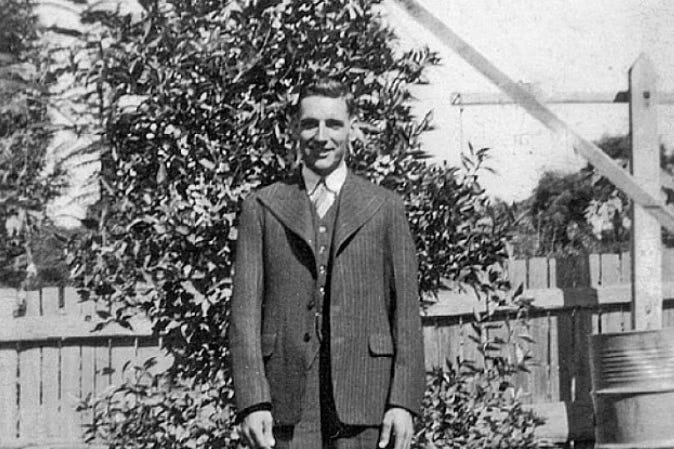
Perhaps the most substantial indicator of guilt in Sterry’s case is a photograph of Betty that, according to his daughter, he kept as a memento in the family’s photo album until his death in 1997. A note on the back of the photograph reads: “Betty Thomson Shanks, murdered 1952.”
Did Eric Sterry kill Betty after she rejected his advances, as his daughter believes? Did he keep her photograph in the family’s album for 45 years as a trophy? Or was Eric innocent, and instead kept the photo to remember a bright young woman he knew whose life was cut tragically short? Since no arrest has ever been made and no person has ever been named responsible in any official capacity, we may never know.
Closing Thoughts
The murder of Betty Shanks is one of the oldest and most infamous unsolved murder cases in Australia’s history. In a matter of 12 minutes, someone had managed to attack and murder a young woman only a few blocks from home without anyone seeing what had happened until it was too late.
Over the years, multiple people have confessed to killing Betty Shanks, but they all have been determined to be false confessions. Today, the case remains open, and as of 2024, the reward has been increased to $50,000 for any information leading to the person responsible.
Sources:
Jones, Ciara. “The Murder of Betty Shanks Has Haunted Brisbane for Decades. After 72 Years, It Still Remains Unsolved.” ABC News, 18 Sept. 2024, https://www.abc.net.au/news/2024-09-19/betty-shank-unsolved-murder-cold-case-brisbane/104319906
Queensland Police Service. “FROM THE VAULT- UNSOLVED the Murder of Betty Shanks – September 19, 1952.” Museum, 23 Sept. 2025, https://mypolice.qld.gov.au/museum/2025/09/23/from-the-vault-unsolved-the-murder-of-betty-shanks-september-19-1952
Series, Part of the Mapping Evil With Mike King Podcast. “Betty Shanks.” ArcGIS StoryMaps, 19 Sept. 2022, https://storymaps.arcgis.com/stories/957fd041add543bd88b1e2cc4c073d61