


Background
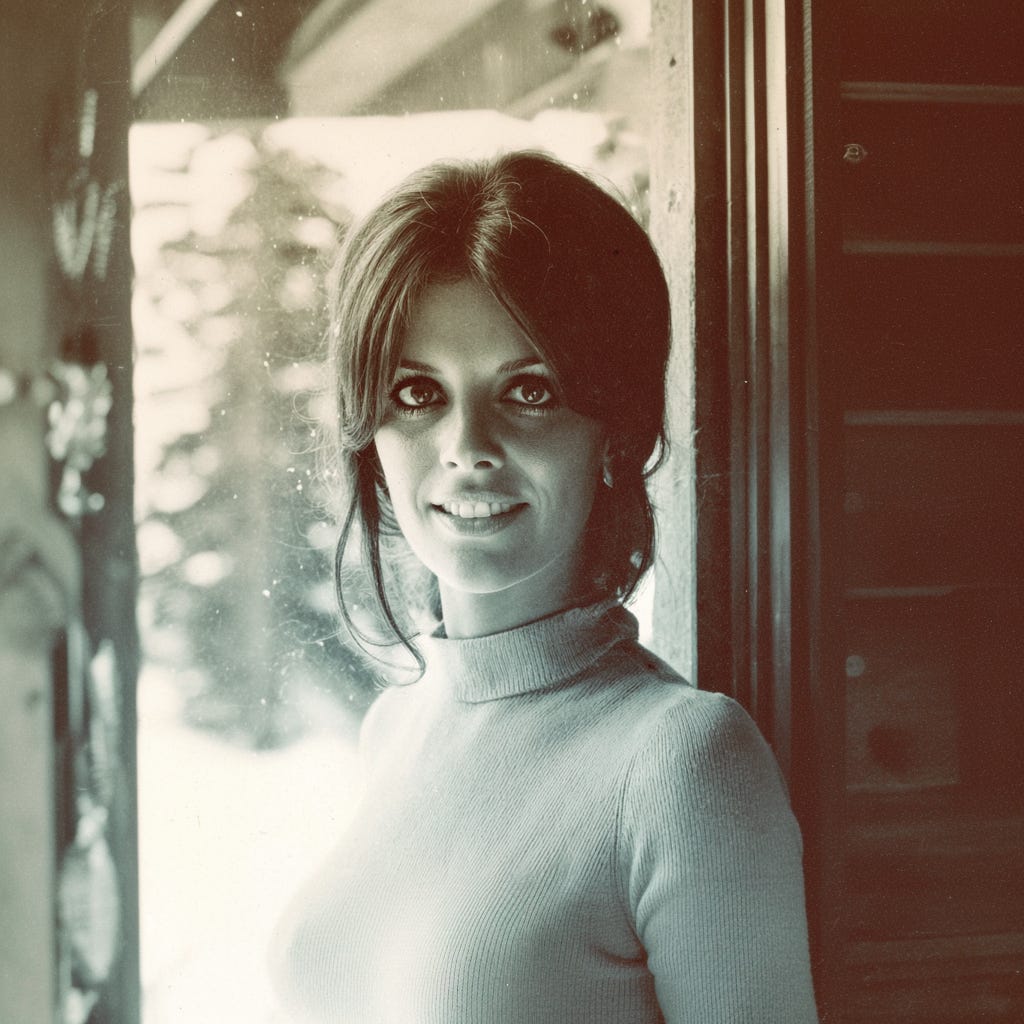
In March 1976, Franco-American actress and musician Claudine Longet was charged with the shooting death of her boyfriend, Olympic skier Vladimir “Spider” Sabich, at his Aspen, Colorado home. The resulting trial, verdict, and fallout would stun many and cause Longet to shun the limelight in favor of a more private existence.
Early Life
Claudine Georgette Longet was born on January 29, 1942, in Paris, France, during the height of World War II. Her early childhood and formative years were shaped in the shadow of the war, as France, like much of Europe, was only just beginning to recover from the devastation.
As a child, Claudine was known to be shy and soft-spoken, but she showed an early fondness for dance and music. Paris, with its cafés, theaters, and music halls, was a place full of culture and movement, and it was here that Claudine first felt the pull of performance. From a young age, she trained seriously in ballet and other forms of dance, learning discipline, posture, and control.
By her late teens, she had appeared on French television and performed in clubs and small venues, gaining experience and building confidence in front of audiences. At 18, Claudine took a bold step to move to the United States.
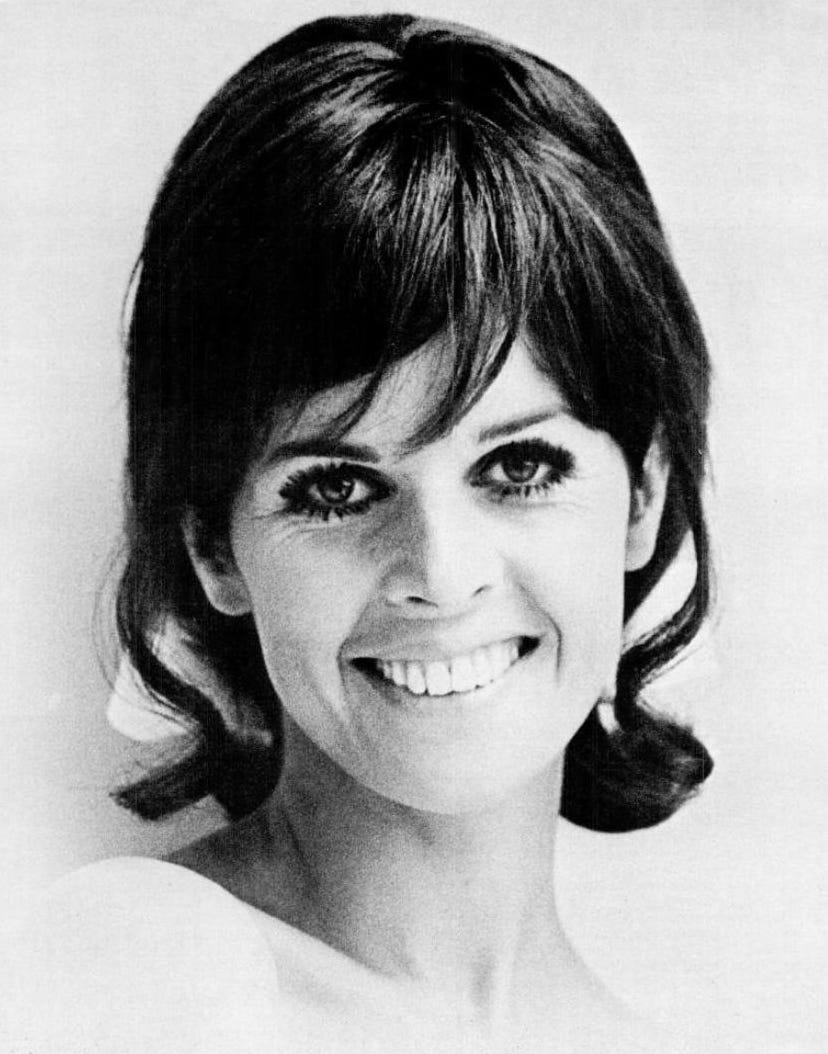
She landed in Las Vegas, Nevada, and soon joined the cast of the Folies Bergère show at the Tropicana Resort and Casino. This was a French-style revue full of lights, music, and showgirls. It was very popular with visitors. Claudine was a lead performer, drawing attention with her elegance, slender figure, and stage presence.
Career and Marriage
Around 1960, Claudine had a chance encounter with a man who would have a significant impact on her personal and professional life. According to widely reported accounts, Longet met popular American singer and television star Andy Williams when Williams stopped his car to help Claudine after her vehicle broke down on the roadside.
This chance meeting began a relationship between Williams and Longet. At the time, Andy Williams was already a major star in the United States. Claudine was new to the country, spoke limited English, and lived a life centered on dance and performance. On December 15, 1961, Claudine Longet and Andy Williams married. Williams was 33, and Longet was 19.
The couple went on to have three children: Noelle (born in 1963), Christian (born in 1965), and Robert (born in 1968). Much of Claudine’s early public image was shaped by her family life as she stepped back from her own career ambitions to devote much of her time to being a wife and mother.
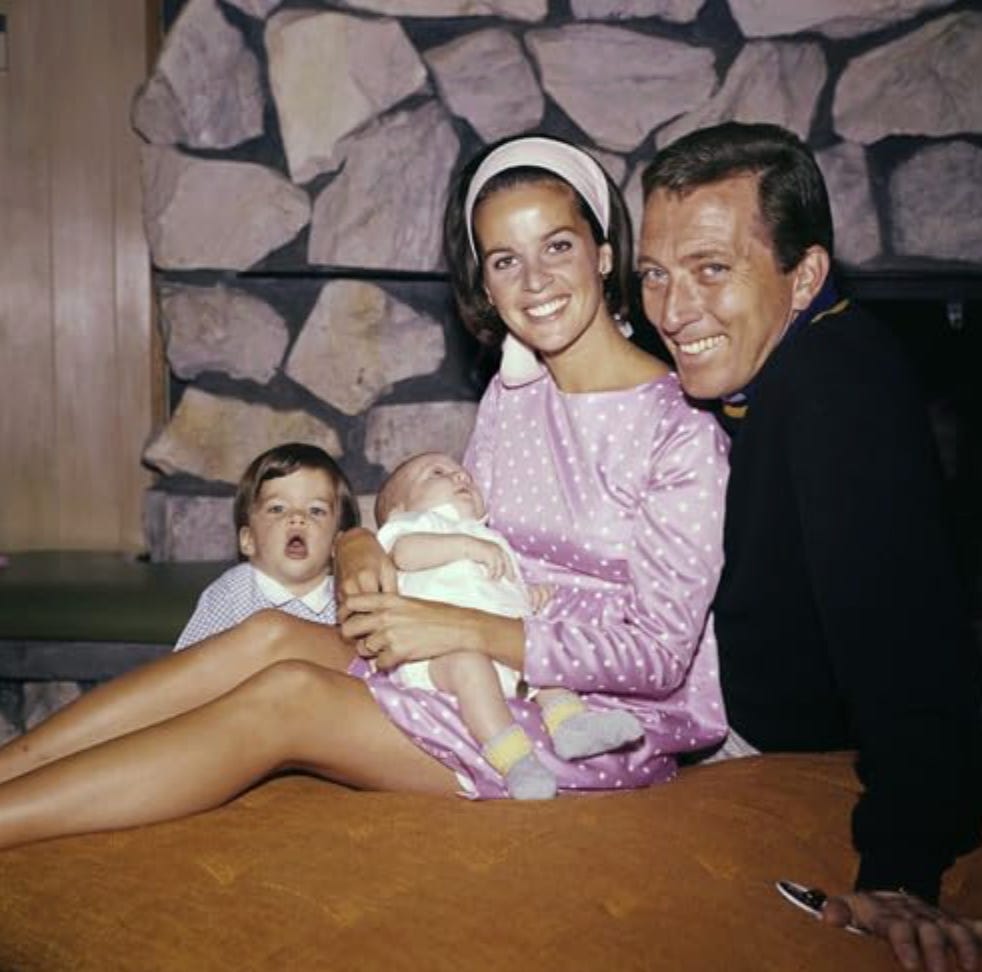
In public, Claudine was often seen as the elegant French wife beside one of America’s most beloved entertainers. But it wasn’t long before her natural talent and charm began to pull her back into the spotlight. Andy Williams also played a key role in opening doors for her career as Claudine began appearing regularly on The Andy Williams Show, which premiered in 1962 and quickly became one of the most-watched variety shows on television.
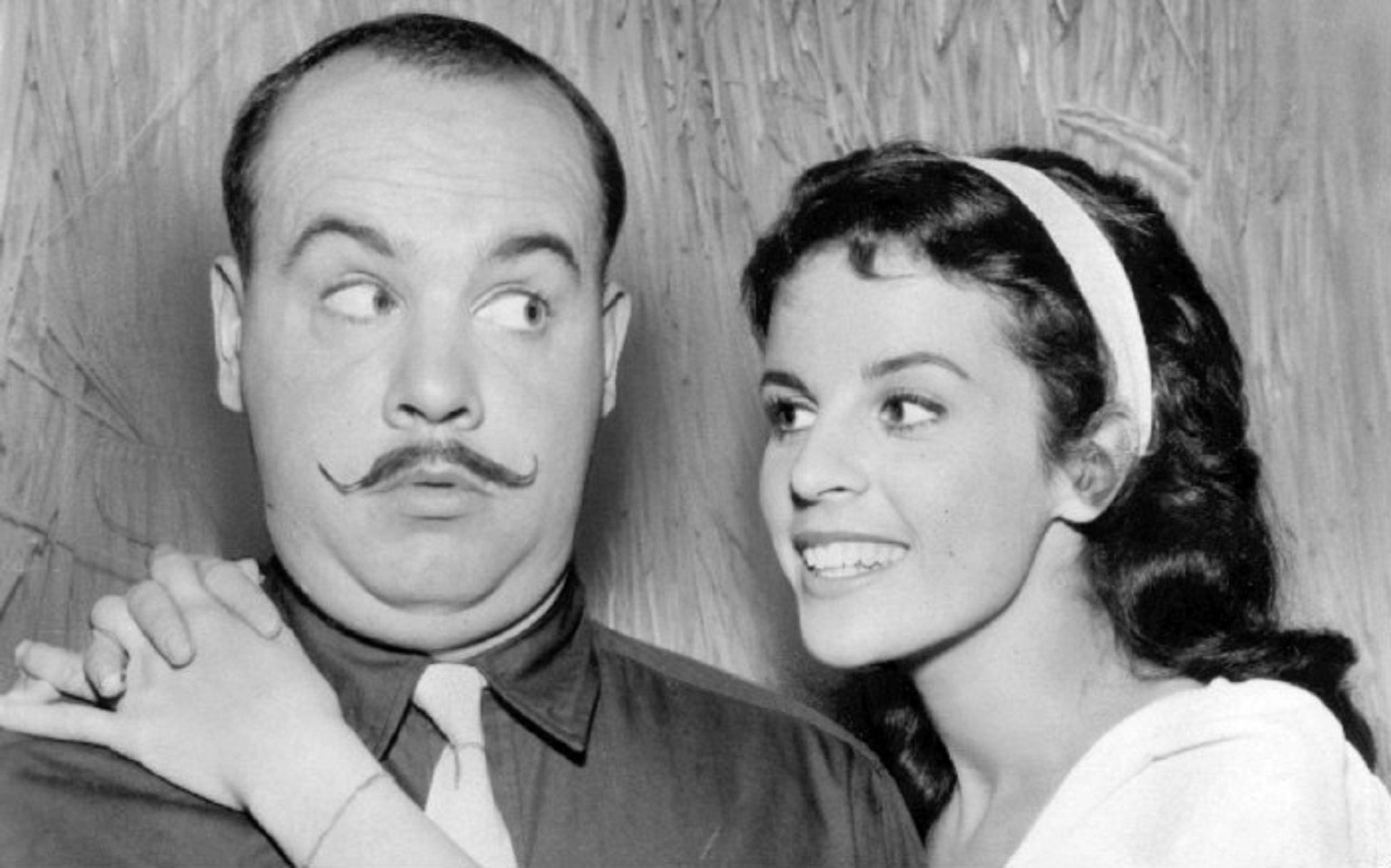
She also made numerous guest appearances on other TV series from 1964 onward, including Combat!, Hogan’s Heroes, Run for Your Life, and The Rat Patrol, where her accent and easy smile made her stand out. Her television exposure soon led to a recording career. In 1966, her performance of the bossa nova song “Meditation” gained attention after it was featured on a television drama. That exposure led music producer Herb Alpert, co-founder of A&M Records, to offer her a recording contract.
Between 1966 and 1970, Claudine recorded five albums for A&M Records. Her first album, titled Claudine (1967), introduced her breathy, soft vocal style to the music world. Songs like “Hello, Hello” and her cover of “Here, There and Everywhere” by The Beatles played on radio stations and brought her broader recognition.
The Look of Love (1967) and Love Is Blue (1968) followed, with the latter album also earning attention on the charts. She recorded more albums like Colours (1968) and Run Wild, Run Free (1970), each showing her gentle, intimate singing that blended pop and bossa nova influences.
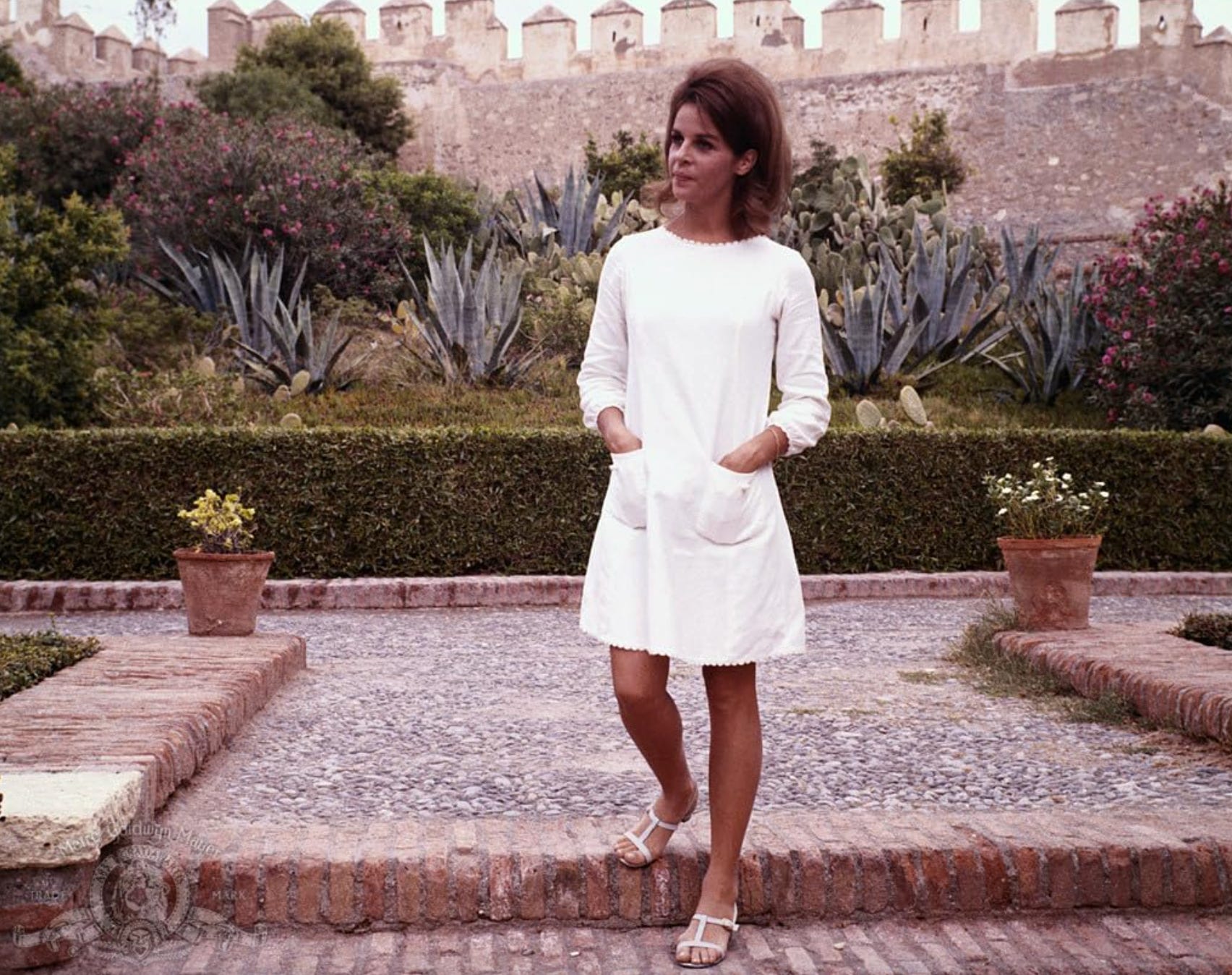
In addition to her recording career, Longet also found work in films. In 1968, she had a notable role in the comedy film The Party, directed by Blake Edwards and starring Peter Sellers. In the movie, she played Michèle Monet, a glamorous Hollywood starlet. This, along with other performances on the big and small screen, helped establish her as a multitalented star.
Personal Life
After years in the spotlight as a singer and actress, Claudine Longet’s life began to change both personally and professionally. As her husband’s career continued to grow, so did the pressure on their marriage. Andy was constantly traveling for performances, recordings, and television work.
Claudine was juggling motherhood with her own rising career. While she enjoyed singing and acting, she often put her family first, which sometimes slowed her professional ambitions. Over the years, the distance between them widened.
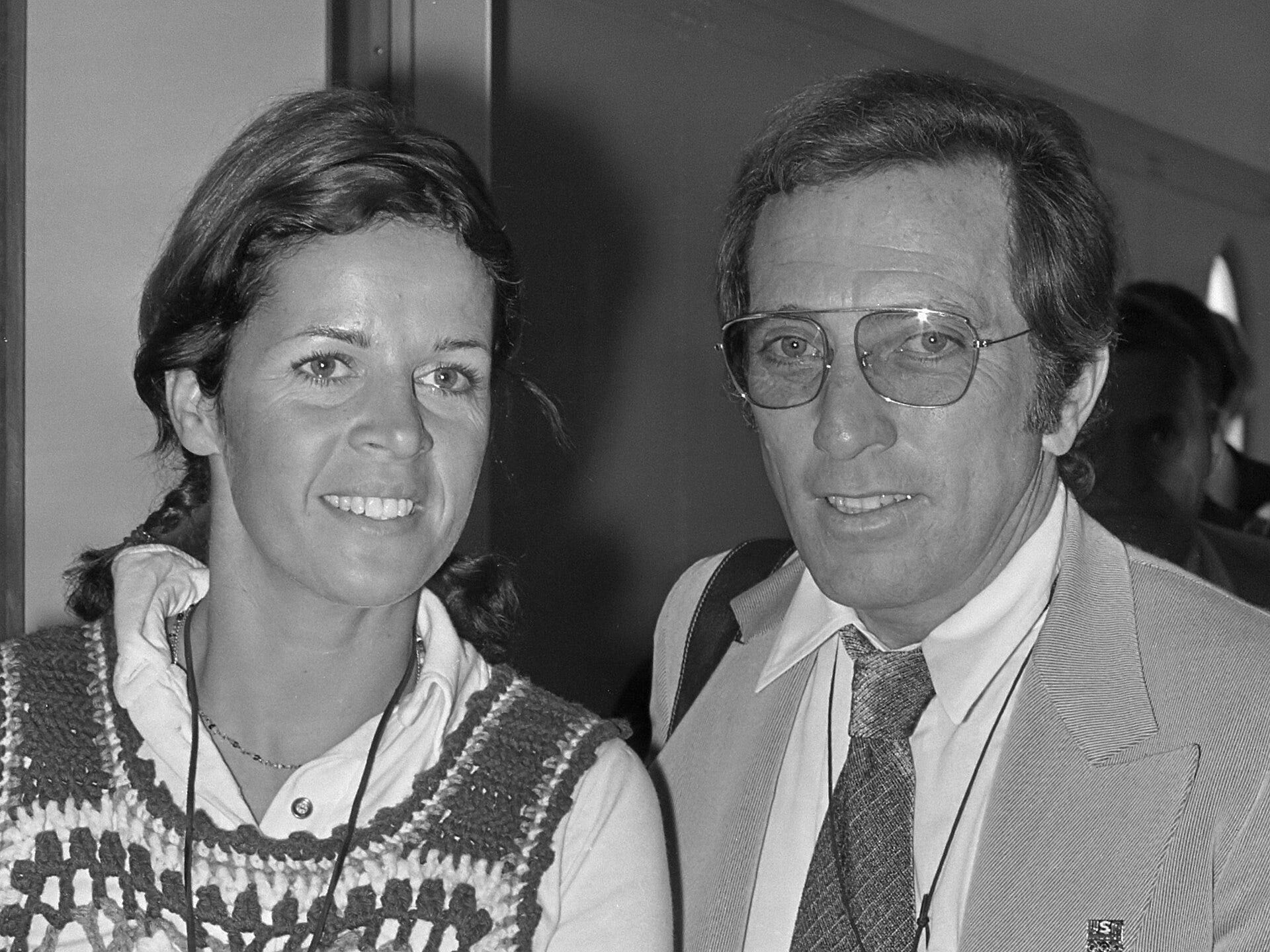
By 1970, cracks had started to show in Claudine’s marriage to Andy Williams. After nearly ten years together, the couple legally separated that year, even though they tried to stay friends. In January 1975, after nearly 14 years of marriage, Claudine Longet and Andy Williams officially divorced. Despite the breakup, they remained on good terms.
After the divorce, Claudine moved away from Los Angeles and spent more time in Aspen, Colorado. In the years immediately after their separation, Claudine’s public appearances became less frequent. She had stopped performing on television specials, and although her music still occasionally received airplay, she was no longer a regular part of the entertainment scene.
Relationship with Vladimir “Spider” Sabich
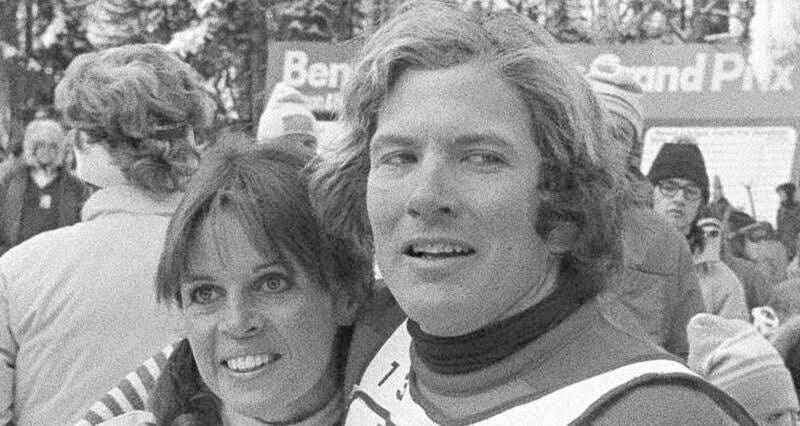
In 1972, shortly before her divorce from Williams, Claudine met professional skier Vladimir “Spider” Sabich at a celebrity ski race in Bear Valley, California. Over the next few years, they grew close, and Claudine began spending more time in Aspen, Colorado, splitting her time between Sabich’s chalet in the mountains and her home in Malibu, California.
Sabich and his siblings had learned to ski while growing up near Lake Tahoe in northern California. His talent earned him a scholarship to the University of Colorado Boulder. His college coach also happened to be the coach of the men’s U.S. Ski Team, and Sabich, along with several other University of Colorado skiers, competed in the 1968 Winter Olympics, where he placed fifth in the Men’s slalom.
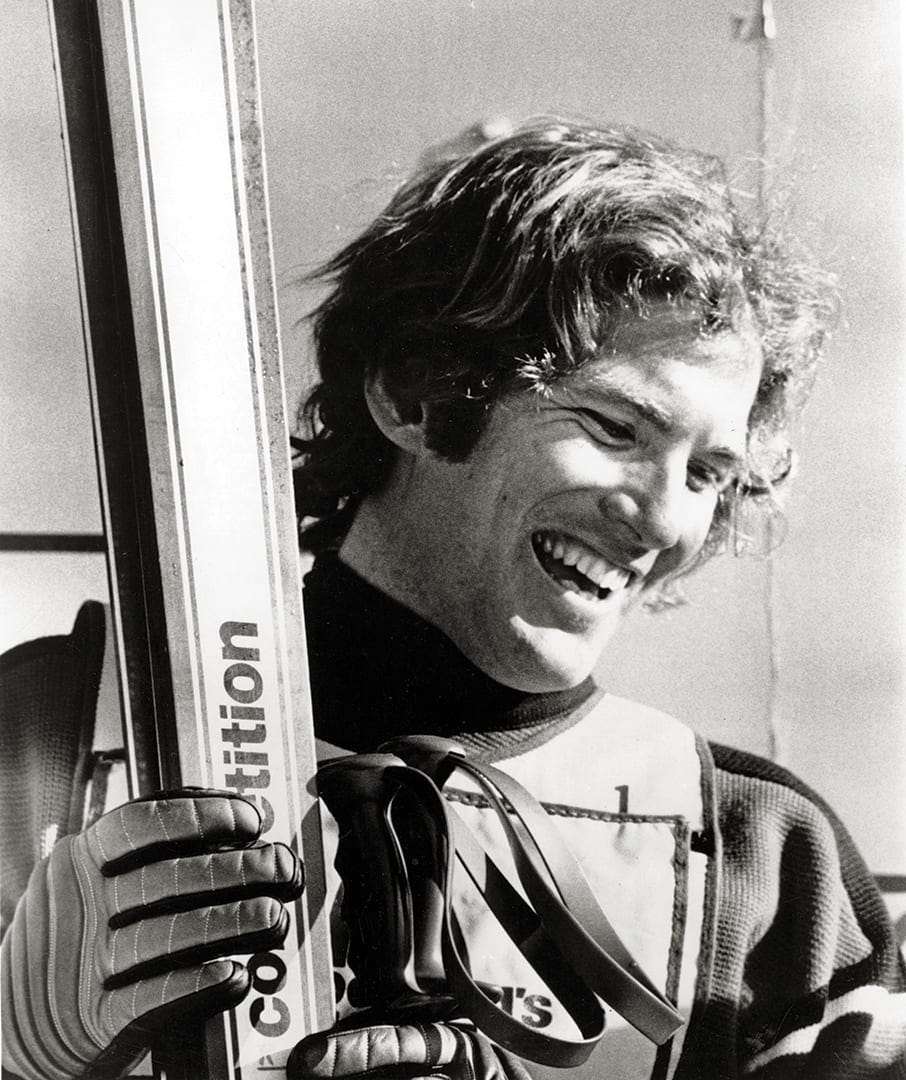
In addition to his success at the Olympics, Sabich competed on the World Cup circuit for several years before turning pro in 1970. His good looks and charisma helped secure him lucrative endorsements that supplemented his prize winnings. His notoriety helped to popularize skiing in the United States during the late 1960s and early 1970s. He was reportedly the inspiration for Robert Redford’s character in the 1969 film Downhill Racer.
Unfortunately, beginning in 1973, a series of injuries slowed Sabich’s career, forcing him to miss the entire 1975 season. During this time, Claudine Longet was splitting time between her home in Malibu and Sabich’s Aspen chalet in the exclusive Starwood complex, where he was neighbors with singer John Denver.
According to sources, including Sabich’s ex-girlfriend and his friend and former college coach Bob Beattie, shortly before Sabich’s death, he had been planning on ending his relationship with Longet.
March 21, 1976
On the afternoon of March 21, 1976, Spider Sabich returned home after a day on the slopes and a training session at Aspen Highlands. He was preparing to take a shower and then get ready for dinner with a friend. Claudine was also in the house that afternoon.
Things between them had been tense in the months prior, as friends later told reporters that Spider had sometimes said he felt tied down, both by the relationship and by having Claudine’s three children living with them.
At some point, Claudine picked up a .22-caliber Luger-style pistol, a small gun Spider’s father had given him, and brought it into the bathroom. The reason why she had the gun in her hand is something that would later be hotly debated in court.
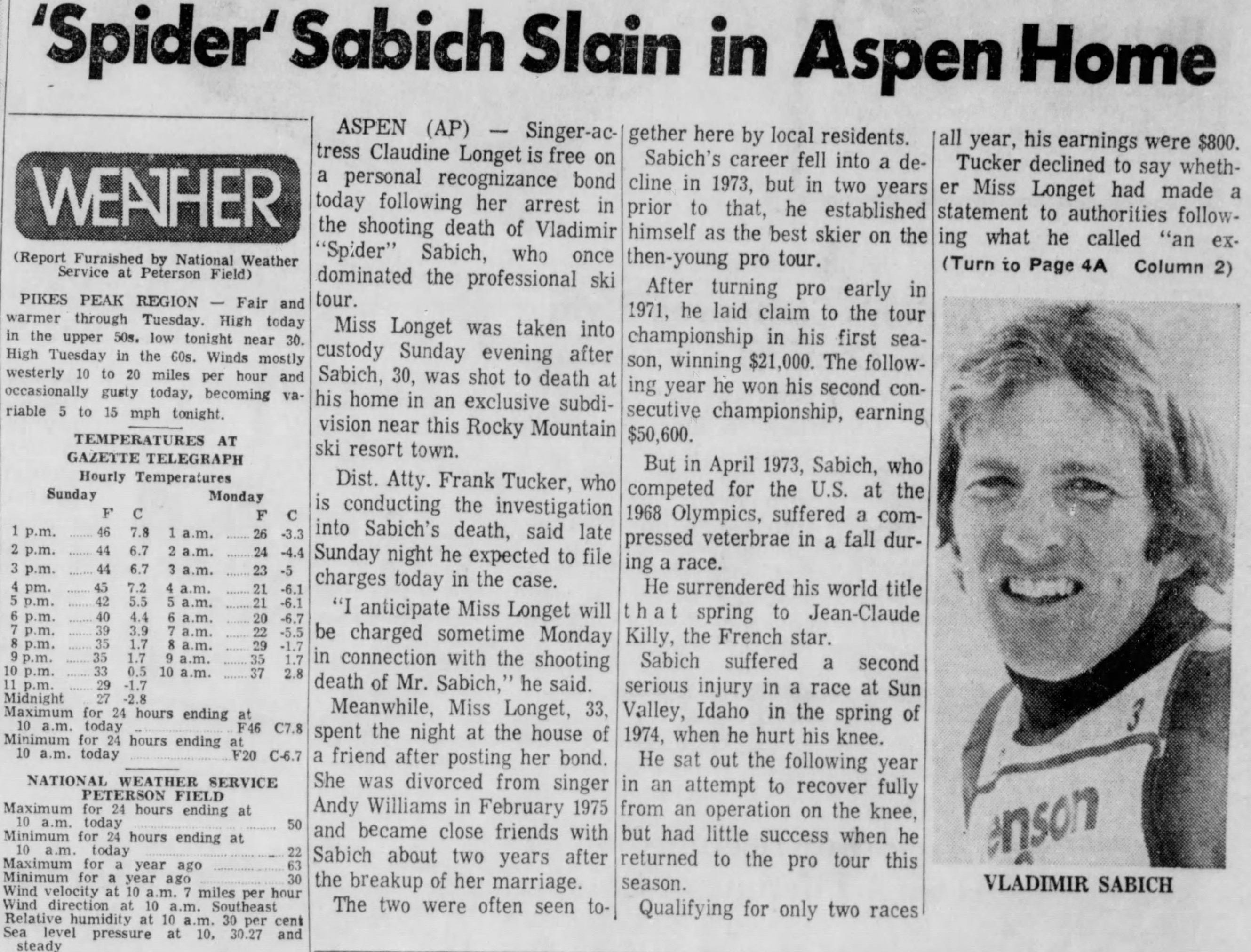
According to her version of events, she was unfamiliar with guns and believed the weapon was unloaded. She claimed that while Sabich was explaining its safety features and demonstrating how to hold it, the gun suddenly fired, striking Sabich. The bullet hit him in the abdomen, causing severe internal injuries. Claudine said she panicked immediately after the shot was fired and tried to get help.
Longet phoned Aspen Valley Hospital right away to report what had happened. Local sheriffs and first responders arrived at the home and found Spider lying in the master bathroom next to the tub, seriously injured. Medics worked to stabilize him, but the bleeding was too severe. Despite their efforts, Sabich died in the ambulance on the way to the hospital, with Claudine at his side, shortly after 5:00 p.m. that afternoon.
News of his death spread quickly through Aspen. Sabich was a beloved sports figure and widely liked in the community, and many people were stunned that his life had ended in such a sudden and violent way, especially under such murky circumstances.
Investigation
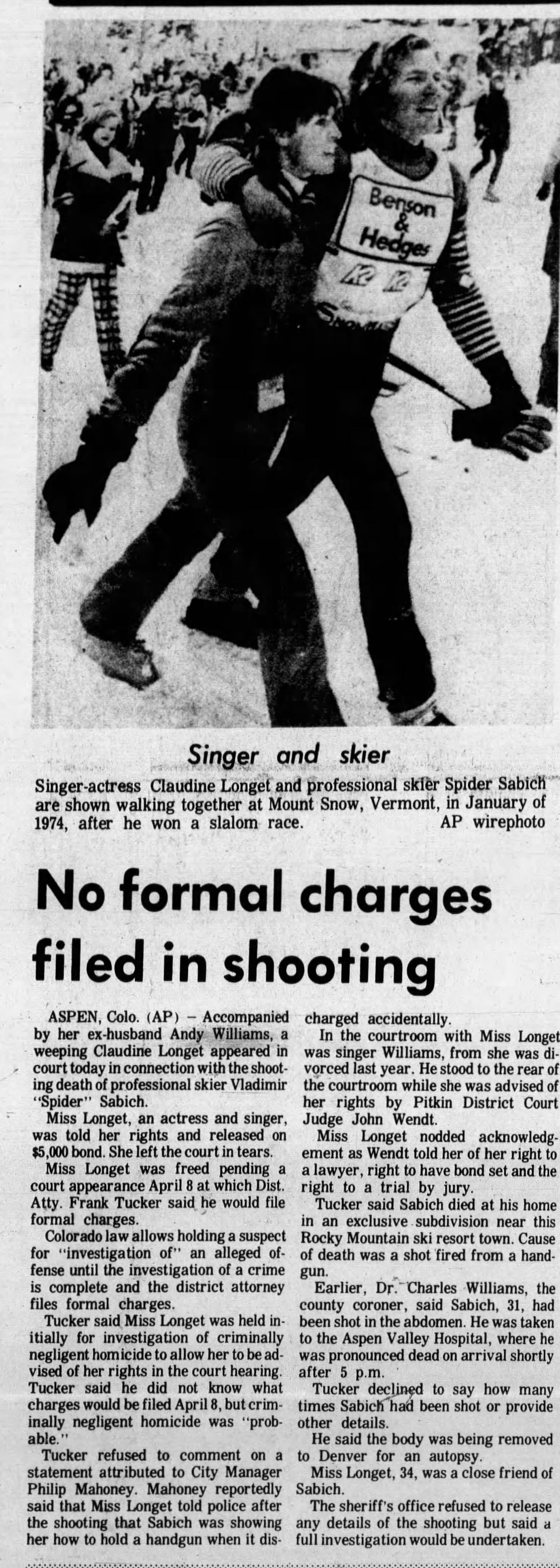
Almost immediately, police began investigating the shooting, trying to understand how and why it happened. Longet was taken into custody for questioning that same day. While she was not arrested on the spot, authorities treated the case seriously from the beginning. Investigators examined the gun, the scene of the shooting, and Claudine’s statements.
When she was taken into custody, Longet allegedly uttered, “I killed him”, while in the presence of a female officer. However, the statement was inadmissible because she did not have an attorney present. She later told police the shooting was an accident; however, there were no eyewitnesses other than Longet and her children in the house.
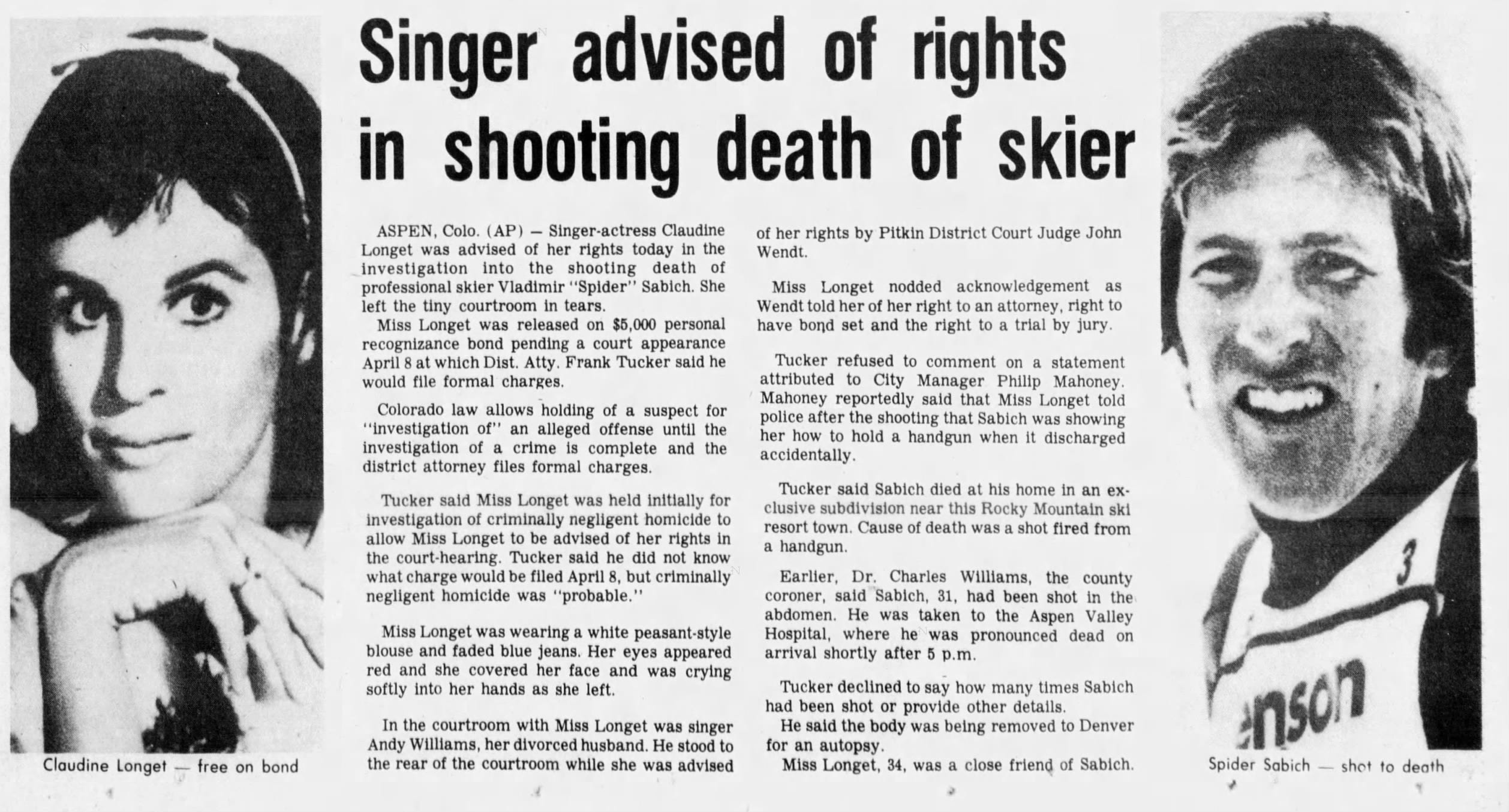
At first, she was charged with reckless manslaughter, a felony that could have carried up to 10 years in prison and a $30,000 fine. Claudine denied any intention to hurt Sabich and maintained from the start that the shooting was an accidental discharge of the gun. She was released on a $5,000 bond, and surprised many when, six days after the shooting, she showed up to an outdoor memorial for Sabich.
The way police mishandled the early stages of the investigation was crucial to the outcome of the case. Shortly after the shooting, Longet was taken to Aspen Valley Hospital, where medical staff drew a blood sample. That blood test later showed traces of cocaine in her system. However, investigators had not obtained a proper warrant before the test was done. Because of this, the judge later ruled the results inadmissible in court.
The same thing happened with Claudine’s personal diary, which the police seized from the home. Investigators believed it might contain information about her relationship with Sabich, including possible tension or arguments. But again, the diary was taken without a valid warrant, and the judge ordered it excluded from the trial. This was a critical misstep, as those who viewed the diary described its contents as “explosive” and could have served the prosecution well.
