


Background
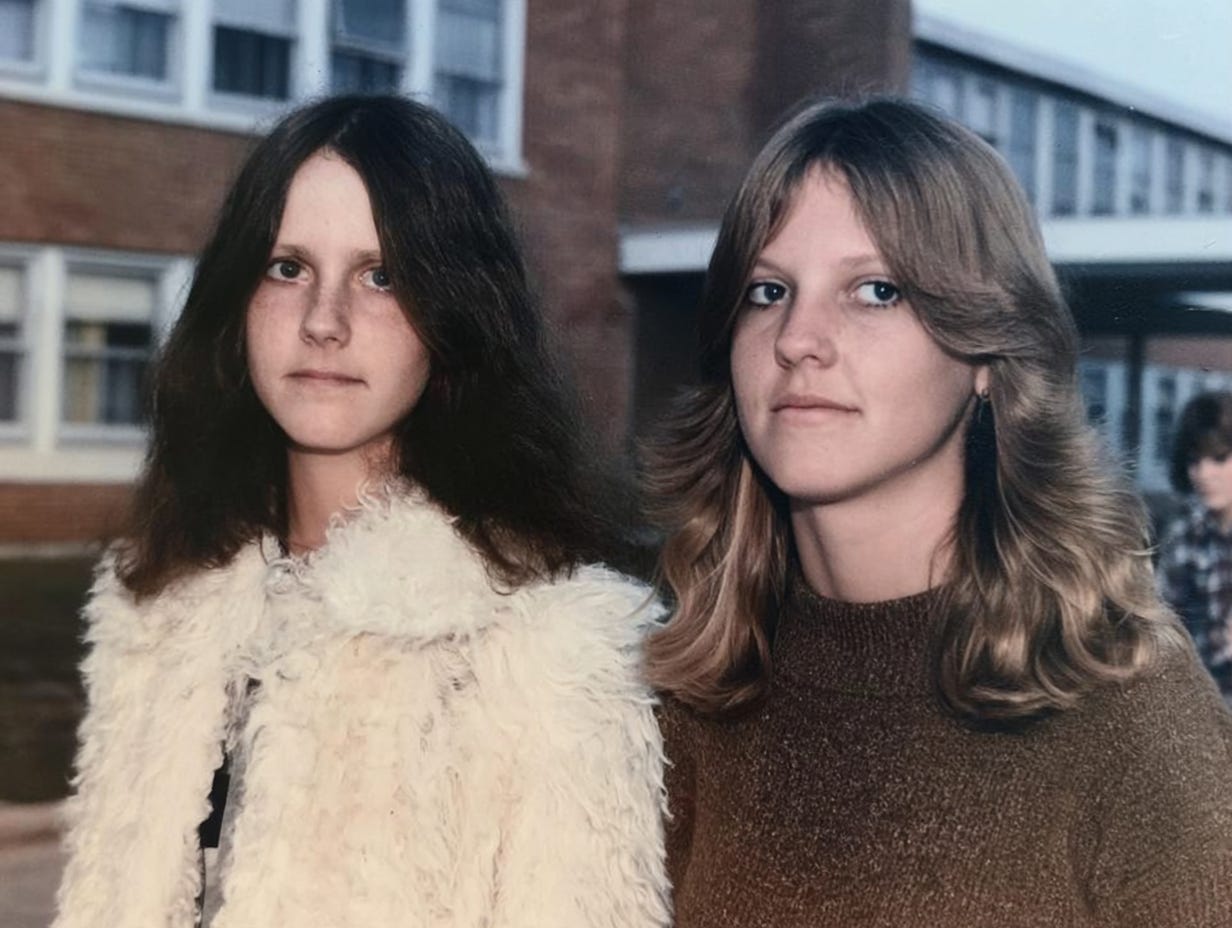
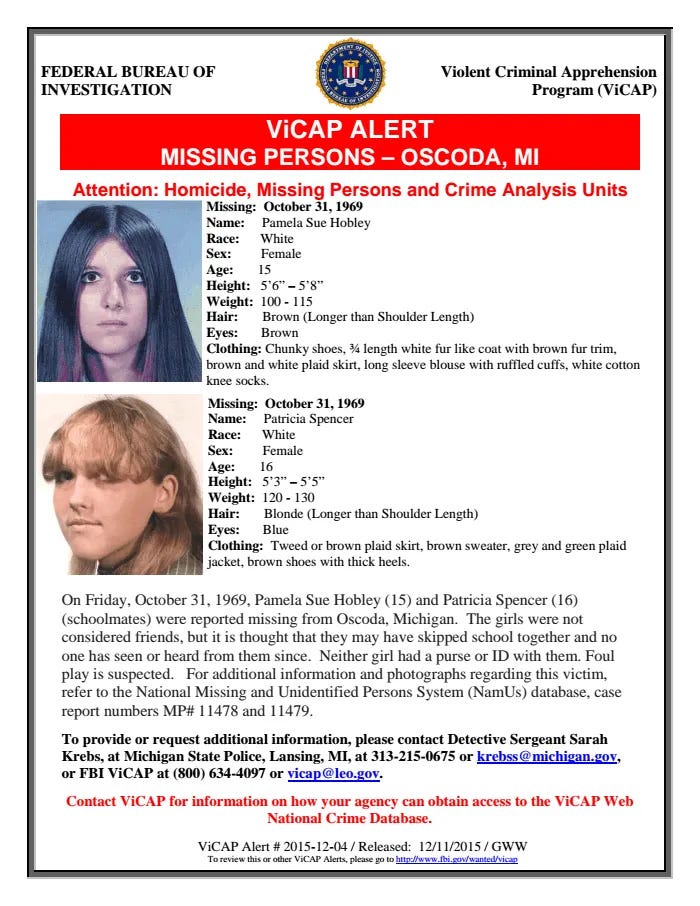
On Friday, October 31, 1969, two teenage girls disappeared from the small town of Oscoda, in Iosco County, Michigan. Patricia Ann "Patty" Spencer, 16, and Pamela Sue "Pam" Hobley, 15, were not close friends; by all accounts, they both simply crossed paths that Halloween. Yet their names would become forever linked in one of Michigan's most haunting unsolved disappearances.
Halloween 1969
Patricia Spencer was born on January 10, 1953, and Pamela Hobley on May 24, 1954; both were students at Oscoda High School.1
According to reports, both girls left school early on October 31, 1969, with the last confirmed sighting placing 16-year-old Patricia Spencer and 15-year-old Pamela Hobley walking eastbound on East River Road, away from Oscoda High School, at around 2:00 p.m. Pamela had told her family that she would be home later that day, as she was planning to attend her school’s homecoming football game followed by a Halloween party. She never made it to either.
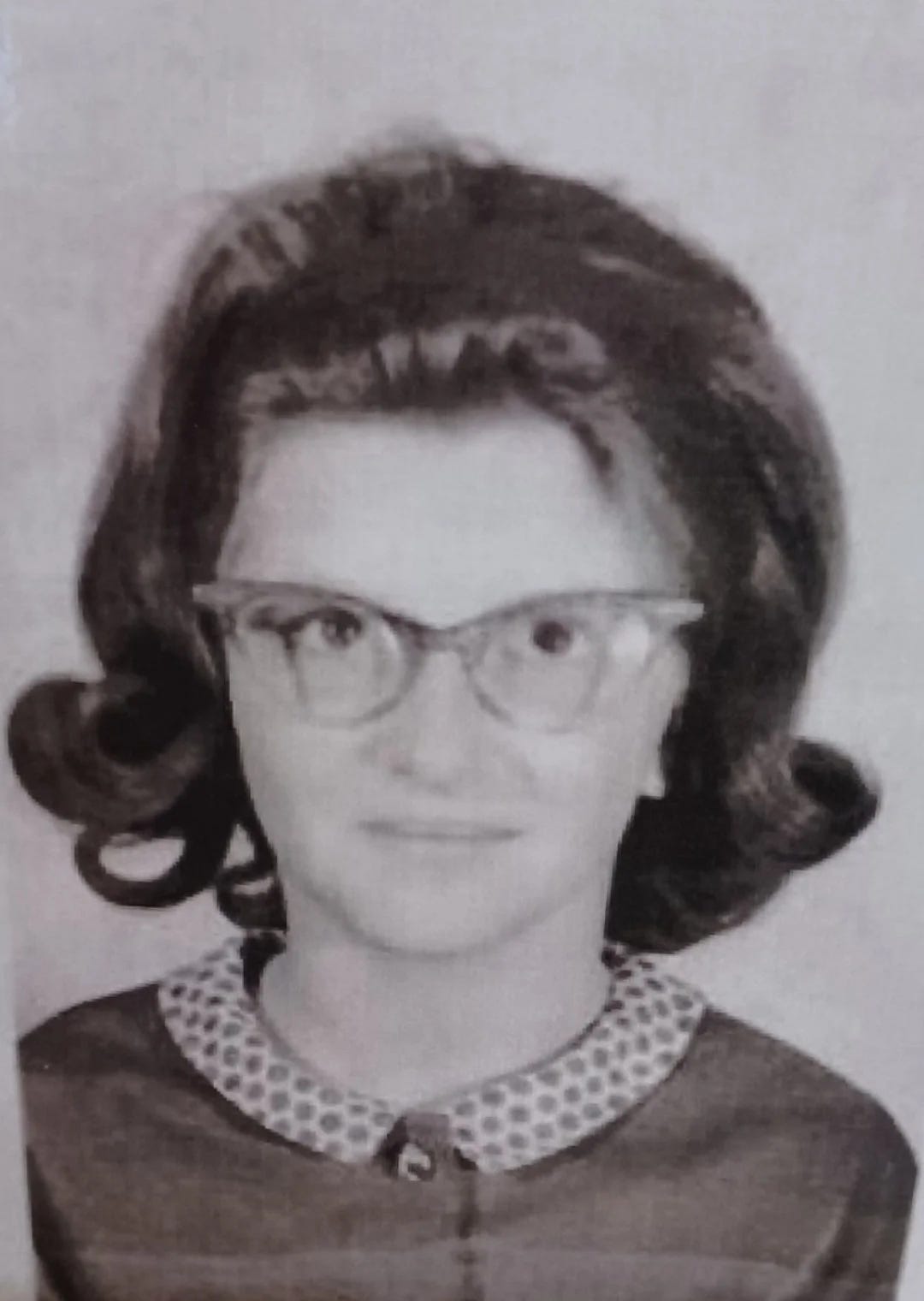
A missing persons investigation was launched after neither girl could be located. In the early stages of the investigation, authorities believed the two had run away; one early theory held that they had set off for Flint; however, both families disputed this theory, as Hobley and Spencer reportedly had good relationships with their families, and neither had left with items suggesting they planned to travel.
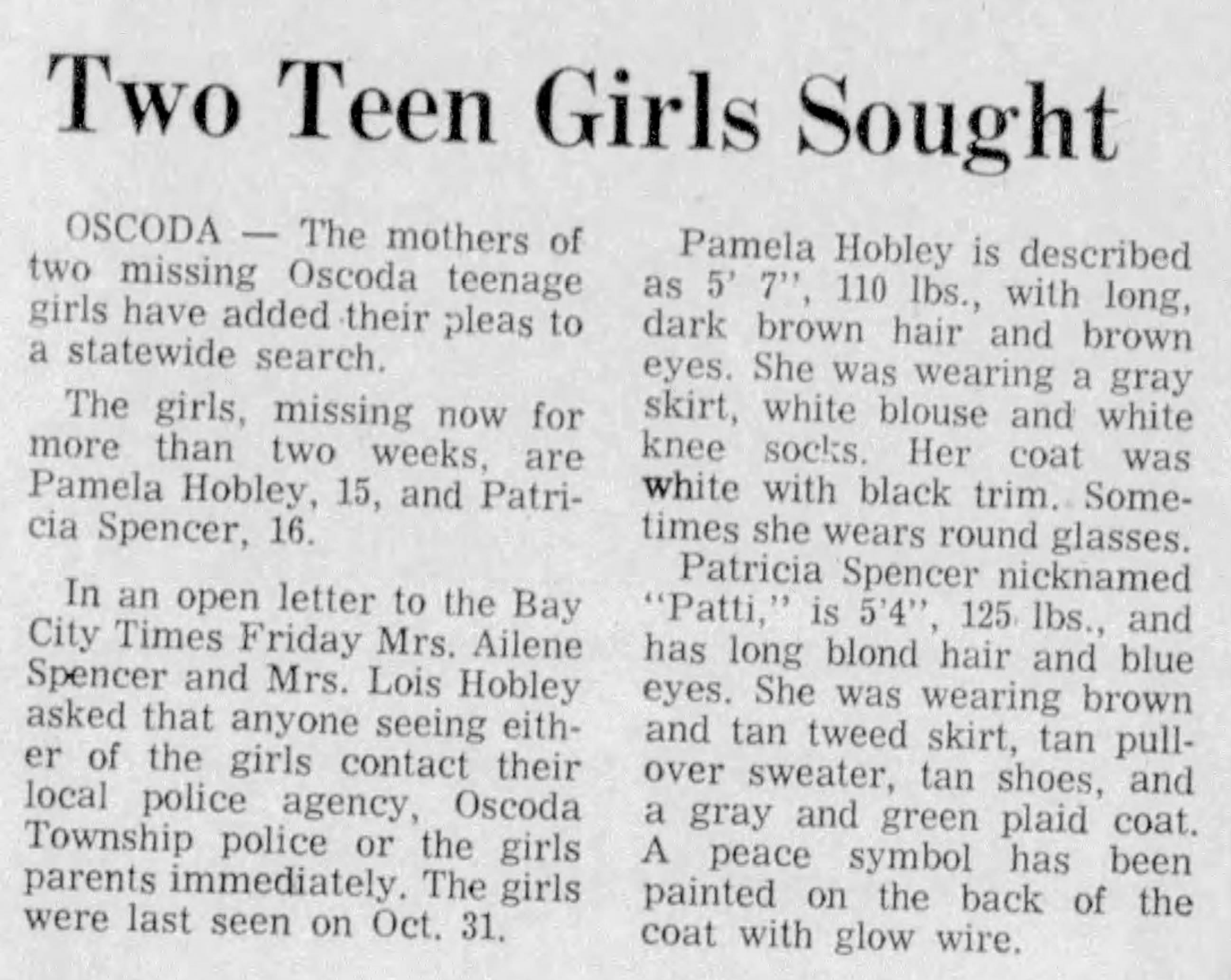
Physical descriptions of both girls, as well as the clothes they were wearing that day, were released. Pamela Hobley was 5'6" to 5'8", with long brown hair and brown eyes, and was wearing a white fur coat with brown trim, a plaid skirt, knee socks, and chunky shoes. Patricia Spencer was 5'3" to 5'5", with long blond hair and blue eyes, and wore a brown or tweed plaid skirt, a brown sweater, a plaid jacket, and brown heeled shoes.
Investigators also recorded distinguishing details that would matter if remains were ever found: Spencer, who normally wore glasses (though not that day), had a scar on one leg from a childhood dog attack, and was reportedly wearing a peace-sign necklace; Hobley had a scar on the bridge of her nose and a scar or birthmark at the left corner of her mouth.
Neither girl carried identification, a purse, or a change of clothing, which further implied that they had not disappeared voluntarily. Police cited several undisclosed sources that indicated Hobbley and Spencer were given a ride to downtown Oscoda, where they believe the two may have continued hitchhiking and were eventually abducted.
According to later accounts, a motorist allegedly dropped the girls at a gas station near the corner of River Road and US-23, at the edge of the business district, where they were last seen.
Decades-Long Investigation
With little to go on in the way of clues or suspects, the disappearances went cold. In 1985, police received a tip that the girls had been murdered by two area men and buried near a barn that had been used for teenage parties. A later search of the site using cadaver dogs turned up nothing.
In 2010, a new detective was assigned and began re-interviewing surviving witnesses. By 2013, investigators said publicly that they had a person of interest but needed more information to move forward.
In recent years, the case has been taken up by a dedicated cold-case team pairing Michigan State Police West Branch Post detectives with the Oscoda Township Police Department. The investigators continue to appeal to the public for tips. The Oscoda Township Police Department renewed those public appeals in late 2023.2
The Hobley–Spencer file also drew on an unusual resource: Western Michigan University's Cold Case Program, in which students partner directly with Michigan State Police to reopen long-dormant cases. Directed by Dr. Ashlyn Kuersten, the program logs thousands of hours each semester digitizing and organizing old files by turning boxes of decades-old paper into searchable records detectives can pull up in the field.3
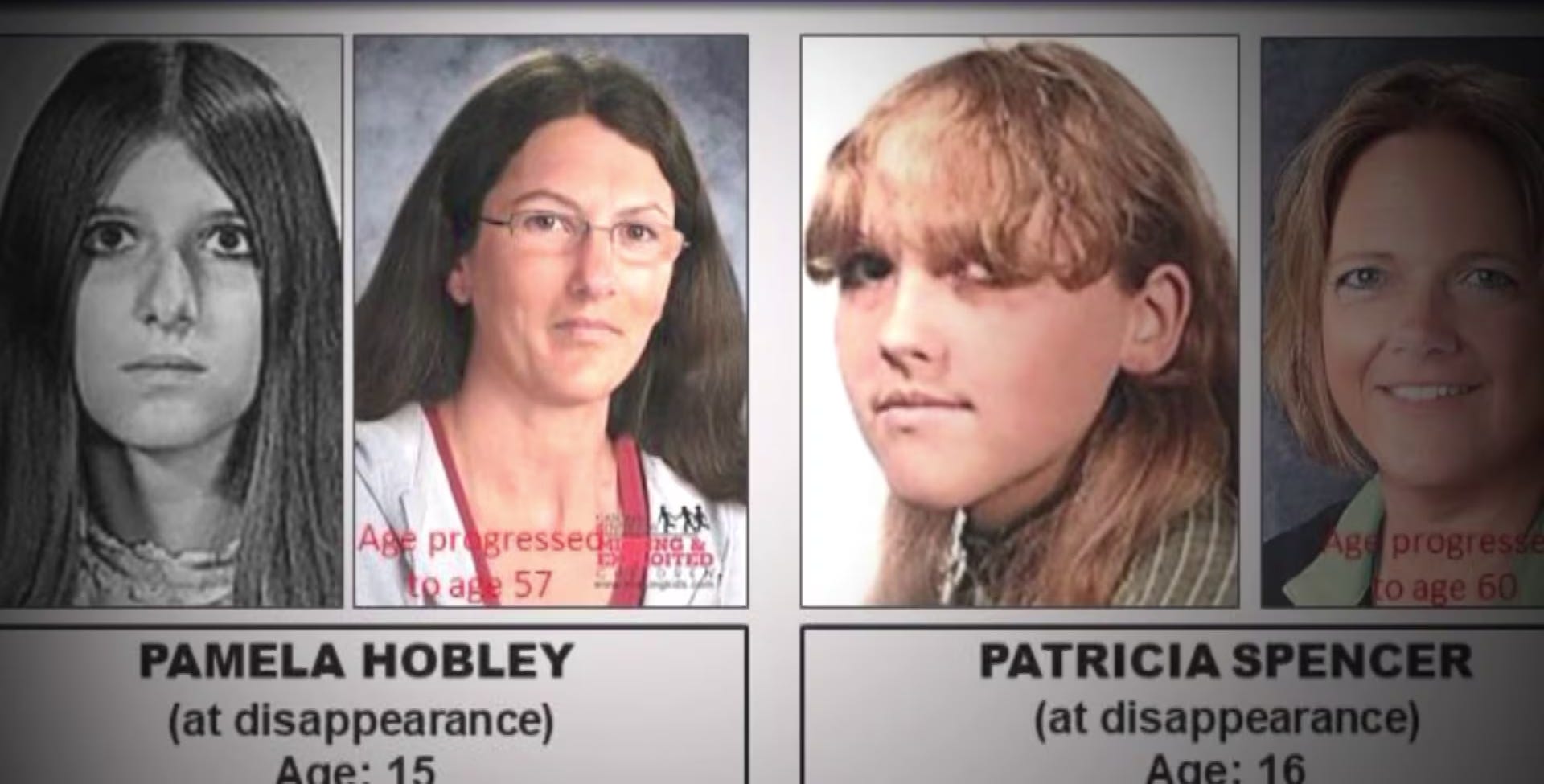
Both girls are entered in the national databases: Patricia Spencer as NamUs MP #11479 and Pamela Hobley as NamUs MP #11478. The National Center for Missing & Exploited Children has produced age-progression images of Patricia Spencer at about age 60 and Pamela Hobley at about age 57. Both are also profiled by The Doe Network, and neither girl has fingerprints on file, which is why DNA and dental records are central to any future identification.
Person of Interest
In April 2026, Michigan State Police announced that forensic-grade genome sequencing work done with the MSP Forensic Science Division and Othram Labs, along with students from Western Michigan University's Cold Case Program reorganizing and digitizing the file, had identified the man responsible for the 1983 kidnapping, sexual assault, and murder of 16-year-old Sheri Jo Elliott in Flint.
He was Roni Collins, 75, of Grand Blanc. Collins never faced charges. He had taken his own life in January 2026, before investigators could obtain a DNA sample; detectives later matched DNA collected during his autopsy to the evidence in the Elliott case.
Elliott, 16, had vanished on November 16, 1983, while walking to her school bus stop in Flint; her body was found four days later in a Saginaw County ditch. The case had sat cold for more than four decades until the WMU program reopened it in 2023 and investigators recovered testable DNA.4
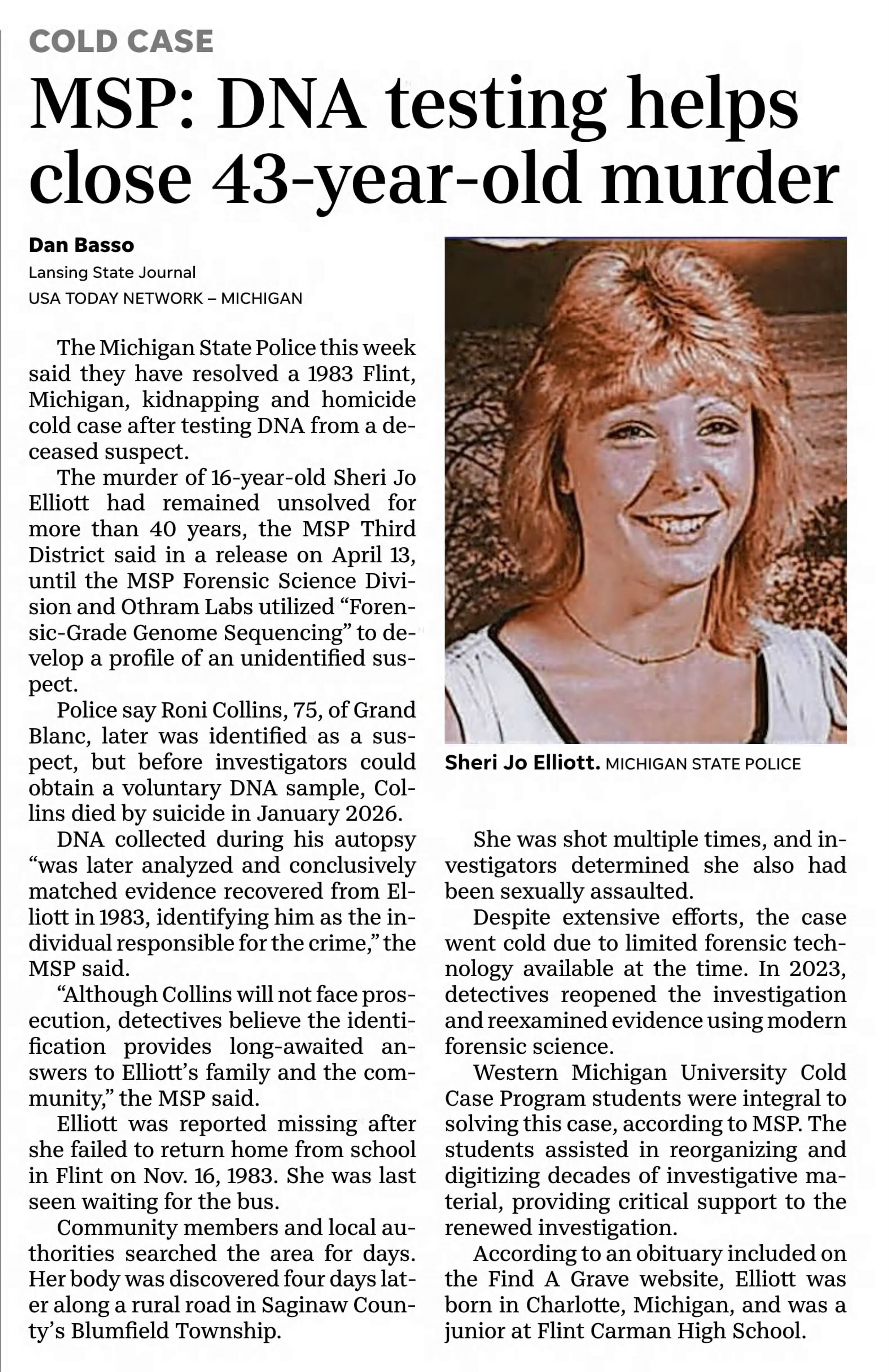
The reason Collins matters to Oscoda is what police said next: Michigan State Police confirmed that Collins had been questioned years earlier as a person of interest in the 1969 disappearance of Pam Hobley and Patricia Spencer.
For decades, the investigation's most tantalizing lead was an unknown vehicle. Just before they disappeared, witnesses reported seeing the girls talking to someone in a van. Collins would have been about 19 in 1969. A bass guitarist who went by the nickname "Hendrix," he played teen dances and venues around Hale and Oscoda, and decades later with the band The GoodFoot.
At the time of the disappearance, he was questioned by police in Flint but said he knew nothing about the girls.5 Collins had ties to the area and, as Hobley's sister Mary Buehrle recalled, "used to hang out down by the beach" and drove a van, echoing the long-standing witness account.
It is important to remember that Collins was a person of interest and never a charged suspect in the Oscoda case, and he is now dead. The disappearance of Patricia Spencer and Pamela Hobley remains officially unsolved and open.
Current Status of the Case
No trace of Pamela Hobley or Patricia Spencer has ever been found. Authorities obtained DNA profiles for both girls and dental charting for Hobley. (Spencer's dental records could not be located). The Hobley family has posted a $1,000 reward, and Mary Buehrle has kept her sister's name alive through events such as Michigan's "Missing in Michigan" program.
Investigators continue to ask anyone with information, no matter how small or old, to come forward. Tips can be directed to the Michigan State Police West Branch Post or the Oscoda Township Police Department.
"Pamela Sue Hobley." The Charley Project. Accessed October 3, 2026. https://charleyproject.org/case/pamela-sue-hobley.
"Michigan State Police seek tips to solve decades-old cold case: the 1969 disappearance of Patricia Spencer and Pamela Hobley." CBS News Detroit, December 21, 2023. https://www.cbsnews.com/detroit/news/michigan-state-police-tips-solve-55-year-old-cold-case-1969-disappearance-patricia-spencer-pamela-hobley.
"Hobley-Spencer Disappearance." Cold Case Program, Western Michigan University. Accessed October 3, 2026. https://wmich.edu/coldcase/hobley-spencer.
"How a College Program Used DNA to Solve a 1983 Murder." A&E, 2026. https://www.aetv.com/articles/sheri-jo-elliott-1983-michigan-murder-solved.
"Killer in 1983 cold case was a person of interest in 1969 disappearance of 2 Oscoda teens." ABC12 (WJRT), April 22, 2026. https://www.abc12.com/news/crime/killer-in-1983-cold-case-was-a-person-of-interest-in-1969-disappearance-of-2/article_3550914e-4e45-4f6f-ac60-3a7b223a9c4e.html.