


Background
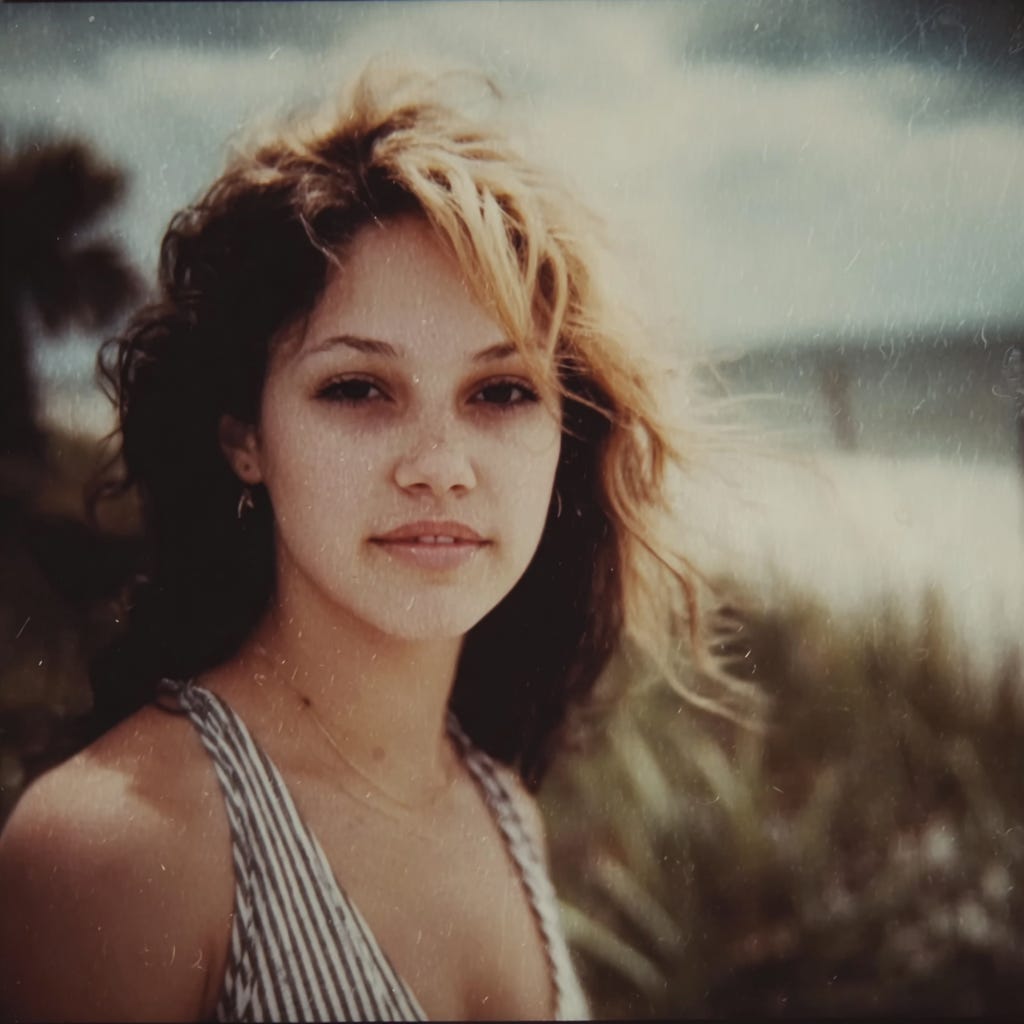
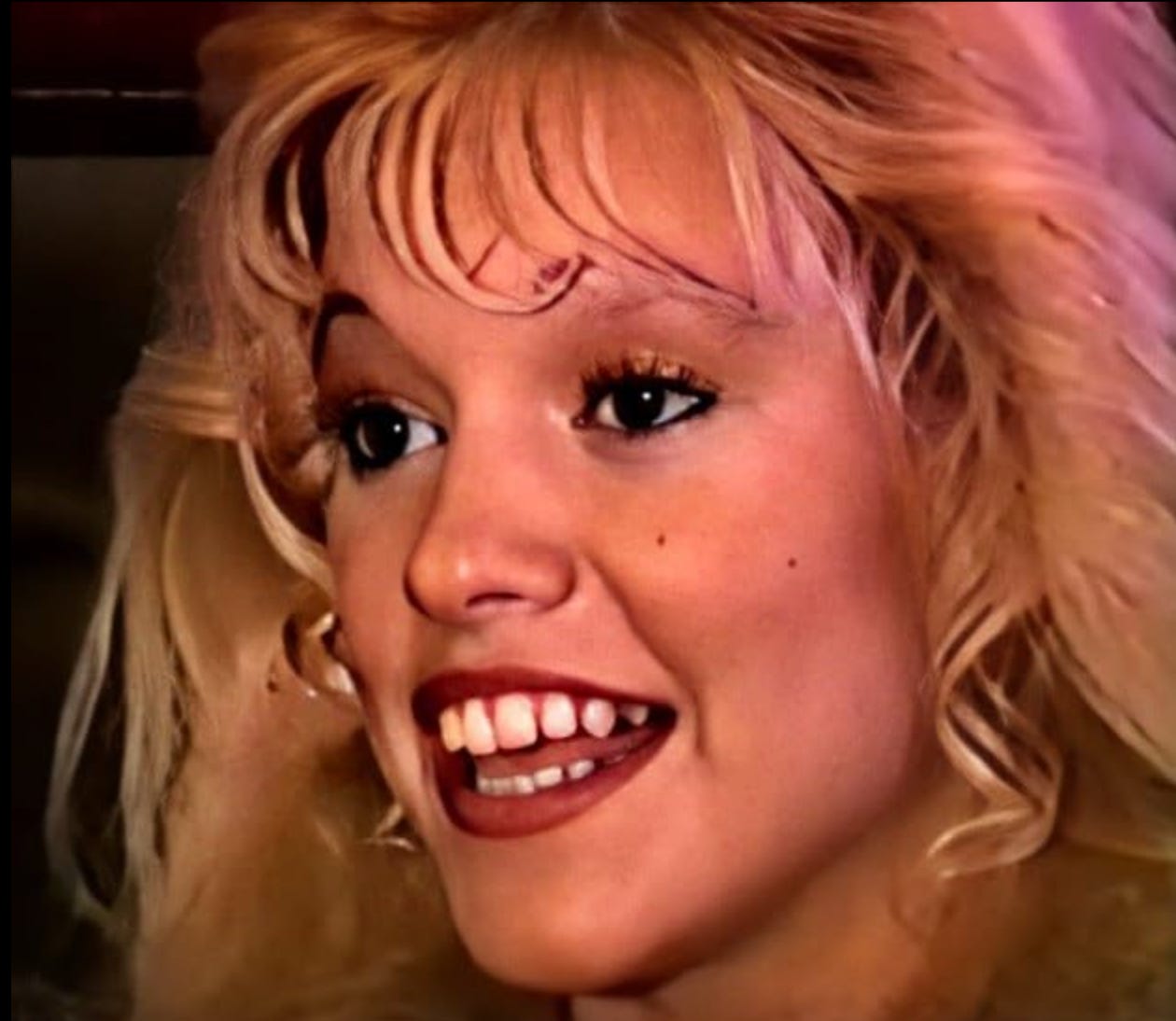
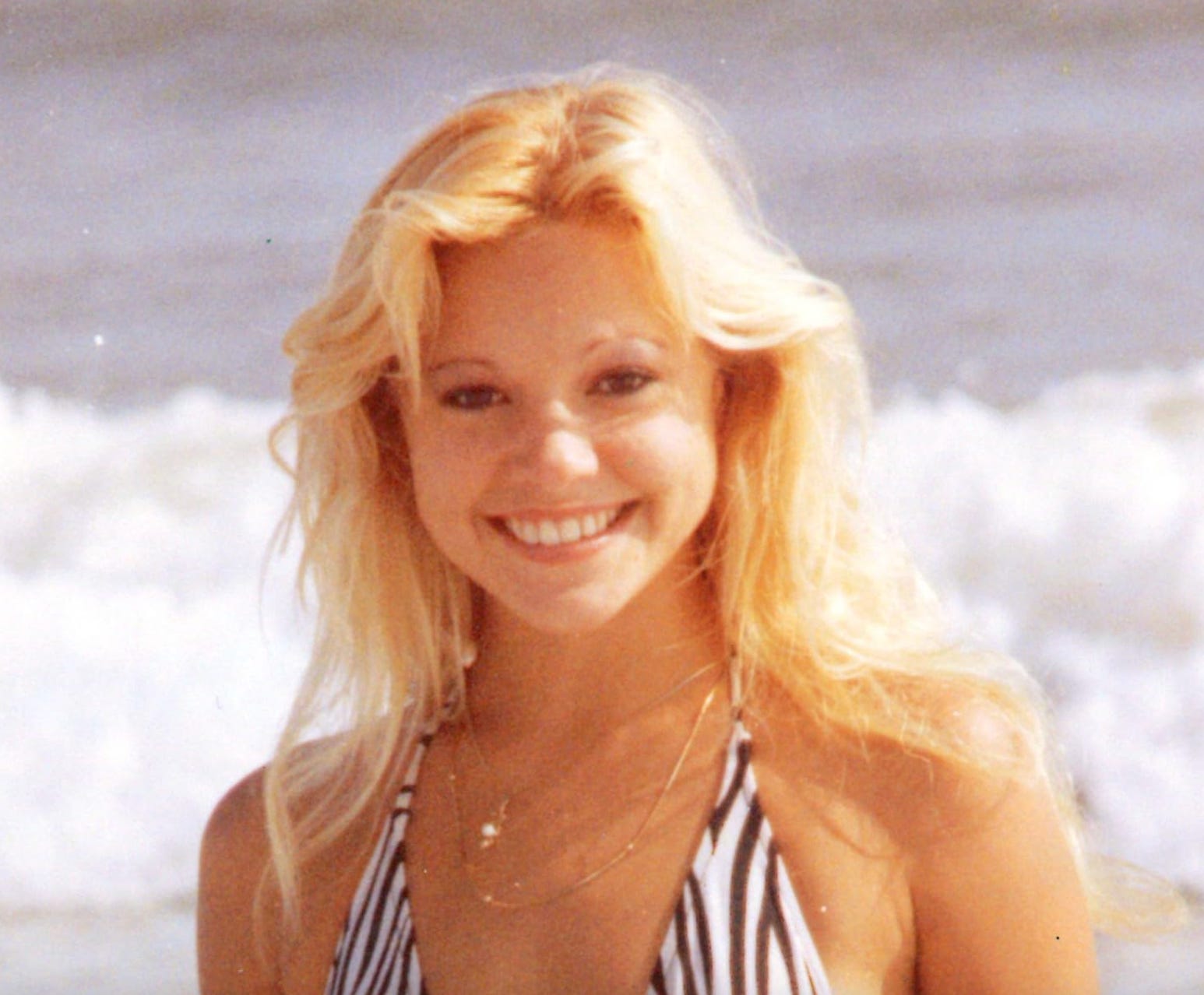
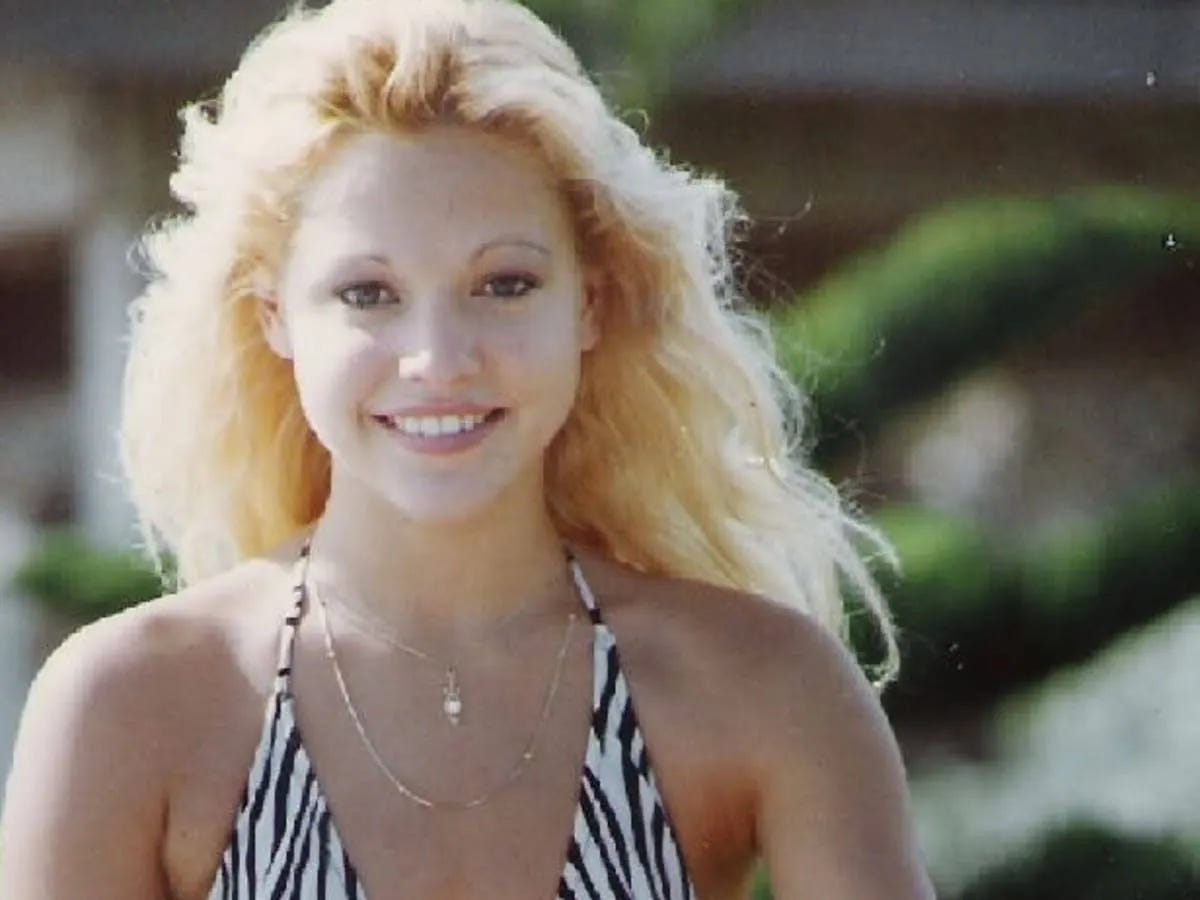
At just 18 years old, Tammy Lynn Leppert had beauty crowns, movie roles, and big dreams. But on a summer day in 1983, she disappeared near Cocoa Beach, Florida, leaving behind no evidence and no clear explanation. Over the years, her case has been linked to serial killers, psychological breakdowns, and dangerous secrets. Decades later, the truth behind her disappearance is still waiting to be uncovered.
Tammy Lynn Leppert
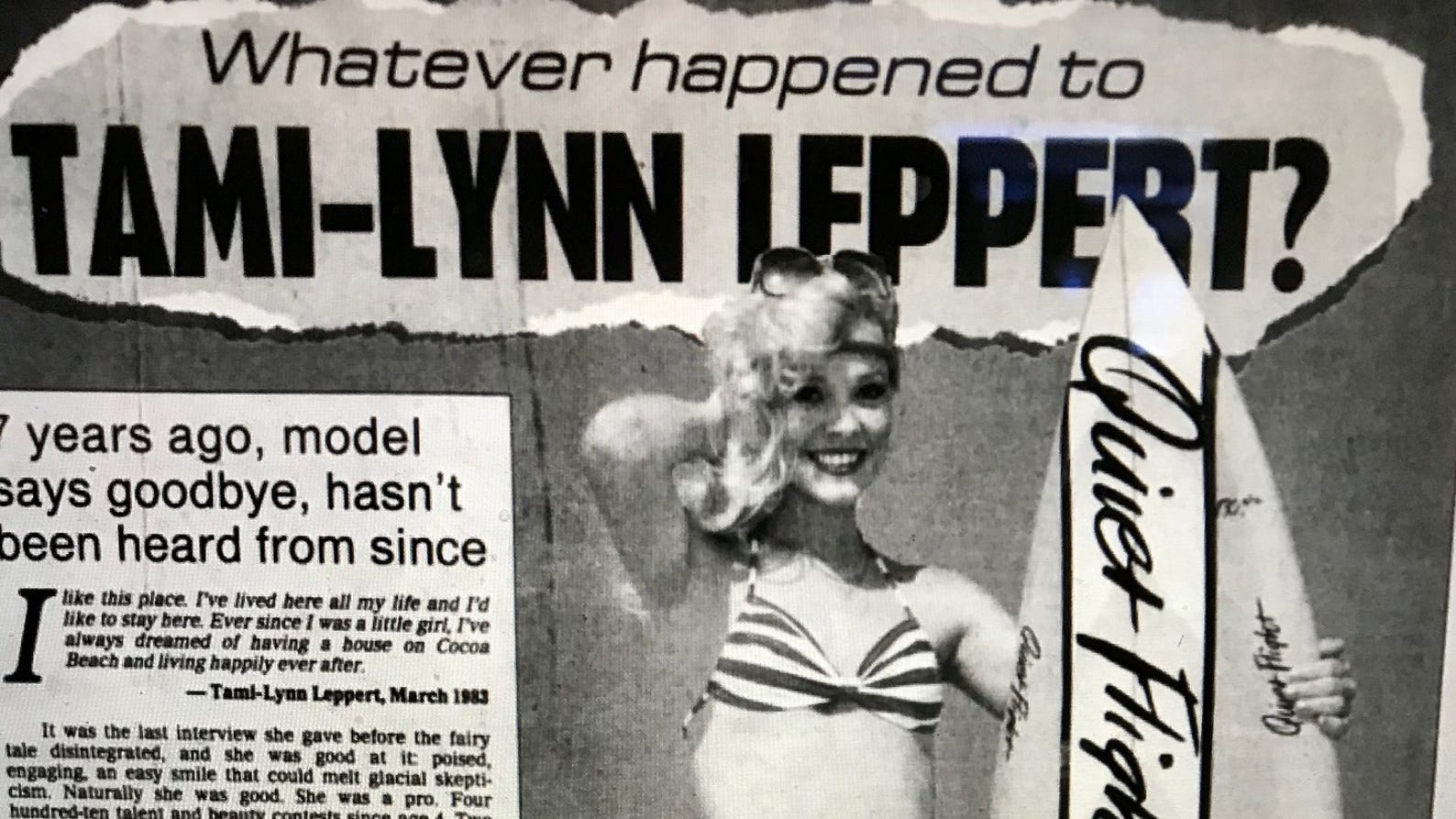
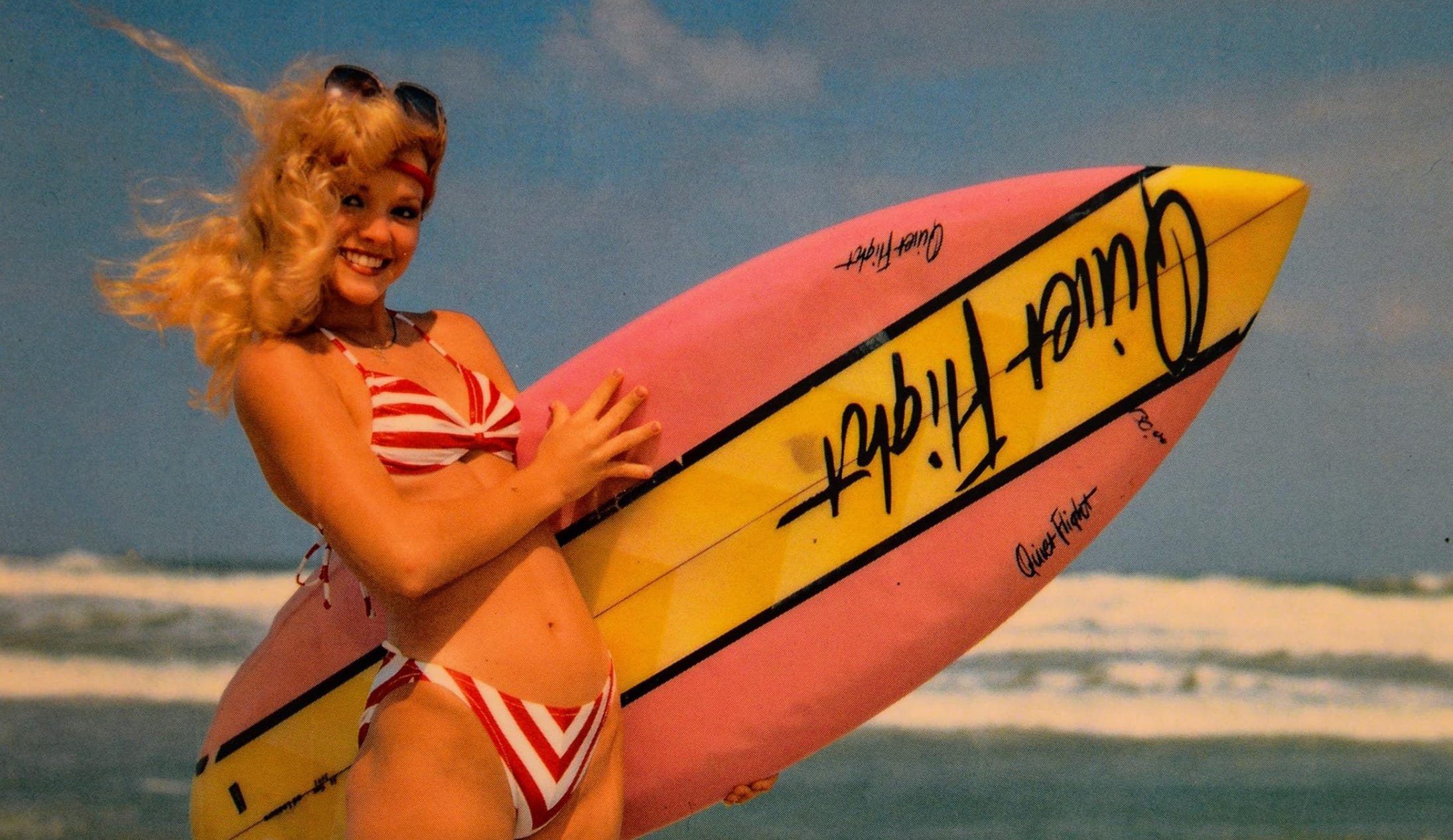
Tammy Lynn Leppert was born on February 5, 1965, in Rockledge, Florida, a quiet town along the state’s Space Coast. From a very young age, she carried herself with a confidence and poise that was rare in someone so young. By age four, Tammy began competing in beauty pageants, encouraged by her mother, Linda Curtis, who worked as her theatrical and modeling agent.
As a teen, she had competed in hundreds of pageants, winning about 280 crowns. She became a familiar face in pageant circles across Florida and beyond, known for her confidence and camera-ready smile.
Her success in pageants naturally flowed into modeling. In October 1978, one of her photos appeared on the cover of CoverGirl magazine. This was such a rare achievement for someone so young. By her mid-teens, Tammy’s dream was to be seen and heard by a larger audience, so she began moving toward acting.
Acting Career
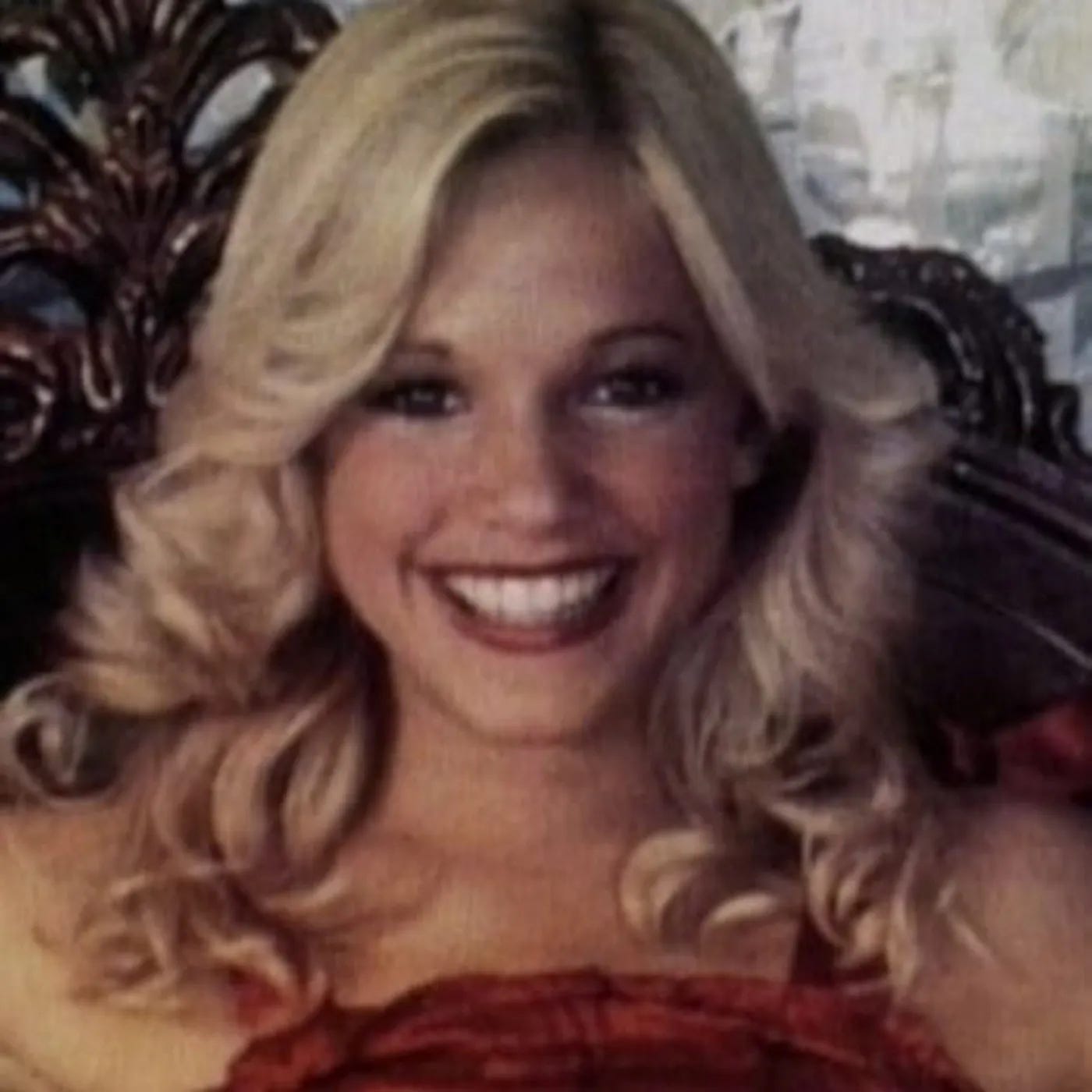
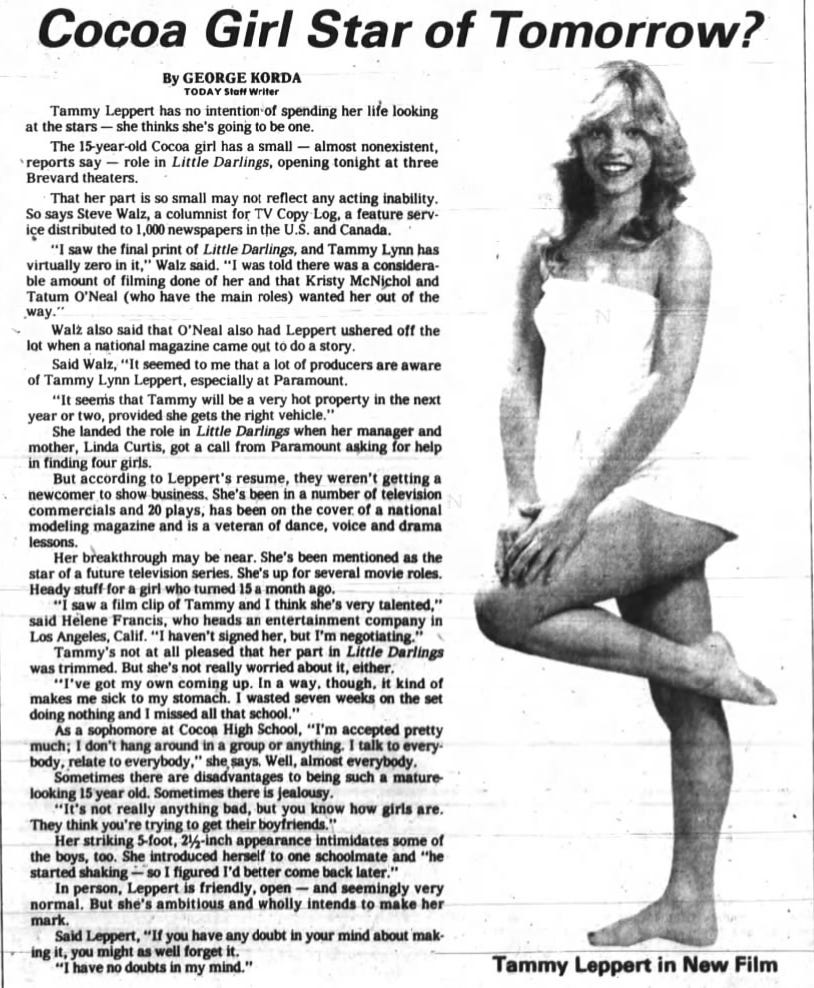
Her first taste of Hollywood came in 1980, when she got a small part in Little Darlings, a teen comedy-drama where she blended into an energetic crowd of young actors. It wasn’t a starring role, but it was a foot in the door.
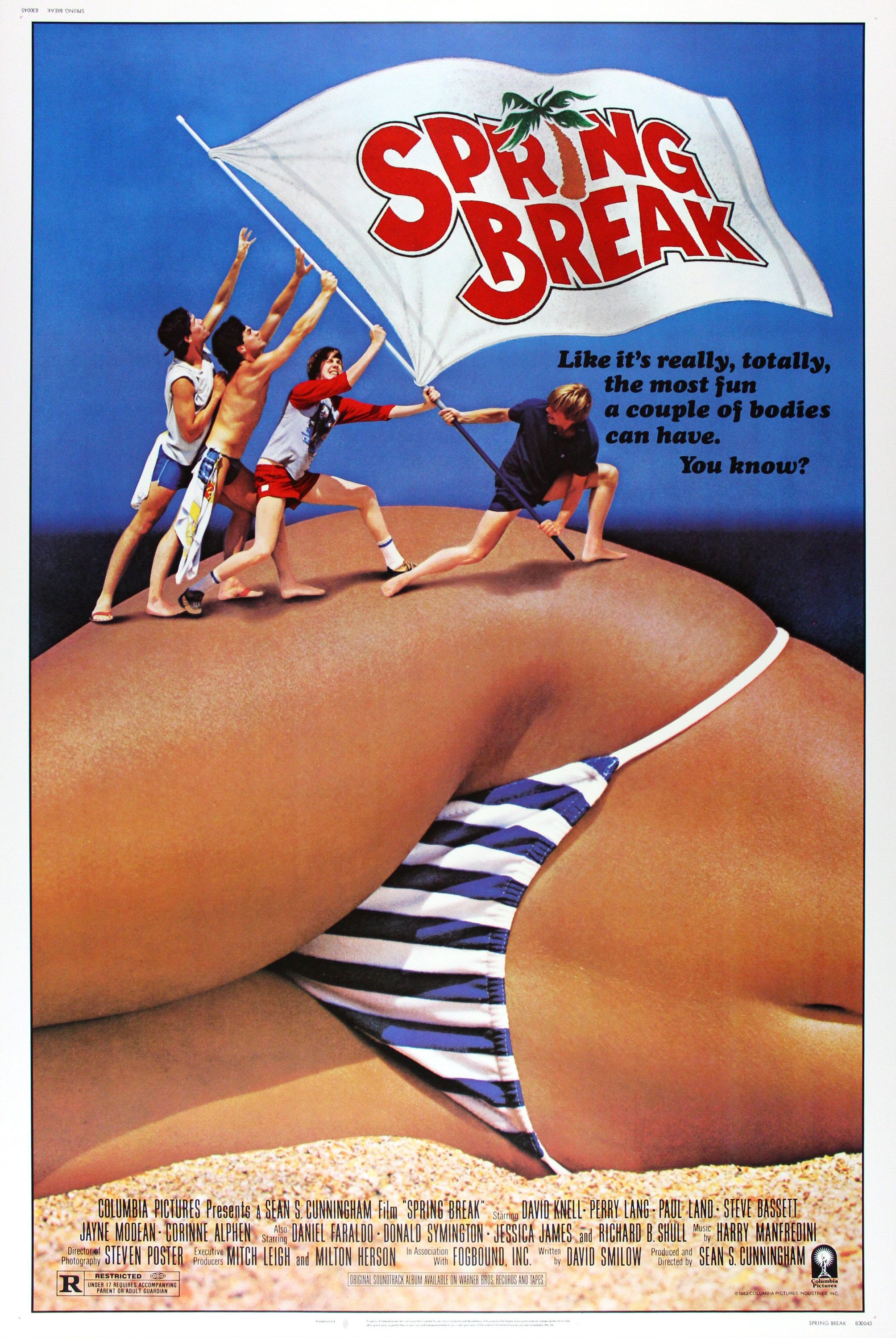
In 1983, she landed small parts in two films: Spring Break, a light-hearted comedy in which she appeared briefly as one of the young people in a boxing scene, and her most notable role as the bikini-clad distraction in the crime drama Scarface, starring Al Pacino.
Tammy told her friends and family she planned to leave Florida for Hollywood to pursue her acting career.
Change in Behavior
In 1983, shortly after she had wrapped filming for Spring Break, Tammy attended a weekend party in Cocoa Beach, Florida. She went to the party alone. When she returned home, her mother noticed immediately that something was wrong. Tammy was shaken, quiet, and visibly frightened.
She would not say exactly what she had seen or experienced, only that something terrible had happened. According to her family, she repeatedly said she had seen something she “wasn’t supposed to see.” When someone asked how her weekend was, she often changed the subject or gave a half-hearted joke before quickly turning away. From that moment on, Tammy believed her life was in danger.
As June 1983 progressed, Tammy’s fear grew worse, and she became deeply paranoid. She became convinced that someone was out to poison her food or drink. She refused to eat from open containers, sometimes asking friends to taste food first just to make sure it wasn’t tainted. She avoided answering the phone or letting others handle it for her. She began keeping to herself, spending long stretches of time alone in her room.
During the filming of Scarface, Tammy had a moment that unnerved everyone who witnessed it. On the fourth day of shooting, in a scene where a character was shot and fake blood splattered, Tammy reportedly began to cry uncontrollably, overwhelmed by what she was seeing. The cast and crew had no choice but to escort her away from the set into a trailer, where she was described as extremely frightened and anxious. Her role in the film ended there, and she packed up and went home.

Then came the violent outburst that shocked even those closest to her. On July 1, 1983, she grabbed a baseball bat and smashed the front window of her home. Her behavior was so alarming that her mother feared Tammy might hurt herself or someone else. With no other options, Linda Curtis had her daughter admitted to the Brevard County Mental Health Center for a psychological evaluation.
For 72 hours, doctors observed Tammy, ran tests, and interviewed her. But despite the strange and troubling behavior, there were no signs of drugs or alcohol in her system, and doctors found nothing physically wrong that could explain what was happening to her. She was described as emotionally distressed but not legally considered a danger. After three days, she was released back to her family.
Disappearance
On the morning of July 6, 1983, Tammy Lynn Leppert woke up in her family home in Rockledge, Florida, just days after being released from a mental health facility. Though her fear had not disappeared, she seemed calmer than she had been in the days before. To her mother, it looked like Tammy might finally be finding her footing again.
That morning, Tammy told her mother she was going out and would be back. She left sometime after 11:00 a.m., climbing into the car of her friend, Keith Roberts, who had driven out from Lakeland to pick her up for a short drive to the beach.
They drove south toward Cocoa Beach. According to Roberts’ statement to the police, the two of them argued in the car. The exact reason for the fight has never been fully explained, but since Tammy was already on edge in those days, it likely didn’t take much for tension to rise. Eventually, Tammy demanded to be let out of the car.
Roberts told investigators he dropped Tammy off in a parking lot near the old Glass Bank building in Cocoa Beach after the argument and drove away. That became the last confirmed sighting the police could document.
People who remember that day say they saw her walking barefoot along the road. She walked away from the car and toward the stretch of Florida State Road A1A that hugs the beach, vanished into the crowd, and was never seen again. Tammy Lynn Leppert was 18 years old when she disappeared.
Investigation
When Tammy didn’t come home on July 6, 1983, her family knew something was wrong. Tammy had been frightened in the weeks leading up to that day, so her mother felt the danger immediately. By that evening, the family contacted the authorities in the Cocoa Beach Police Department, and a missing persons report was filed.
At first, the police treated Tammy’s disappearance as a possible runaway case. Missing persons investigations often begin by asking whether someone might have left on their own, and in Tammy’s case, officers considered that possibility.

Tammy’s mother, Linda, however, believed Tammy would never just leave without contacting her. She also told police that her daughter had been afraid of the male friend who had picked her up that morning. Officers questioned Roberts, and while his account raised questions, there was not enough evidence at the time to hold him or charge him with any crime.
Not long after Tammy vanished, detectives began receiving strange phone calls. Cocoa Beach Detective Harold Lewis got calls from a woman who claimed that Tammy was still alive. In the first call, the woman said Tammy would reach out when the time was right. During the second call, she said Tammy was fulfilling her dream of going to nursing school somewhere out of state.
These calls troubled investigators as they offered no way to verify the caller or her claims. Police traced what they could, but the calls either led nowhere or came from pay phones, which were common in the 1980s and nearly impossible to trace accurately.
Investigators later stated they believed the calls were crank calls or cruel hoaxes. However, they could never completely rule out the possibility that someone was trying to mislead the family or law enforcement.
The National Center for Missing & Exploited Children (NCMEC), The Doe Network, and other agencies created age-progressed images showing what Tammy might look like years after her disappearance. Those images were shared through law enforcement agencies and missing persons organizations.
Possible Suspects and Theories
One of the earliest and most unsettling theories involved serial killers active in Florida during the early 1980s. At that time, it sparked early speculation that she might have encountered one of them.

One of the first names mentioned was Christopher Wilder, a serial killer later known as the “Beauty Queen Killer.” Wilder was known for luring young women with promises of modeling opportunities. This made some people wonder whether he and Tammy could have crossed paths, as he often gained victims’ trust by pretending to be a photographer or talent scout. Her family even filed a lawsuit against Wilder’s estate in connection with her disappearance, hoping it might force out information.
However, that lawsuit was later dropped, and police never found any evidence directly linking him to Tammy’s case. Wilder himself was later killed in a shootout with police in 1984.
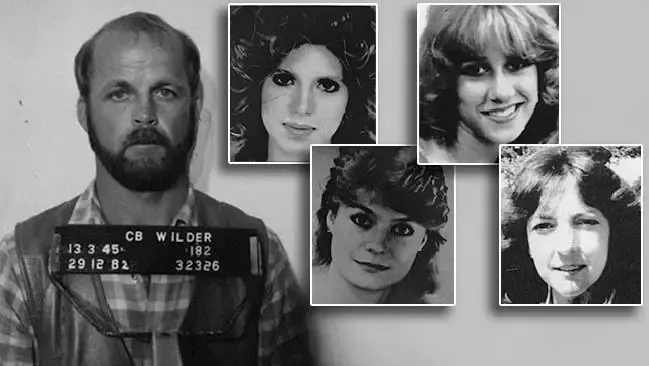
Another figure who drew attention was John Brennan Crutchley, sometimes called the Vampire Rapist. Crutchley was active in Florida around the same time and was convicted of kidnapping and sexual assault. While he was considered a person of interest in several unsolved cases, police again found no proof connecting him to Tammy. By the mid-1980s, both men were effectively ruled out as suspects.
Another theory focuses not on an attacker, but on Tammy’s state of mind in the weeks leading up to her disappearance. By late June and early July 1983, Tammy had clearly been struggling. She was fearful, paranoid, and convinced someone was trying to harm her. She had just been released from a 72-hour mental health evaluation only days before she vanished. Because of this, some investigators believed Tammy may have experienced a psychological break and left on her own.
However, this idea has always been difficult for her family to accept. Tammy left behind her purse, money, identification, and never contacted anyone she loved, something those closest to her say she would never do willingly.
The troubling theory Tammy’s mother most strongly believed is that Tammy may have learned or witnessed something she wasn’t supposed to see at the party she attended in 1983. According to Linda, Tammy had once told her that a friend had boasted about a large-scale drug-money laundering operation in Brevard County, involving people with power and influence in the community.
Linda believed this knowledge placed Tammy in danger and that her fear was based on something real rather than imagined. She later claimed Tammy even tried to make a police report about what she knew, although there is no official record of such a report.
Media Coverage and Public Interest
As the years passed with no answers, Tammy Lynn Leppert’s disappearance refused to fade away. Instead, it found a second life in the media, moving from police files to television screens, newspapers, and eventually the internet.
Her case was featured on the popular television show Unsolved Mysteries, which aired throughout the late 1980s and 1990s. The program was known for bringing national attention to cold cases, and Tammy’s story fit its format perfectly.
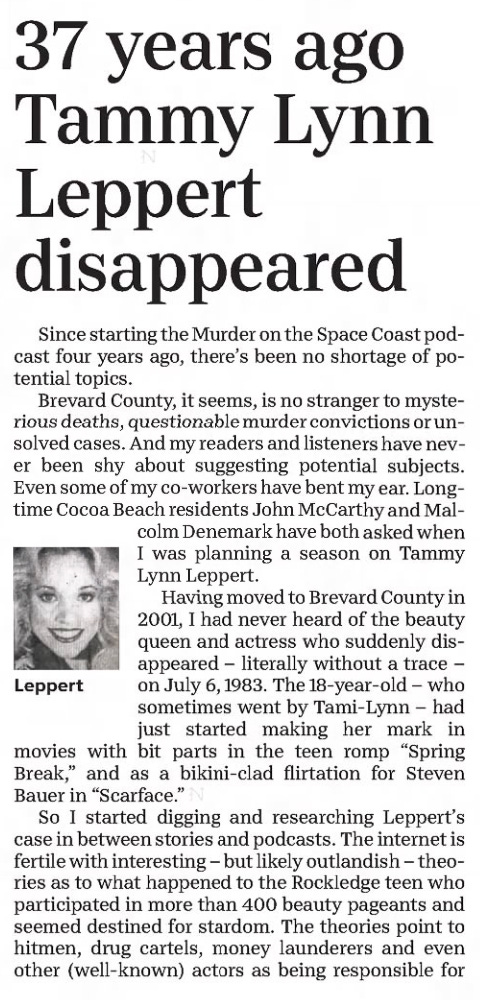
Local and regional Florida news outlets also revisited the case over the years. Anniversaries of her disappearance, especially the 10th anniversary in 1993, the 25th anniversary in 2008, and the 40th anniversary in 2023, often brought renewed coverage.
By the early 2000s, her disappearance was being discussed on forums, blogs, and later on social media platforms. True-crime communities on websites like Reddit, dedicated cold-case blogs, and YouTube channels began revisiting her story in detail. These discussions didn’t solve the case, but they kept it active to ensure Tammy wasn’t forgotten in a system crowded with thousands of missing-person files.
Current Status
More than four decades have passed since Tammy Lynn Leppert vanished on July 6, 1983, and her case remains officially unsolved. As of 2025, there has been no confirmed sighting of Tammy, no discovery of remains linked to her, and no arrest connected to her disappearance.
Law enforcement agencies in Florida, including the Cocoa Beach Police Department and the Brevard County Sheriff’s Office, still list Tammy as a missing person. Her case is also maintained in national databases such as The Charley Project, The Doe Network, and the National Missing and Unidentified Persons System (NamUs).
These listings ensure that Tammy’s information remains accessible to investigators, medical examiners, and the public if new evidence surfaces. To this day, her case remains open, and until the truth is known, her story remains unfinished.
Sources:
Lamoureux, Aimee. “The Chilling Disappearance of Tammy Lynn Leppert, the 18-Year-Old Beauty Queen Who Vanished in 1983.” All That’s Interesting, All That’s Interesting, 10 Feb. 2025, https://allthatsinteresting.com/tammy-lynn-leppert
Christopher, Wilder. “Tammy Lynn Leppert.” The Charley Project, 2019, https://charleyproject.org/case/tammy-lynn-leppert
Her witnessing a drug operation can't explain it, since such things were common in the Miami areas in those days (i.e. people unloading unknown stuff from boats) but since she couldn't have proven it was drugs the drug traffickers would have had no reason to get her, since it was "she said, he said." Al Capone did not need to kill, intimidate, or bribe ALL the witnesses, jurors, judges, and security officers: he simply was not stupid enough to leave hard evidence or even circumstantial evidence (there is no reason to kill, intimidate, or bribe witnesses if you made sure you were alone at the time). The serial killers were nowhere near the film crew and cast, but Michael Scorsese was a drug user. Michael Scorsese, Al Pacino, and Michelle Pfeiffer all signed the Polanski petition on the basis of separating the artist from the art but the milieu of Hollywood combined with the sexualization of the victim and Pfeiffer indicate Michael Scorsese scared her off: since it was an old woman who claimed the victim went to nursing school, this indicates Scorsese did not kill her but paid her off so his drug habit would not be exposed (unlike rape, this would NOT be a "he said, she said" since whilst the casting couch could be passed off as seduction without sex - although there would still be a power imbalance - and thus not rape (fathers chaperone their daughters) drug abuse cannot be dismissed as medicine (due to the fact it was well known the Mafia dominated Hollywood).
We can assume the victim's friend supplied drugs to Michael Scorsese, and that the victim could be involved as a nurse and in regional theatre productions and art films all over the world.
More details on that party?