



*Warning: This Article Contains Sensitive Subject Matter*
Background
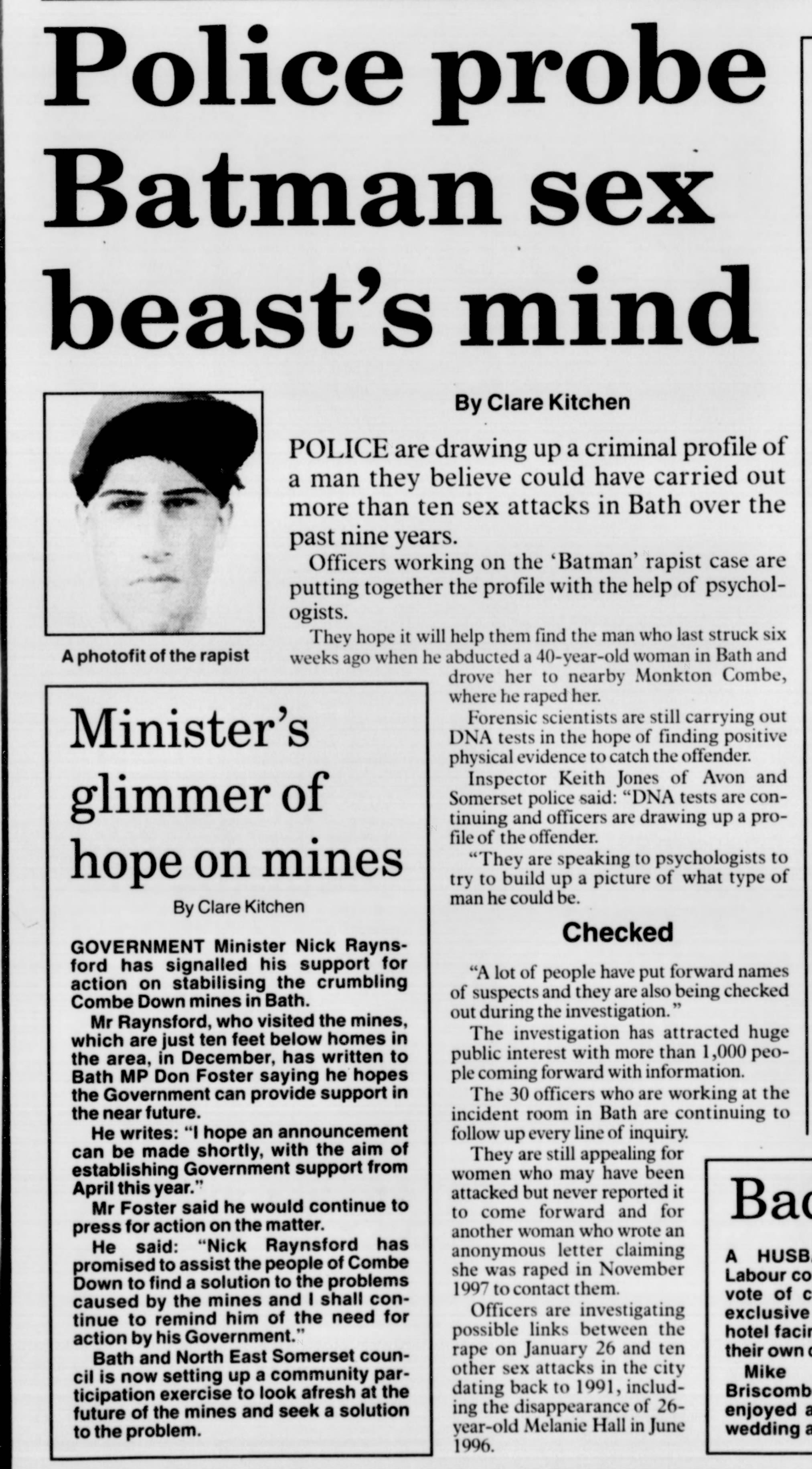
During the 1990s, the city of Bath in South West England was at the center of Britain’s longest-running serial rape investigation, codenamed Operation Eagle. The assailant, who police linked to at least 17 attacks, came to be known as the “Batman Rapist” after leaving behind a baseball cap with a Batman logo at one of the crime scenes.
Despite the scope of the investigation and the resources allocated, the rapist was never captured or identified. More than thirty years later, the case remains open. This is the story of the man the press called the Batman Rapist.
A Historic City
Named for its well-preserved Roman baths and elegant Georgian terraces, the city of Bath, Somerset, located about 100 miles west of London, in South West England, is known for its beauty and history and draws thousands of visitors annually. In 1987, UNESCO named the city a World Heritage Site.
Like any city, Bath was not free of crime — there were burglaries, car thefts, the occasional robbery — but violent crime was rare compared with London, Birmingham, or Manchester. Women routinely walked back to parked cars after an evening out without giving it much thought.
However, that would all change beginning in the early 1990s, when a series of abductions and sexual assaults shook the area.

Assaults Begin
On May 21, 1991, a 36-year-old woman finishing a night shift drove home to the Southdown area of Bath. As she parked in a lane behind her house, a man suddenly seized her, covered her mouth, and held a knife to her throat. He forced her to drive to a rough track off Combe Hay Lane, on the edge of the city, where he raped her before disappearing into the dark.1
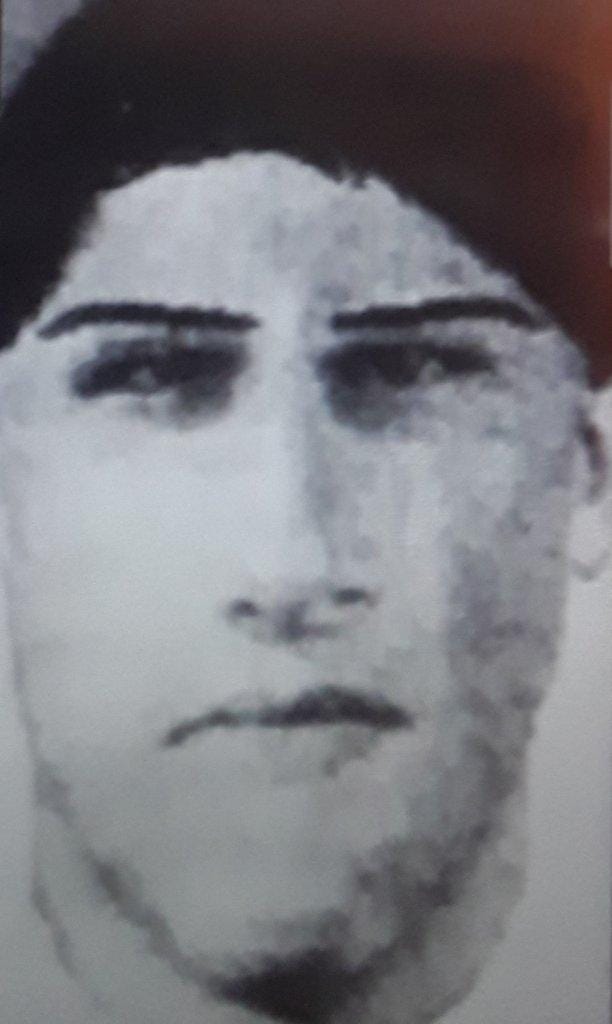
The victim reported the attack at once, and Avon and Somerset Constabulary began to investigate. She described her attacker as a white man, around 5 feet 9 inches tall, slim, with blue eyes and short brown hair, clean-shaven, with a noticeable scar below his lower lip. 2
He wore dark clothing and seemed calm and in control — a man who appeared to know exactly what he wanted to do. Then, on October 23, 1991, an 18-year-old woman was attacked on Bathwick Hill, and her description of the assailant closely matched the description of the man from the Southdown attack. The similarities were hard to ignore.
An Inconsistent Pattern
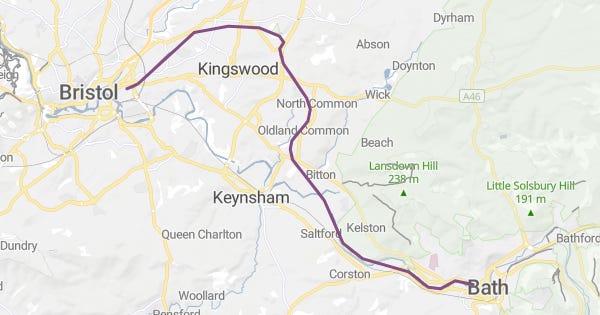
After the October 1991 attack, the assaults stopped for a period of three years until the next attack in November 1994. This assault was again followed by a period of inactivity until September 1996, when a 19-year-old woman was abducted and raped in Kingswood, near Bristol.
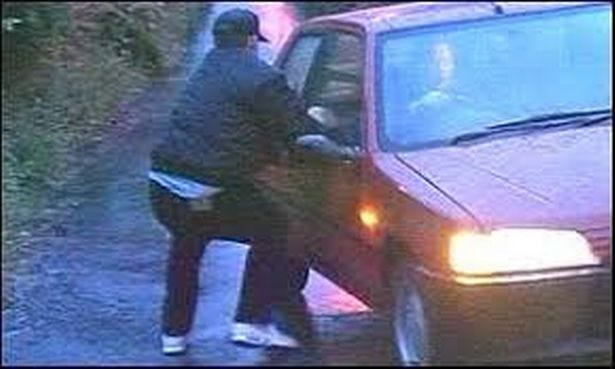
Even though all of the previous and later assaults occurred within the city of Bath, the Kingswood rape was linked to the suspect due to the M.O. and description of the perpetrator. The attacker would approach his victims as they reached their cars, and then drive them to a secluded area where the assaults occurred.
After interviewing several of the victims, investigators found that the attacker seemed to have a sexual fixation on women’s tights, often ripping them during the attacks. They also found it unusual that after the assaults, the rapist would often drive the victims back to the location where he had abducted them before fleeing.
According to a January 2000 Guardian article, there were three assaults in 1996 and another three in 1997. After that, there was another period of inactivity until 1999.
By the mid-1990s, detectives had stopped treating the attacks as separate crimes. The victims appeared to be chosen because they were alone — students, workers, women out by themselves — not because the offender knew them. Most attacks came in the evening, between roughly 6 and 8 p.m., or in the late hours after the pubs and clubs had emptied.
All but one of the assaults occurred within the city of Bath, leading investigators to conclude that the rapist was very familiar with the city, its side streets, secluded car parks, and country lanes, leading police to believe he lived, worked, or spent significant time in the city.
The “Batman Rapist”
On the evening of January 26, 1999, a 39-year-old woman was getting into her car on Forrester Lane when a man tried to abduct her. She fought back, screamed, and resisted. Fearing the noise would draw witnesses, the attacker fled, and in his rush, he dropped his baseball cap.
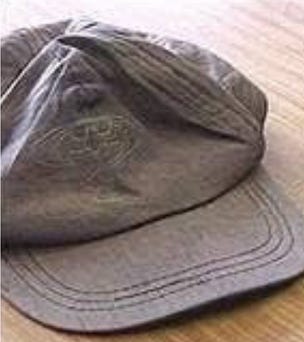
Lying on the ground was a faded cap bearing a Batman logo. The hat was collected, photographed, and sent for forensic examination in the hope it carried fibers, hairs, or biological traces. Despite the limits of the technology at the time, scientists recovered a DNA profile believed to belong to the attacker. It was a major breakthrough after nearly a decade chasing a man with no name.
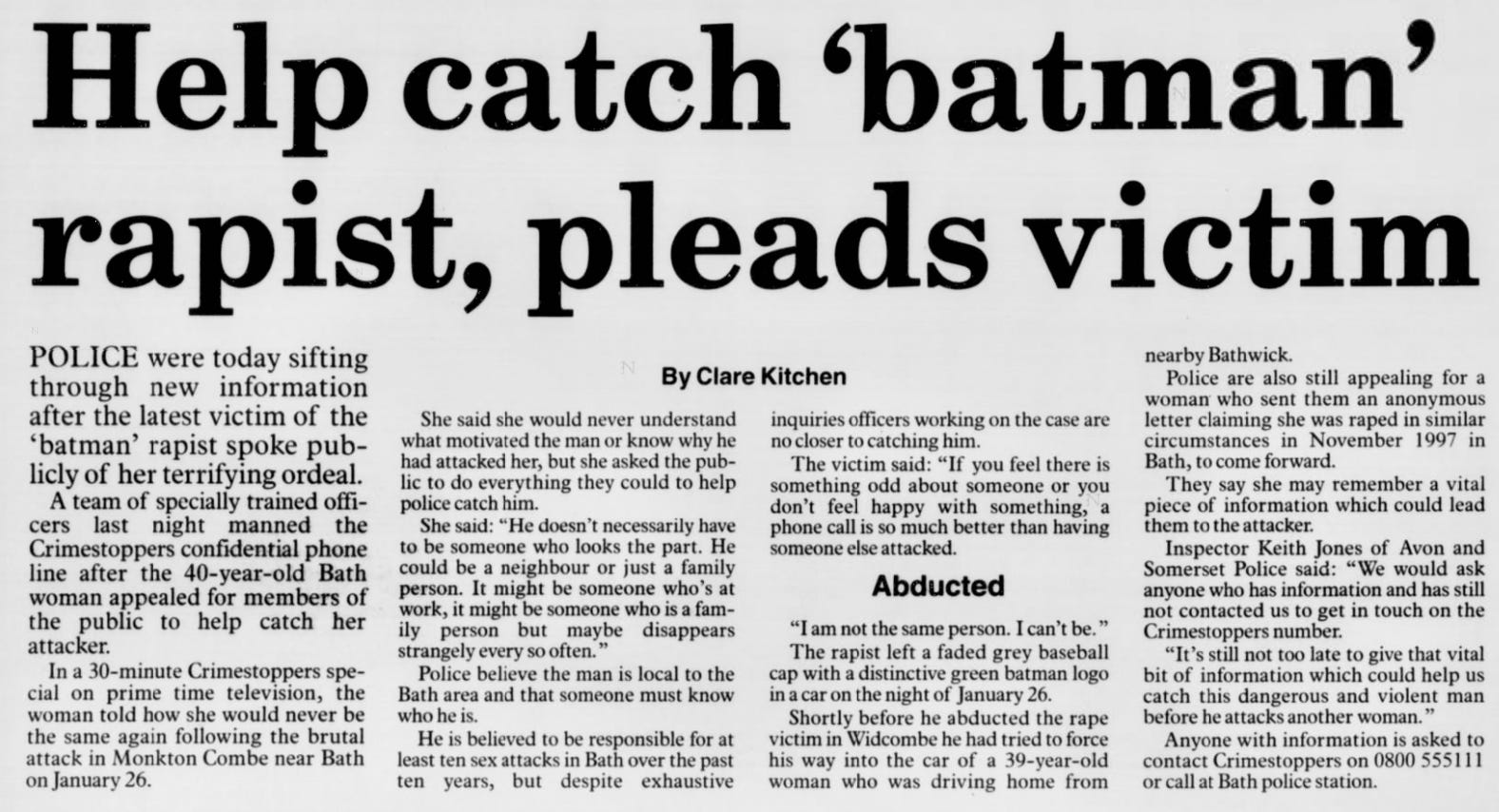
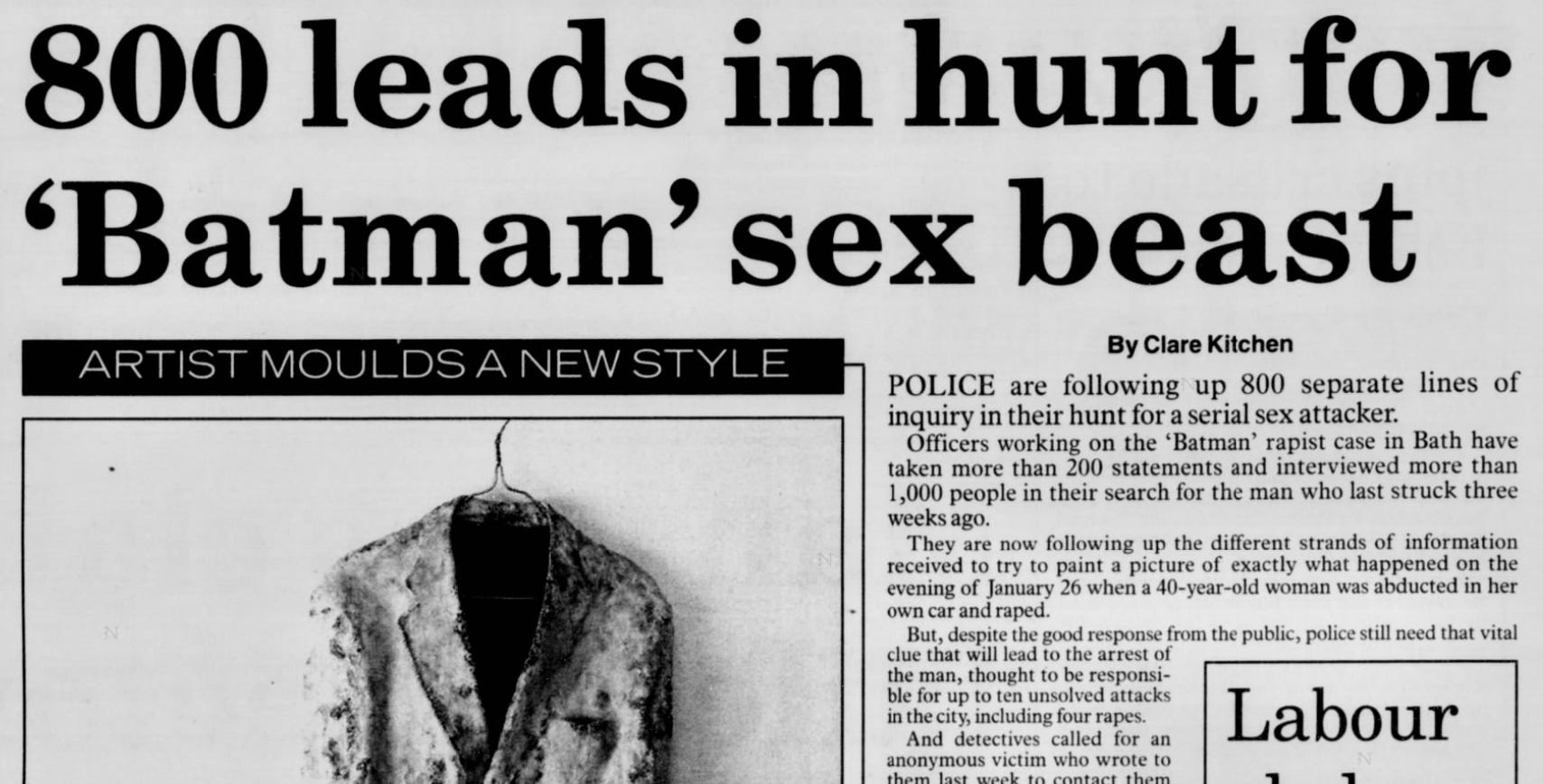
As journalists reported the incident, newspapers and television began calling the unknown offender the "Batman Rapist." The name spread quickly, and the case became national news. Detectives appealed to the public, asking people to think about friends, relatives, or colleagues who might fit the description or who wore such a cap.
Surprisingly, the near-miss did not deter the rapist. Investigators believe that within minutes of fleeing Forrester Lane, the offender attacked another woman nearby, forcing her toward the village of Monkton Combe. The crime illustrated just how determined he was, even after nearly being caught.
Operation Eagle
By early 2000, Avon and Somerset Police established a major investigation codenamed Operation Eagle.3 Senior detectives reviewed each attack, comparing witness statements, crime scene reports, and all physical evidence collected since 1991, mapping every location for patterns. The more they dug, the clearer it became that the same individual was responsible for all of the assaults.
Authorities appealed to the public for assistance. Thousands of witness statements were collected; hundreds of tips came in. None identified the offender outright, but each one helped to eliminate suspects. Detectives built a behavioral profile of a patient, methodical man who probably held a regular job and blended quietly into the community.
The man was described as a White male with a slim to medium build, between 30 and 50 years old, who was very familiar with the city of Bath and was also likely familiar with the Bristol area.
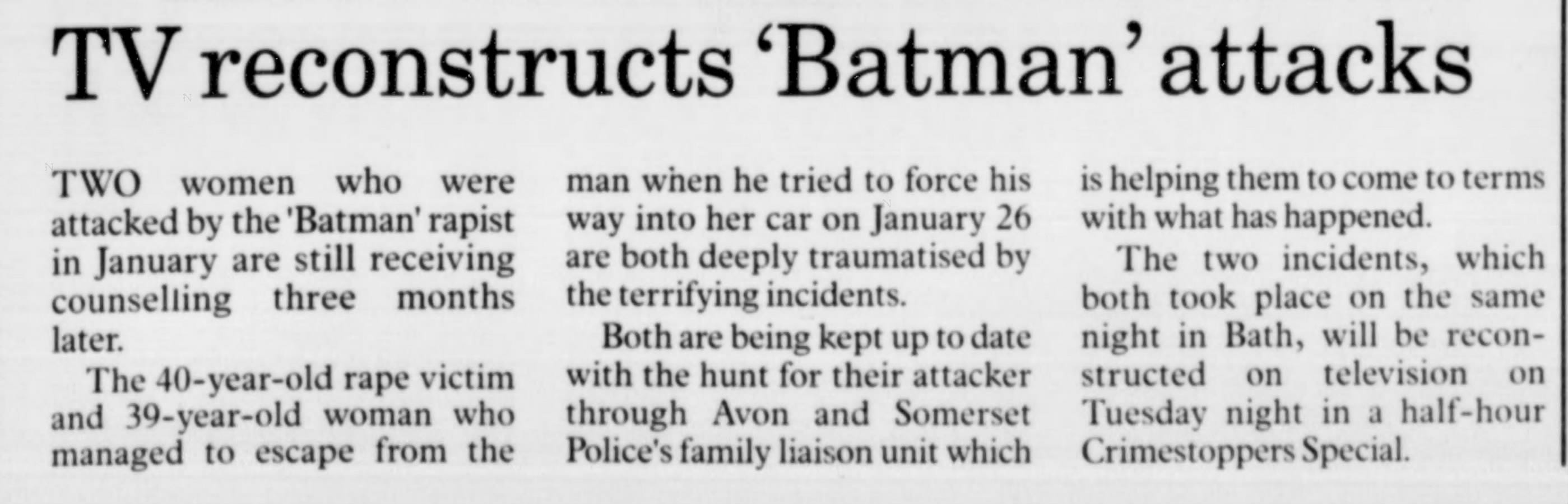
On January 25 2000, the case featured on the BBC's Crimewatch UK, with a reconstruction of how the offender approached victims. Six women who had never reported their attacks came forward after the show had aired. Tips from viewers poured in, and in October 2000, the operation carried out what was described as the largest leaflet distribution in a British criminal investigation at the time, reaching around 25,000 homes in Bath.
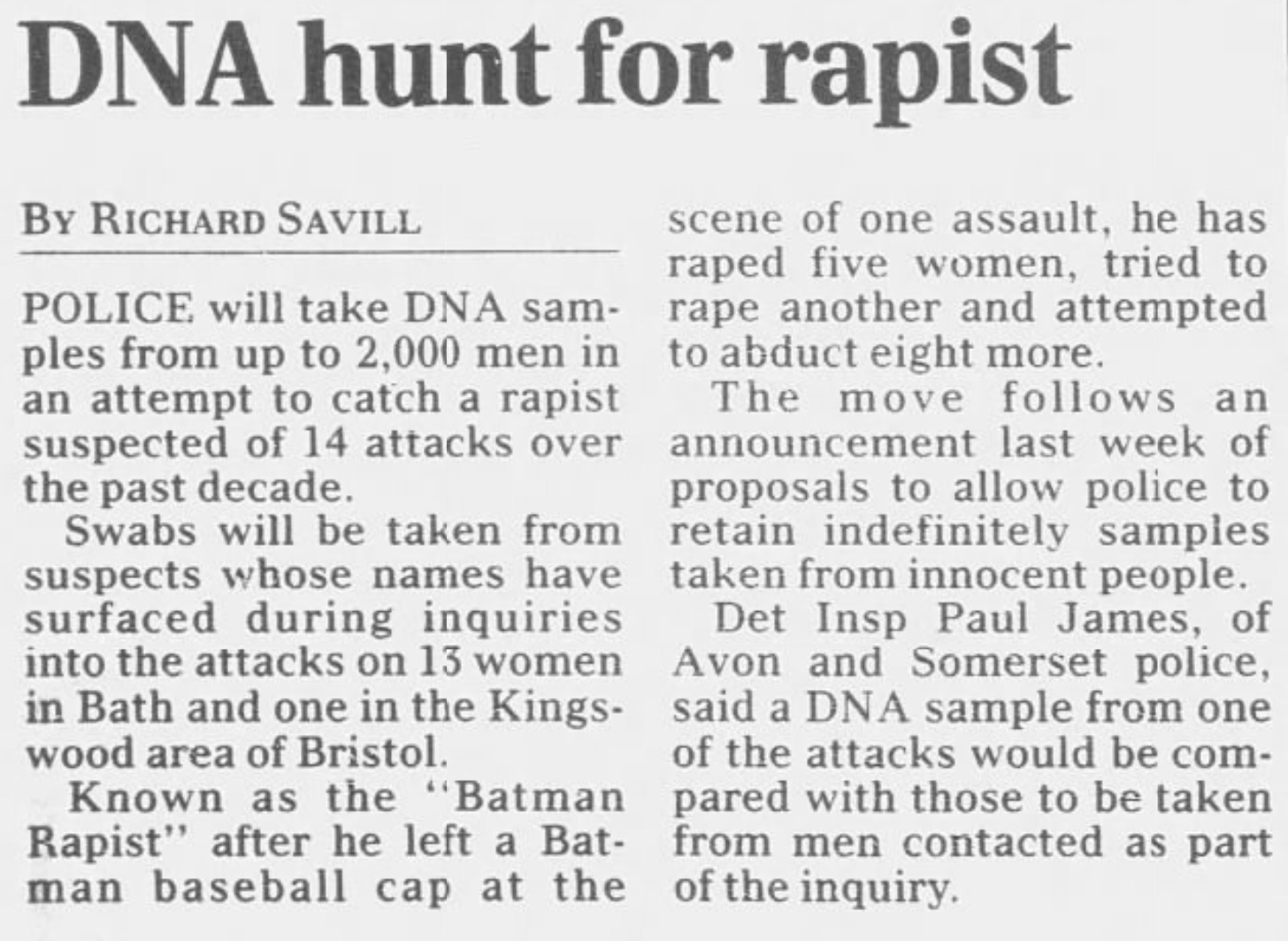
In January 2001, the Forensic Science Service applied a then-new technique, Low Copy Number (LCN) DNA profiling, which could recover a usable profile from far smaller amounts of genetic material. It gave investigators a full DNA fingerprint of the attacker but no name to match it to. Detectives asked roughly 2,000 men whose names had surfaced during the investigation to give DNA voluntarily. One by one, all 2,000 names were cleared.
Offender Profile
With the DNA testing failing to return a match, investigators were left to theorize as to the offender’s identity. In addition to the physical description given by victims, and the fact that the rapist was familiar with the city of Bath, police also took note of the long periods of inactivity in between assaults.
They speculated that during these periods, the offender may have been in prison, serving in the armed forces, or otherwise living away from the area. A name submitted to Crimewatch — a diplomat's son — was found to have been living abroad with his father during some of the gap dates, though this tip did not lead to an arrest.
Detectives also questioned whether the Batman Rapist may have been tied to other unsolved cases, most prominently the disappearance and murder of Melanie Hall. Hall, a 25-year-old hospital clerical worker, vanished on June 9, 1996, after a night out at a Bath nightclub; her remains were found in October 2009 near a slip road on the M5. Because she disappeared in Bath during the same period, investigators compared the DNA; however, the forensic evidence did not support a link between the two cases.
Current Status of the Case
More than three decades after the first attack, Operation Eagle has never closed. There have been no confirmed attacks since January 2000, but detectives continue to review the evidence whenever new technology or information emerges, making it Britain's longest-running serial rape investigation.
Modern methods such as forensic genetic genealogy have solved decades-old cold cases elsewhere by comparing crime-scene DNA with family-history databases, though its use varies by country and legal framework.
A DNA profile can only identify someone if there is a sample to match it against; if the offender's DNA has never entered the relevant databases, the profile alone cannot name him. That has been one of Operation Eagle's greatest frustrations.
Avon and Somerset Police have never stopped appealing for help, and the charity Crimestoppers has offered a £10,000 reward for information leading to the offender's capture — a reward that still stands.4 The investigation has also shaped how serious sexual-offense cases are handled in Britain, reinforcing the value of preserving physical evidence for decades so newer techniques can be applied later.
More than thirty years after the first attack, the Batman Rapist remains unidentified.
"Batman Rapist Fugitive Case: Bath, Somerset — Avon and Somerset Constabulary." Solve the Case. Accessed August 2026. https://www.solvethecase.org/case/1991-35/batman-rapist
"Batman Rapist." Wikipedia. Last modified July 22, 2026. https://en.wikipedia.org/wiki/Batman_rapist
Avon and Somerset Police. "Operation Eagle: The Bath 'Batman Rapist' Investigation" (appeals and case updates). Avon and Somerset Constabulary. Accessed August 2026. https://www.avonandsomerset.police.uk/
Crimestoppers UK. "Batman Rapist" reward appeal (£10,000). Accessed August 2026. https://crimestoppers-uk.org/
It is disturbing that he was never caught. A local man near me was actually caught for a rape he committed in the 70s, though, because his granddaughter was arrested for something minor, and they took her DNA and found the familial connection. So there is still hope they could get him. It's likely he died or left the country if everything just completely stopped in 2000, though.
Maybe the rapist is a cop?