



Background
On July 28, 1980, just two days before he was set to be executed for a cold-blooded double murder, 32-year-old Troy Leon Gregg, along with three other convicted killers, escaped from death row at Georgia State Prison in Reidsville. The brazen death row escape was the first in Georgia’s history.
However, Gregg’s reprieve would be short-lived. The next day, his battered body was found in a North Carolina river. Though there have been several different versions of the circumstances surrounding Gregg’s murder, no one was ever convicted, and his murder remains officially unsolved.
This is the tale of Troy Leon Gregg, the man who couldn’t cheat death.
November 1973
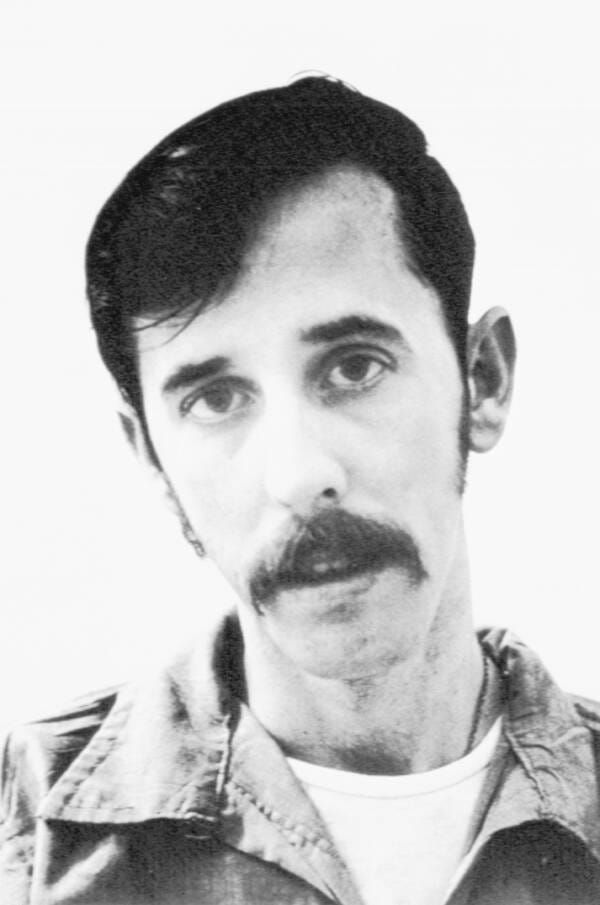
On the morning of November 21, 1973, 25-year-old North Carolina native Troy Leon Gregg and 16-year-old Ralford “Sam” Allen were hitchhiking in Florida when they were picked up by two men, Fred Simmons and Bob “Tex” Moore.
At a certain point, the car broke down. Sometime later, Simmons and Moore were given a ride to a car dealership by a Florida State Trooper, where Simmons paid about $275 cash and bought a 1960 Pontiac. Simmons left with the bill of sale, intending to return later for the car title.
Simmons and Moore, now driving the Pontiac, again picked up Gregg and Allen and continued their trip north. According to reports, both Simmons and Moore were seen flashing a lot of cash. On the way, they picked up a third hitchhiker, Dennis Weaver, who was also heading north.
According to later accounts by Weaver, Simmons and Moore were drinking heavily while Gregg drove the portion of the trip that Weaver was in the car. At about 11:00 p.m., Weaver was dropped off near the intersection of I-85 and Highway 23 in Atlanta, Georgia.

The four of them later stopped at a rest stop in Gwinnett County. Allen would later tell police that after Simmons and Moore got out of the car, Gregg told Allen to get out because “we’re going to rob them.”
Gregg then leaned against the car with a pistol in his hand, and as Simmons and Moore were walking back towards the car, he shot both of them. He then went over to where they were lying and shot both men in the head at point-blank range.
He then took all of the cash off both men as well as the contents of their pockets before returning to the Pontiac. He told Allen to get in, and the two of them drove away.
Arrest
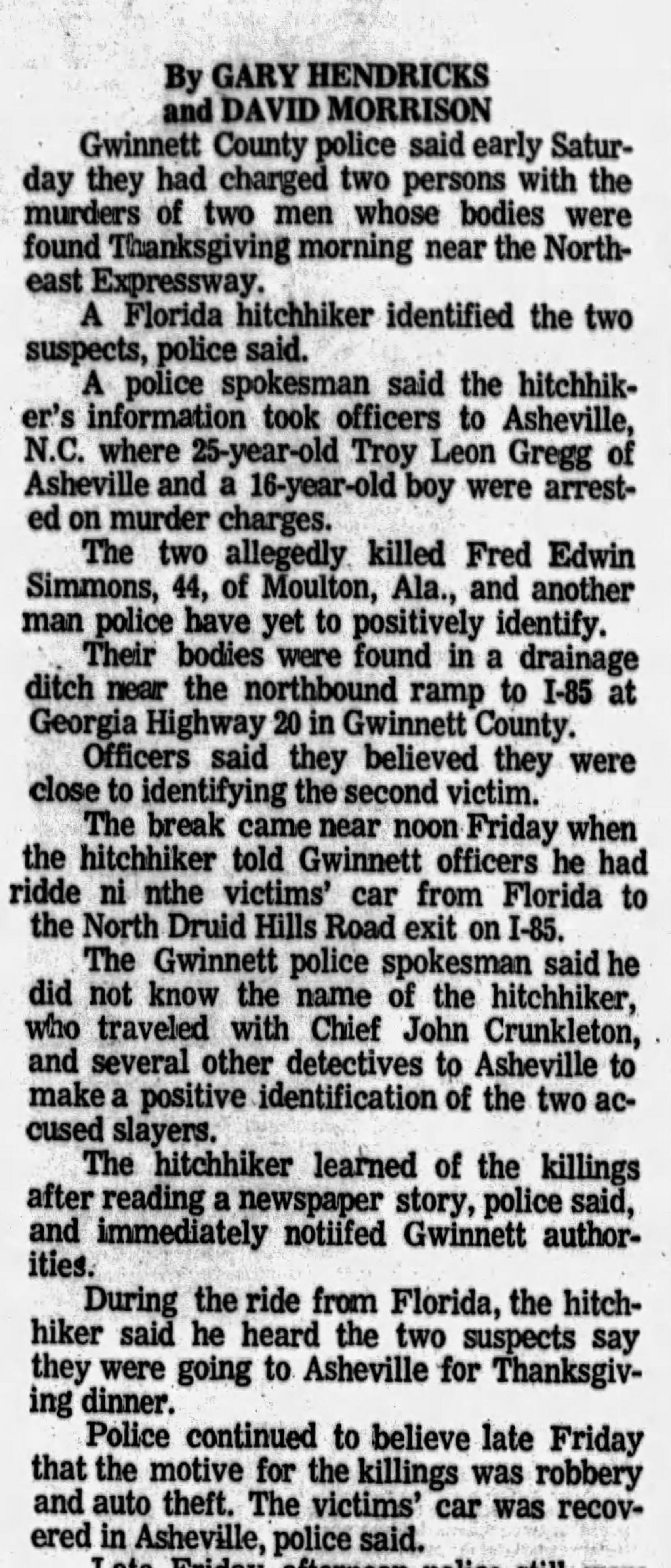
Two days later, on November 23, Dennis Weaver saw a newspaper article about the two murders. He contacted the Gwinnett County Police Department and told them about Gregg and Allen, and that he believed they were heading for Asheville, North Carolina.
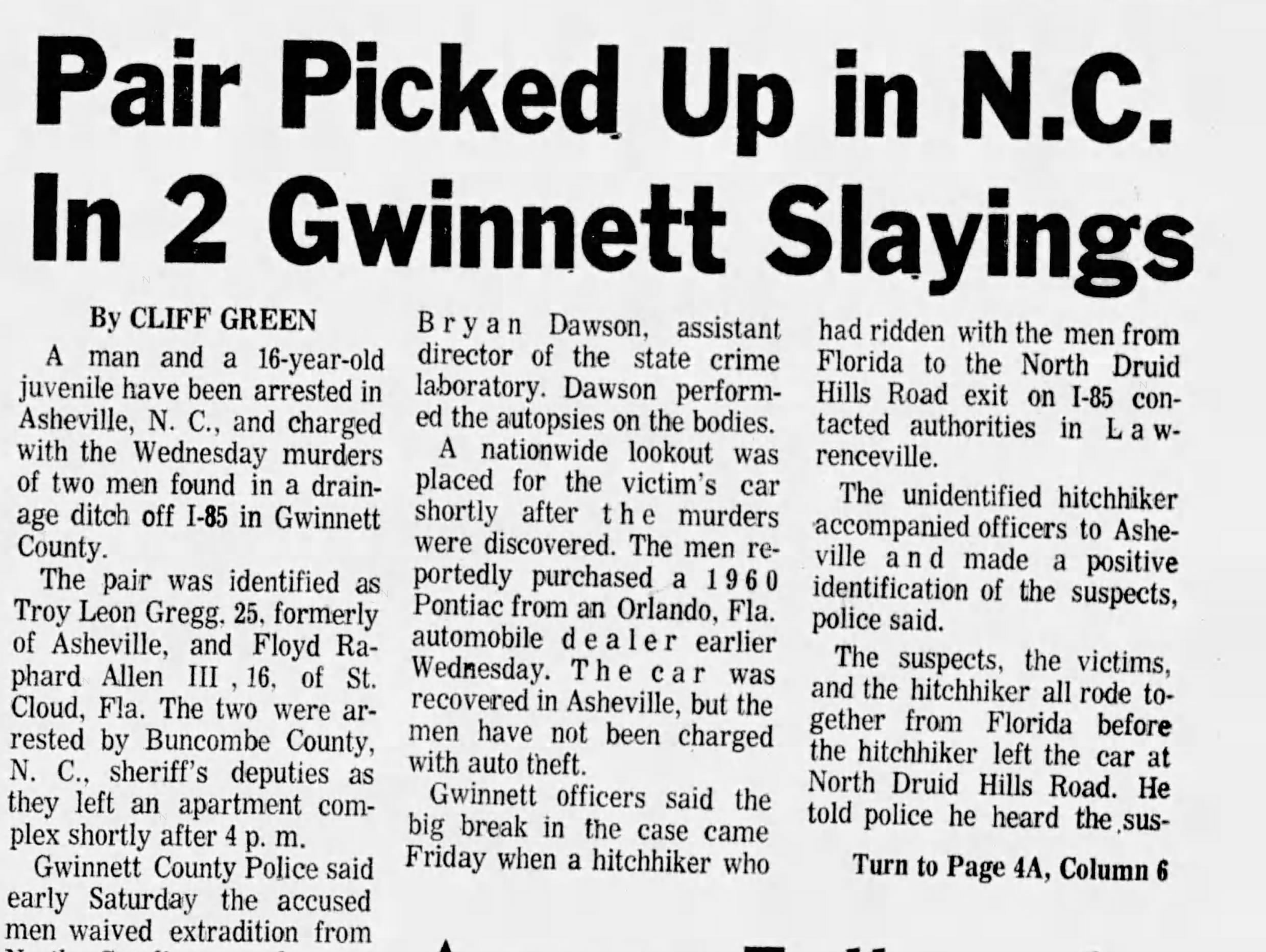
Authorities in Asheville were then notified, and police detained Gregg and Allen, who were driving in Simmons’ Pontiac. During the search, police found a .25 caliber automatic pistol in Gregg’s pocket.
Ballistic tests would later confirm that it was the same gun used in the murders of Simmons and Moore. Weaver also identified Gregg and Allen as the two individuals he had ridden with days prior.
Allen told the police what happened, and Gregg confirmed his account, allegedly telling detectives, “By God, I wanted them dead.” However, he would later try to coerce Allen to change his story and lie about what happened.
Gregg then changed his story and claimed that Simmons was drunk and assaulted him, hitting him several times in the face, and that he used his gun to defend himself. However, this version of events fails to explain why he also shot and killed Moore, or why he robbed the two men after shooting both execution style.
Gregg v. Georgia
Though no one realized at the time, the trial of Troy Gregg would have tremendous implications for U.S. case law and the application of the death penalty.
In 1972, a year before Gregg’s arrest and trial, a landmark case known as Furman v. Georgia had been heard before the United States Supreme Court. A majority of justices ruled that the arbitrary use of the death penalty violated both the Eighth and Fourteenth Amendments to the Constitution.

The result was essentially a national moratorium on capital punishment. While several states did away with the death penalty entirely, other states, including Georgia, rewrote their laws to ensure that the death penalty was not handed out arbitrarily, but instead met a strict criteria.
During Gregg’s trial, prosecutors laid out the three considerations that were necessary in order for the jury to return a sentence of death. The first was that Gregg had committed the double homicide while committing another capital felony, i.e., armed robbery and auto theft. The second was that he committed the murders with the intent of stealing the victims’ property.

The third consideration was not as cut-and-dry. It asked if the murder was “Outrageously or wantonly vile, horrible, or inhuman in that it involved torture, depravity of mind, or an aggravated battery to the victim.” After some consideration, the jury determined that all of the state’s requirements had been met, and they imposed a sentence of death.
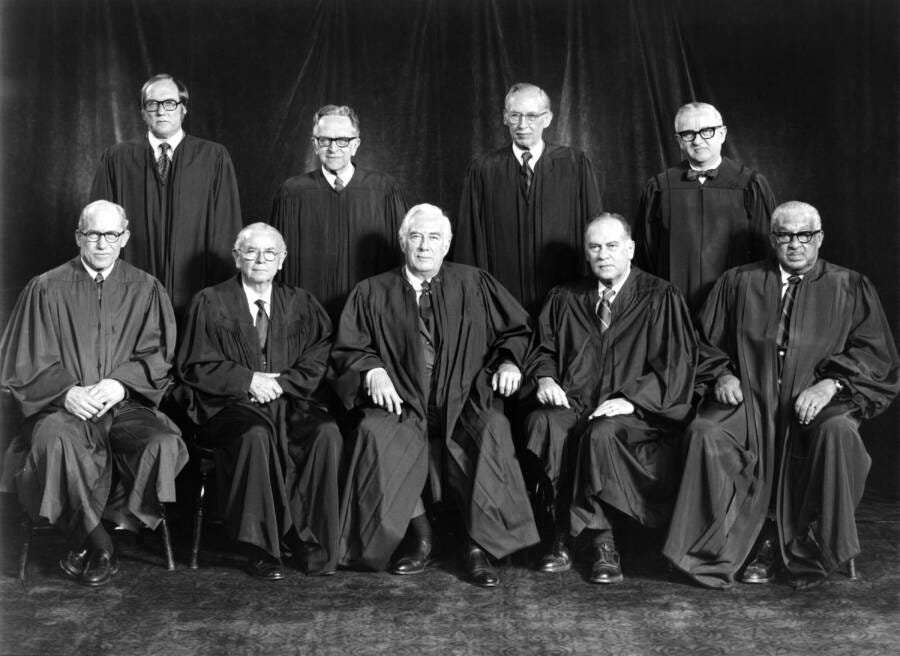
In what became another landmark case, Gregg v. Georgia, Gregg’s case was heard by the Supreme Court in 1976. Ultimately, the court ruled that Gregg’s death sentence had not been imposed arbitrarily and that his constitutional rights had not been violated.
And so, on July 2, 1976, Troy Gregg became the first person to have his death sentence upheld by the U.S. Supreme Court since the Furman ruling. The ruling had essentially reinstated the death penalty, albeit with more stringent guidelines on how it could be applied.
Prison Break and Death
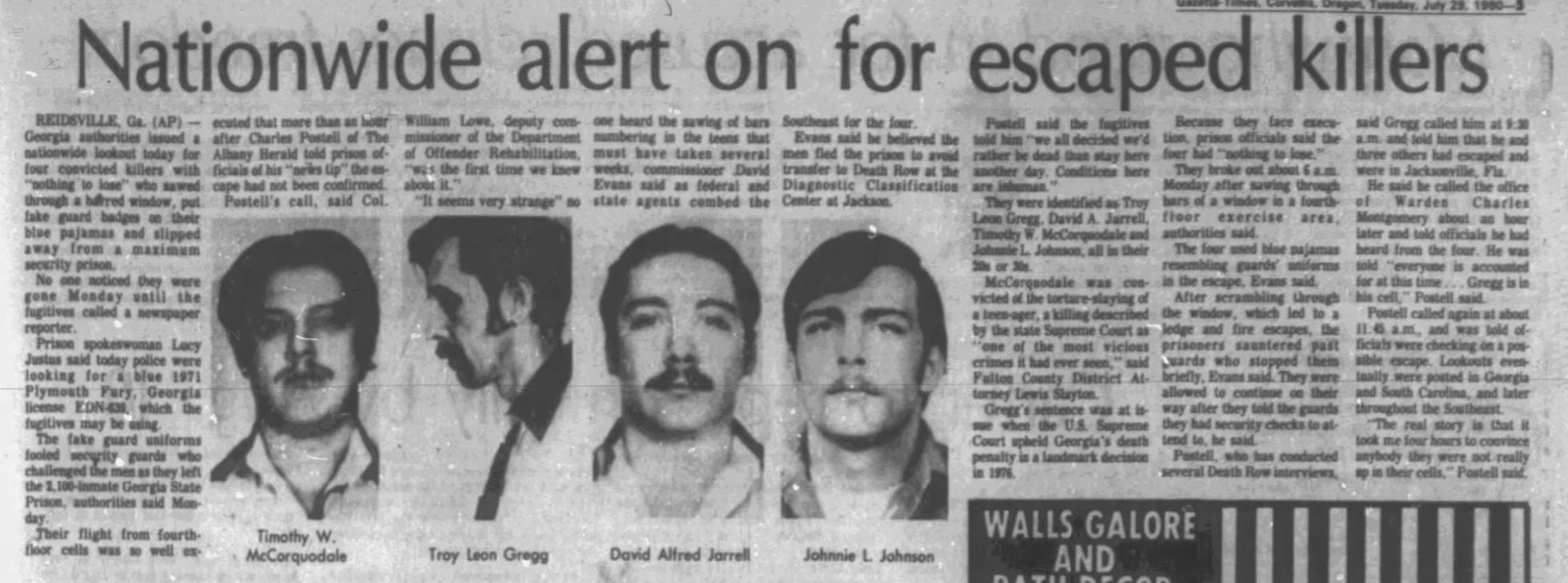
On July 28, 1980, Gregg and three other death row inmates, Timothy McCorquodale, Johnnie L. Johnson, and David A. Jarrell, used smuggled hacksaw blades to saw through their cell bars and the window of an exercise room and made their way to a fire escape.
The four inmates had altered and dyed their pajamas black to look like guard uniforms. They were apparently convincing enough that other guards mistook them for colleagues, and the four men walked through the main gate. It was the first escape by death row inmates in Georgia’s history.
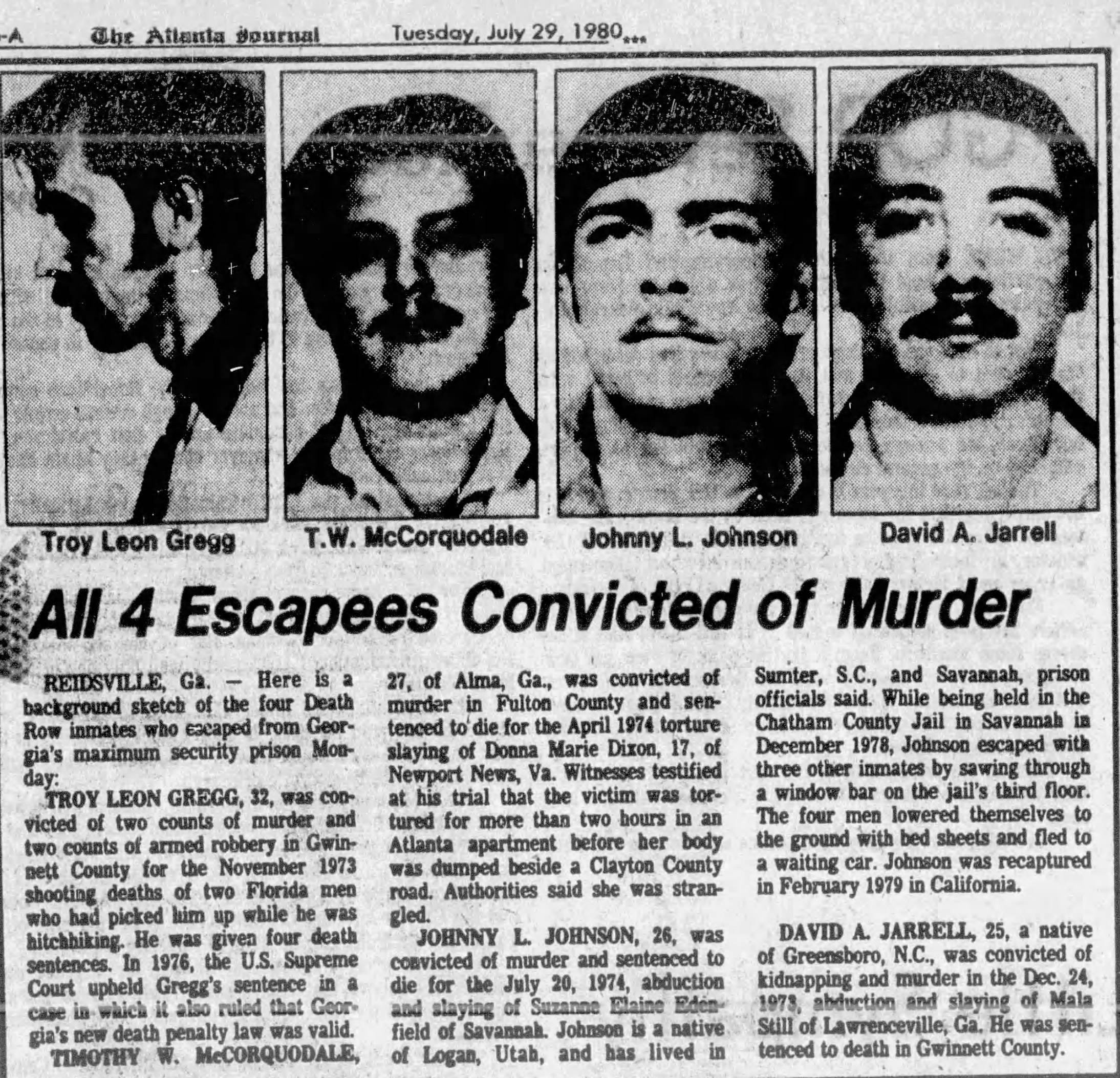
The four escapees then drove off in a car that had been left in the prison’s visitors’ parking lot by a relative. Later that day, Gregg allegedly placed a call to Charles Postell of the Albany Herald newspaper, informing him of their escape and complaining about the prison’s inhumane conditions.
Postell then called prison officials and told them about Gregg’s phone call. It was Postell’s call that first alerted prison staff to the escape, as they were unaware that the four inmates were missing.
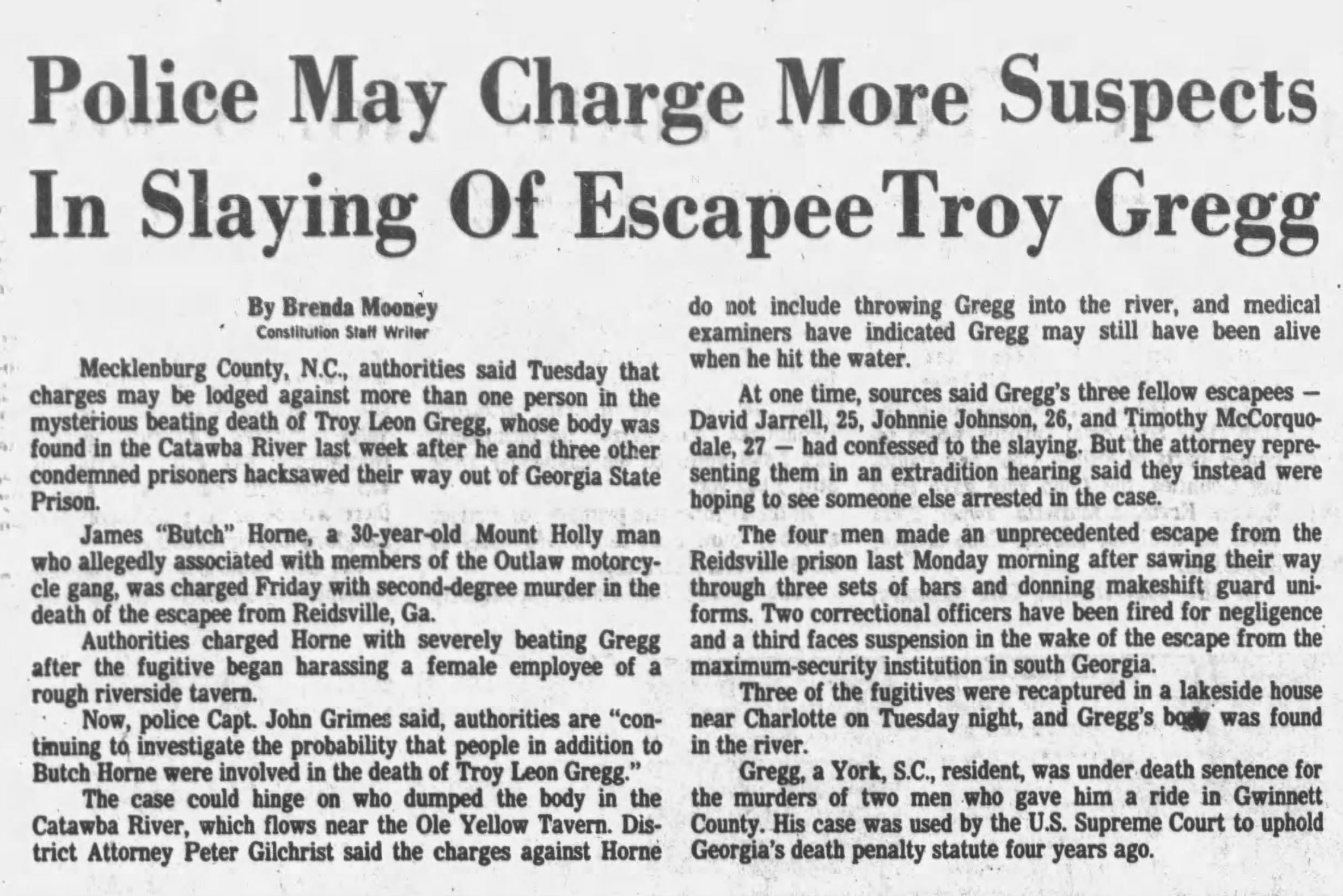
The following day, Troy Gregg’s body was found in the Catawba River in North Carolina. He had been severely beaten, and an autopsy concluded that he had died by suffocation caused by swelling.
The other three escaped prisoners were captured two days later in a rundown house in North Carolina after an hours long standoff with police. The house was owned by a member of the Outlaws motorcycle gang who was friends with David Jarrell, one of the escaped men.
Also in the house at the time was James Cecil Horne, who was also alleged to be a member of the Outlaws. Initially, Horne was charged with Gregg’s murder; however, charges were later dropped due to a lack of evidence.
What Happened?
There are differing accounts of what supposedly happened to Troy Gregg. One of them alleges that Gregg was in a biker bar in North Carolina and got belligerently drunk and attempted to assault a waitress. He was then beaten to death by local bikers and dumped in a lake behind the bar.
Another version of events has Gregg being beaten to death by fellow prisoner Timothy McCorquodale with the help of James Horne. The motive for the killing is unclear, but it has been suggested that Gregg’s phone call to the reporter may have been the cause of the beating.

No one was ever convicted for the crime, and the murder of Troy Gregg remains unsolved. The other three prisoners were returned to Georgia and transferred to a newer and more secure facility in Jackson, Georgia.
Timothy McCorquodale was executed in 1987 for the brutal rape, torture, and murder of a 17-year-old girl. Johnnie L. Johnson and David A. Jarrell are still in prison serving life sentences.
Sources:
Gregg v. State, Justia U.S. Law, https://law.justia.com/cases/georgia/supreme-court/1974/28996-1.html
Harvey, Austin. “Inside The Demise Of Troy Leon Gregg, The Man Who Escaped Death Row Before Being Murdered That Very Night.” All That is Interesting, 28 December 2022, Updated 6 January 2023, https://allthatsinteresting.com/troy-leon-gregg
“Troy Leon Gregg.” Murderpedia, https://murderpedia.org/male.G/g/gregg-troy-leon-white.htm
Morrow, Jason. “Savage Killer Timothy McCorquodale, 1974.” Historical Crime Detective, 27 August 2014, https://www.historicalcrimedetective.com/savage-killer-timothy-mccorquodale-1974/
I love a happy ending.
This is intriguing! Though, I think the simplest explanation is usually the most likely - I think his fellow prisoners would have ample reason for the murder given his phone call to a reporter. I am also intrigued as to why he made the phone call to begin with?? That seems weird. One of those cases that leaves many questions still unanswered!