



Background
In 1907, an artist named Robert Wood was on trial for the brutal murder of Emily Dimmock, a 22-year-old part-time prostitute. The killing, which had occurred at 29 St. Paul’s Road in the Camden Town section of London, became known as the “Camden Town Murder.”
The murder and the sordid details surrounding it gripped the public and press, who carefully followed the details of the trial. The trial became notable for several controversial moments, including a biased outburst from the presiding judge and Robert Wood taking the stand in his own defense. Though he was ultimately acquitted, the question remains: Did a killer walk free?
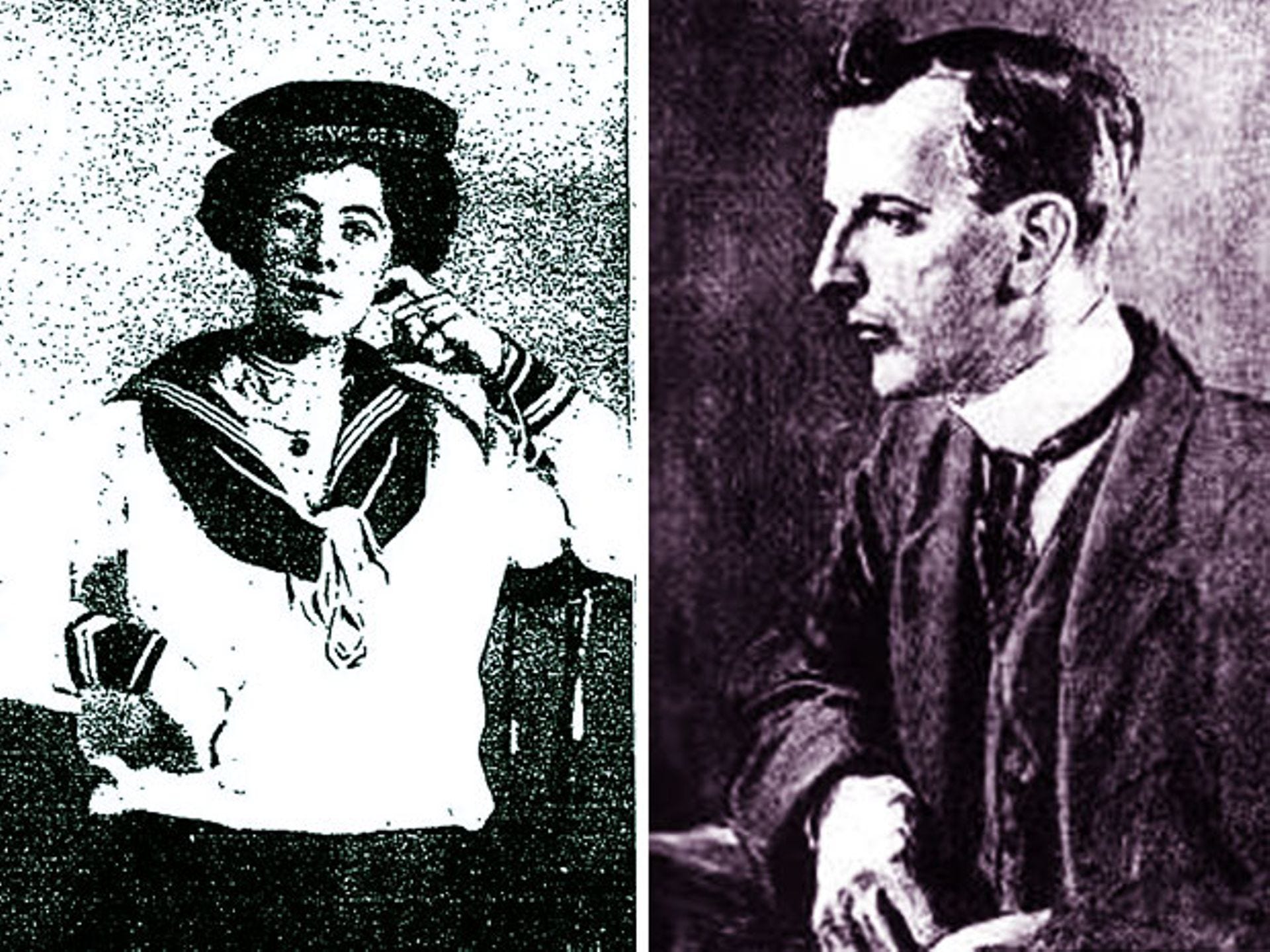
Emily Dimmock
Emily Elizabeth Dimmock was born in the Hertfordshire Village of Standon on October 20, 1884. Her father, William, ran the Red Lion pub, where Emily spent much of her childhood.
By age twenty-one, she had moved to 1 Bidborough Street, near the bustling railway stations of Kings Cross and St. Pancras. The house’s owner, John William Crabtree, would later be arrested for running a brothel, hinting at the shadowy world Emily inhabited.
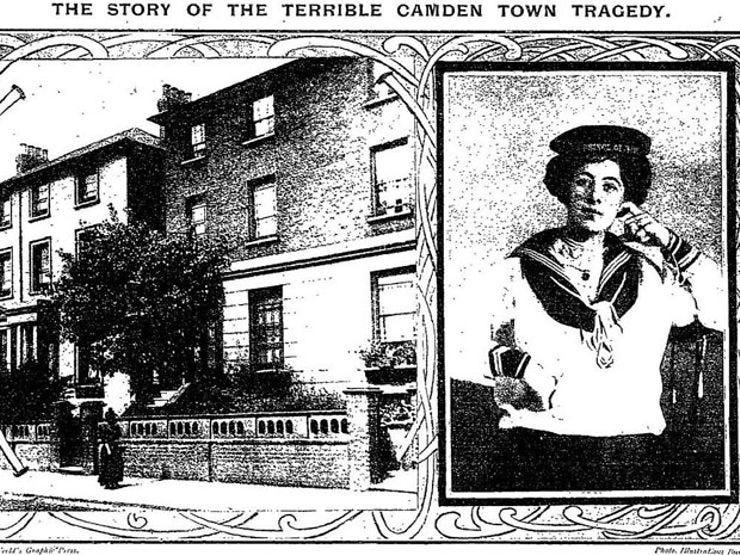
In 1906, Emily, who also went by Phyllis, met nineteen-year-old Bertram Shaw. What began as a part-time relationship soon blossomed into romance, and Bert became her common-law husband. The couple settled at 29 St. Paul’s Road in Camden Town. They presented themselves to the landlady as Mr. and Mrs. Shaw. Bert worked on the Midland Railway as a chef on the Sheffield Express, a train that ran between St. Pancras and Sheffield.
Every night, Shaw left home about 4:15 p.m. and returned to London at 11:30 a.m. the following morning. While Shaw was away working nights, Emily sought customers and companionship in local pubs like the Rising Sun.
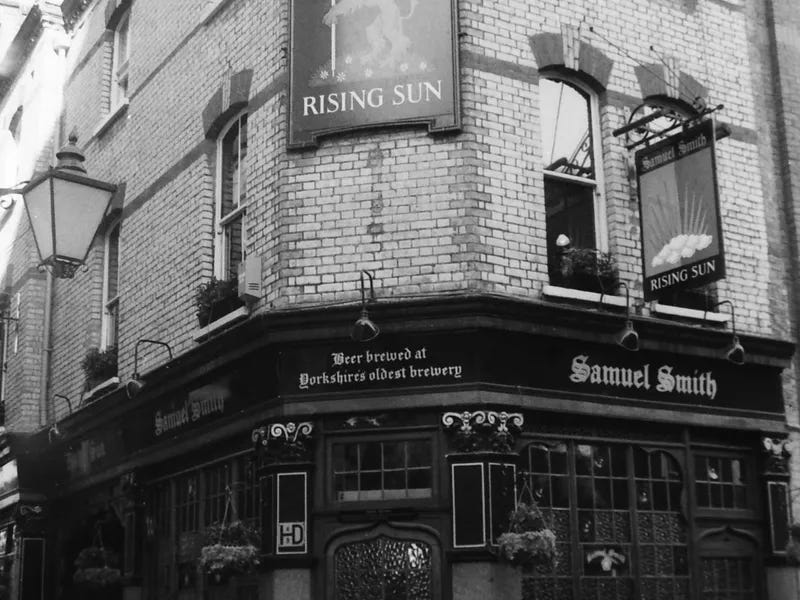
The Rising Sun
Emily’s search for companionship after hours often led her to the bustling Camden Town pub, the Rising Sun. While Bert worked overnight, Emily would bring other men home, seeking comfort and excitement in London’s nightlife.
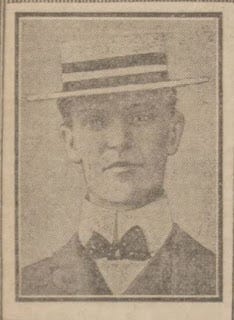
Just days before her death, she met Robert Percival Roberts, a sailor whose company she enjoyed so much that he stayed with her for two more nights. On September 11th, the day of the murder, Roberts begged to be allowed to stay again, but Emily refused, telling him she was expecting another visitor that night.
To prove her point, Emily produced a note to show Roberts: “Will you meet me at the Eagle, Camden Town, 8:30 tonight, Wednesday.” It was signed “Bert,” adding another layer of mystery to Emily’s evening plans. Although Roberts had a solid alibi and was quickly cleared by investigators, he did provide a crucial clue. He remembered the note and a mysterious letter that Emily received that morning before he left. After reading it, she burnt it in her fireplace, leaving the contents a mystery.
Just days before her meeting with Roberts, on September 6th, Emily met another man named Robert Wood at the Eagle pub on Royal College Street. This seemingly minor encounter would soon become central to the investigation as Wood’s connection to Emily and the events leading to her murder drew the attention of both the public and the police.
On September 11th, Roberts went to the Rising Sun pub, hoping to see Emily again. He met a friend named Franck Clark, and the two shared a pint while waiting. Emily never appeared. Instead, a few miles away, Emily was seen in the Eagle in the company of Robert Wood.
It was the last time anyone would see her alive.
Murder Mystery
On September 12th, 1907, Bert’s mother, Mrs. Shaw, arrived for a prearranged visit with Emily. She had disapproved of their union, and Bert wanted her to get to know Emily better. Mrs. Shaw knocked at the couple’s door but received no answer. She then waited with the landlady until Bert returned home from work.
When Bert Shaw finally arrived home, he found his room locked, a detail that immediately struck him as odd. He had to borrow a key from the landlady, Mrs. Stocks. With the borrowed key in hand, the trio stepped inside, only to be greeted by chaos; rooms ransacked, the unmistakable evidence of bloody hands washed in the basin, and a chilling quiet that seemed to echo through the house.
In the bedroom, Bert found a horrific scene. Emily lay nude, her throat cut so savagely that it nearly severed her head. The peaceful expression on her face, even in death, suggested she’d been murdered as she slept, unaware of the danger.
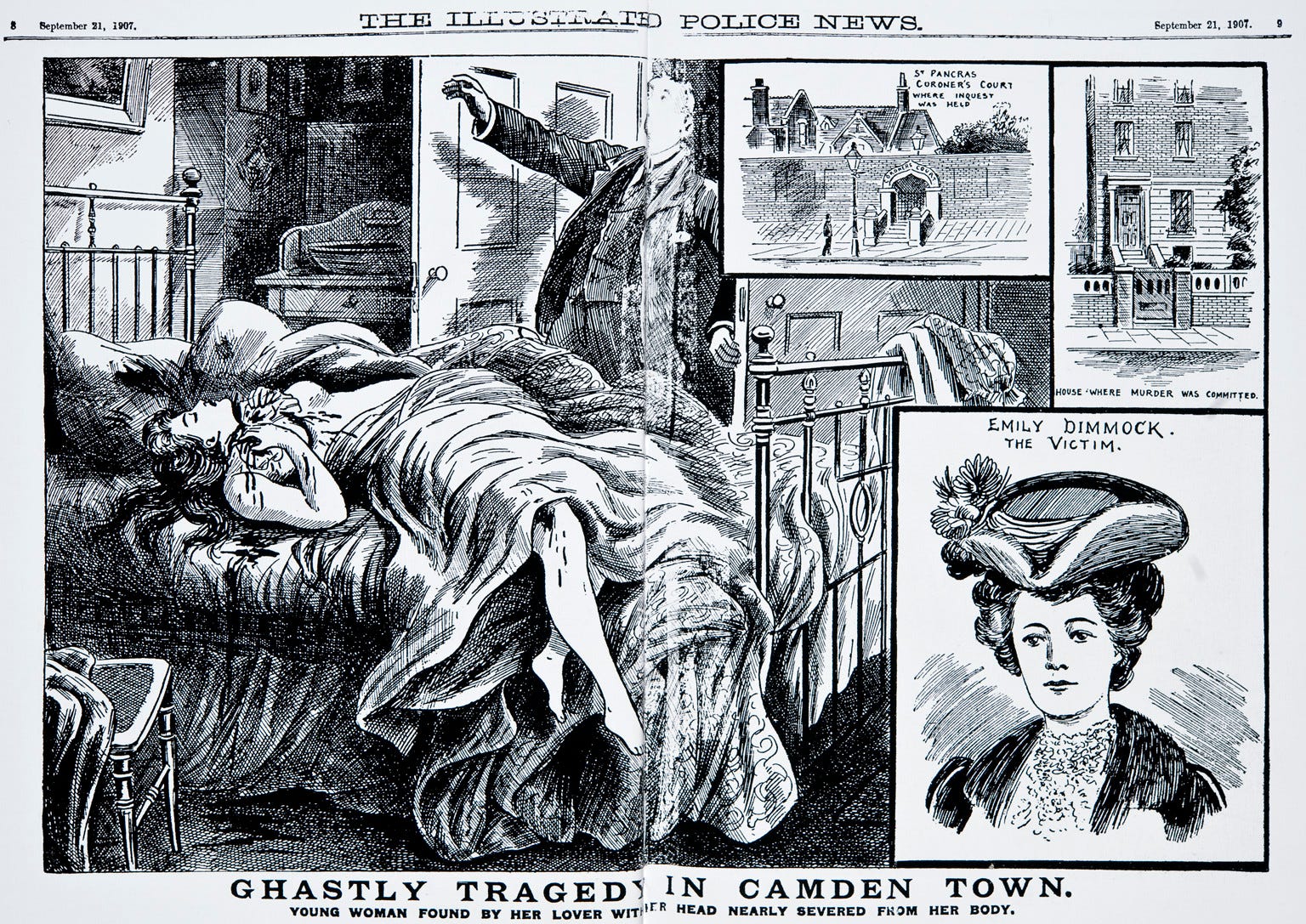
Investigation
Inspector Arthur Neal of Scotland Yard headed the investigation, but the scene offered few clues. The murderer had left little evidence behind. Emily’s stomach contents showed she’d died sometime between 3 and 6 a.m. on the morning of September 12th.
The remains of a dinner for two were found on a table in the parlor, leading inspectors to guess Emily’s last meal had been eaten with her killer. The murder weapon was never found.
Only a few valuables were taken from the rooms, including Bert’s cigarette case and watch, and Emily’s purse and ring. Most noticeable, though, was the destruction of Emily’s cherished postcard collection. Many of the postcards had been torn out, leading the Inspector to guess they concealed secrets to the killer’s identity.
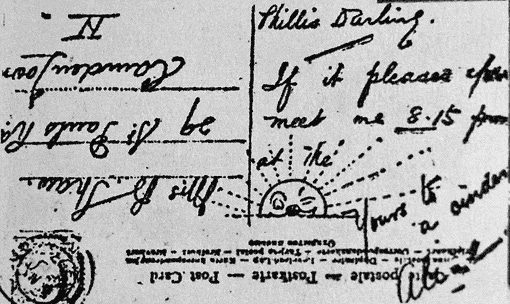
When Bert cleaned out the rooms after Emily’s funeral, he discovered a postcard signed, “Alice.” He dutifully gave it to the police, thinking it might have something to do with the murder. Inspector Neil enlisted several local newspapers to publish the postcard. He hoped to find someone who might recognize the handwriting.
The postcard read: Phillis darling. If it pleases you to meet me at 8.15 at the (and here instead of words, he drew an artist’s impression of a rising sun). Yours to a cinder.’ On September 29th, the News of the World offered a £100 reward to anyone who provided information about the mysterious Alice.
The breakthrough came when Ruby Young, a former lover of Robert Wood, recognized his handwriting on the postcard. When confronted, Wood realized the danger he faced, knowing he was among the last to see Emily alive at the Eagle pub. He begged Ruby not to tell anyone she recognized the handwriting, and if the truth came out somehow, he told her to tell the police they met regularly every Monday and Wednesday. That would give him an alibi for the night of Emily’s murder.
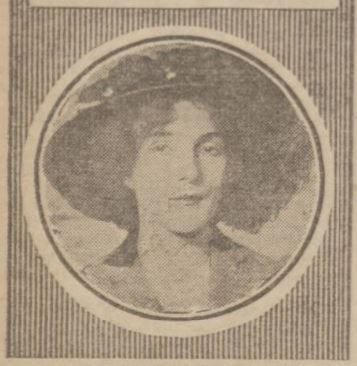
At first, Ruby agreed, but she eventually shared the information with a friend. This friend happened to have another friend who worked in Fleet Street, the heart of British journalism and publishing. Ruby’s friend told a journalist who contacted Ruby. In exchange for the promised reward, Ruby offered to tell him everything. Knowing what an important clue the “Alice” postcard might be, the journalist invited along a witness to the conversation, Inspector Arthur Neil.
It was the first real break in the case. Neil believed Robert Wood was the murderer of Emily Dimmock. He was arrested on October 4th. Although Wood admitted meeting Emily and writing the postcard, the case against him was based largely on circumstantial evidence. His movements on the night of the murder were inconclusive. After meeting Emily at the Eagle, no one could vouch for his whereabouts.
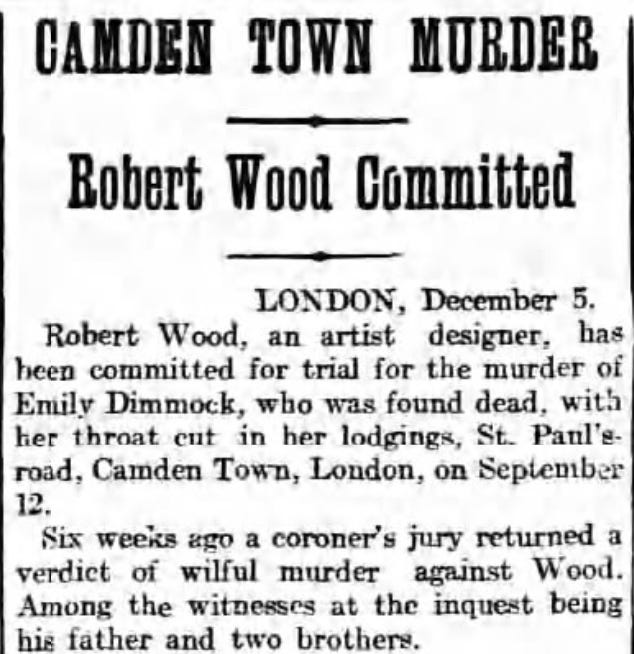
Trial of Robert Wood
Robert Wood’s trial took place in December at the Old Bailey, the Central Criminal Court. It was the prominent criminal court in London, known for many notable trials. The seats were filled with the luminaries of the day, the well-known actors, writers, and artists. Many had reserved seats for the “spectacle.” The general public filled the streets outside, treating the trial as the best entertainment of the year.
Many people, including Wood’s employers, believed he was innocent, and they put up £1000 for his defense, obtaining the services of famed English barrister Sir Edward Marshall Hall. Known as “The Great Defender,” Hall had represented defendants in some of the era’s most notable and high-profile cases.
Hall became convinced of Wood’s innocence and the fallibility of the prosecution’s case. He used dramatic and effective cross-examination, a trademark of his legal defense. In a risky and controversial move, Wood himself took the stand in his own defense. This did not seem to help him much, as he came off to some as insincere and rather unbothered about being accused of a brutal murder.
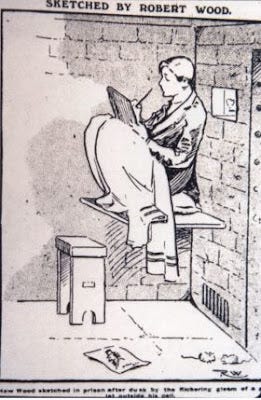
Many witnesses said Wood showed little interest in the trial. He sat silently, sketching people in the courtroom, including the judge and witnesses, almost as if he were merely a spectator. Despite his client’s strange behaviour, Marshall Hall used his skills to undermine the credibility of the prosecution’s witnesses and create a reasonable doubt in the minds of the jurors.
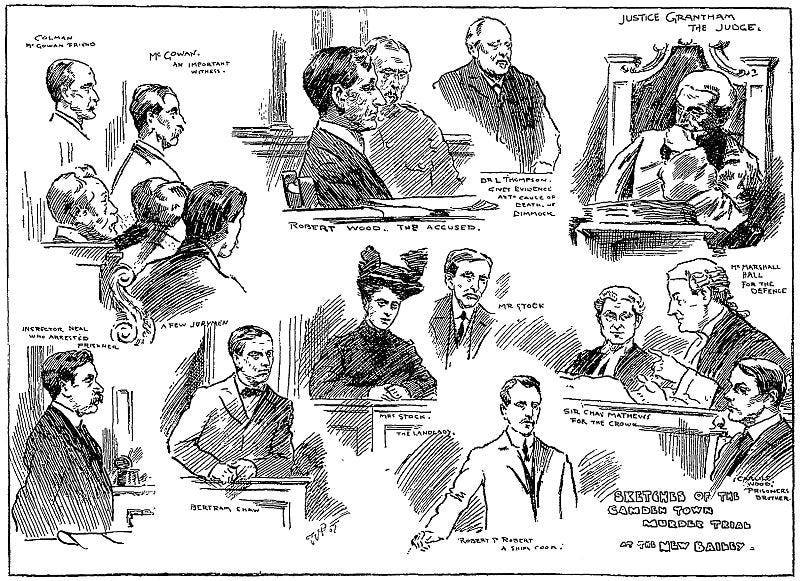
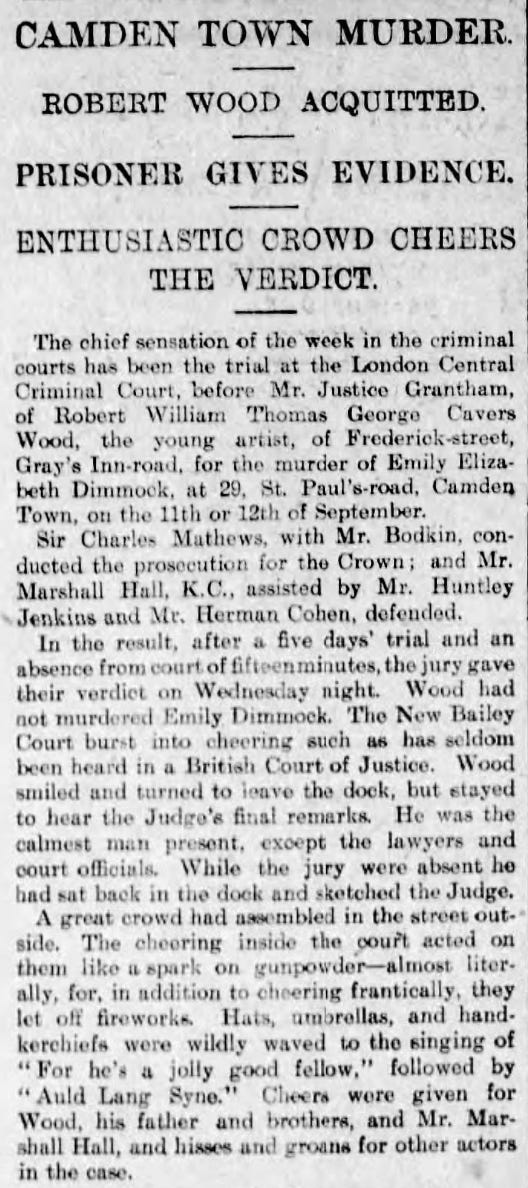
The Judge, Mr. Justice Grantham, was expected to take a pro-conviction stance at the trial. However, to the shock of many, about halfway through the summing up, he made it clear to the jury that they should acquit Wood. The jury dutifully retired and, after fifteen minutes, returned with a verdict of “not guilty.”
Though some were pleased with the verdict, believing that an innocent man had been rightly vindicated, others saw a grave injustice.
Other Suspects
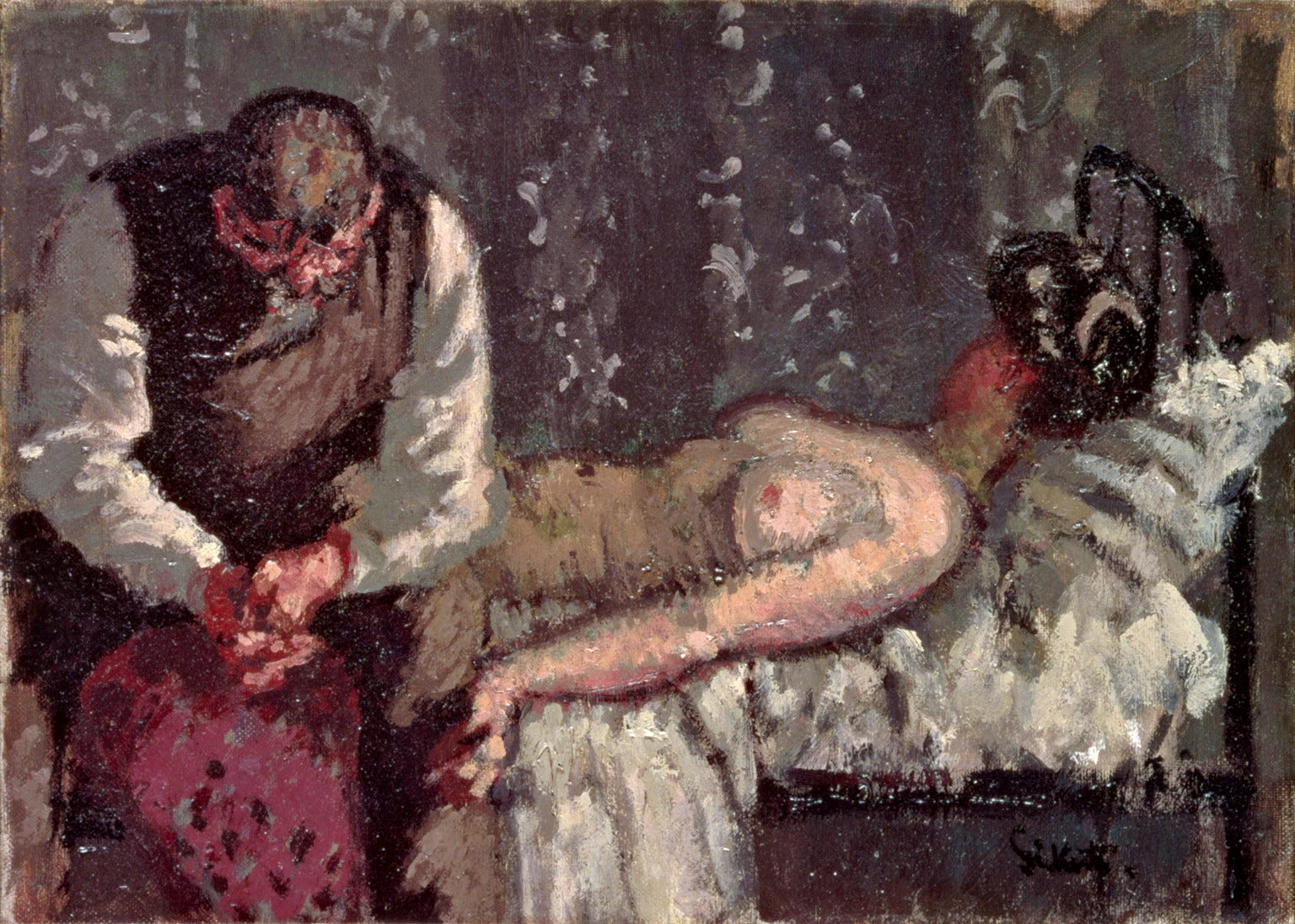
Some alternative suspects have been suggested over the years, including Walter Sickert, a German-born British artist and painter who, in 1908, the year after the murder, sketched a series of four paintings called “The Camden Town Murder.”
Sickert lived in Camden at the time of the killing; however, there was no evidence that he ever knew or crossed paths with Emily Dimmock, nor was he ever interviewed or questioned during the investigation or trial.
Another mysterious character named “Scotch Bob” was named as an early suspect after it was alleged that he had threatened to cut Emily’s throat. However, he was never identified or located.
Aftermath
After the trial and his acquittal, Robert Wood lived a quiet, law-abiding life until his death in 1966. Many in his own family didn’t even know about the trial until they discovered it in history books. Bert Shaw vanished from the pages of history. His sole claim to fame was the discovery of Emily’s body.
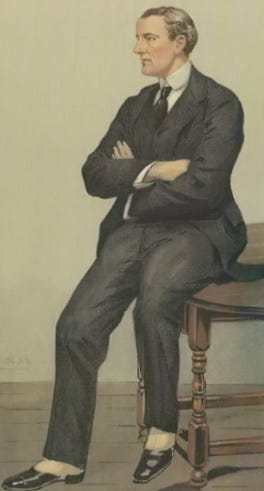
After his successful defense, Sir Edward Marshal Hall later told his daughter he had come to believe Wood murdered Emily. No one knew what or why he changed his mind. Inspector Neil was quoted as saying, “Although we must abide by the Jury’s decision, there is no moral doubt that Wood was guilty of the murder.”
Nearly 120 years after Emily Dimmock’s gruesome murder, her death remains unsolved.
Sources:
Coates, Jon. “Retired judge unmasks the killer… 112 years too late.” Express, 17 November 2019, https://www.express.co.uk/life-style/life/1205588/postcard-murder-Emily-dimmock-killer-solved
Barber, John. “The Camden Town Murder.” Casebook, https://www.casebook.org/dissertations/camdentownmurder.html
“The Camden Town Murder.” Strange Company, 2018, https://strangeco.blogspot.com/2017/02/the-camden-town-murder.html
"The Murder in The Red Lion?" I believe this was a play which later was fused with another murder to become "The Murder in The Red Barn." Since it was believed Robert Wood was guilty until the judge changed his mind this implies the prosecution and police were mind-numbingly incompetent, which can be attributed to mass corruption due to the time period. This means the murder was connected to the Greater Home Counties mob. "Alice" seems to be a reference to "Alice in Wonderland," so it refers to a mobster's little daughter, the daughter being associated with her father's alcoholism, alcoholism causes hallucinations. I would think Sir Edward Marshal Hall realized Robert Wood was guilty based on circumstantial evidence he figured out from his later trials where he was the defending attorney and prosecuting one. The other suspects were mobsters who were involved in the crime, although I would think only one actually killed Emily Dimmock. Since open relationships were taboo in those days, we can assume Emily Dimmock turned to prostitution due to stress and she didn't give her slaveowner bosses the money, but this does not explain why they didn't just beat her up; John William Crabtree seems to have been her original pimp.
"Dimmock" seems to be a Gaelic name, so I would think given the Irish immigration to the Greater Home Counties starting in the C.E. 1700s i would think her family was linked to the Irish mob: the Greater Home Counties mob killed her because they knew beating her up would immediately result in a response by the Irish mob, so they killed her and the Irish mob didn't suspect the Greater Home Counties mob because the Irish mob assumed the Greater Home Counties mob would only escalate piecemeal.