



Background
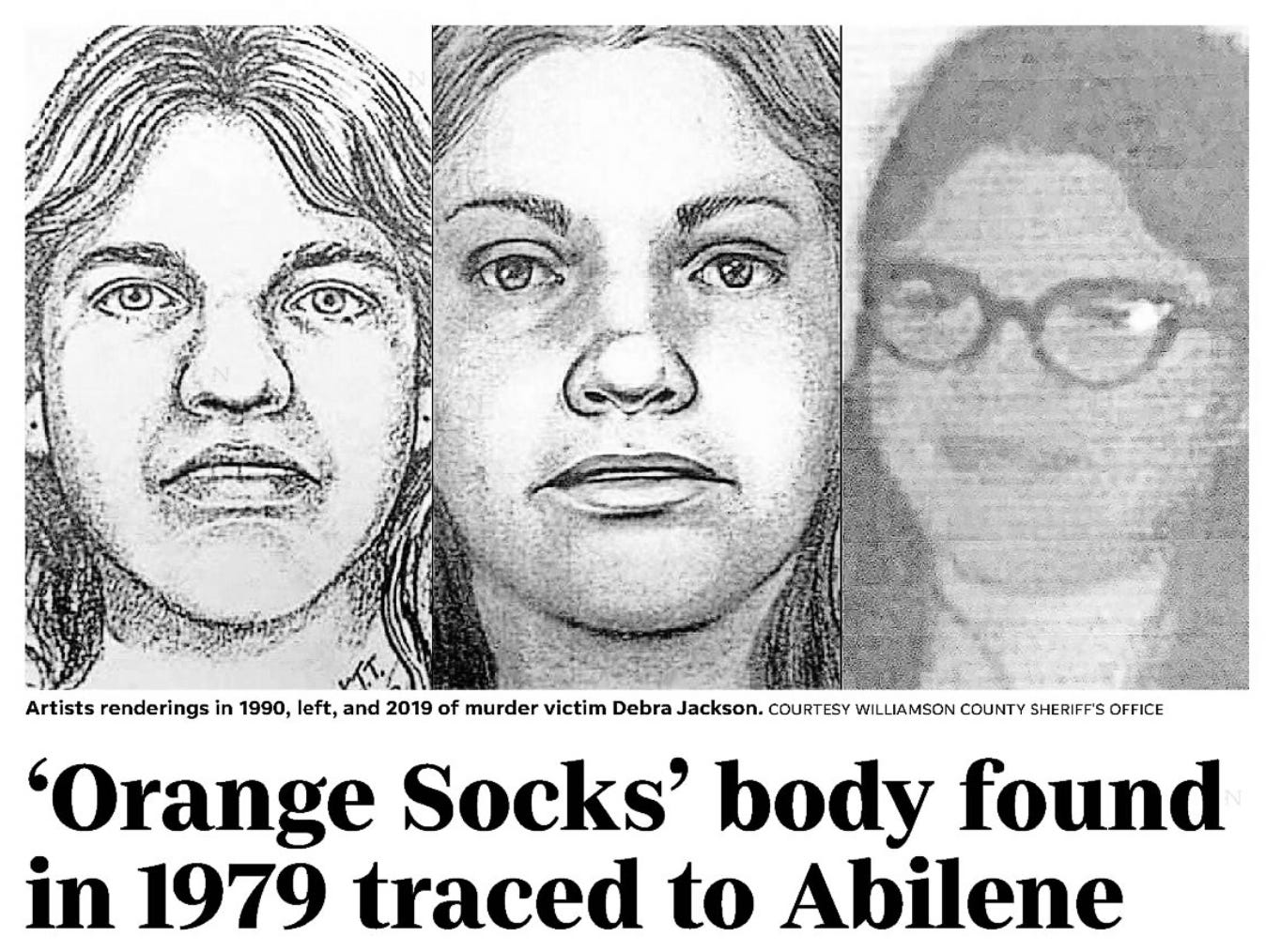
In August 2019, investigators in Williamson County, Texas, made a significant breakthrough in one of the county’s oldest cold-case homicides. After 40 years, they had finally identified the Jane Doe, known only as “Orange Socks” due to the distinctive socks she had been wearing when her body was found.
Though police have identified the victim as 23-year-old Debra Louise Jackson of Abilene, Texas, many questions remain, including who killed her and the circumstances surrounding her murder. Despite the passage of time, they remain hopeful that information from the public may lead to a break in the case.
Halloween 1979
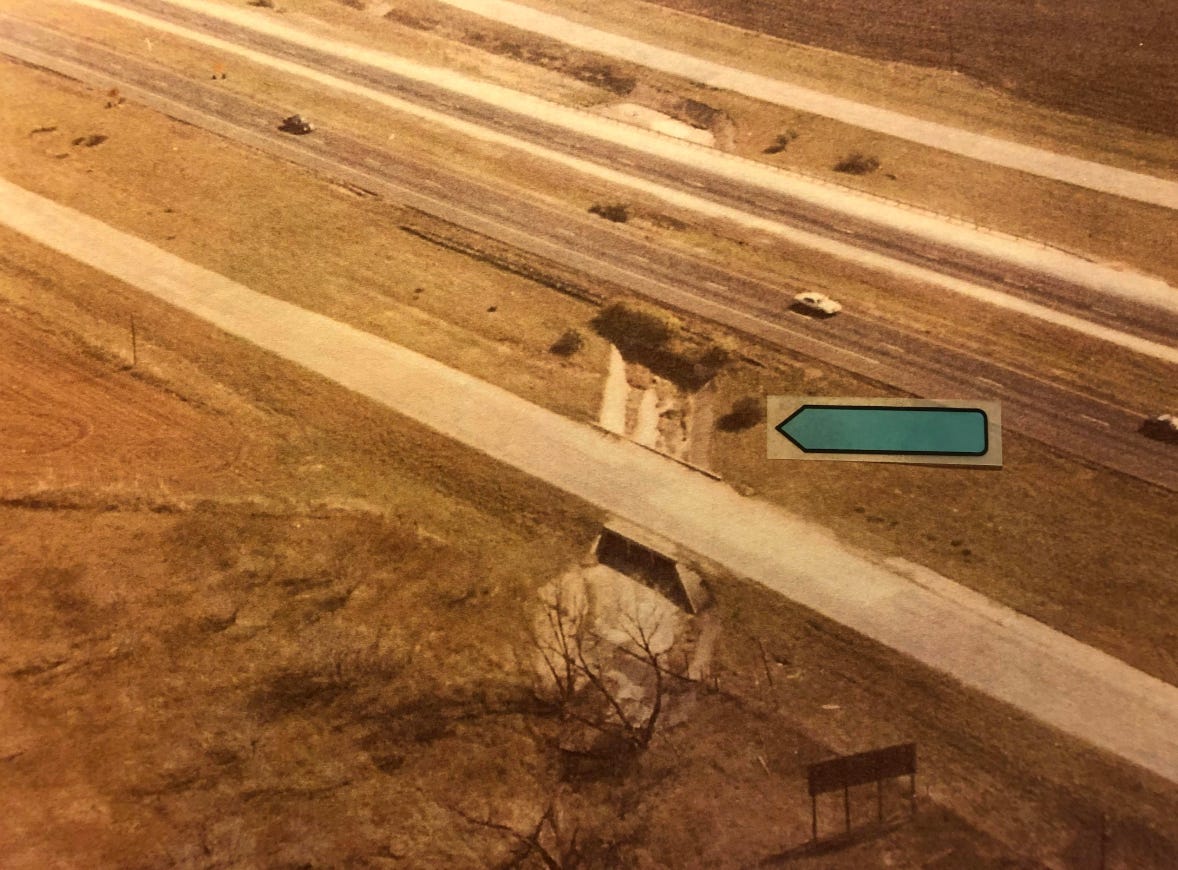
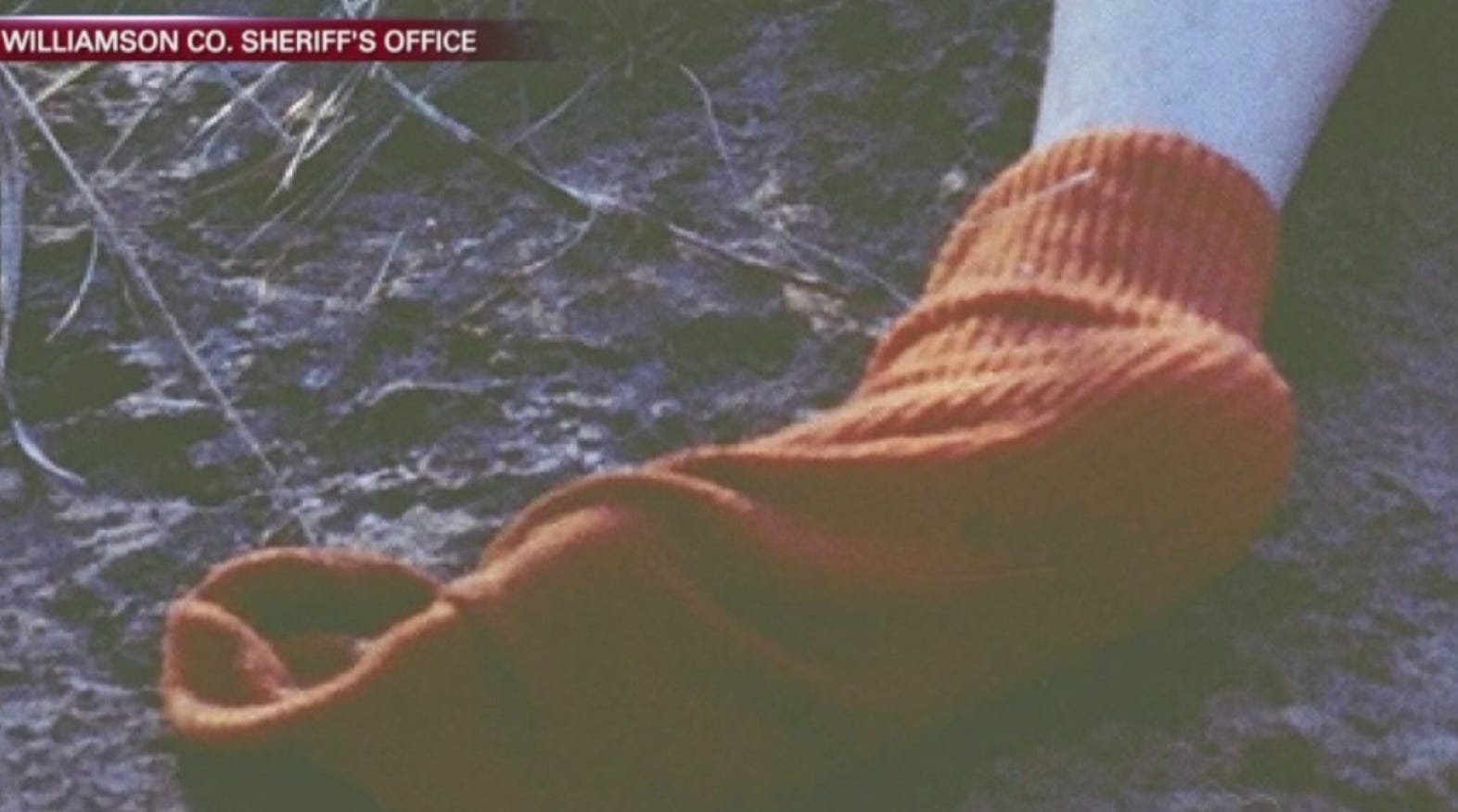
On October 31, 1979, the body of a young woman was found in a concrete ditch off of highway I-35 near Georgetown, Texas.1 The victim was nude except for a pair of orange socks. Investigators determined that she had only been there a short time — possibly just hours — before she was found. The body had been thrown from a highway overpass and then dragged through the grass before being left near the culvert.
The medical examiner ruled the death a homicide resulting from strangulation. The body had a significant amount of visible bruising around the neck. Additional bruising on the body was a result of being dropped from the overpass. She had also been sexually assaulted.
With no identification at the scene, investigators noted all physical indicators and descriptions of the victim, including hair color, eye color, scars, and other distinctive features. She was approximately 5”8” to 5”10”, between 140 and 160 pounds, and her age was estimated to be late teens to mid-twenties.
Police believed she may have been a hitchhiker or drifter. One of the only clues found at the scene was a matchbook from a hotel in Henryetta, Oklahoma. Authorities checked the hotel but found no name in the registry that matched the victim.
The Georgetown Jane Doe came to be known as “Orange Socks” after the most distinctive feature of her case.2 Authorities believed that her murder may have been connected to several other unsolved homicides along I-35 in Travis County, Texas.
Soon, a notorious serial killer would claim responsibility for the murder, yet many within law enforcement were dubious.
A Serial Killer’s Confession
The case seemed to gain momentum when, in 1983, convicted killer Henry Lee Lucas confessed to the murder. According to Lucas, he met the victim in Oklahoma, and the two of them had consensual sex. Later, while in Texas, when Lee asked to have sex again, she tried to flee the car. Lee then strangled her and drove to Georgetown, where he dumped the body.
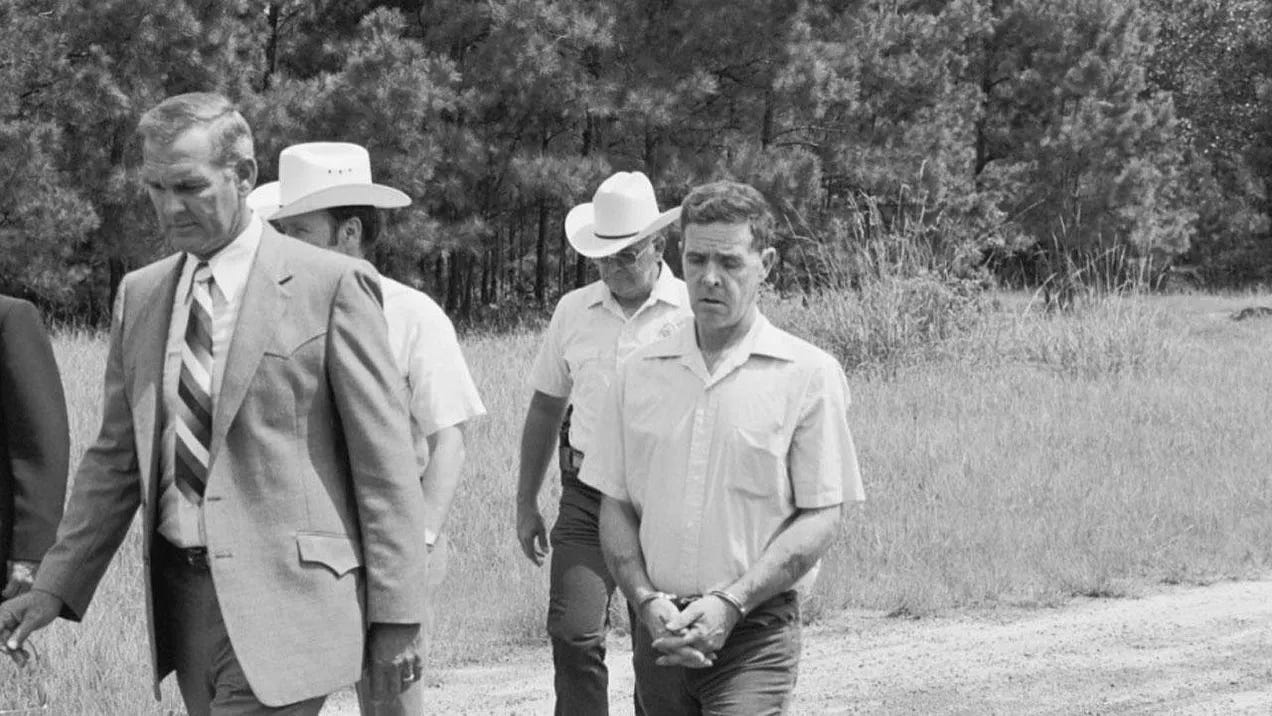
When authorities took Lucas to the crime scene, he reportedly showed them how he had dragged her body over the guardrail. Despite his confession, some within law enforcement were skeptical of his claims. There was evidence that Lucas was working in Florida at the time the murder occurred. He also contradicted himself numerous times during his interrogation.
According to his defense team, Lucas was shown images of the crime scene before speaking with investigators. Lucas has also confessed to a staggering number of additional murders where it was proven that he was not involved. In 1984, Lucas recanted his confession.
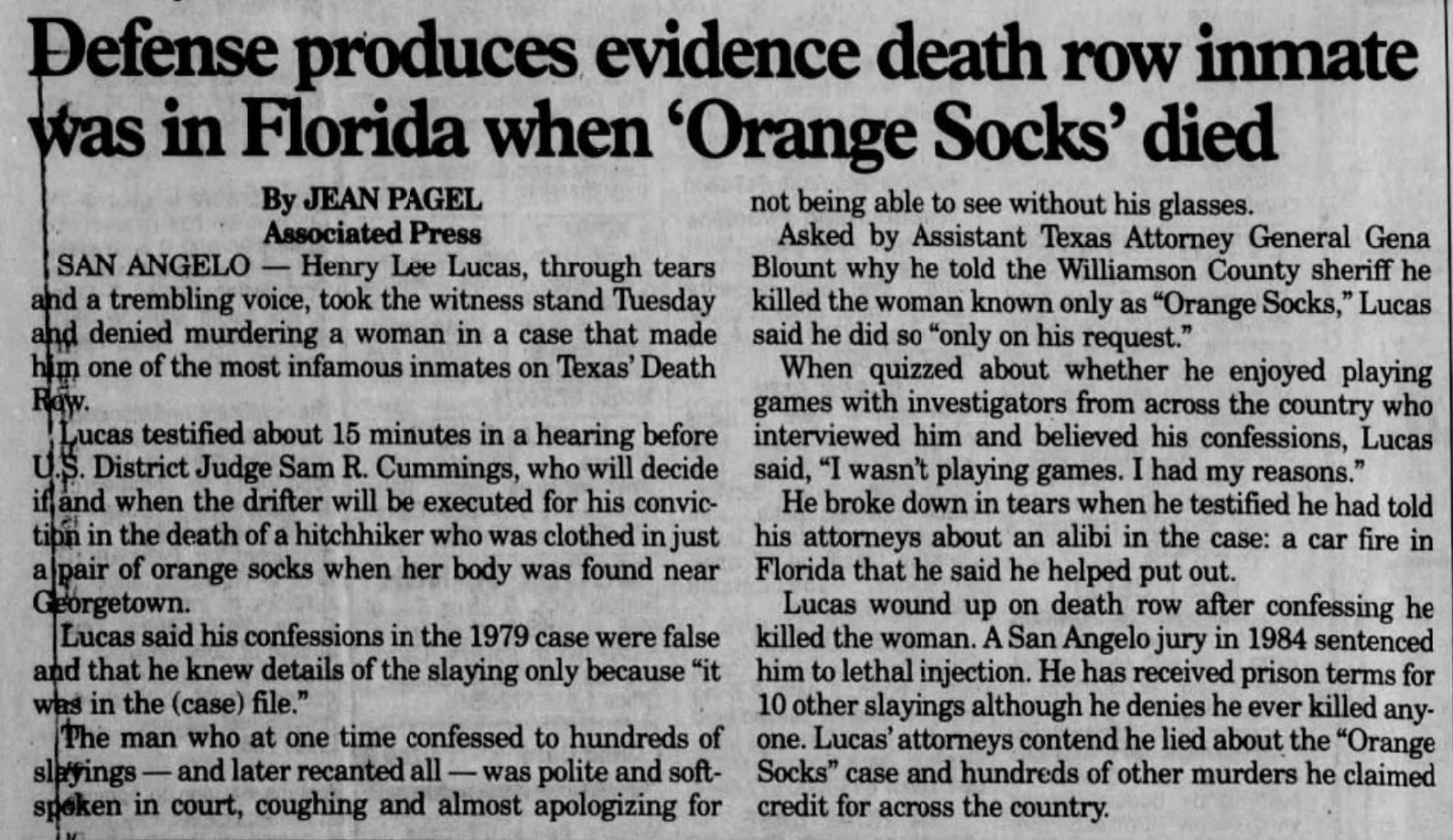
Despite this, Henry Lee Lucas was convicted of the killing and sentenced to death. However, in 1988, his sentence was commuted to life in prison by then-Governor of Texas George W. Bush.3 The reasoning was that this murder was the only one Lucas was convicted of that carried a capital sentence, and due to lingering doubts about his guilt, it was the better option. It was the only death sentence Governor Bush commuted during his time in office.
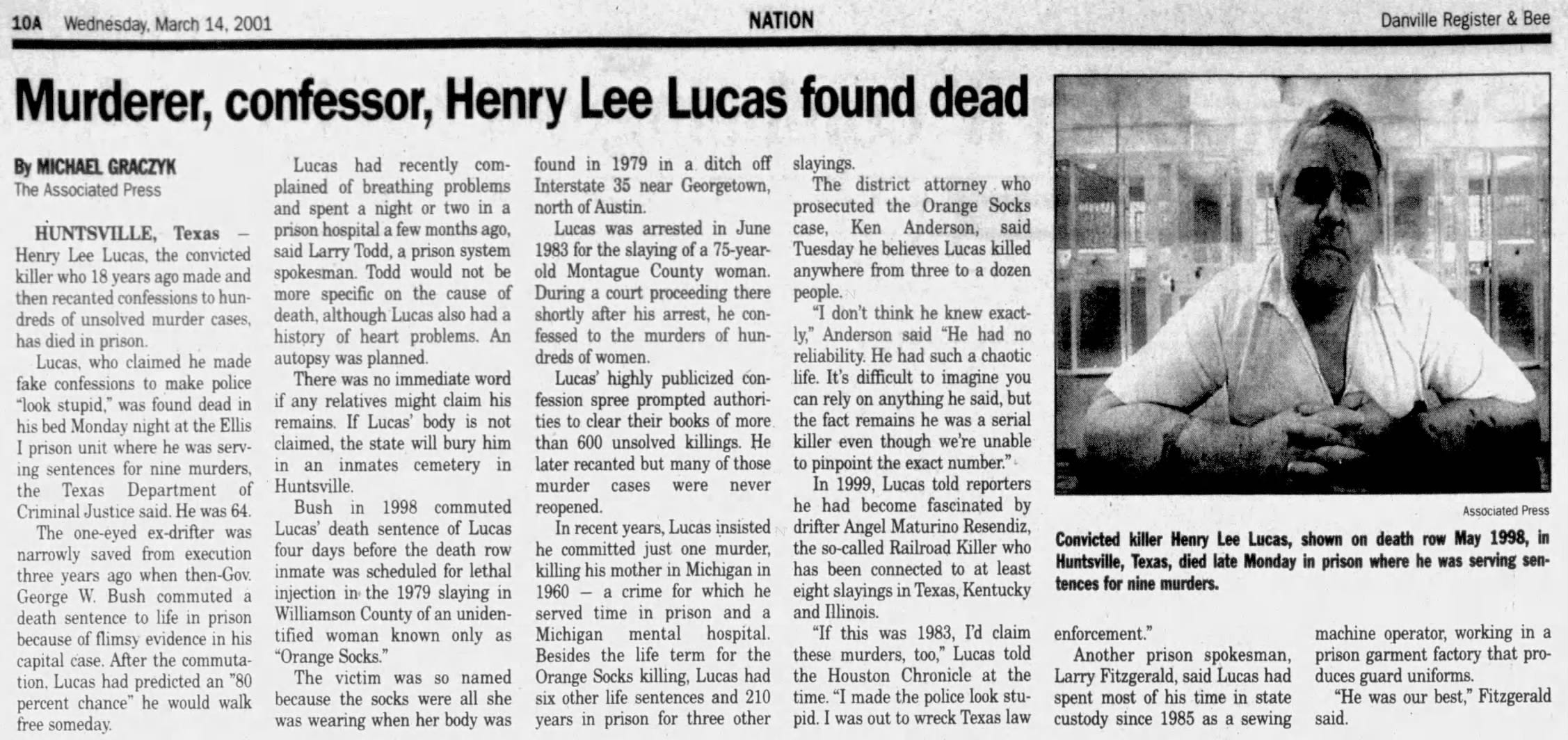
Lucas was ultimately convicted of eleven murders, including “Orange Socks” and his own mother. He was a suspect in many more. On March 12, 2001, Lucas died in prison of heart failure at age 64.
Orange Socks Identified
Over the years, several possibilities were put forth as to Orange Socks’ identity, including several missing women. However, they were all eventually ruled out. The case remained in the public eye and was featured twice on the television show America’s Most Wanted.
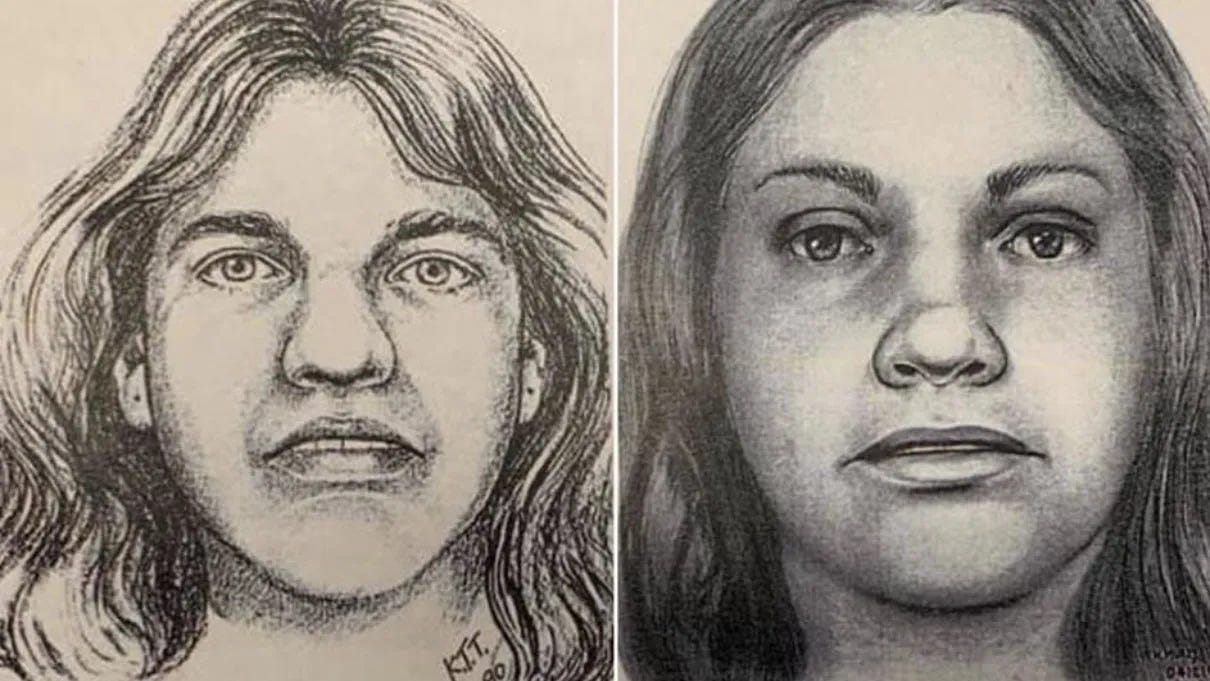
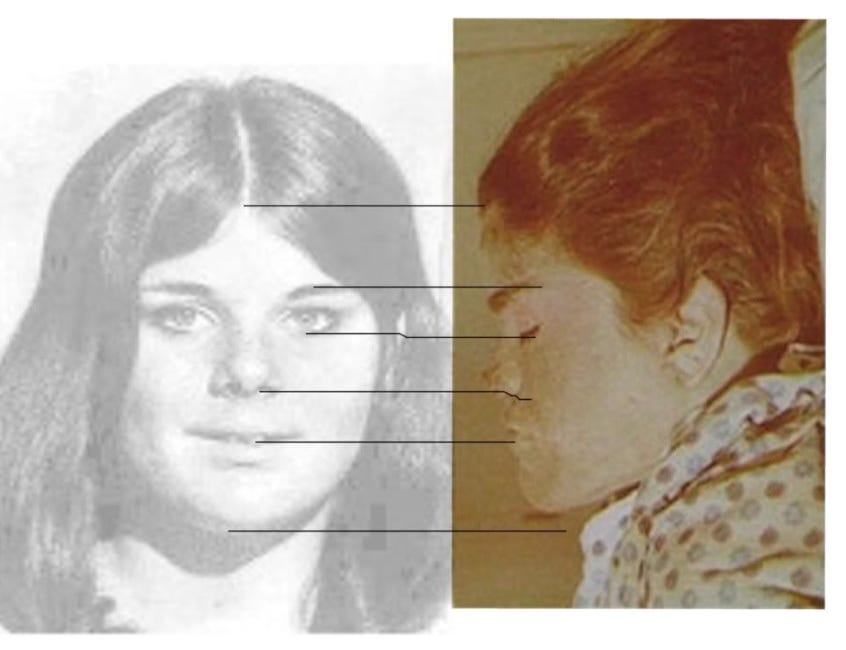
In 2016, new composite sketches of the victim were released by the National Center for Missing & Exploited Children. In 2018 and early 2019, new DNA samples were taken from a ring that she had been wearing, as well as from her socks. Analysis of the socks returned the DNA profiles of two different males.
DNA taken from the victim had been entered into the DNA Doe Project, where it returned a match for a possible cousin of the victim. Around the same time, Angie Larned saw one of the revised sketches, which closely resembled her sister Debra, who had left home in 1977 and had not been heard from since.4

After contacting investigators and looking at photographs of the victim, Angie and other family members identified the Jane Doe known only as Orange Socks as Debra Louise Jackson. In August 2019, DNA tests from Angie confirmed that she was, in fact, closely related to the victim.
After 40 years, “Orange Socks” finally had her name back, yet many questions still remain.
Lingering Questions
One reason it took so long to identify Debra Jackson is that she was never reported missing. Born on September 20, 1956, in Harris County, Texas, Debra was already an adult when she left her home in Abilene in 1977.
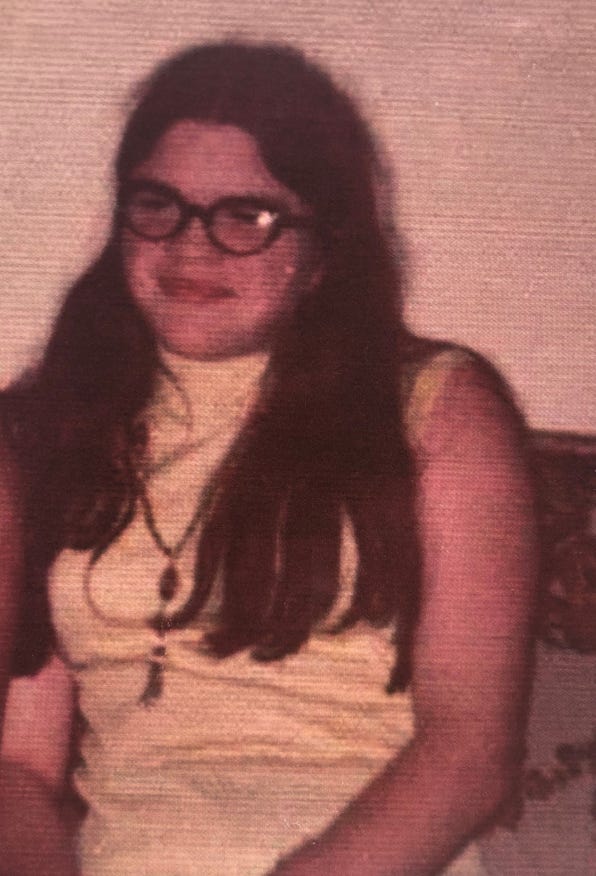
In 1978, Debra was working as a maid in a hotel in Amarillo. She is also known to have worked for an assisted living facility in Azle.5 Other than that, there is little information about Debra’s life in the brief period between her leaving Abilene in 1977 and being murdered in 1979.
Though he was convicted of her murder, many are doubtful that Henry Lee Lucas killed Debra. Unfortunately, even if Lucas did not commit the murder, the lack of available information about Debra’s life makes it difficult to determine if she would have known her killer or if they were a stranger.
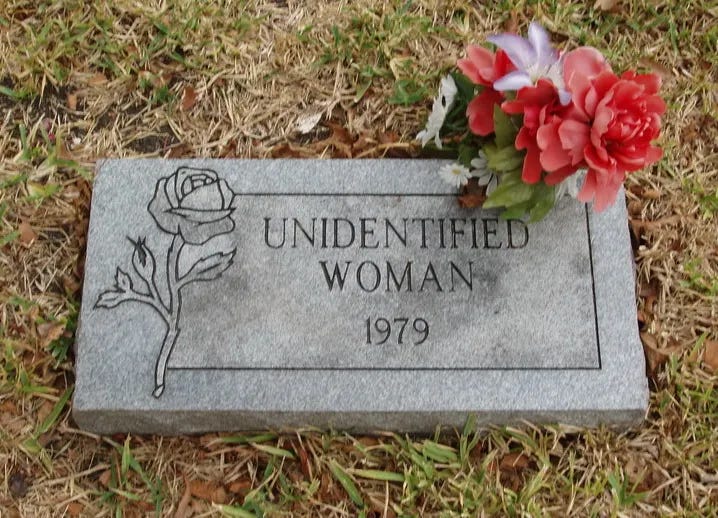
Authorities are hopeful that one day the case will be solved. Anyone with any information about Jackson's murder is encouraged to contact the Williamson County Sheriff's Office at 512-943-5204 or the Williamson County Crime Stoppers at 1-800-253-7867
Falcon, Russel & DuPree, Will. “Williamson County names victim in 40-year-old ‘Orange Socks’ cold case.” KXAN News, August 6, 2019, (Updated August 10, 2019), https://www.kxan.com/news/local/williamson-county/breaking-a-40-year-old-williamson-county-cold-case-victim-has-been-identified/
Travis, Avery. “Mystery of ‘Orange Socks’ killer haunts detectives 46 years after woman found dead on Halloween.” KXAN News, October 30, 2025, https://www.kxan.com/news/crime/unsolved-central-texas/mystery-of-orange-socks-killer-haunts-detectives-46-years-after-woman-found-dead-on-halloween/
Bradshaw, Nick. “The long road to identifying the ‘Orange Socks’ murder victim as an Abilene woman.” KTXS12 ABC, August 7, 2019, https://ktxs.com/news/abilene/the-long-road-to-identifying-the-orange-socks-murder-victim-as-an-abilene-woman
Farrow, Libbi. “‘Orange Socks’ cold case: Williamson County Sheriff’s Office still investigating murder of Debra Jackson.” FOX 7 Austin, July 14, 2024, https://www.fox7austin.com/news/orange-socks-cold-case-murder-debra-jackson-williamson-county-missing-in-texas
Martinez, Natalie. “Abilene woman identified as murder victim in 40-year-old “orange socks” case.” Fox 7 Austin, August 7, 2019, https://www.fox7austin.com/news/abilene-woman-identified-as-murder-victim-in-40-year-old-orange-socks-case