


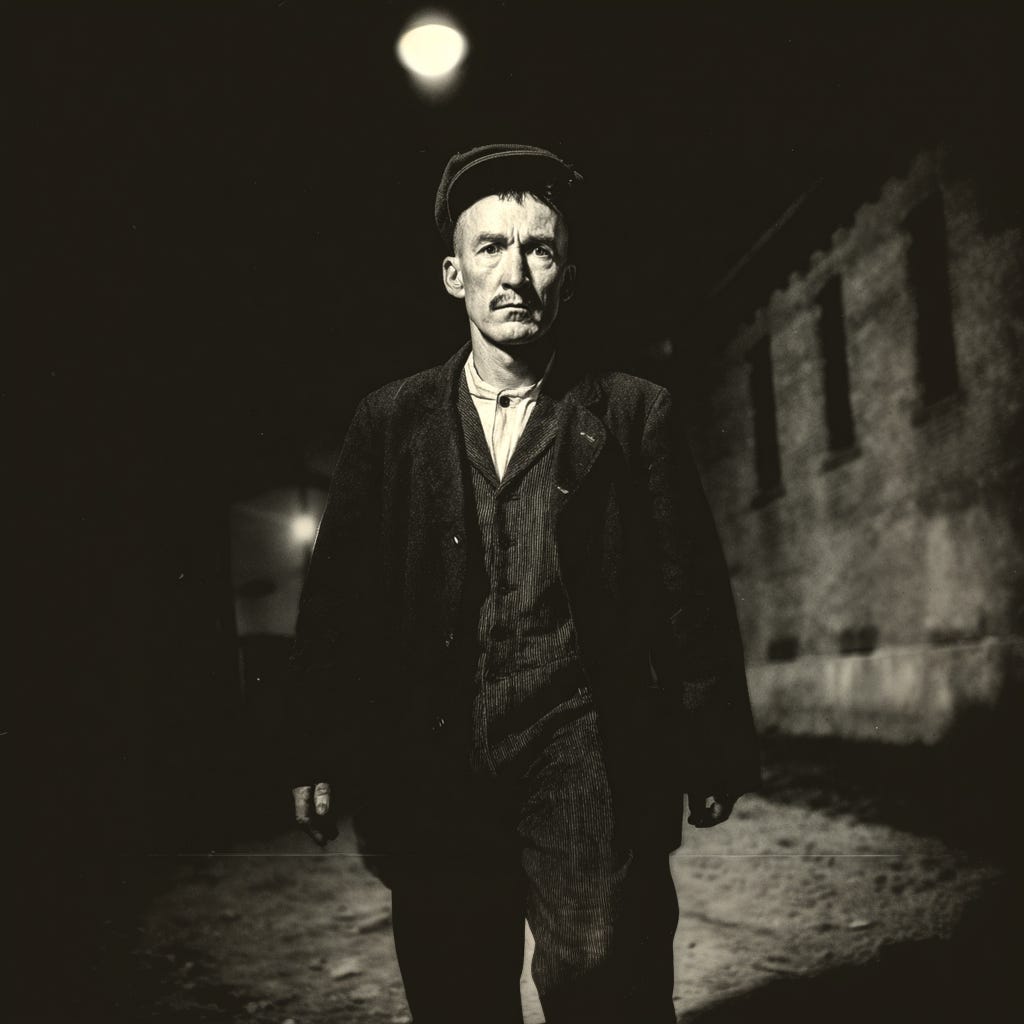
Background
In December 1921, an armed robber and convicted cop killer named Tommy O’Connor escaped from jail just days before he was scheduled to be executed, becoming the most wanted man in Chicago.
Despite being hunted by numerous law enforcement agencies, O’Connor managed to continually evade capture, staying a step ahead of the law. For years after his escape, reported sightings of him continued to pour in throughout the Midwest and beyond.
Authorities were so sure that he would eventually be captured that his name was kept on the death list and his gallows remained standing until 1977, when they were finally sold to a Wild West town in Union, Illinois.
The fate of “Terrible” Tommy O’Connor, as he was known by some in the press, remains unknown, and his story is one of the more intriguing tales of the prohibition-era gangsters.
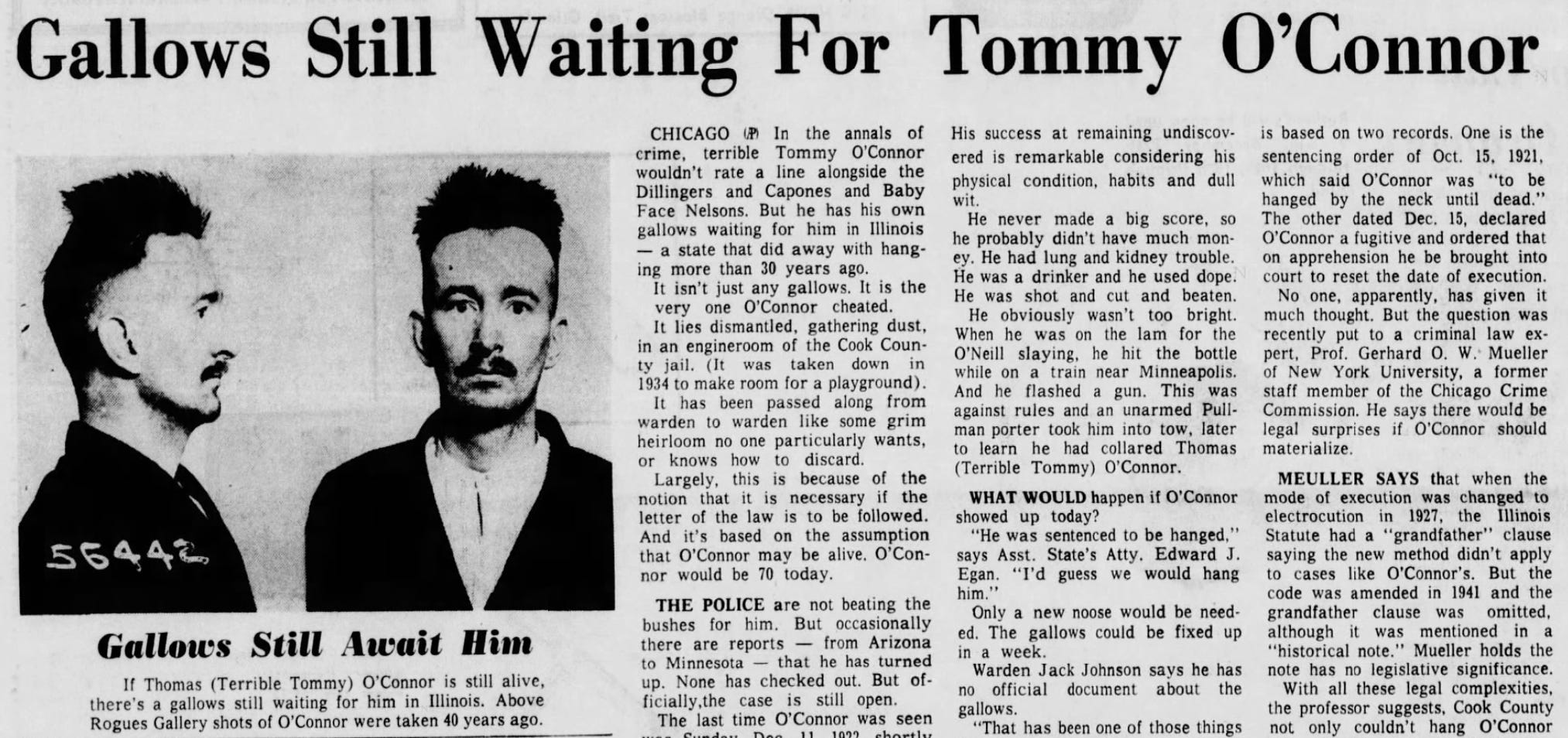
“Terrible” Tommy O’Connor
Tommy O’Connor’s origins are somewhat murky. According to sources, he was born around 1890 in County Limerick, Ireland, and emigrated with his family to the United States as a child.
The family settled in the crime-ridden Maxwell Street neighborhood on Chicago’s Near West Side. The neighborhood, which was known as “Bloody Maxwell,” was a mix of Irish, German, Italian, and other immigrants and was a breeding ground for up-and-coming criminals.
At some point, O’Connor joined the Valley Gang, which was centered around Maxwell and 15th Street. The gang was one of many Irish-American street gangs active in Chicago at the time. They were involved in pickpocketing and armed robberies, and hired themselves out as muscle for other criminals.
Tommy had two brothers and a sister, and though his older brother David “Darling Dave” O’Connor had some questionable acquaintances, Tommy was the only member of the family to get into serious legal trouble.
Illinois Central Station Robbery
On February 2, 1918, four men robbed the Illinois Central Railroad’s Randolph Street station, making off with approximately $2,500. However, the holdup did not go according to plan, and during the course of the robbery, a shootout occurred between the robbers and railroad agent and collector Dennis Tierney, during which Tierney was killed.
In the days after the robbery, one of the robbers, George Raymond, was killed during a gun battle with police on Chicago’s West Side. Another one of them, Harry Emerson, was arrested.
During his confession to members of the state’s attorney’s office, Emerson admitted to his role in the robbery and described in detail how the hastily planned robbery did not go as designed.
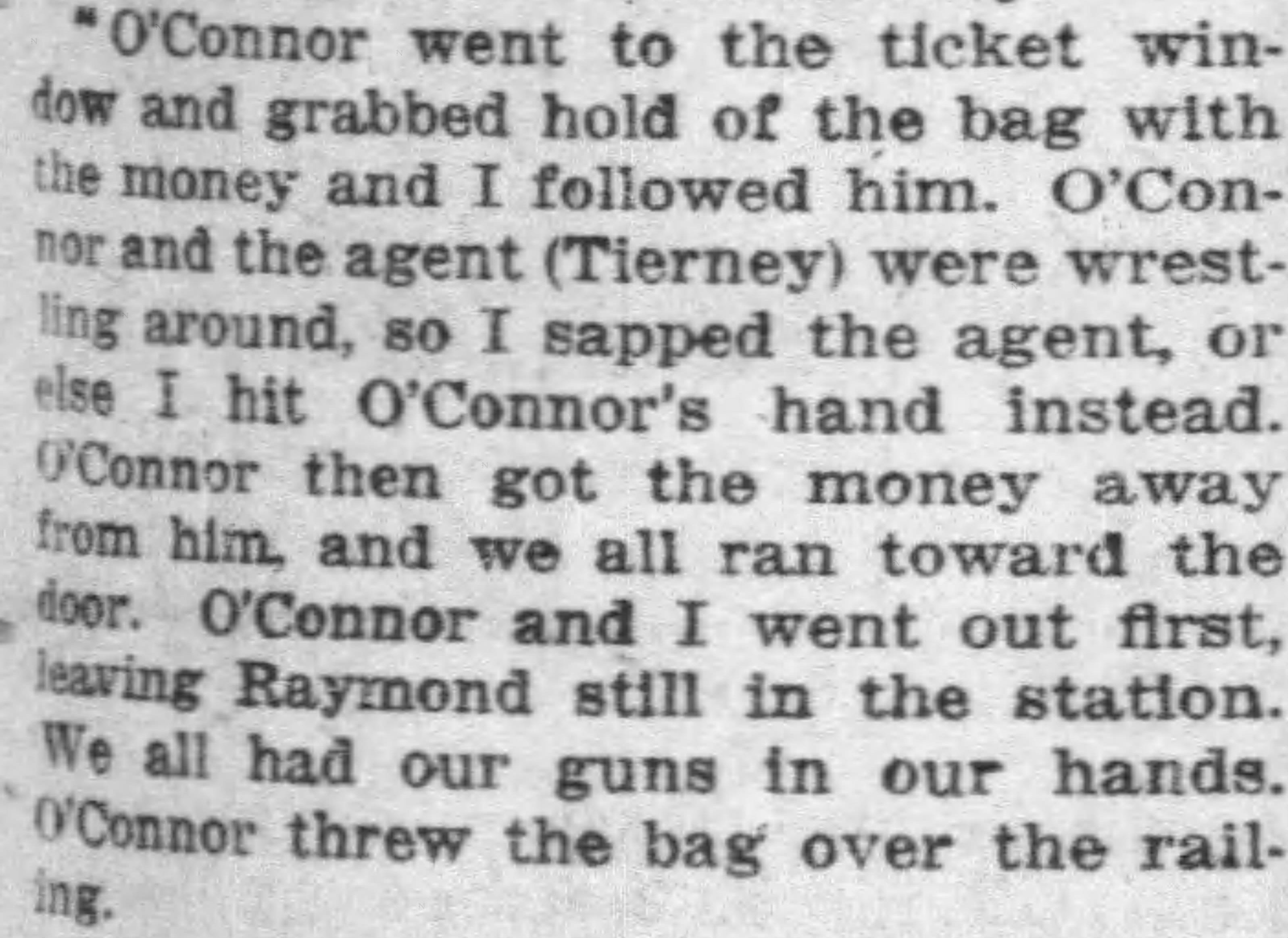
The robbers had used a cab, which they hijacked at gunpoint, as transportation, and, according to Emerson, some of the robbers did not stick to their assigned roles, which in part led to the fatal shootout.
According to Emerson, it was Raymond - who was conveniently already dead - who fired the shots that killed Tierney. Emerson also revealed the identities of his other two accomplices, who were previously unknown to police. The two men were James Hanratty, alias Howard, and Tommy O’Connor.
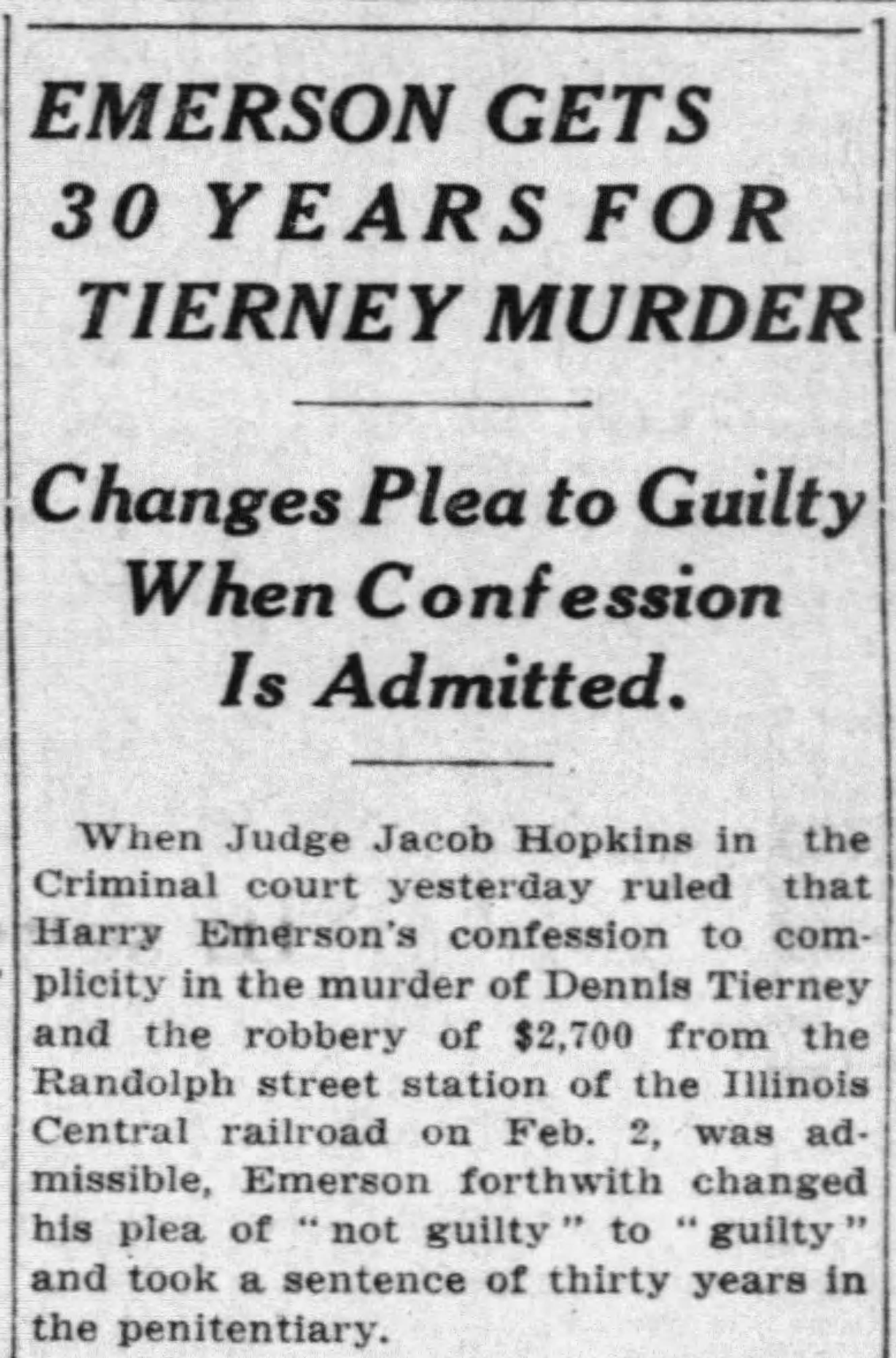
In July 1918, Emerson, fearing a possible death sentence, withdrew his plea of not guilty after the judge ruled that his confession could be admitted into evidence. Instead, he entered a plea of guilty for his role in the murder of Dennis Tierney. He was given a sentence of 30 years in prison.
Murder of Jimmy Cherin
Knowing that Emerson would cooperate against him, O’Connor reached out to a childhood friend named Jimmy Cherin, who had a lengthy criminal record and was known as “The Peacock of the Underworld,” and asked Cherin for a favor.
O’Connor offered Cherin money to get word to another gangster, “Big Joe” Moran, and offer Moran money to have Harry Emerson murdered in prison. O’Connor knew that Emerson was the state’s main witness against him, and without his testimony, the case against him would likely fall apart.
What O’Connor had not counted on was that Jimmy “The Peacock,” who had long been a fixture in Chicago’s criminal underworld, had recently decided to go straight. Cherin had a wife and young daughter and had decided to put the criminal life behind him. He therefore declined O’Connor’s offer.
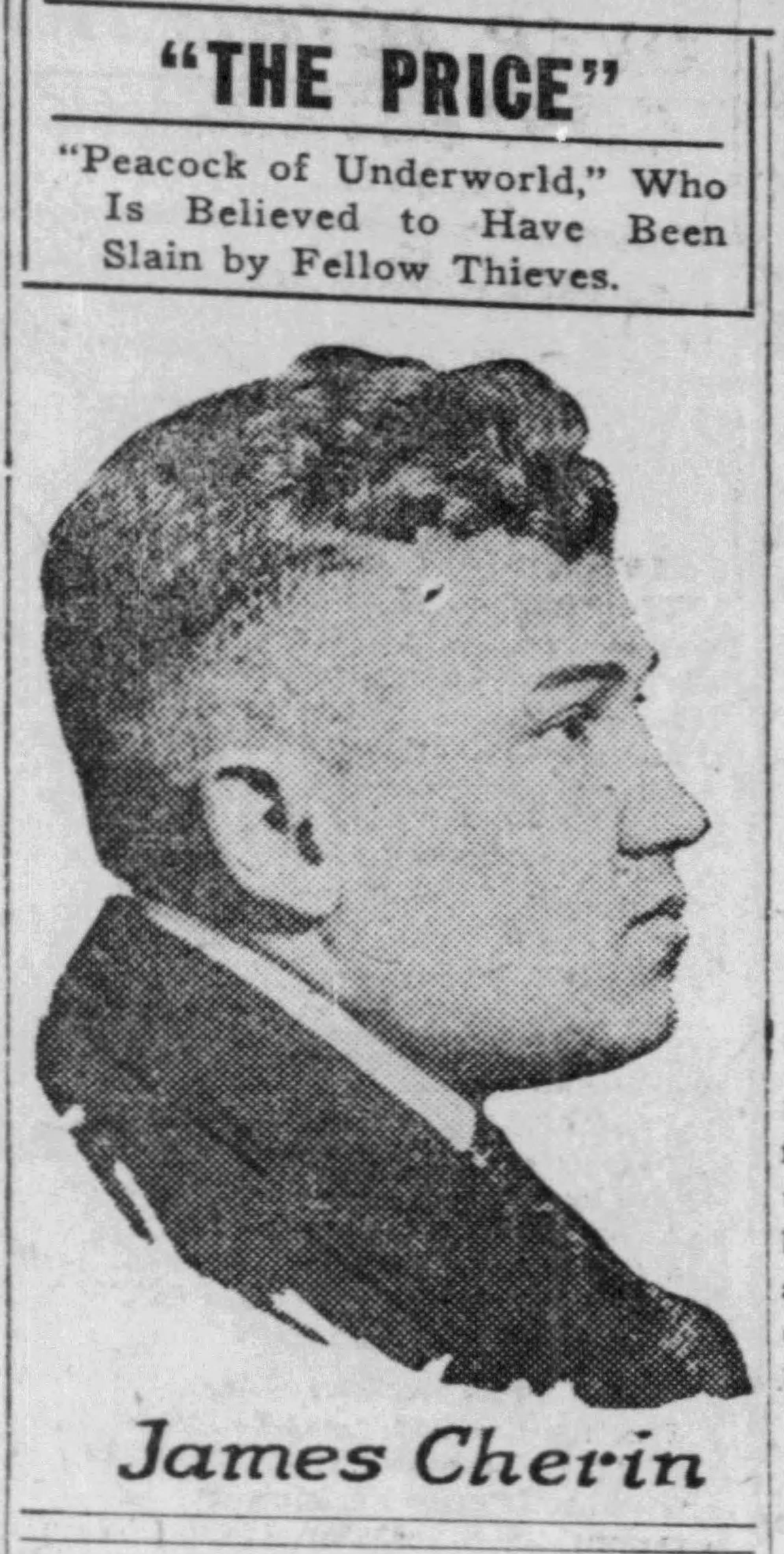
On January 21, 1919, Cherin and O’Connor were in the backseat of a car while a third man, Louie Miller, was in the driver’s seat. The three men were talking when suddenly, O’Connor pulled out a revolver and shot Cherin three times in the head. O’Connor then ordered a shaken Miller to drive to Stickney, a town just outside the city limits, where they left Cherin’s body.
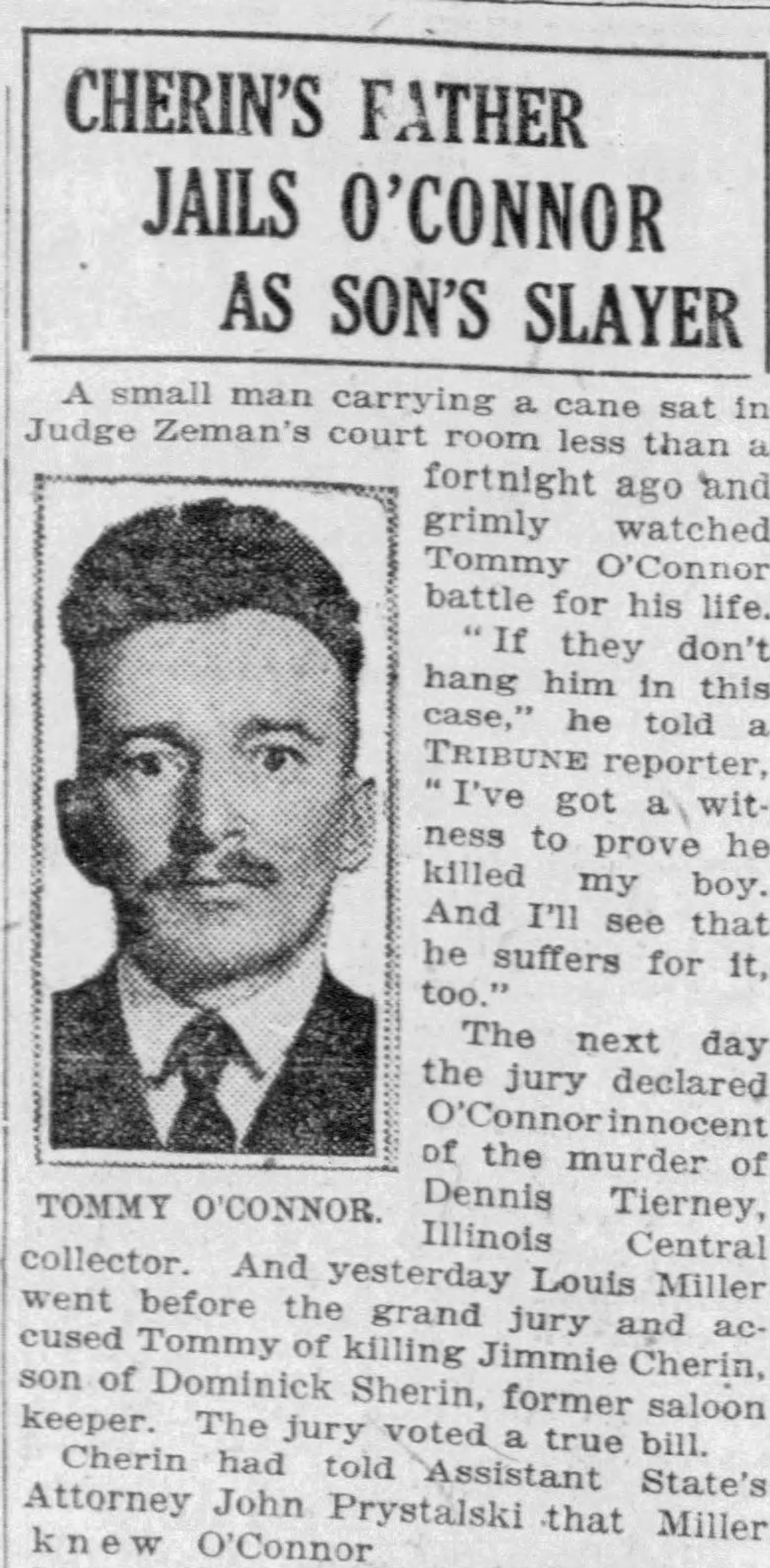
In a tragic footnote, Cherin’s grieving widow, Gertrude, took her own life and the life of her three-year-old daughter, Adeline, in June 1919. Cherin’s father, who knew that O’Connor was responsible for his son’s murder, swore revenge.
Arrest and Trial
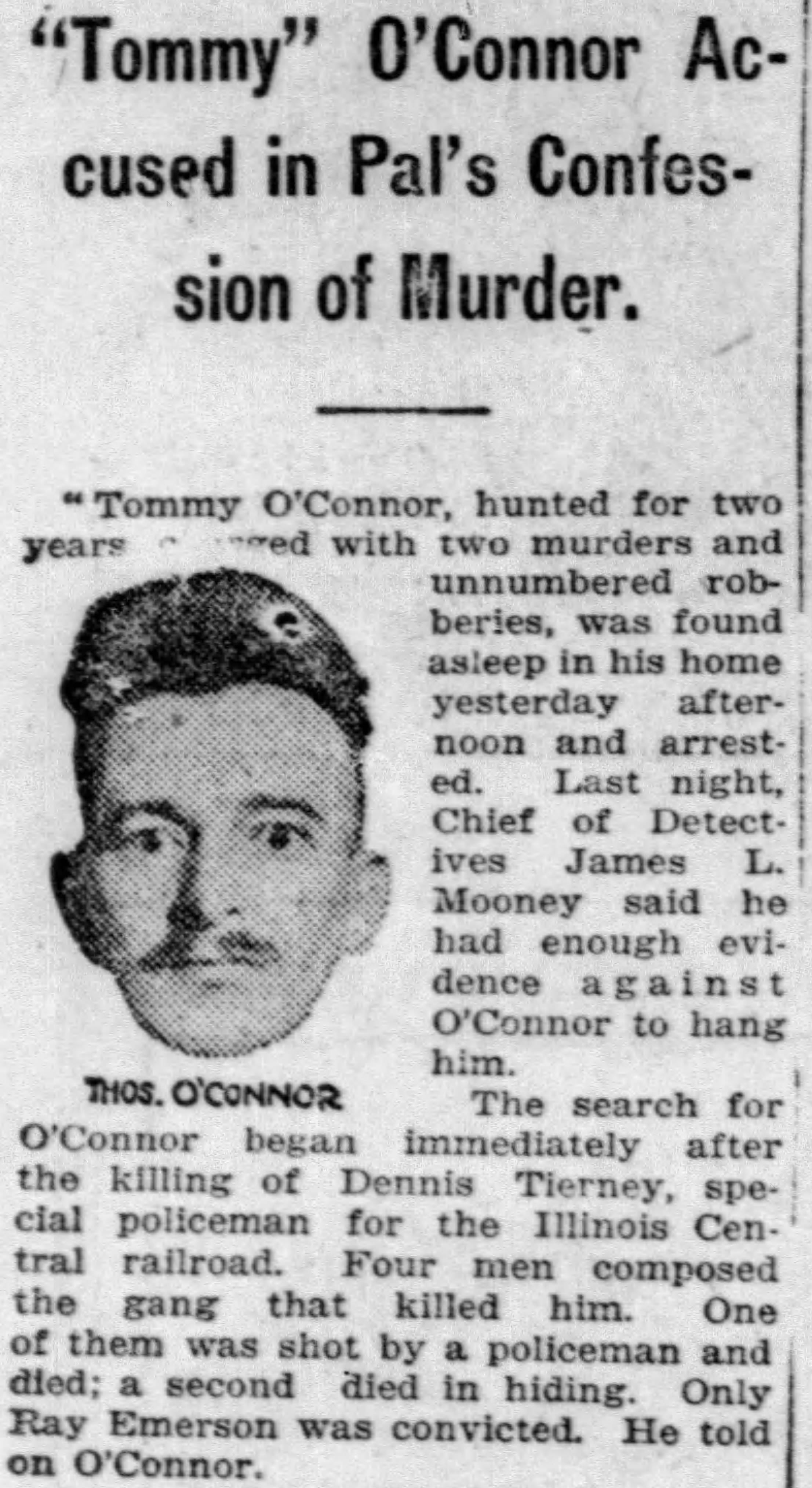
Ever since Emerson’s confession, Chicago police had been earnestly hunting Hanratty and O’Connor. However, they would learn that finding Tommy O’Connor was not an easy feat. He remained in hiding for nearly two years before finally being captured at his home on November 12, 1919.
According to the Chicago Tribune article that reported his capture, O’Connor’s accomplice, James Hanratty, had died while in hiding - though the article does not provide details.
Though he was a suspect in the murder of Jimmy Cherin, O’Connor would first stand trial for the Central Railroad robbery and the murder of Dennis Tierney. In early April 1919, O’Connor went on trial. In a surprising verdict, he was found not guilty. Later that month, with pressure from Cherin’s father, police arrested O’Connor on suspicion of murder.
After a rough interrogation by Chicago police, Louie Miller, who had been present when Jimmy Cherin was murdered, identified O’Connor as the triggerman and agreed to testify against him.
Despite being indicted for murder in January 1921, O’Connor was back on the streets after posting a large cash bail. After leaving jail, he promptly went into hiding.
Murder of Patrick O’Neill
Around 10 p.m. on March 23, acting on a tip, Detective Sergeant Patrick “Paddy” O’Neill and five other detectives approached a house on South Washenaw Avenue on the city’s Southwest Side. It was the home of William Foley, O’Connor’s brother-in-law.
Det. O’Neill and three of the others went around to the back of the house while another detective demanded entry at the house’s front door. A fifth detective stood guard on the front sidewalk.
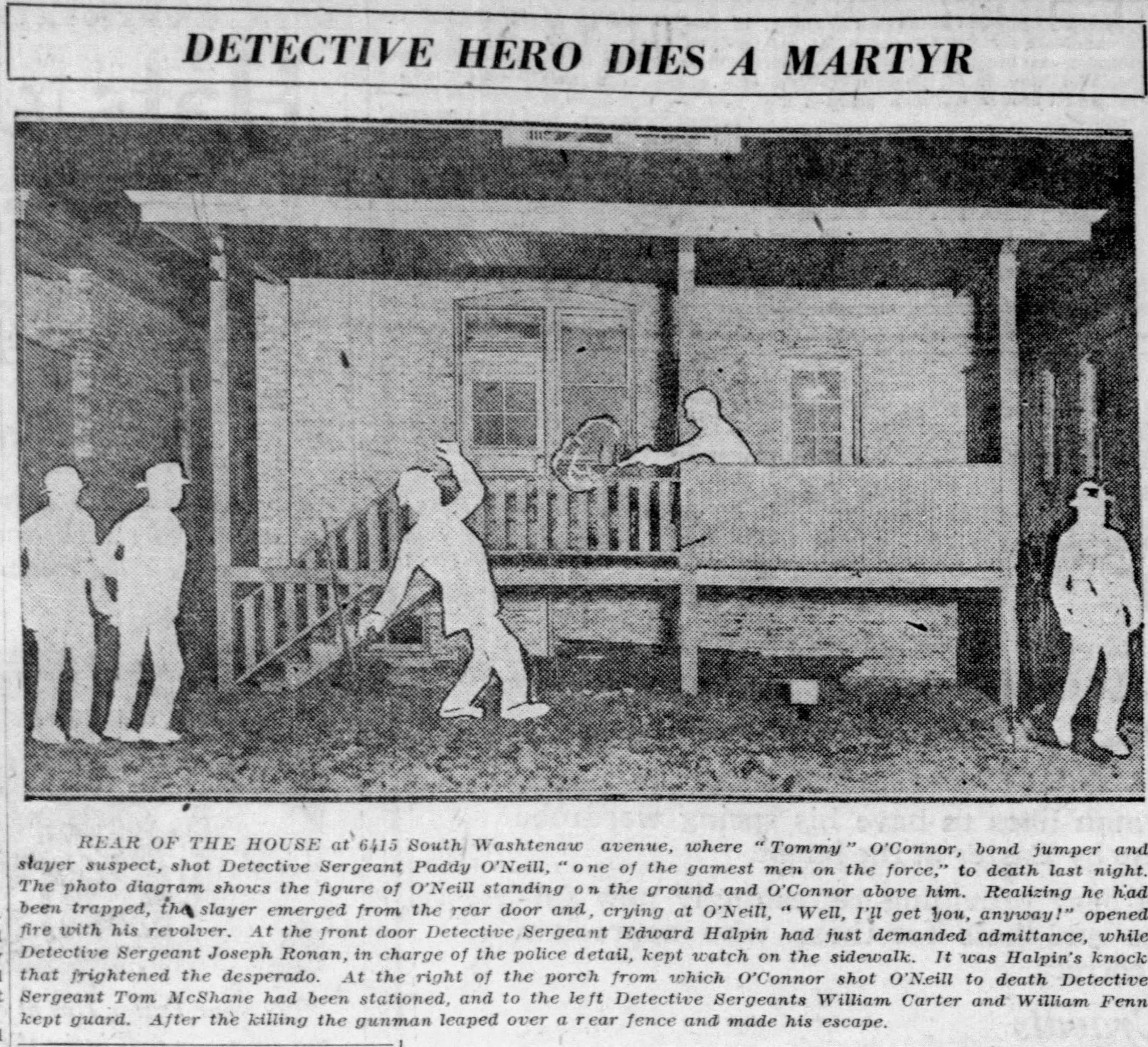
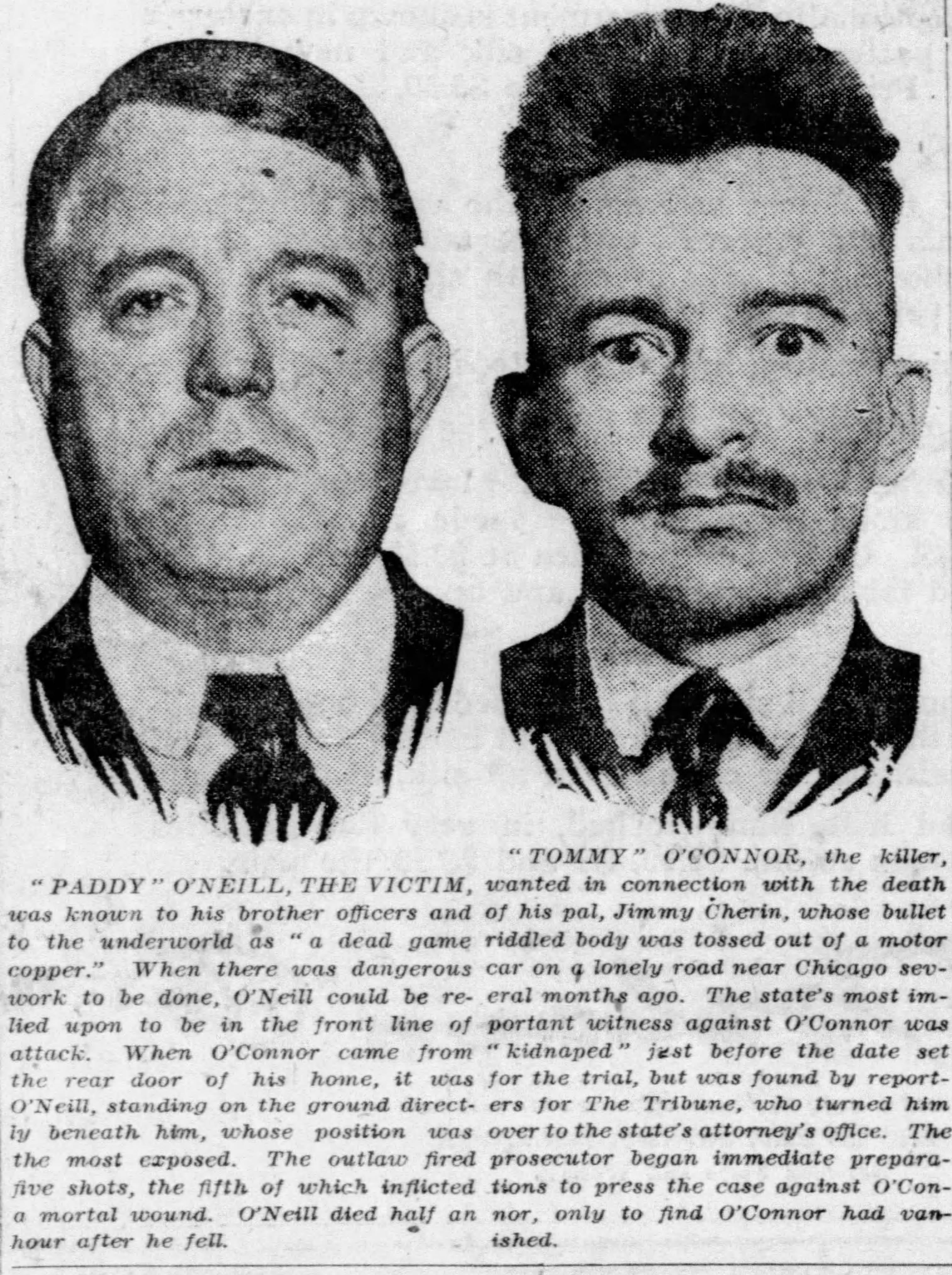
Suddenly, O’Connor emerged from the back door, shouting at the detectives with a revolver in his hand. He fired five shots at O’Neill, with the final one striking him in the side. As O’Neill lay mortally wounded, O’Connor managed to hop a fence and escape in a Checker cab.
After several blocks, he exited the cab and carjacked a couple after jumping onto the running board of their car. Brandishing two revolvers, O’Connor forced the couple to drive north before ordering the wife to exit the car. After crossing through several suburbs, O’Connor then forced the husband out of the car before driving off.
Detective Patrick O’Neill was pronounced dead approximately half an hour after the shooting.
Manhunt
The manhunt that followed was one of the largest in Chicago’s history. More than a thousand officers, many armed with rifles and riot guns, patrolled the city looking for O’Connor. Many of the neighboring suburbs were also alerted and likewise had officers searching.
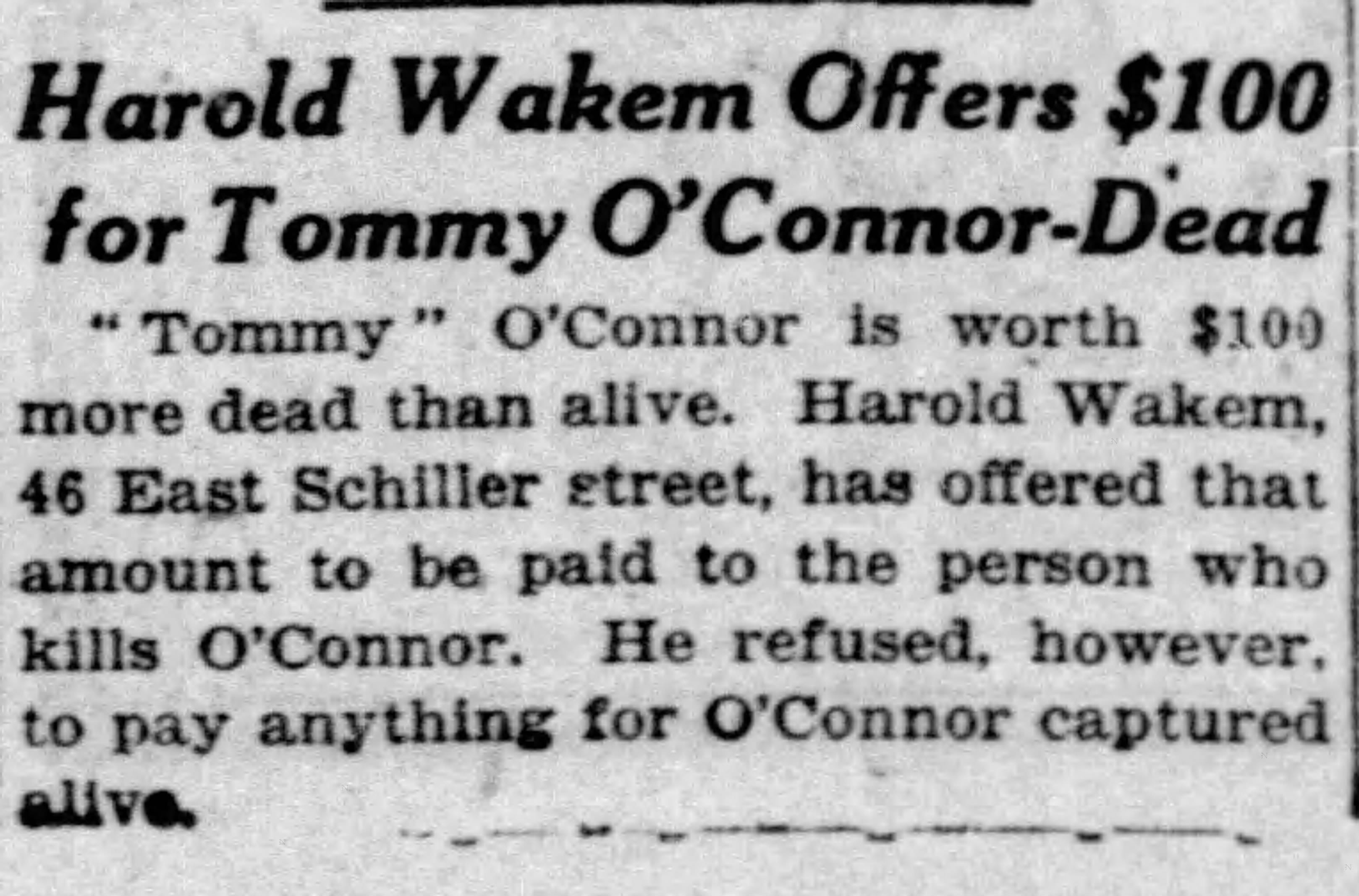
Chicago’s police chief Fitzmorris offered a $500 reward for Tommy O’Connor, dead or alive, while another Chicago citizen offered $100 for O’Connor - dead only.
In the aftermath of the shooting, both the Foleys and O’Connor’s mother and father, who were in the house at the time, were arrested, as well as O’Connor’s brother, “Darling Dave.”
Police found clothing as well as holsters and ammunition in the room where O’Connor was staying.
Capture and Trial
Despite the enormous search that was underway, O’Connor managed to remain a fugitive for several months until he was finally apprehended - almost accidentally - by a railroad porter in Minnesota.
When a Pullman porter on the Chicago Great Western Railroad noticed someone sneaking around in one of the railcars while stopped in St. Paul, Minnesota, he confronted the intruder, who turned out to be a semi-drunk Tommy O’Connor.
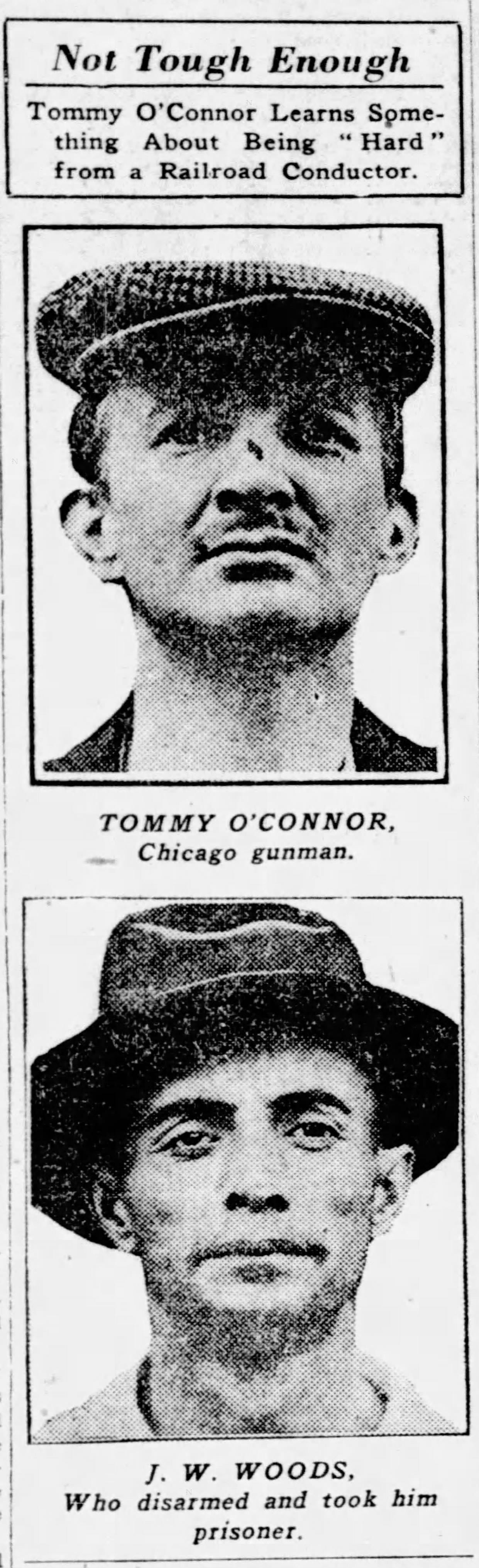
After being physically removed by the porter, O’Connor was chased down by several yardmen and arrested. When he was searched, O’Connor was found to be carrying three handguns, a rosary, two medals, and other religious items.
When authorities in Chicago learned of O’Connor’s arrest, they wasted no time sending detectives to retrieve him. In fact, the St. Paul city attorney charged the Chicago chief of detectives with kidnapping, due to the fact that O’Connor was scheduled to stand trial for a robbery he had allegedly committed in St. Paul.
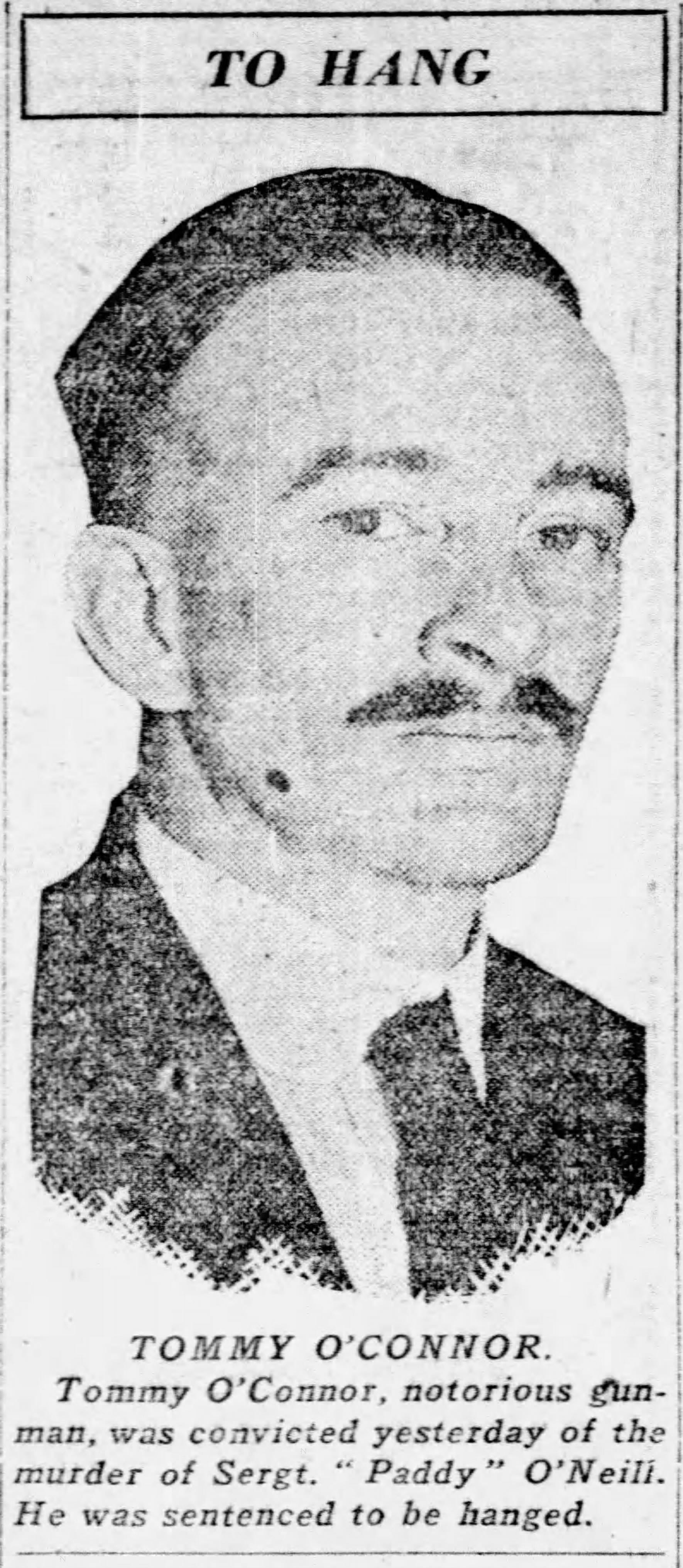
Despite these efforts, O’Connor would remain in Chicago and stand trial for the murder of Detective Sergeant Patrick O’Neill. In September 1921, after just two hours of deliberation, the jury returned a verdict of guilty and sentenced O’Connor to be hanged. It appeared that Tommy O’Connor’s luck had finally run out.
Escape and Disappearance
Following his sentencing, O’Connor’s attorney pressed for a new trial. However, these efforts were denied by the presiding judge, who maintained that he was satisfied with the result. For his part, O’Connor vehemently maintained his innocence.
He claimed that the shots that killed Det. O’Neill were fired by the other Chicago detectives, and although the CPD later dismissed the five detectives for their lack of aid towards O’Neill, there was no evidence that anyone except O’Connor fired the fatal shots.
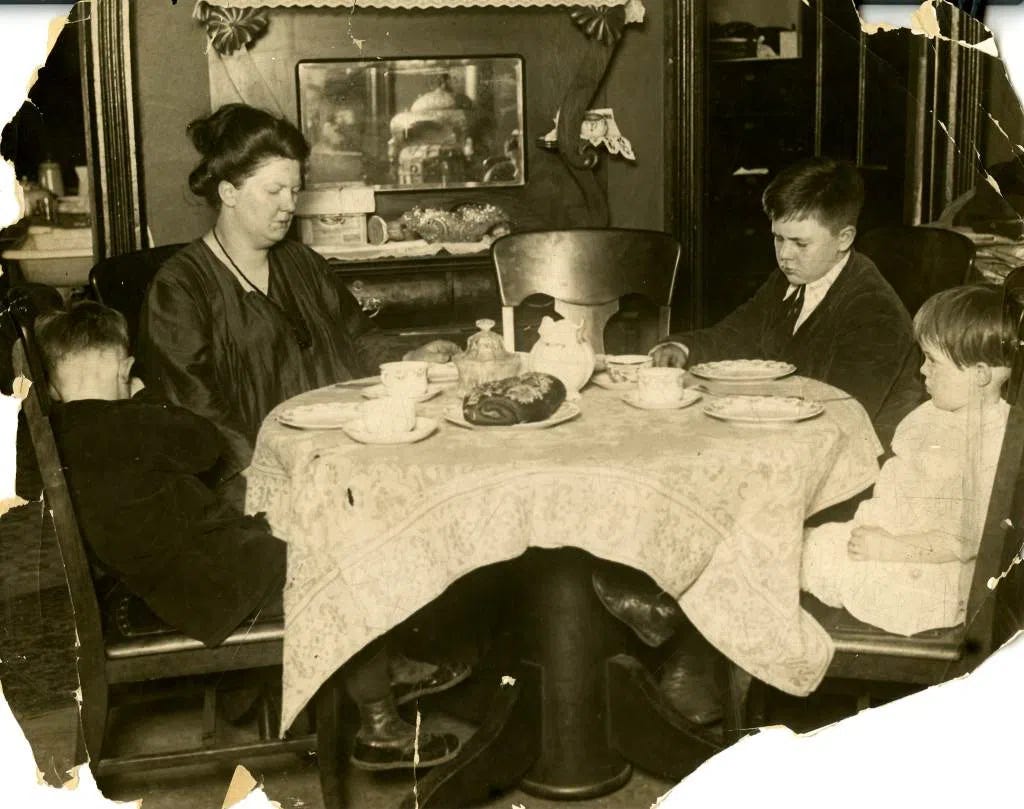
O’Connor was recorded as saying, “I am innocent. If I were standing before God this minute, I would swear I was innocent.” Despite his protest, O’Connor was scheduled to hang on Thursday, December 15th.
On Sunday, December 11, just four days before he was scheduled to be executed, Tommy O’Connor and four other inmates escaped from the criminal courts building where they were being held. Somehow, O’Connor got his hands on a gun, and he and the other four overpowered the guards.
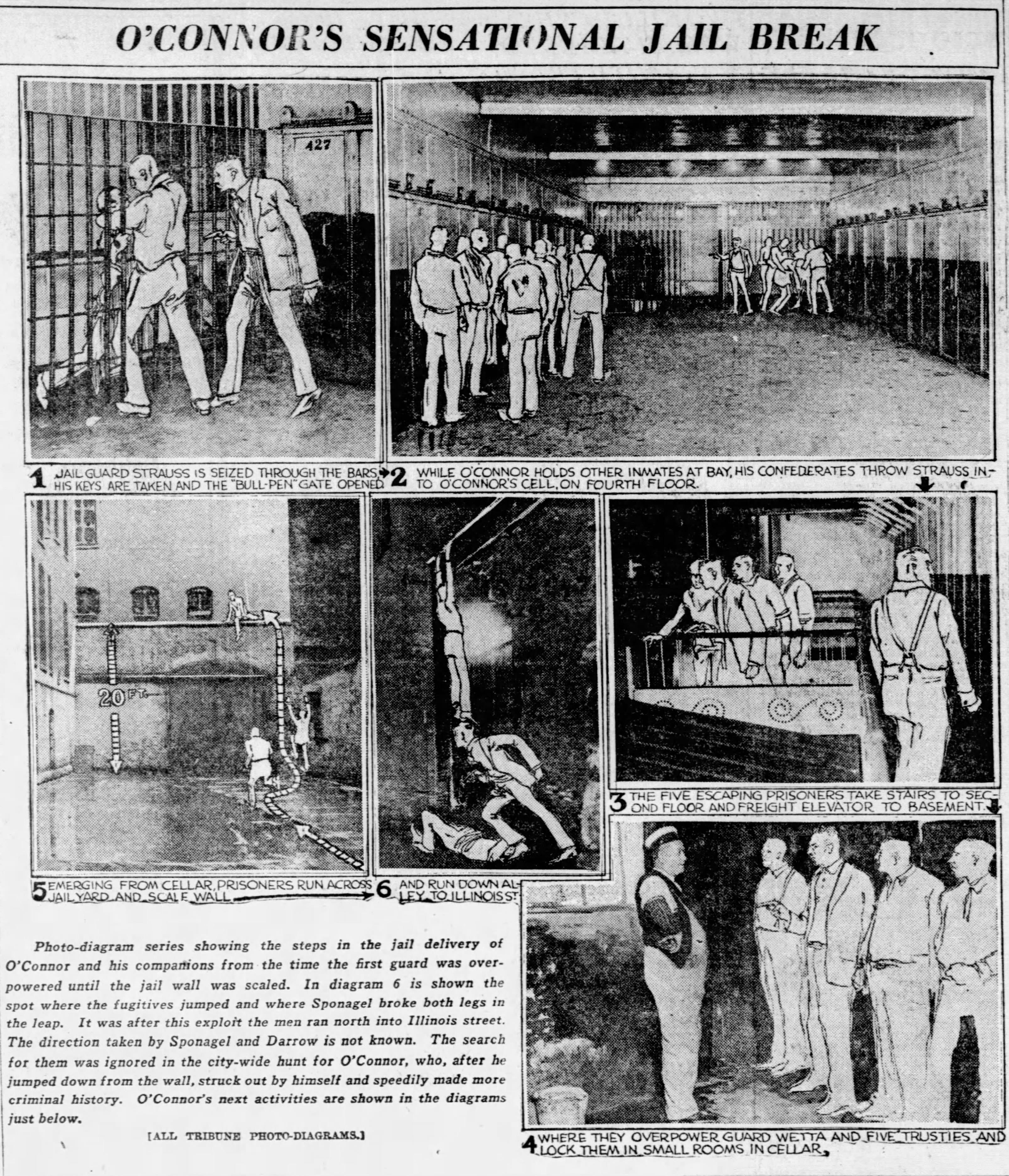
After making their way out of the jail, the five inmates climbed onto the roof of a shed and jumped over the nine-foot-high wall. One of the escapees, who was a heavyset man, broke both of his ankles and was captured soon after.
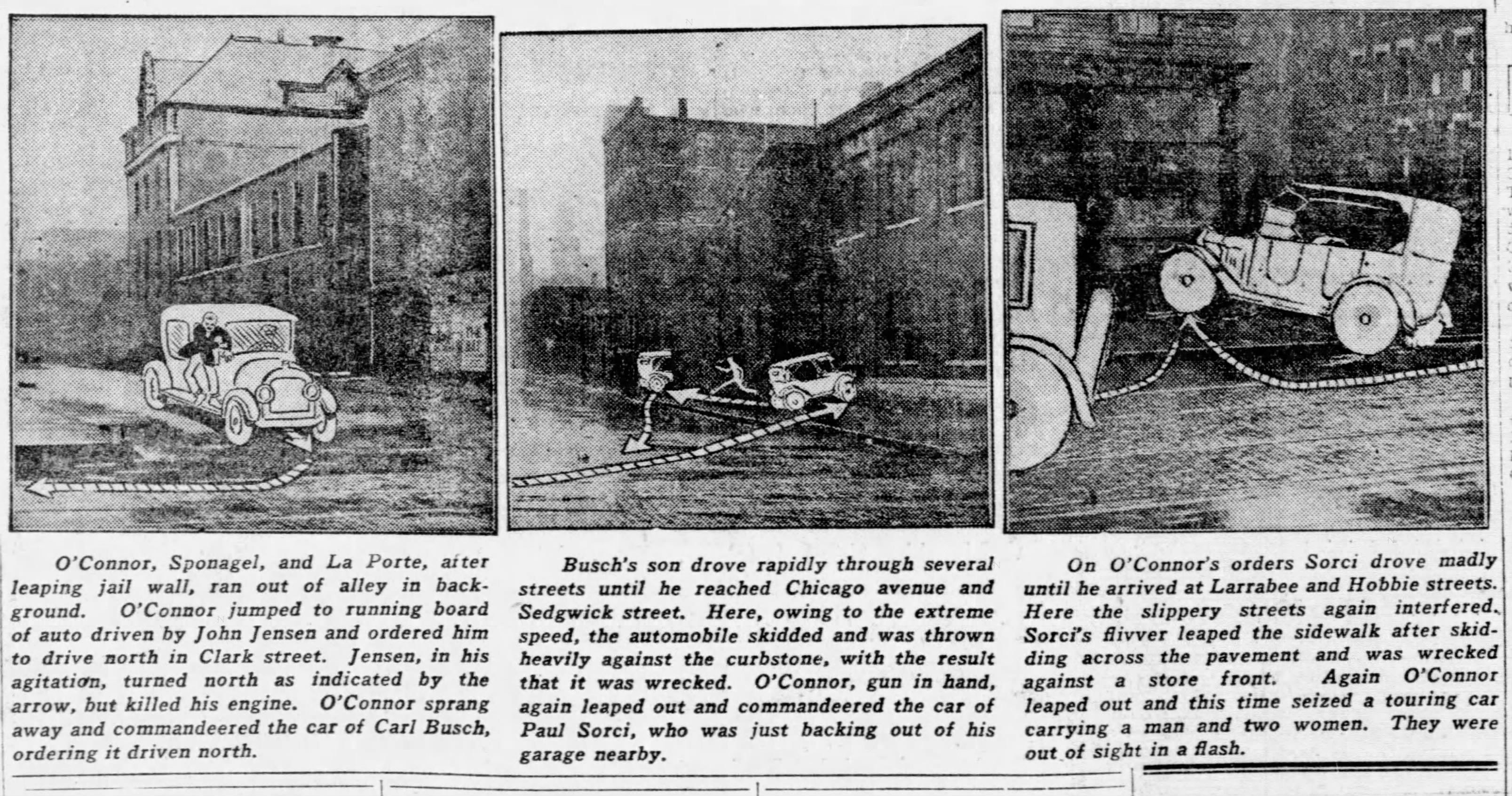
Two of the other men fled in a different direction and were later captured. O’Connor, similar to his escape after shooting Det. O’Neill jumped onto the running board of a passing car and forced the driver at gunpoint to speed away.
Then, in a scene straight out of Grand Theft Auto, O’Connor carjacked three more cars after the second one crashed and the third one skidded off the road. Once in the final car, he sped off and was gone.
Aftermath
Once order in the jail was restored, a furious Chief Fitzmorris accused several of the guards of conspiring with O’Connor and the others to escape. Two of them would later be convicted. It is still unclear how O’Connor got hold of a gun, with one of the stories being that it was smuggled inside a pork chop sandwich.
The Sheriff and Chief Deputy agreed that the escaped men may have had some inside help. Sheriff Charles Peters told reporters, “I am going to get to the bottom of this. I haven’t suspended anyone yet - but we might keep some of our guards here as customers. But I won’t do anything until I find out who is at fault.”
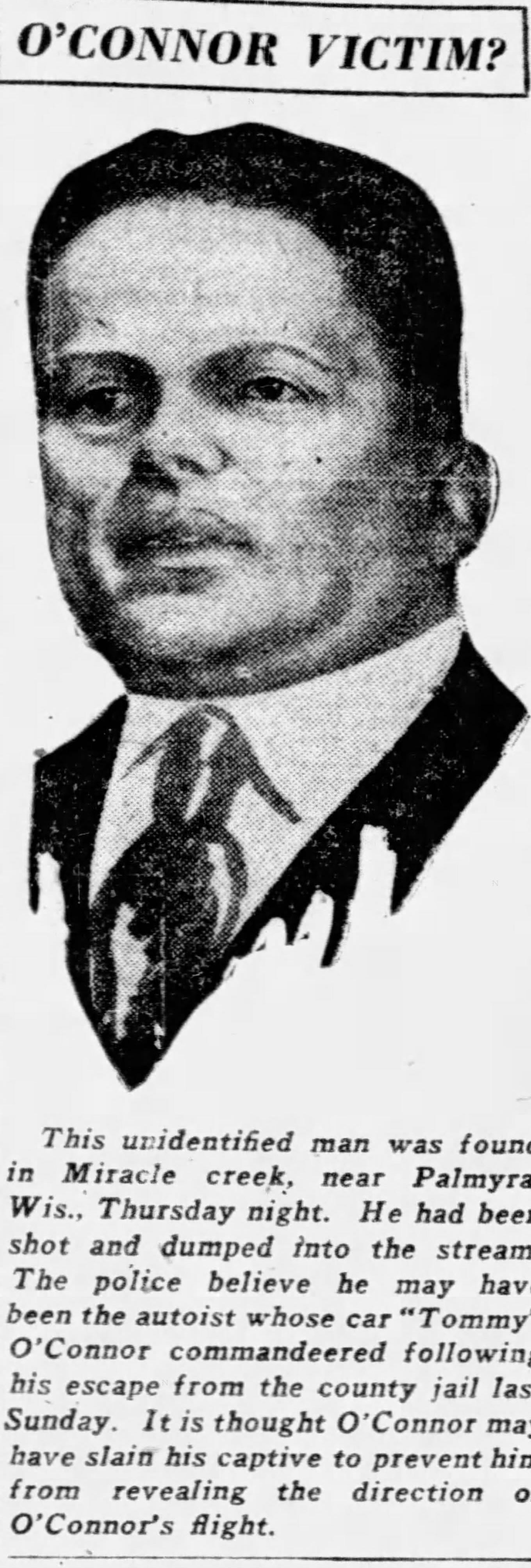
On December 17, an unidentified man was found shot and dumped in a creek near Palmyra, Wisconsin. Police believed the victim may have been the driver of the last car that O’Connor hijacked, as the man had not been seen since the day of the escape. The body was also found in only underwear, meaning his killer had likely taken his clothing.
Somehow, despite the immense resources and manpower used to hunt O’Connor and the high-profile nature of the case, he was never located.
For years after his escape, his name would continue to appear in newspapers, usually linked to some sort of robbery or shooting. He was like a ghost, everywhere and nowhere at the same time.
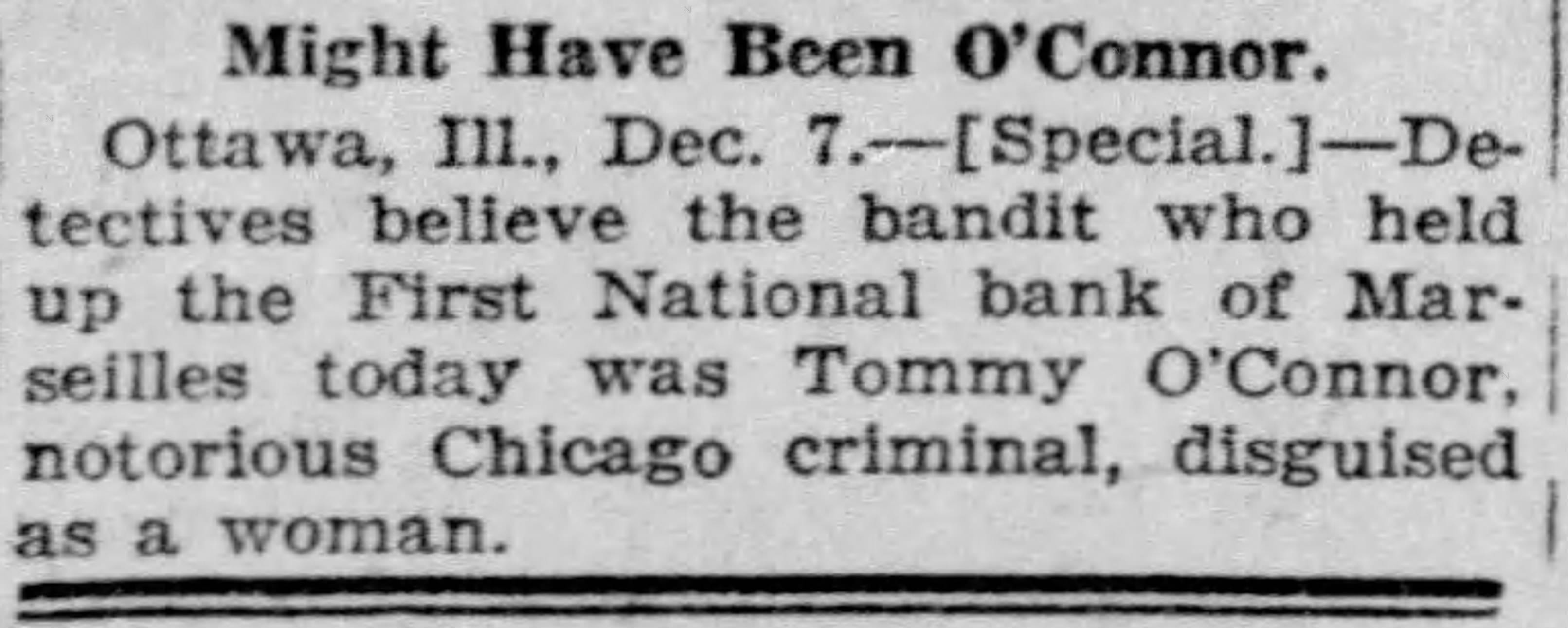
A 1922 article identified him as the bandit who attempted to hold up a train in Iowa. A 1924 article had him hiding out in the Wisconsin woods. A 1926 article claimed he was the lone survivor of a group of bandits who were killed by sheriffs in Los Angeles. However, police in Chicago reported that they had not heard anything to that effect. Another 1926 article had O’Connor robbing a bank in Marseilles, Illinois, while disguised as a woman.
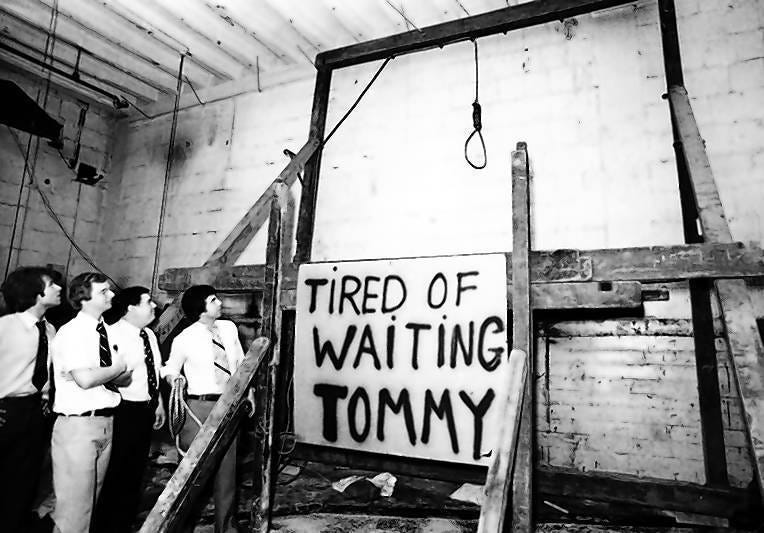
While some of these seem far-fetched, it goes to show that he was still very much in the public eye years after his improbable escape. In fact, his name continued to remain on the death list, and the gallows that had been erected just days before his escape remained standing until 1977, when they were sold to a private buyer and later displayed at Donley’s Wild West Town in Union, Illinois.
Sources:
“Terrible Tommy.” Roger Touhy, Gangster, https://rogertouhygangsters.blogspot.com/2014/06/terrible-tommy.html
Yockel, Michael. “When Harry Met Tommy.” Chicago Reader, 21 December 2000, https://chicagoreader.com/news/when-harry-met-tommy/
“Prisoner Gives Detailed Story of I.C. Murder.” Chicago Tribune, 3 March 1918, https://www.newspapers.com/image/355226322/?match=1&terms=Dennis%20Tierney
“Emerson Gets 30 Years For Tierney Murder.” Chicago Tribune, 13 July 1918, https://www.newspapers.com/image/355143748/?match=1&terms=Dennis%20Tierney
“Thieves Still Falling Out 3 More Dead.” Chicago Tribune, 22 January 1919, https://www.newspapers.com/image/355265081/?match=1&terms=cherin
“Hunted 2 Years As Killer; Found In Home Asleep.” Chicago Tribune, 13 November 1919, https://www.newspapers.com/image/355084764/?match=1&terms=%20tommy%20o%27connor
“Cherin’s Father Jails O’Connor As Son’s Slayer.” Chicago Tribune, 21 April 1920, https://www.newspapers.com/image/349491096/?match=1&terms=%20tommy%20o%27connor
“Police Army Combing City For Murderer.” Chicago Tribune, 24 March 1921, https://www.newspapers.com/image/355006600/
“Slayer Kills Officer; City Combed In Hunt.” Chicago Tribune 24 March 1921, https://www.newspapers.com/image/355006626/?match=1&terms=%20tommy%20o%27connor
“O’Connor To Be In Chicago Jail This Morning.” Chicago Tribune, 30 July 1921, https://www.newspapers.com/image/355100974/?match=1&terms=tommy%20o%27connor
“Pullman Porter Causes Capture Of T. O’Connor.” The Chicago Whip, 6 August 1921, https://www.newspapers.com/image/900978606/?match=1&terms=tommy%20o%27connor
“O’Connor Found Guilty; Doomed To Die By Rope.” Chicago Tribune, 25 September 1921, https://www.newspapers.com/image/355175184/?match=1&terms=tommy%20o%27connor
“Tommy O’Connor Breaks Jail on Eve of Hanging.” Chicago Tribune, 12 December 1921, https://www.newspapers.com/image/355172765/?match=1&terms=tommy%20o%27connor
“Slain Man Found In Creek Seen As O’Connor Victim.” Chicago Tribune, 17 December 1921, https://www.newspapers.com/image/354937485/?match=1&terms=tommy%20o%27connor
This is wild, and I am surprised more creators haven't delved into this story. O'Connor was an awful man and it's a shame he got away.